






Energy Efficiency and Heat Management in LED Stage Light Bars
- Why thermal management matters in professional lighting
- LEDs are efficient but sensitive to temperature
- Impact on performance, lifetime and maintenance costs
- Real-world constraints in stage environments
- Cooling strategies and materials
- Passive cooling: optimized heat sinks and conduction paths
- Active cooling: fans and forced convection
- Thermal path improvements: PCB, TIMs and mounting
- Energy efficiency: drivers, dimming strategies and system-level optimization
- Choosing efficient LED drivers
- Dimming methods and perceptual efficiency
- System-level strategies to reduce energy use
- Testing, standards and measurable targets
- Key metrics to specify and measure
- Environmental standards and safety
- Comparison table: cooling approaches and trade-offs
- Practical design and procurement recommendations
- Specifying for long-term performance
- Operational best practices
- Lifecycle and sustainability considerations
- Uplus Lighting: capabilities and product relevance
- FAQ
- 1. How does temperature affect LED lifetime?
- 2. Do I always need active fans in a led stage light bar?
- 3. What test data should I request from suppliers?
- 4. How can venue operators reduce thermal-related failures?
- 5. How does driver dimming strategy affect energy efficiency?
- 6. Can I retrofit existing fixtures to improve thermal performance?
I routinely evaluate the interplay between energy efficiency and thermal management when specifying or designing led stage light bar systems. Good thermal strategy is not an optional engineering detail — it is central to delivering stable light output, reliable color fidelity and long lifetime for professional lighting rigs. In this article I summarize proven cooling approaches, material and driver choices, measurement standards and practical steps you can take to optimize the efficiency and service life of led stage light bar products used in theaters, tours and rental applications.
Why thermal management matters in professional lighting
LEDs are efficient but sensitive to temperature
Light-emitting diodes convert electrical energy into light far more efficiently than older technologies, however a significant portion of supplied energy still appears as heat inside the package. The physics are well established: higher junction temperatures reduce luminous efficacy and accelerate lumen and color degradation. For technical context see the LED fundamentals overview on Wikipedia and basic LED guidance from the U.S. Department of Energy: LED basics. I always design with the manufacturer’s junction temperature (Tj) limits and lumen maintenance data in mind.
Impact on performance, lifetime and maintenance costs
When a led stage light bar runs hot, you will see immediate and long-term consequences: reduced lumen output and CRI drift during a show, faster lumen depreciation over months/years, and higher failure rates in power supplies and LEDs. For professional events where consistent beam and color are essential, insufficient heat management leads to increased downtime and lifecycle costs. Standards like LM-80 (LED lumen maintenance testing) from the Illuminating Engineering Society provide the measurement basis to compare devices: IES LM-80.
Real-world constraints in stage environments
Stage lighting introduces additional constraints: compact form factors for truss mounting, high-density LED arrays for narrow beam control, and heavy duty handling from touring. All of this pushes designers to balance thermal performance with weight, aerodynamic drag, IP rating and manufacturability. I use a systems approach — LED package, PCB, heat sink, airflow and driver must be engineered together to meet the spec for a given led stage light bar.
Cooling strategies and materials
Passive cooling: optimized heat sinks and conduction paths
Passive thermal design remains the backbone of robust stage fixtures. High-conductivity materials (typically aluminum alloys) shaped into finned heat sinks provide the main conduction path from LED package to ambient. The heat sink geometry, surface area and orientation determine convective heat transfer. Wikipedia's primer on heat sinks is a useful technical reference: Heat sink. In practice I specify extruded or die-cast aluminum heat sinks with thermal interface materials (TIM) and a thermal resistance target (θJA) consistent with the LED manufacturer's maximum junction temperature.
Active cooling: fans and forced convection
Active cooling (small high-MTF fans) can significantly reduce LED junction temperature and allow higher power density, but it adds moving parts, acoustic noise and potential dust ingress. For touring led stage light bar units where weight and airflow channels are available, I often design hybrid solutions — primarily passive cooling with strategically placed low-noise fans that run only when temperature thresholds are exceeded. Active cooling should be controlled by thermal management firmware to avoid unnecessary energy use and noise.
Thermal path improvements: PCB, TIMs and mounting
Beyond heat sinks and fans, the thermal path includes the PCB (IMS or metal-core PCB), soldering quality, and thermal interface materials (gap pads, phase-change TIMs, thermal adhesives). Metal-core PCBs reduce thermal resistance compared to FR4. Proper mechanical mounting — ensuring the LED board is in intimate thermal contact with the heat sink using correctly specified TIM — is critical. I always validate assembly processes in thermal cycles to ensure no micro-gaps form after vibration or thermal expansion.
Energy efficiency: drivers, dimming strategies and system-level optimization
Choosing efficient LED drivers
Driver efficiency directly affects energy use and heat generated within the fixture. Modern constant-current LED drivers can exceed 90% efficiency; lower quality supplies may lose considerable energy as heat. When I specify components for an led stage light bar, I require driver efficiency curves across the dimming range and at expected input voltages. Power factor and THD also matter for large installations to avoid electrical penalties and long-term grid impacts.
Dimming methods and perceptual efficiency
Pulse-width modulation (PWM) and current reduction both have implications for efficiency and color stability. PWM at sufficiently high frequency maintains color fidelity but can increase driver switching losses. Smooth current reduction reduces switching stress but can change color temperature if LED binning is sensitive. I often test units with the intended control protocol (DMX/RDM or Artnet) and measure luminous output vs. input power across dimming to identify operating points that maximize perceived brightness per watt.
System-level strategies to reduce energy use
Optimizing a venue’s lighting plan can reduce the number of fixtures and power required. Beam shaping, optics choice, and using higher-efficacy LEDs frequently yield better outcomes than simply increasing fixture count. In tours I work on, careful beam overlap and fixture placement allow lower output per unit and consequently lower thermal stress and energy consumption across the rig.
Testing, standards and measurable targets
Key metrics to specify and measure
When I test led stage light bar prototypes or incoming production, I measure the following: junction and case temperature under steady-state, lumen output at multiple drive currents and temperatures, color coordinates (CCT/x-y), flicker, driver efficiency, and lumen maintenance (accelerated tests). LM-80 and TM-21 extrapolation are industry-accepted methods for lumen maintenance projections; see IES LM-80 references: IES LM-80.
Environmental standards and safety
Depending on markets, fixtures must meet IP ratings for ingress protection, low-voltage safety standards and EMC rules. For example, IEC standards for luminaires and related safety regulations guide design choices that can affect thermal paths (sealed units require different cooling strategies). Refer to relevant IEC and regional authorities for market-specific compliance details.
Comparison table: cooling approaches and trade-offs
| Cooling Method | Advantages | Disadvantages | Best use cases |
|---|---|---|---|
| Passive heatsink | Reliable, silent, low maintenance | Bulky, limited power density | Theaters, fixed installations |
| Active fans | Higher power density, lower operating temp | Noise, moving parts, ingress risk | Tours, compact bars requiring high output |
| Liquid / vapor chambers | Very effective for high heat flux | Complex, costlier, maintenance | High-power AR/LED fixtures where weight is critical |
Sources for general thermal engineering concepts: Heat sink (Wikipedia), DOE LED basics: energy.gov.
Practical design and procurement recommendations
Specifying for long-term performance
When you order or design an led stage light bar, require: LM-80 data for the LED packages, driver efficiency curves, thermal resistance (θJA) targets, and measured luminous flux at typical operating temperature. Ask manufacturers for thermal images (IR) of the unit under load and test reports showing lumen output vs. time at defined ambient temperatures. I include acceptance criteria in procurement documents to avoid surprises during commissioning.
Operational best practices
Operationally, manage fixture orientation, avoid obstructing convection paths, and maintain clean heat sink surfaces. For touring gear, schedule inspection and cleaning intervals; dust accumulation measurably degrades thermal performance. Implementing thermal threshold-controlled fan curves and graceful derating reduces failures during sustained high-output periods.
Lifecycle and sustainability considerations
Energy-efficient LED fixtures reduce operating cost and venue HVAC load. However, materials and reparability matter too: modular driver designs and user-replaceable fans or boards extend service life. I prefer suppliers who provide spare parts and detailed repair guides — this reduces total lifecycle cost compared to sealed, throwaway units.
Uplus Lighting: capabilities and product relevance
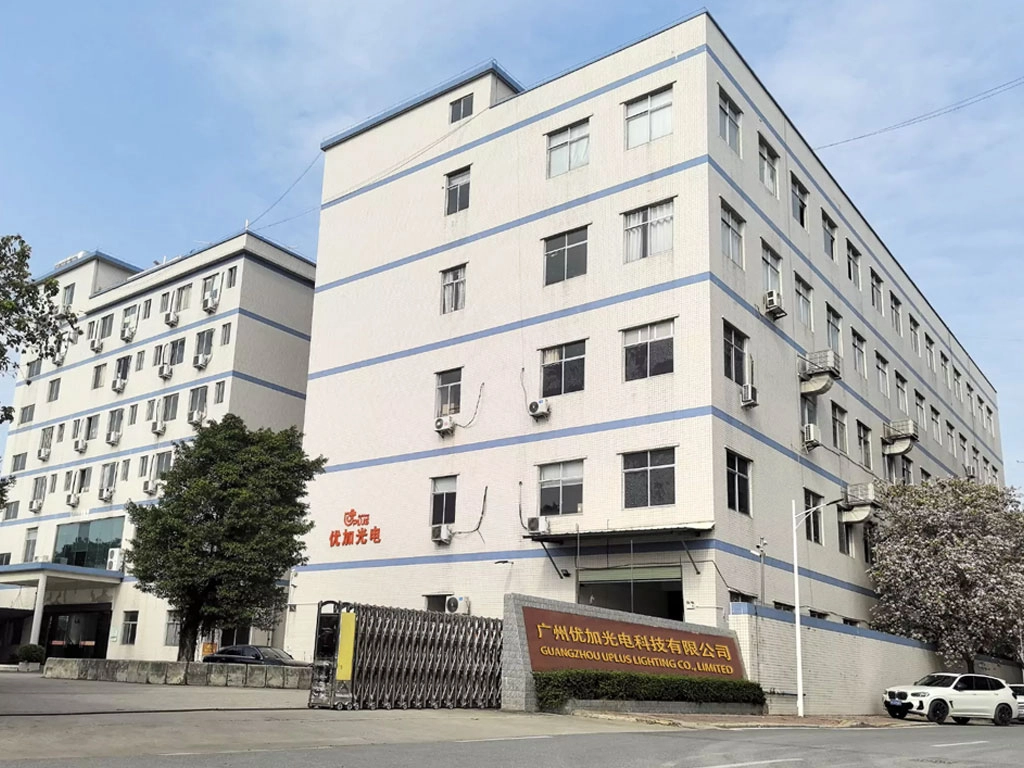
Uplus Lighting was established in 2012 in Guangzhou, China, and is a professional manufacturer specializing in high-end stage lighting products. We provide innovative and reliable lighting solutions for theaters, studios, cultural projects, concerts, and live events worldwide. With rich experience in product development, manufacturing, and export, we offer a wide product range covering professional lighting, entertainment lighting, and theater lighting to meet the needs of large performances, rental companies, distributors, and project clients. Since 2015, our products have been widely applied in major concerts, opera houses, TV programs, and large-scale events in China and abroad. We also support OEM orders and customized product development. A skilled production team and strict quality control ensure stable performance, consistent quality, and professional service trusted by global partners.
For led stage light bar applications, Uplus Lighting's strengths include strong R&D in thermal design, robust manufacturing processes and the ability to deliver product families ranging from moving head lights and strobe lights to led battery lights, static lights, led theatre lights, led follow spot light, stage effect lights and laser lights. Our competitive edge comes from:
- Proven track record in large-scale projects and live events since 2015, demonstrating field reliability.
- In-house thermal simulation and production-level testing that ensure specified θJA and lumen maintenance targets are met.
- Flexible OEM/customization capability to match cooling strategies to venue needs — from passive-heavy bars for theaters to hybrid-cooled touring bars.
- Strict quality control and global export experience that reduce integration and commissioning risk.
If your project needs high-efficacy led stage light bar solutions with verified thermal and photometric data, Uplus Lighting can provide product samples, LM-80 reports, and thermal test results to support procurement and commissioning. Contact us to discuss performance targets, custom housings, or touring-ready variants.
FAQ
1. How does temperature affect LED lifetime?
Higher junction temperatures accelerate lumen depreciation and color shift. Manufacturers provide LM-80 data and maximum Tj values; by keeping the LEDs below recommended temperatures you prolong useful life and maintain output.
2. Do I always need active fans in a led stage light bar?
Not always. For fixed installations with space for large heatsinks, passive cooling is preferred. For compact, high-output touring bars, hybrid or active cooling may be necessary to maintain performance without excessive weight or size penalties.
3. What test data should I request from suppliers?
Ask for LM-80 for LED packages, driver efficiency curves, thermal images under load, lumen output vs. temperature data, and any IP/EMC certifications relevant to your market. These allow proper comparison between products.
4. How can venue operators reduce thermal-related failures?
Maintain clean fixtures, ensure adequate ventilation around installed bars, adhere to orientation guidelines and manage rigging so convection paths are not blocked. Schedule periodic inspections for dust and fan operation.
5. How does driver dimming strategy affect energy efficiency?
Drivers with high efficiency across the dimming range save energy and produce less internal heat. Some dimming methods can cause increased switching losses; verify the driver’s efficiency vs. dimming curve with the supplier.
6. Can I retrofit existing fixtures to improve thermal performance?
Retrofitting can be feasible (e.g., replacing drivers with more efficient units or improving airflow) but must be evaluated case-by-case for mechanical compatibility, safety and warranty implications. For mission-critical rigs I recommend consulting the manufacturer or a professional service provider.
If you would like help selecting or customizing an led stage light bar for your venue or tour, or you need thermal test data and product samples, contact Uplus Lighting to discuss requirements and view our product range. Visit our product pages or reach out for a consultation and quotation.
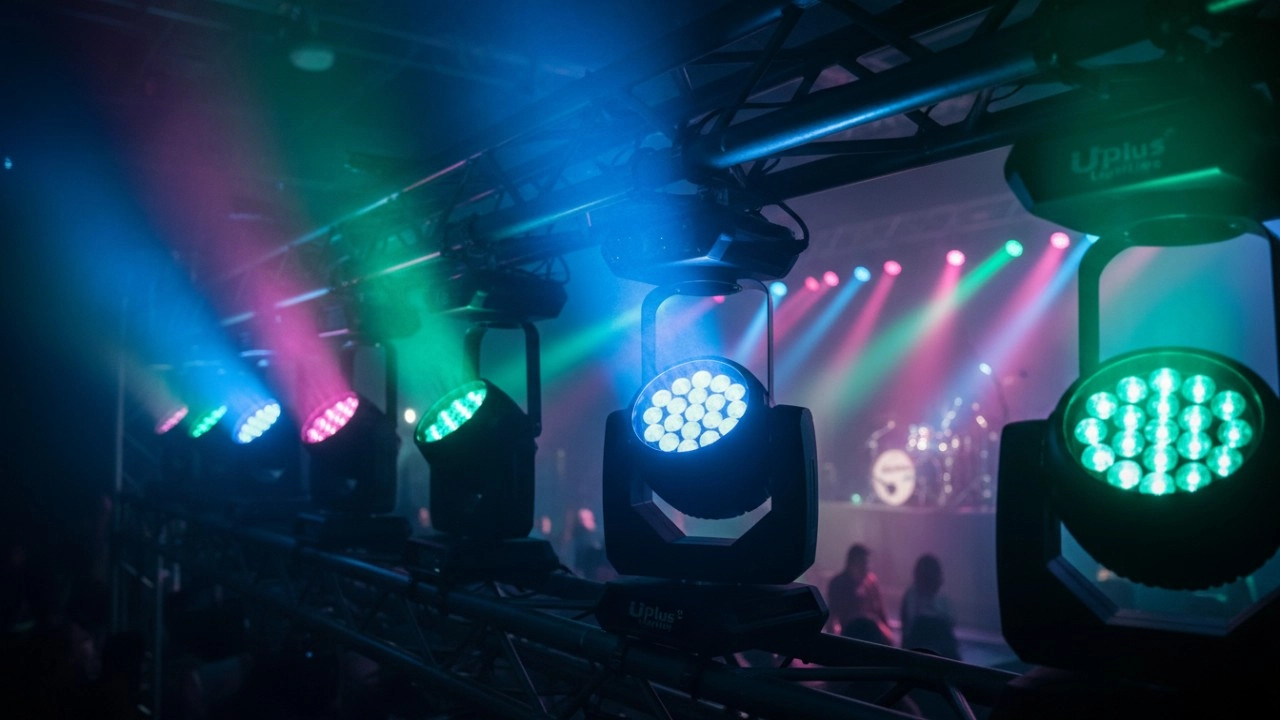
The Definitive 2026 LED Par Light Handbook: From Pro Stage Setup to DMX Control
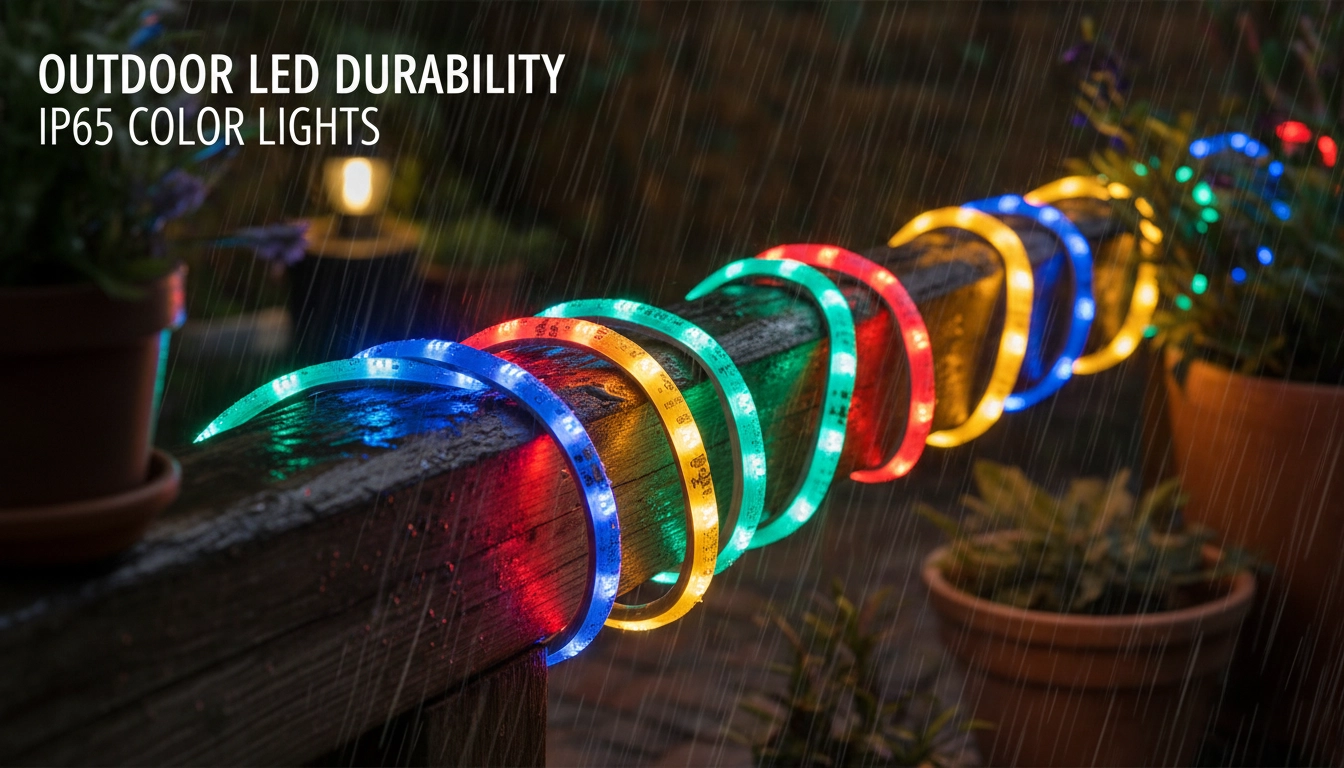
Beyond Waterproof: How IP65 Color Lights are Revolutionizing Modern Home Design in 2026
Energy-Efficient Moving Head Lights: Power and Cooling Tips
Top 7r Beam Moving Head Uses for Concerts and Tours
IP-B1950
How is the accuracy of the 6-50° zoom adjustment? Can it be used in small spaces?
High zoom accuracy; the 6° narrow angle allows for precise focusing, suitable for localized lighting in small spaces, with no wasted light spots.
About Company
Our service?
We have a professional team that can provide and customize products for you.
IP-PZ3740
Can beginners operate it quickly without a professional console?
It supports self-running and voice-activated modes. Preset programs are launched upon startup, requiring no professional knowledge; beginners can quickly get started.
IP-BF60
How heavy is the device? Will it get tiring to hold for extended periods?
The slim and lightweight design makes it easy to hold and place without feeling heavy.
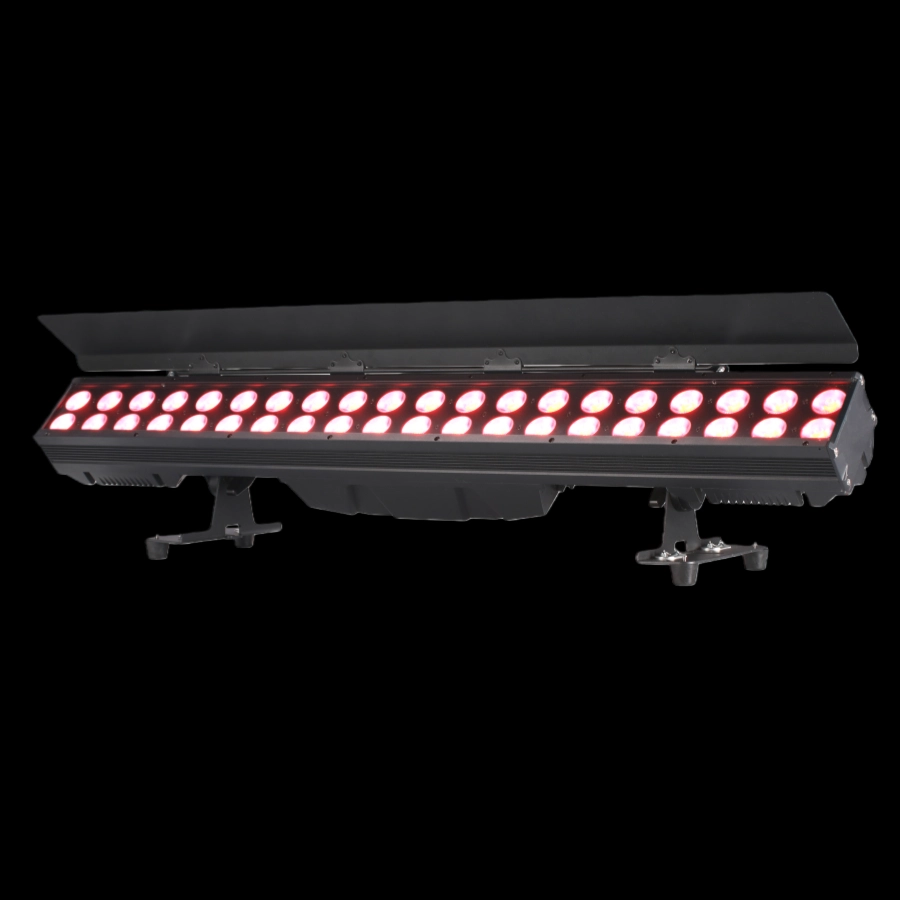
The IP65 two-row 40*10W RGBW led pixel link bar is a high-protection pixel bar light. It adopts a dual-row design with 40 10W RGBW four-in-one LED beads, supports pixel-level independent light control and multi-lamp linkage, and has an IP65 protection rating, making it rainproof and dustproof. It is compatible with DMX512 control and can present rich dynamic light effects, making it suitable for creating linear light and shadow effects in outdoor lighting, stage backgrounds, cultural and tourism landscapes and other scenarios.
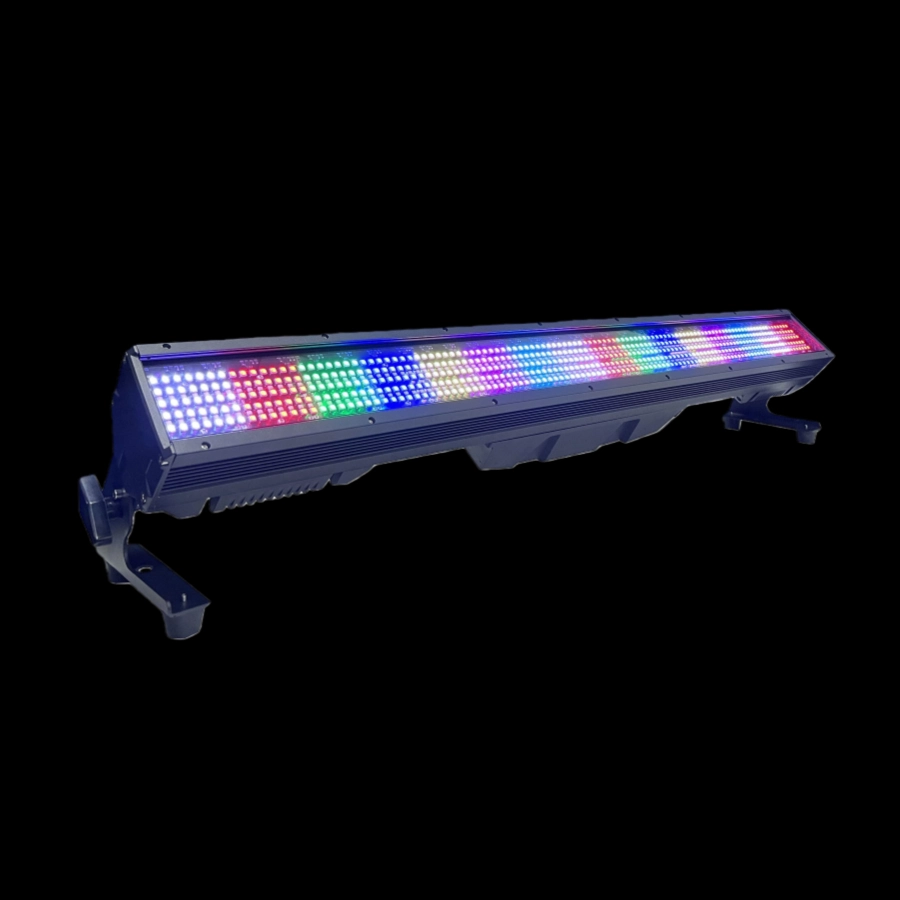
The IP65 waterproof 400W LED Link Strobe bar is a high-protection cascaded strobe light strip equipped with a 400W high-power LED light source. The strobe frequency is adjustable and supports seamless linkage of multiple lights. The IP65 protection rating can withstand outdoor wind, rain, and dust. It is compatible with DMX512 control, easy to install, and suitable for creating dynamic light and shadow in outdoor performances, cultural tourism night tours, architectural lighting and other scenarios.
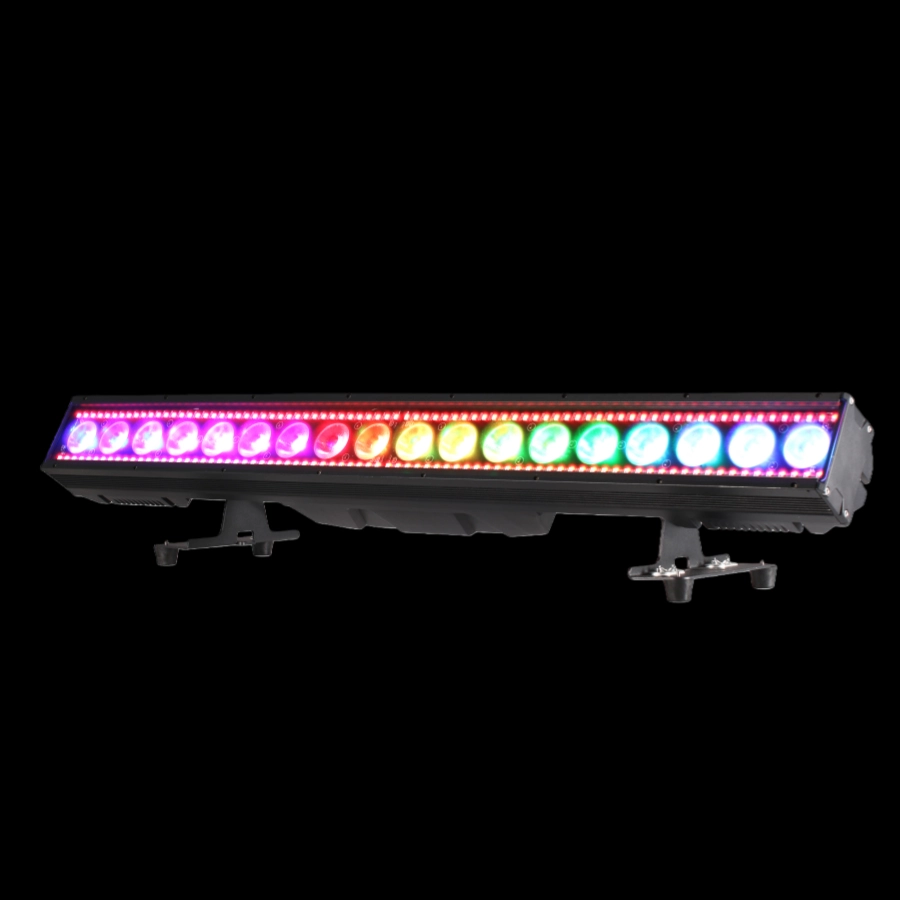
The IP65 waterproof 18*30W RGBWAUV LED pixel bar is a high-performance outdoor pixel bar light. It is equipped with 18 30W RGBWAUV six-in-one LED beads, supports pixel-level independent light control, and can present rich colors and dynamic light effects. With an IP65 protection rating, it is highly dustproof and waterproof, compatible with multiple control modes such as DMX512, flexible splicing and easy installation, and suitable for linear light and shadow shaping in outdoor performances, cultural and tourism lighting, stage backgrounds and other scenarios.
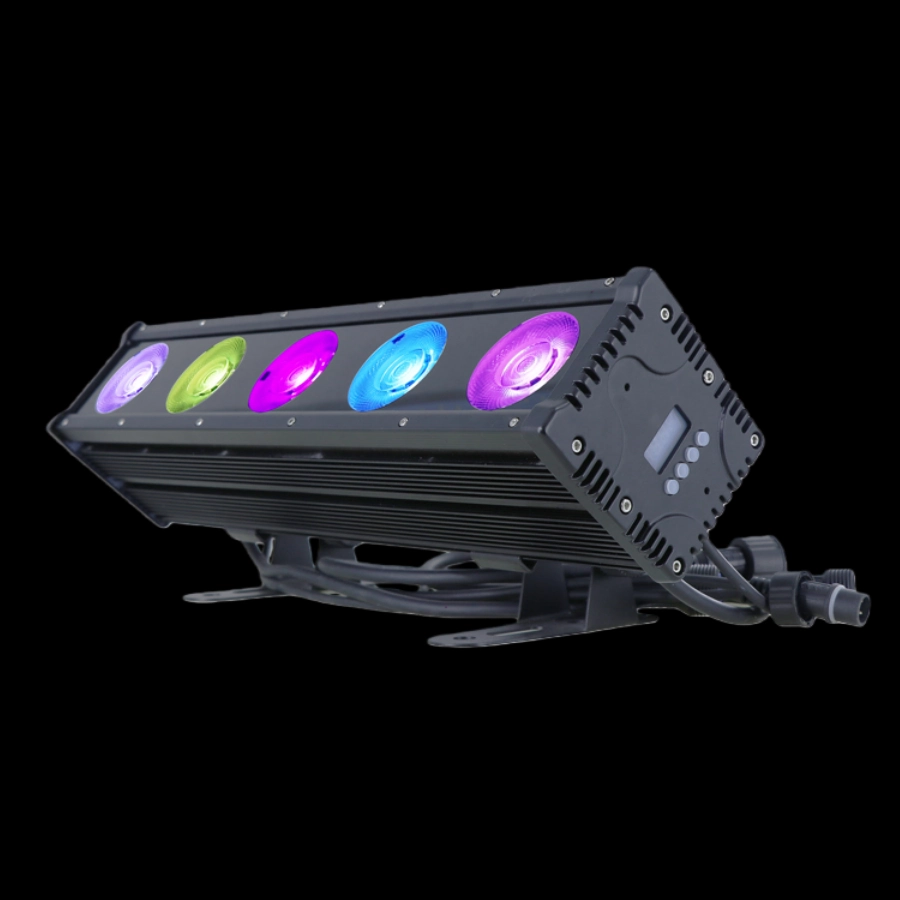
The Outdoor 5x45W COB Pixel BAR is a high-performance outdoor COB pixel light strip, equipped with five 45W RGBW four-in-one COB LEDs, each of which can be independently controlled, resulting in smooth color transitions and abundant brightness. It is IP65 protected against wind, rain, and dust, and supports DMX512/RDM/master-slave control, making it suitable for creative lighting designs in scenarios such as cultural and tourism landscape lighting, dynamic lighting of building facades, and outdoor stage effect lighting.
If you have any comments or good suggestions, please leave us a message, later our professional staff will contact you as soon as possible.
Lighting Innovators
Uplus Lighting is a leading integrated company specializing in R&D, design, production, and sales of stage lighting solutions.
 Scan QR Code
Facebook
Instagram
YouTube
VK