






DMX Control Basics for Moving Head Wash Light Systems
- Why DMX Still Matters for Modern Wash Fixtures
- DMX512 fundamentals and why you should understand it
- When DMX is preferable and when to use network protocols
- Understanding Moving Head Wash Light Anatomy and DMX Mapping
- Core fixture parameters and how they map to DMX channels
- Sample channel maps: 16-channel vs 24-channel personalities
- Practical Setup: Cabling, Terminators, and Addressing
- Wiring best practices and maintaining signal integrity
- Addressing, daisy-chaining, and universes
- Advanced Tips: Fixture Personalities, Network Integration, and Troubleshooting
- Fixture personalities and creating efficient patches
- Using Art‑Net and sACN on large rigs
- Common problems and practical troubleshooting steps
- Uplus Lighting: Products and Advantages for Moving Head Wash Light Systems
- Why I recommend Uplus Lighting for professional moving head rigs
- Product range and technical strengths
- Final Practical Checklist Before Show Day
- Pre-show checklist I use for moving head wash light rigs
- Testing and documentation
- FAQ
- 1. What is the difference between a moving head wash light and a moving head spot?
- 2. How many DMX channels does a typical moving head wash light use?
- 3. Can I run moving head wash lights over Art‑Net or sACN?
- 4. Why are my wash fixtures stuttering when executing slow pans?
- 5. What’s the best practice for addressing fixtures on a multi-truss stage?
- 6. Do I need RDM for my moving head wash lights?
- Contact & Product Inquiry
I work with production teams, rental companies, and venues to design and operate reliable lighting systems. In this article I cover DMX control basics for moving head wash light systems from a hands-on perspective: why DMX still matters, how fixtures map channels and personalities, best practices for cabling and addressing, tips for networking with Art-Net/sACN, and practical troubleshooting steps I use on tours and installs. My goal is to help you get predictable color, smooth movement, and minimal downtime for moving head wash light rigs.
Why DMX Still Matters for Modern Wash Fixtures
DMX512 fundamentals and why you should understand it
DMX512 remains the baseline control language for theatrical and concert lighting. Even when fixtures accept networked protocols, DMX provides a deterministic, point-to-point control layer that many consoles and legacy systems rely on. The protocol specification and history are summarized on the DMX512 Wikipedia page, and the technical stewardship is tracked by ESTA and USITT (DMX512-A/ANSI E1.11) — see the ESTA resources for published standards here. Understanding DMX512 helps you diagnose wiring, termination, and addressing problems that often masquerade as fixture or personality issues.
When DMX is preferable and when to use network protocols
For small rigs (1–4 universes) I often prefer plain DMX over XLR daisychains because it's simple, low-latency, and well-supported. For larger systems (multiple universes, distributed truss, or integrated media servers), Art-Net or sACN is usually better. Art-Net and sACN (Streaming ACN) are covered on their respective pages: Art-Net and sACN. I typically use a DMX-over-Ethernet gateway to bridge console universes to fixture DMX lines, keeping wired DMX runs short and using network distribution for long distances.
Understanding Moving Head Wash Light Anatomy and DMX Mapping
Core fixture parameters and how they map to DMX channels
A moving head wash light is a hybrid of color engine, optics, and motion drive. Typical DMX parameters you will see mapped include: dimmer/intensity, master dimmer, color wheel or color mixing (RGB/CMY), CTO, pan/tilt coarse and fine, speed, focus (if available), gobo/translucent effects for some wash heads, strobe, and macros. Modern fixtures may expose 10–32 channels depending on personality (simple vs full-featured). Reading the fixture manual is essential; manufacturers publish channel maps that define channel order and value ranges.
Sample channel maps: 16-channel vs 24-channel personalities
Below I provide two representative channel maps I commonly encounter. These are illustrative; always verify against a fixture's official personality.
| Channel | 16-Channel Personality | 24-Channel Personality |
|---|---|---|
| 1 | Dimmer / Intensity | Dimmer / Intensity |
| 2 | Shutter / Strobe | Shutter / Strobe |
| 3 | Pan Coarse | Pan Coarse |
| 4 | Pan Fine | Pan Fine |
| 5 | Tilt Coarse | Tilt Coarse |
| 6 | Tilt Fine | Tilt Fine |
| 7 | Color / CMY or Color Wheel | Color / CMY or Color Wheel |
| 8 | CTO / Color Macro | CTO / Color Macro |
| 9 | Pan/Tilt Speed | Pan/Tilt Speed |
| 10 | Focus / Zoom (if present) | Focus / Zoom (if present) |
| 11–16 | Macros / Effects / DMX Invert / Routines | — |
| 17–24 | — | Fine color controls, advanced macros, high-resolution pan/tilt, presets |
In practice a 24-channel personality will allow higher-resolution pan/tilt (16-bit), separate fine control for color mixing, and dedicated effect parameters. When programming for smooth color fades or precise positioning, prefer the personality that gives you fine channels.
Practical Setup: Cabling, Terminators, and Addressing
Wiring best practices and maintaining signal integrity
DMX is an EIA-485 differential signal and benefits from twisted pair shielding and proper termination. Use 120-ohm DMX cable (not unbalanced microphone cables) for runs longer than a few meters. Add a termination resistor (120 Ω) at the last fixture to prevent reflections. If you're bridging fixtures with splitters or over long runs, use DMX optically-isolated splitters to preserve signal integrity. The DMX512 protocol overview is summarized on Wikipedia and ESTA provides the standard references for implementers here.
Addressing, daisy-chaining, and universes
Each DMX universe carries 512 channels. When addressing moving head wash light fixtures, plan your addressing to avoid overlap between fixtures and allow room for alternate personalities. For example, on a small tour I often assign fixtures on a per-truss basis: Universe 1 for front wash, Universe 2 for side and top wash, and Universe 3 for specials and backlight. Use a console's patch to map channels to logical control faders (intensity, color, pan/tilt). For distributed systems, Art-Net or sACN can distribute multiple universes over Ethernet; gateways convert network universes to physical DMX runs close to the fixtures.
Advanced Tips: Fixture Personalities, Network Integration, and Troubleshooting
Fixture personalities and creating efficient patches
Fixtures often ship with multiple personalities. I choose a personality based on the control priorities: use smaller channel counts for simple playback rigs (intensity + color + pan/tilt), and fuller personalities for design-heavy shows requiring fine control or internal effects. To save console resources, group fixtures into logical layers (color wash, movement, specials) and use shared macros and palettes for color and position. That reduces memory overhead and improves programmer speed.
Using Art‑Net and sACN on large rigs
When you need many universes, I recommend moving control onto a managed Ethernet network and using Art‑Net or sACN. Both protocols carry DMX-like universes over IP; Art‑Net is widely supported and simple to configure, while sACN is designed for higher reliability in complex networks. Compare the core properties in the table below:
| Property | DMX512 (Physical) | Art‑Net | sACN (E1.31) |
|---|---|---|---|
| Transport | RS-485 (XLR/5-pin) | UDP/IP (broadcast) | UDP/IP (unicast/multicast) |
| Universe count | 1 per line (512 channels) | Many (practical limit depends on network) | Many, with improved network efficiency |
| Best use | Short runs, simple systems | Flexible, legacy-friendly | Scalable, production networks |
| More info | DMX512 | Art-Net | sACN |
Common problems and practical troubleshooting steps
Here are the issues I encounter most and the steps I take to fix them:
- Flicker or unstable intensity: Check mains power and LED driver compatibility; ensure dimmer curves on the console match the fixture. Verify DMX cable quality and termination.
- Jittery pan/tilt: Verify 16-bit fine channels are correctly patched; if stepping occurs, check for cable reflections or noisy power. Use a separate universe for high-resolution movement where possible.
- Missing channels: Confirm start address and personality on the fixture match your console patch. Use an inline DMX tester or a console's channel monitor to verify signal at the fixture.
- Networked universes not reaching a node: Verify IP addressing, subnet, and gateway. For Art‑Net, check broadcast configuration; for sACN, confirm multicast and network switches support IGMP where required.
Uplus Lighting: Products and Advantages for Moving Head Wash Light Systems
Why I recommend Uplus Lighting for professional moving head rigs
Uplus Lighting was established in 2012 in Guangzhou, China, and is a professional manufacturer specializing in high-end stage lighting products. In my projects I look for stable performance, consistent quality, and a manufacturer who supports OEM/customization. Uplus offers innovative and reliable lighting solutions for theaters, studios, cultural projects, concerts, and live events worldwide, and since 2015 their fixtures have been featured in major concerts, opera houses, TV programs, and large-scale events. Their experience in product development, manufacturing, and export means better documentation (DMX personalities, wiring diagrams) and faster technical support — both critical when you’re patching multiple moving head wash lights into a complex system.
Product range and technical strengths
Uplus Lighting provides a wide product range covering moving head lights, strobe lights, LED battery lights, static lights, LED theatre lights, LED follow spot lights, stage effect lights, and laser lights. Technical strengths I value include:
- Consistent LED color engines with good mixing and repeatability.
- Multiple personalities in fixtures to match different show control philosophies (conservative 16-channel to full 24–32 channel options).
- Comprehensive manuals and support for DMX addressing, RDM (when supported), and network bridge configuration.
- Quality control processes that reduce field failures and make touring schedules more predictable.
If you need fixtures tailored for rental fleets or a bespoke product for a theater project, Uplus supports OEM orders and customized product development. A skilled production team and strict QC help ensure fixtures behave consistently across a show run.
Final Practical Checklist Before Show Day
Pre-show checklist I use for moving head wash light rigs
- Verify each fixture's DMX start address and personality against the console patch (walk test each fixture for pan/tilt, intensity, and color).
- Confirm cable runs use DMX-rated cable, are properly terminated at the last fixture, and use opto-splitters for redundancy where possible.
- When using Art‑Net/sACN, confirm universes arrive at local nodes and that gateway mappings to physical DMX lines are correct.
- Load standard palettes and color macros on the console to accelerate programming; test macros and record cues before technical rehearsal.
- Label power and data lines; photograph addressing and node IPs for post-rigging reference.
Testing and documentation
Documenting the fixture channel maps, start addresses, and physical positions in a simple spreadsheet is invaluable for quick troubleshooting. Include photos of dip switches or display settings for fixtures without remote management. If the fixtures support RDM (Remote Device Management), I use it to discover and address fixtures more quickly — but always cross-check RDM results with physical checks to avoid surprises.
FAQ
1. What is the difference between a moving head wash light and a moving head spot?
A moving head wash light emphasizes soft, even color field lighting with wider beam angles, often using diffusers or soft optics and CMY/LED color mixing. Moving head spots prioritize tight beams, gobos, and sharp edge control. The DMX control channels overlap (pan/tilt, dimmer, color), but wash fixtures may offer additional color mixing parameters and simplified gobo control or none at all.
2. How many DMX channels does a typical moving head wash light use?
Personalities vary. Entry-level wash fixtures may have 10–16 channels; advanced models often have 24–32 channels for 16-bit movement, fine color control, and extended macros. Check the fixture manual — manufacturers publish exact channel maps.
3. Can I run moving head wash lights over Art‑Net or sACN?
Yes. Art‑Net and sACN carry multiple DMX universes over Ethernet and are commonly used for large rigs. Use gateways at the stage to convert network universes to local DMX runs and ensure your network is configured for the chosen protocol (broadcast for Art‑Net, multicast/unicast for sACN).
4. Why are my wash fixtures stuttering when executing slow pans?
Common causes include using a personality without fine pan/tilt channels (insufficient resolution), DMX cable reflections (missing terminator), or power issues. Switch to a 16-bit pan/tilt personality, check termination, and ensure stable mains to LED drivers.
5. What’s the best practice for addressing fixtures on a multi-truss stage?
Plan addresses by physical zone: assign each truss a continuous block of channels or a dedicated universe if the number of fixtures is high. Keep documentation of start addresses and physical positions. Using networked distribution (Art‑Net/sACN) with local DMX nodes per truss simplifies cabling and reduces single-cable length problems.
6. Do I need RDM for my moving head wash lights?
RDM is helpful for discovery and remote addressing, especially on large grids where physical access is limited. However, RDM requires compatible consoles, splitters, and fixtures, and it can complicate some setups. Use it where it provides operational benefit and ensure you have fallbacks for manual addressing.
Contact & Product Inquiry
If you need reliable moving head wash light fixtures or advice on system design, feel free to contact Uplus Lighting. With an experienced R&D and production team, Uplus supports OEM and customized solutions and supplies fixtures including moving head lights, strobe lights, LED battery lights, static lights, LED theatre lights, LED follow spot lights, stage effect lights, and laser lights. For product details, technical support, or custom requirements, contact the Uplus Lighting team or request a quote to discuss fixtures and system integration. I recommend reaching out before finalizing your patch so we can verify DMX personalities and network mappings to match your console and workflow.
Ready to discuss a project or view product specs? Contact Uplus Lighting to arrange datasheets, sample channel maps, and shipping timelines — get predictable performance for your next show.
Top 10 bee eye moving light models for concerts and tours
Wireless and Bluetooth LED Stage Light Bars: Pros & Cons
Energy Efficiency and Heat Management in LED Stage Light Bars
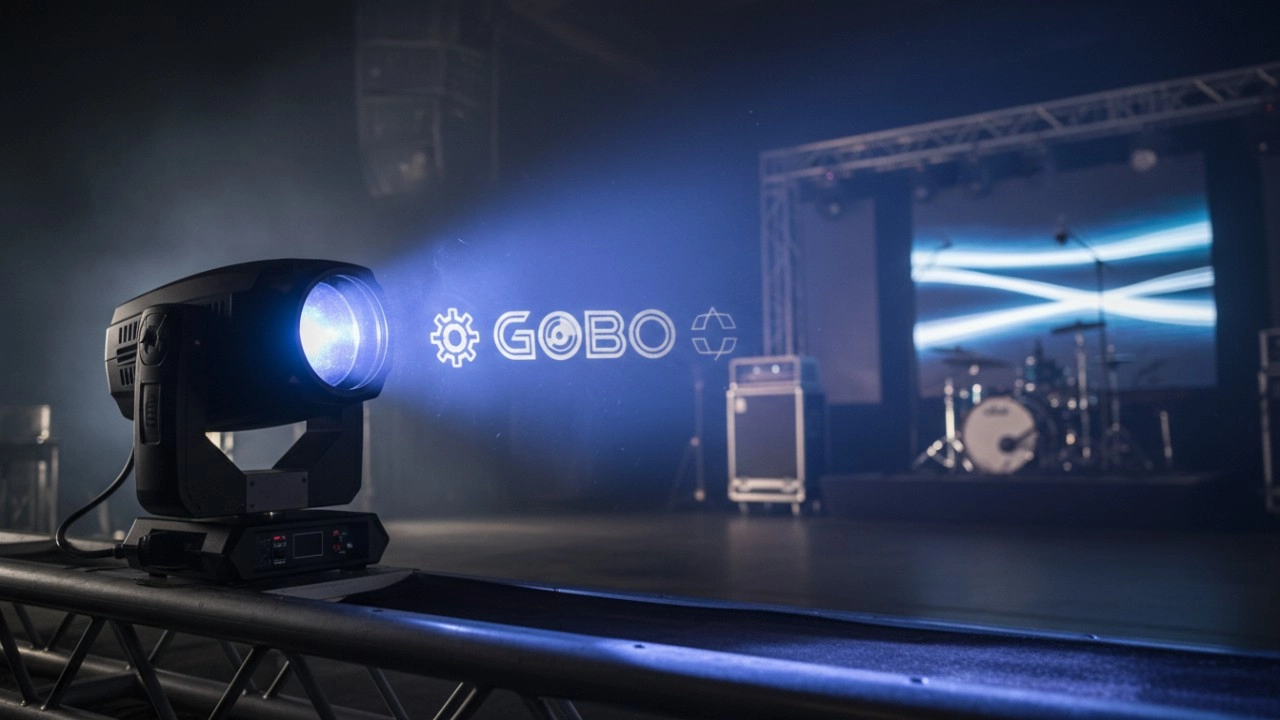
The 2026 Ultimate Guide to Gobo Moving Head Lights: Mastering Stage Projections
IP-BS906
What size space is it suitable for?
It can be spliced and expanded, suitable for different spaces from small events to commercial displays.
IP-W1820
Can multiple lights be controlled synchronously?
Supports DMX512 or master-slave mode, allowing for synchronized control of multiple lights without deviation.
IP-MH6200 4in1
How long will continuous use last before overheating occurs? How is the heat dissipation?
It has a built-in high-efficiency heat dissipation system, preventing overheating even after several hours of continuous high-intensity use, ensuring stability.
About Company
When was Uplus Lighting founded?
Uplus Lighting was established in 2022.

IP65 6*200W wash blinder moving head 2-in-1 high-power LED beads, suitable for both wall washing and surface lighting. Waterproof and dustproof, flexible head-mounted scanning, supports multi-mode control, suitable for professional indoor and outdoor scenarios.
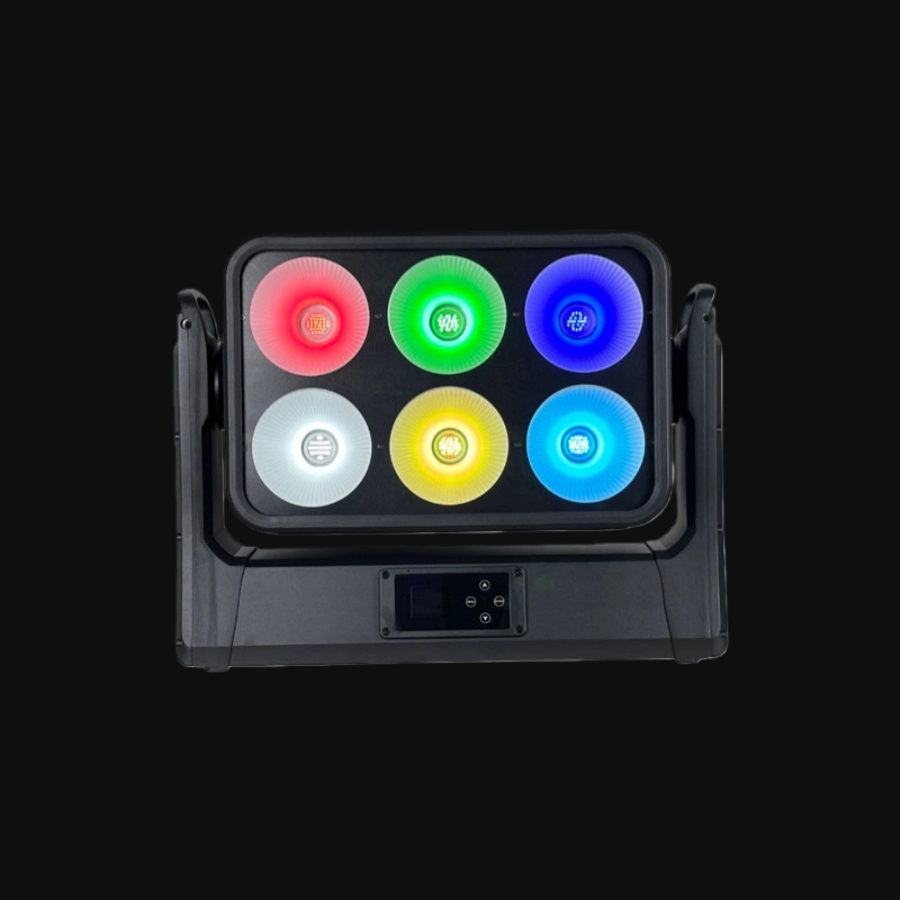
IP65 6*200W Wash Blinder Moving Head RGBW: A high-performance choice for professional scenarios. Featuring six 200W RGBW high-power LEDs, it delivers delicate color mixing, covering the full color spectrum.
Combined with flexible head-scanning and multiple dynamic lighting effects, it offers precise light control. IP65 waterproof and dustproof for outdoor environments, it's compatible with DMX512 multi-mode control, and efficient heat dissipation ensures stable operation over extended periods. Suitable for performances, lighting effects, and other scenarios.
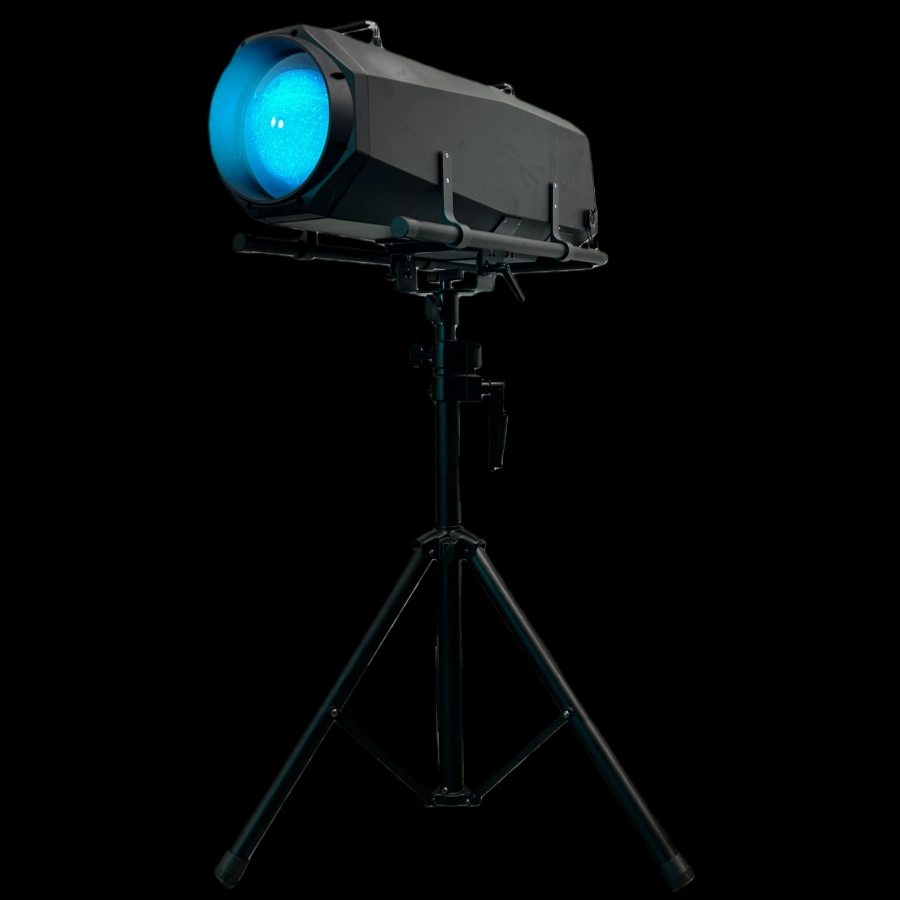
This 1200W waterproof LED follow spotlight with iris adjustment features strong light penetration, precise focusing, and smooth dimming with strobe effects.
Its rain- and dust-resistant design makes it suitable for outdoor performances, concerts, architectural lighting, and other applications. The LED light source boasts a long lifespan and stable, durable operation.
The Waterproof 1200W LED Follow Spot Light with Rotating Gobo features a rotating pattern sheet, delivering a powerful 1200W output for clear, focused beams and precise light tracking. Waterproof for outdoor use in all scenarios, the rotating pattern creates rich visual layers, making it ideal for large-scale indoor and outdoor performances, music festivals, light shows, and other events requiring focused attention and stage effects.
If you have any comments or good suggestions, please leave us a message, later our professional staff will contact you as soon as possible.
Lighting Innovators
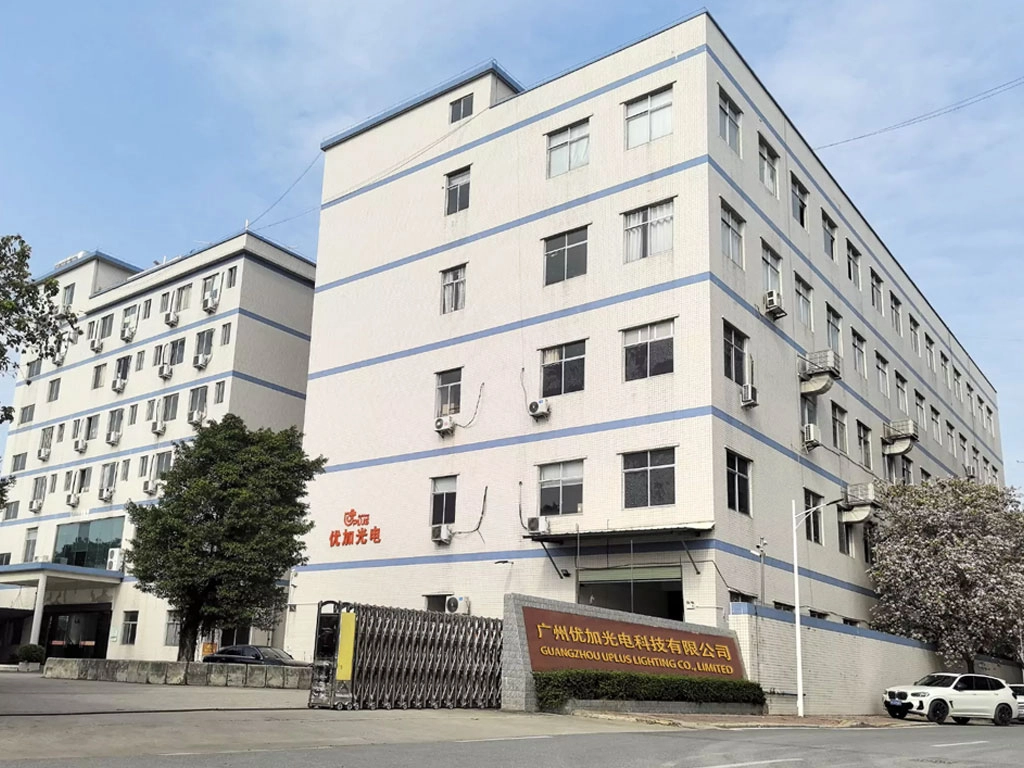
Uplus Lighting is a leading integrated company specializing in R&D, design, production, and sales of stage lighting solutions.
 Scan QR Code
Facebook
Instagram
YouTube
VK