






Compare LED Stage Light Bar Types: Pixel, Wash, and Beam
- Understanding stage lighting roles and applications
- Typical venues and production needs
- Key performance metrics to evaluate
- Why LED bar types matter for designers and technicians
- Pixel LED bars — fine-grain control and dynamic effects
- How pixel bars work
- Practical use cases and advantages
- Typical technical trade-offs
- Wash LED bars — even color and coverage
- How wash bars work
- Practical use cases and benefits
- Performance considerations
- Beam LED bars and choosing between types
- How beam bars differ
- Decision matrix — when to use pixel vs wash vs beam
- Comparative deployment scenarios
- Vendor, warranty and lifecycle considerations
- Selecting products and vendors — practical guidance
- Checklist for procurement
- Why I recommend sourcing from experienced manufacturers
- Uplus Lighting strengths and main products
- Installation, programming and operational tips
- Rigging and power planning
- Programming efficiency
- Maintenance and lifecycle
- FAQ
- 1. What is the difference between pixel and wash bars in simple terms?
- 2. Can the same LED bar perform as both a wash and a pixel bar?
- 3. How important is PWM frequency for LED bars used on camera?
- 4. What control protocols should I insist on for modern installations?
- 5. How do I compare lumen or lux values between bars?
- 6. Are LED bars suitable for outdoor events?
- Closing and contact
I write this as a lighting professional who has specified, deployed, and supported LED fixtures across theaters, concerts, and broadcast studios. This article gives a practical, geolocation-friendly (Guangzhou-manufactured supply chain aware) comparison of pixel, wash, and beam LED stage light bars so you can choose the right tool for your production. I cover operating principles, technical metrics to prioritize, real-world use cases, a data-backed comparison table, vendor selection guidance, and FAQs for procurement and deployment.
Understanding stage lighting roles and applications
Typical venues and production needs
Different venues demand different light-bar characteristics. Small theatres and houses of worship often prioritize uniform color washing and low noise; rental companies and concert tours demand punch, precise pixel control, and robustness; broadcast studios focus on color accuracy (CRI/TLCI) and flicker-free operation for cameras. When specifying a led stage light bar, align the bar type with the venue’s scale, rigging limits, and control infrastructure.
Key performance metrics to evaluate
When I assess bars, I look beyond marketing buzz to measurable specs: luminous flux (lumens), beam angle, pixel pitch and number of independently addressable LED segments, color gamut and CRI/TLCI, power consumption and thermal design, control protocols (DMX512, Art‑Net, sACN), refresh/frequency (camera-safe PWM), IP rating for outdoor use, weight and mechanical rigging options. For control protocols see DMX512 and Art‑Net references for interoperability: DMX512, Art‑Net.
Why LED bar types matter for designers and technicians
A single lighting rig often mixes types. Choosing incorrect bars increases setup time, complicates programming, and can compromise visual intent. For example, using narrow-beam fixtures for stage wash can create hot spots; conversely, wash fixtures cannot produce the razor-sharp shafts a beam bar delivers. Knowing the strengths and limitations prevents costly re-rigs and improves artistic control.
Pixel LED bars — fine-grain control and dynamic effects
How pixel bars work
Pixel bars contain multiple independently addressable LED pixels (often groups of 1–8 LEDs per pixel). Each pixel can be controlled for color and intensity, enabling pixel mapping, chasing, and complex animated content across the bar. Pixel control is typically driven by DMX or network protocols (Art‑Net/sACN), and many designs accept pixel mapping via media servers.
Practical use cases and advantages
I recommend pixel bars when you need: animated linear effects, background video-like visuals, audience blinder arrays with fine control, and synchronization with music or video content. Pixel bars are staples in concert touring, experiential events, and broadcast set pieces where dynamic, per-pixel effects are required.
Typical technical trade-offs
Pixel bars trade grain and complexity for punch. Because they prioritize many small emitters and control electronics, they often have lower per‑pixel luminous output than a comparable wash or beam module and may need more power and data bandwidth. Pay attention to refresh rates and PWM/frequency for camera compatibility; ensure fixtures support high-frequency driving for flicker-free imaging (important for broadcast).
Wash LED bars — even color and coverage
How wash bars work
Wash bars use lenses and grouping of LEDs to create a broad, even field of light with soft edges. They are optimized for color mixing and uniformity rather than discrete pixel animation. Many wash bars use multi-chip LEDs (RGBAW, RGBW, or RGB+Amber) to achieve extended color gamut and smooth gradients.
Practical use cases and benefits
I choose wash bars for front or cyc lighting, soft stage fills, and general audience washes where color consistency and low artifacting are essential. Wash bars reduce shadowing and provide even illumination across large surfaces with fewer fixtures compared to profile or beam fixtures.
Performance considerations
For wash fixtures verify CRI/TLCI values if you need accurate skin tones on camera (see Color Rendering Index (CRI)). Consider beam angle spread, lumen output, dimming curve linearity, and the bar’s ability to house diffusion optics or accessories for softening light when necessary.
Beam LED bars and choosing between types
How beam bars differ
Beam bars are optimized for tight, high-intensity shafts and aerial effects. They use narrow beam optics (typically single-digit degree beam angles) to produce visible beams in haze or fog, and often include gobos or iris options in higher-end models. Beam bars are favored for dramatic vertical shafts, caustic aerial patterns, and high-contrast looks on large stages.
Decision matrix — when to use pixel vs wash vs beam
Below is a condensed comparison I use when advising clients. Values are typical ranges; actual specs vary by model and manufacturer. Sources used for protocol/technology context: DMX512 (Wikipedia DMX512), Art‑Net (Wikipedia Art‑Net), LED fundamentals (LED lamp).
| Feature | Pixel Bar | Wash Bar | Beam Bar |
|---|---|---|---|
| Primary use | Animated effects, pixel mapping | Even color fill, cyc/front light | Sharp aerial beams, stage accents |
| Beam angle | 10°–40° (depends on optics) | 40°–120° (soft, wide spread) | 1°–10° (very narrow) |
| Control | Per-pixel DMX/Art‑Net/sACN | Grouped channels, color macros | Intensity + pan/tilt for moving variants |
| Typical lumen output | Varies widely; medium per-pixel | High for smooth coverage | High center intensity |
| Suitable for camera | Yes, if high refresh rate | Yes, if CRI/TLCI adequate | Yes, but check flicker |
| Common trade-offs | Complex programming; data heavy | Less dynamic for pixel animation | Limited surface coverage; needs haze |
Note: Always consult fixture datasheets for exact lumen, beam angle, weight, and power — manufacturers publish model-specific data sheets that should guide final selection.
Comparative deployment scenarios
In a concert rig I often specify pixel bars across the front-of-stage to deliver dynamic band-branding and synced animation, wash bars for consistent cyc/backdrop illumination, and beam bars at rear trusses for aerial effects. For corporate events or theaters, the mix shifts towards wash bars for clean coverage and fewer pixel fixtures, unless a branded dynamic backdrop is required.
Vendor, warranty and lifecycle considerations
Beyond the lamp technology, I evaluate manufacturers on warranty terms, availability of spare parts, firmware update policy, and support for protocol updates (Art‑Net/sACN). Long-term maintainability, modular replacement parts, and ease of field repair reduce total cost of ownership for rental companies and venues.
Selecting products and vendors — practical guidance
Checklist for procurement
- Define artistic objectives (animations, washes, beams).
- Match CRI/TLCI and refresh/frequency to camera needs.
- Confirm control compatibility (DMX512, Art‑Net, sACN) and channel footprint.
- Check mechanical fittings, safety certifications, and IP rating for outdoor work.
- Request photometric files (IES/SPD) and conduct on-site tests where possible.
Why I recommend sourcing from experienced manufacturers
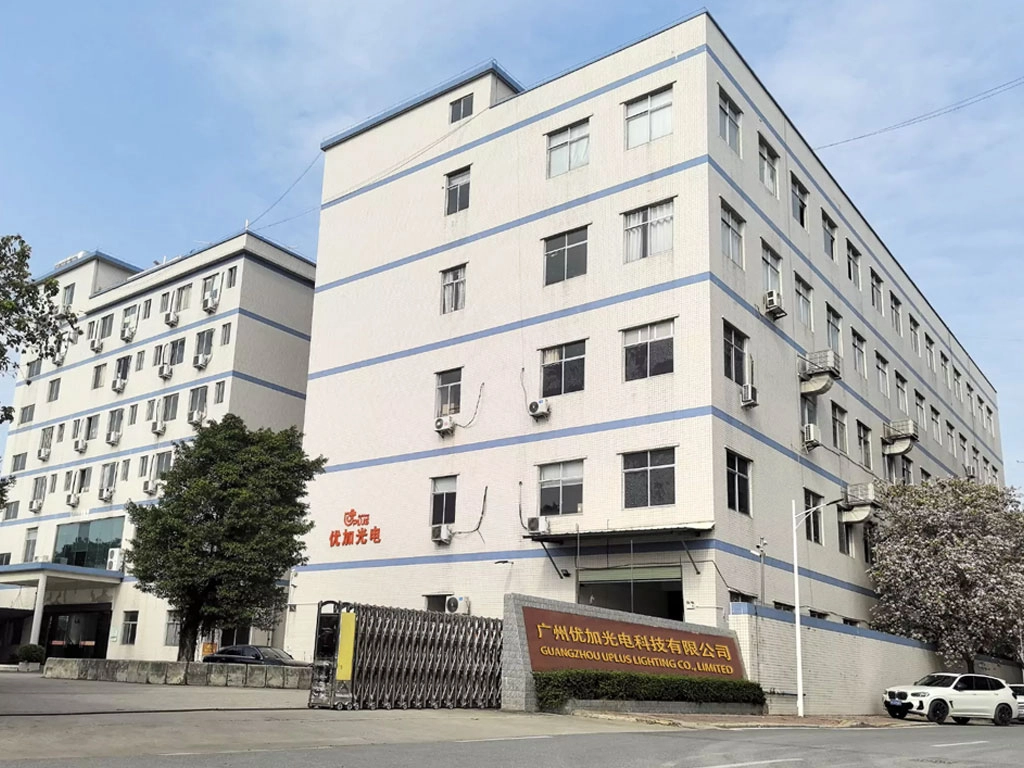
Manufacturers with proven R&D and quality control reduce risk. Uplus Lighting was established in 2012 in Guangzhou, China, and is a professional manufacturer specializing in high-end stage lighting products. We provide innovative and reliable lighting solutions for theaters, studios, cultural projects, concerts, and live events worldwide. With rich experience in product development, manufacturing, and export, we offer a wide product range covering professional lighting, entertainment lighting, and theater lighting to meet the needs of large performances, rental companies, distributors, and project clients. Since 2015, our products have been widely applied in major concerts, opera houses, TV programs, and large-scale events in China and abroad. We also support OEM orders and customized product development. A skilled production team and strict quality control ensure stable performance, consistent quality, and professional service trusted by global partners.
Uplus Lighting strengths and main products
From my experience evaluating suppliers, the strengths to look for — and which Uplus demonstrates — are: consistent photometric performance batch-to-batch, documented test procedures, accessible firmware and support, and willingness to provide OEM/custom solutions. Uplus Lighting’s main products include moving head lights, strobe lights, led battery lights, static lights, led theatre lights, led follow spot light, stage effect lights, and laser lights. Their product portfolio supports a full rig specification (pixel bars, wash bars, beam bars) and they provide application support for projects requiring mixed fixture deployments.
Installation, programming and operational tips
Rigging and power planning
Plan rigging points and truss load capacity early. Pixel bars can require significant data cabling and network aggregation; plan DMX splits and use Ethernet switches rated for sACN/Art‑Net with multicast support to avoid packet loss. Calculate inrush and continuous current from manufacturer power specs and allow headroom for dimming curves.
Programming efficiency
When programming pixel arrays, use media servers or timeline-based controllers to offload complex animation from the console. For wash-heavy shows, macros and palette systems speed setup. Maintain clear channel labeling and consistent patching conventions to aid follow-up changes and crew handover.
Maintenance and lifecycle
Regularly inspect connectors, lenses, and fans/thermal paths. Keep spare power supplies and LED modules for rental fleets. Firmware updates may improve performance; manage releases centrally and test on a small number of fixtures before fleet-wide updates.
FAQ
1. What is the difference between pixel and wash bars in simple terms?
Pixel bars offer independent control per LED or per small group of LEDs for animated effects; wash bars produce a wide, even field of light for consistent color coverage. Use pixel bars for motion/animation and wash bars for uniform illumination.
2. Can the same LED bar perform as both a wash and a pixel bar?
Some hybrid fixtures provide both per-pixel control and wide optics, but hybrids often compromise on maximum punch or uniformity. Assess the manufacturer’s photometric data to verify performance in both modes.
3. How important is PWM frequency for LED bars used on camera?
Very important. Low PWM frequencies can produce visible flicker on high-speed or certain-frame-rate cameras. Choose fixtures with high-frequency driving or camera-safe modes and request test footage from the vendor.
4. What control protocols should I insist on for modern installations?
Ensure DMX512 compatibility and network protocols such as Art‑Net or sACN for large pixel counts. These protocols allow easier mapping and distribution of pixel data. See protocol references: DMX512, Art‑Net.
5. How do I compare lumen or lux values between bars?
Compare the manufacturer’s photometric files (IES) and beam spreads under the same measurement distance. Lumen on its own is insufficient; lux at a given distance and beam angle gives a clearer picture of usable illumination for your application.
6. Are LED bars suitable for outdoor events?
Yes, if they have appropriate IP ratings (IP65 or higher for heavy weather) and corrosion-resistant fittings. Also confirm operating temperature range and UV exposure resilience if deployed outdoors for extended periods.
Closing and contact
If you’re specifying fixtures for a project and want a tailored recommendation—whether a touring concert, theatre retrofit, or broadcast set—I can help assess requirements and build a mixed-fixture rig that balances artistic goals and operational realities. For product inquiries, OEM options, or to view Uplus Lighting’s product line including pixel bars, wash bars, and beam bars, contact your regional Uplus Lighting representative or visit their product pages. For direct assistance with specification, send project details (venue size, rigging limits, camera use, and budget) and I’ll provide a prioritized fixture shortlist and deployment plan.
Contact Uplus Lighting for product catalogs and custom solutions, or reach out to discuss project specifications and receive a quotation.
Top 10 bee eye moving light Manufacturers and Supplier Brands
Where to Buy mini beam moving head light
DMX Moving Head Lights: Types, Control, Specs & Buying Guide
Top 10 7r beam moving head Manufacturers and Supplier Brands
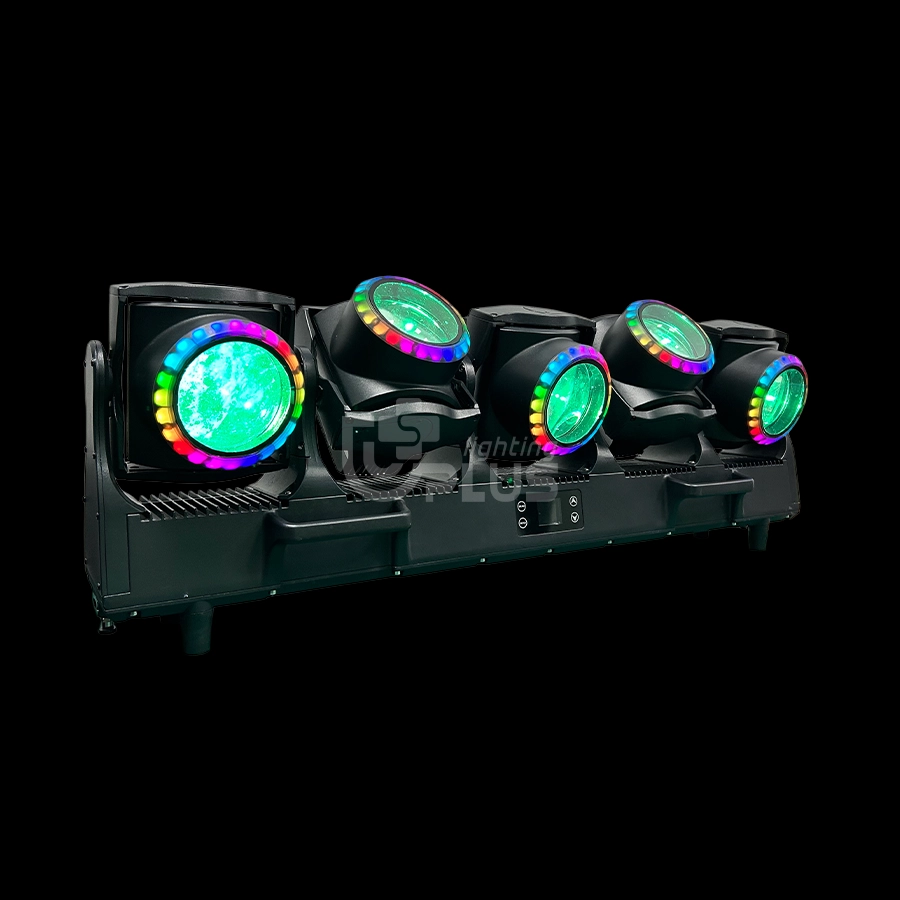
Waterproof 5*120W Pixel zoom LED bar moving head, a waterproof 5*120W pixel zoom LED strip moving head light, with individually controllable pixels, supports zoom and dynamic effects, IP65 protection, suitable for outdoor performances, stage and engineering lighting.

The IP65 two-row 40*10W RGBW led pixel link bar is a high-protection pixel bar light. It adopts a dual-row design with 40 10W RGBW four-in-one LED beads, supports pixel-level independent light control and multi-lamp linkage, and has an IP65 protection rating, making it rainproof and dustproof. It is compatible with DMX512 control and can present rich dynamic light effects, making it suitable for creating linear light and shadow effects in outdoor lighting, stage backgrounds, cultural and tourism landscapes and other scenarios.
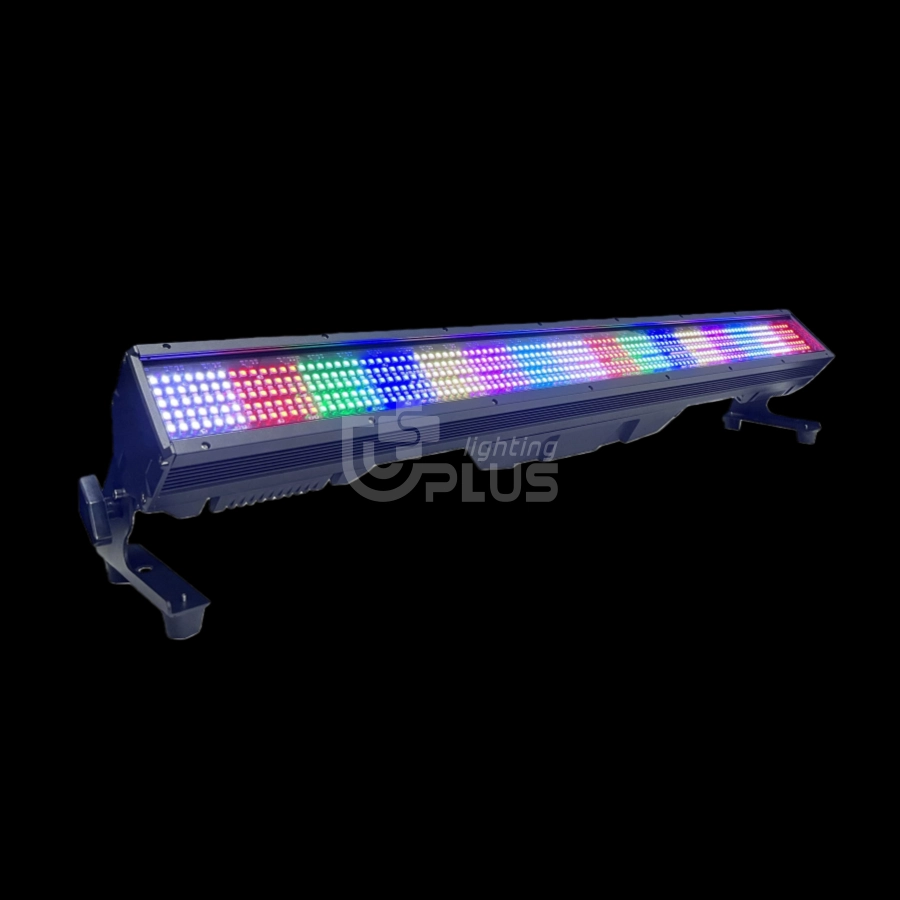
The IP65 waterproof 400W LED Link Strobe bar is a high-protection cascaded strobe light strip equipped with a 400W high-power LED light source. The strobe frequency is adjustable and supports seamless linkage of multiple lights. The IP65 protection rating can withstand outdoor wind, rain, and dust. It is compatible with DMX512 control, easy to install, and suitable for creating dynamic light and shadow in outdoor performances, cultural tourism night tours, architectural lighting and other scenarios.

The IP65 waterproof 18*30W RGBWAUV LED pixel bar is a high-performance outdoor pixel bar light. It is equipped with 18 30W RGBWAUV six-in-one LED beads, supports pixel-level independent light control, and can present rich colors and dynamic light effects. With an IP65 protection rating, it is highly dustproof and waterproof, compatible with multiple control modes such as DMX512, flexible splicing and easy installation, and suitable for linear light and shadow shaping in outdoor performances, cultural and tourism lighting, stage backgrounds and other scenarios.
If you have any comments or good suggestions, please leave us a message, later our professional staff will contact you as soon as possible.
Lighting Innovators
Uplus Lighting is a leading integrated company specializing in R&D, design, production, and sales of stage lighting solutions.
 Scan QR Code
Facebook
Instagram
YouTube
VK