




How to Choose the Right Power and Beam for Strobe Lights
- Understanding Strobe Light Basics
- What a strobe is and how we measure it
- LED strobes vs. discharge strobes: trade-offs
- Important technical terms (quick reference)
- Selecting Power: How Much Output Do You Really Need
- Match power to venue: a practical table
- Why distance and inverse-square law matter
- Duty cycle, refresh rate, and safety
- Choosing Beam Angle and Optics for Effect and Coverage
- Narrow vs. wide beams: visual effect and coverage
- Beam shaping: lenses, reflectors, and gobos
- Practical examples (beam vs. perceived brightness)
- Practical Setup, Controls, and Integration
- Control systems: DMX, Art-Net, and trigger modes
- Placement and aiming: achieving even coverage
- Safety, rigging, and compliance
- Why I Recommend Uplus Lighting for Pro Strobe Solutions
- Company background and capabilities
- Products that fit the strobe brief
- Competitive advantages and technical strengths
- Common Configurations, Comparisons, and Quick Selection Guide
- At-a-glance selection matrix
- Comparing two common fixture types
- FAQ
- 1. How many watts of LED strobe do I need for a nightclub?
- 2. Is a moving head strobe better than a fixed strobe?
- 3. What beam angle should I choose for long-throw strobe effects?
- 4. Are LED strobes safe for audiences with photosensitivity?
- 5. How should I control strobes in a DMX rig for reliability?
- 6. Can I mix different brands of strobes in one show?
- Contact and Next Steps
Choosing the right power and beam for a strobe light is less about buying the biggest unit and more about matching technical performance to venue, aesthetic goals, and operation constraints. In this article I explain how I evaluate LED strobe systems—including led dj moving head strobe light fixtures—using measurable metrics (lumens, lux, candela, beam angle), venue geometry, pulse control, and safety standards so you can select the correct unit, optimize placement, and integrate it into a professional lighting rig.
Understanding Strobe Light Basics
What a strobe is and how we measure it
A strobe is a light source producing short, intense bursts of light. Traditional strobes used discharge lamps; modern designs increasingly use high-power LEDs. Key metrics I use to compare strobes are luminous flux (lumens), luminous intensity (candela), illuminance at a surface (lux), beam angle, pulse width, and refresh rate. For a technical overview of strobe fundamentals see Strobe light — Wikipedia.
LED strobes vs. discharge strobes: trade-offs
LED strobes are more energy efficient, produce less heat, are easier to control precisely (pulse width and color), and integrate neatly into moving head platforms—making the led dj moving head strobe light a popular choice for DJs, clubs, and touring rigs. Discharge strobes historically provided higher peak output per unit but required more maintenance and specialized power. I emphasize LEDs for most modern pro applications because they balance output, durability, and control.
Important technical terms (quick reference)
When comparing specs, pay attention to:
- Lumens: total light output.
- Candela (cd): luminous intensity in a specific direction, useful with beam angle to estimate lux at distance.
- Lux: illuminance on a surface (what audience/photography 'sees').
- Beam angle: spread of the main beam—narrow produces punchy shafts, wide covers stage/area.
- Pulse width/frequency: affects visual perception and camera exposure; important for safety.
Selecting Power: How Much Output Do You Really Need
Match power to venue: a practical table
Below I summarize typical, practical recommendations I use when specifying LED strobes. These are industry-typical ranges based on product lines and field experience; use them as starting points and refine with manufacturer photometric data and venue measurements (inverse-square law applies—see next section).
| Venue / Use | Recommended LED Power (approx.) | Typical Beam Angle | Application Notes |
|---|---|---|---|
| Small DJ booth / bar | 50–200 W equivalent | 60°–120° (wide) or 30° (for shafts) | Wide coverage, lower peak; combine with narrow units for accents. |
| Medium club / small theatre | 200–500 W | 30°–60° | Balance between audience wash and controlled beams; moving heads useful. |
| Large club / small concert | 500–1,200 W | 10°–40° (narrow) + wider fills | Higher peak for camera and distant coverage; mix narrow strobes with washes. |
| Arena / festival stages | 1,200 W+ | 10°–30° (very narrow available) | Use multiple fixtures and distributed positions for even perceived output. |
Note: the numeric ranges above reflect LED-array power and are not a direct conversion from incandescent wattage. Always consult manufacturer photometric charts for candela/lumen output and measured lux at distance.
Why distance and inverse-square law matter
Illuminance on a surface falls with the square of the distance from the source. This inverse-square principle is important when you choose a strobe’s power or plan placement—doubling distance reduces lux to a quarter. For the physics reference, see Inverse-square law — Wikipedia. I always calculate expected lux at audience and stage positions based on manufacturer candela values and beam angle to avoid under- or over-specifying a unit.
Duty cycle, refresh rate, and safety
Strobe pulse characteristics determine perceived brightness and safety. Short, high-intensity pulses may look brighter than continuous light of the same average power. However, flashing lights are potential triggers for photosensitive epilepsy—follow guidance such as that from the Epilepsy Foundation. Also consider duty cycle limits described in fixture manuals; overdriving LED arrays reduces lifespan and can void warranties. As a rule, use manufacturer-specified pulse settings for sustained shows, and adjust for safety where audiences include sensitive individuals.
Choosing Beam Angle and Optics for Effect and Coverage
Narrow vs. wide beams: visual effect and coverage
Narrow beams (10°–30°) create strong shafts and long-throw effects ideal for arena strobes or camera-visible punch. Wide beams (60°–120°) provide broad coverage for clubs or stage washes. My approach is to design a complementary mix: narrow strobes for impact and wide strobes for ambient coverage. The led dj moving head strobe light excels because it allows me to switch between narrow shaft effects and wider blinding washes dynamically during a set.
Beam shaping: lenses, reflectors, and gobos
Some LED strobes include interchangeable lenses or an internal optical engine that reconfigures beam spread. Moving head strobes add prisms and motorized zooms so one unit can serve multiple roles. When specifying optics, always check the beam divergence at the fixture’s specified candela and lumen values—two fixtures with identical lumen claims can differ widely in perceived brightness if one is narrow and the other is broad.
Practical examples (beam vs. perceived brightness)
For example, a strobe concentrated into a 10° beam will appear much brighter at a point on-axis than the same light spread into 90°. For concert visuals where sharp shafts are desired, choose narrow optics and ensure your fixture’s peak candela supports long-throw visibility. For dancefloor coverage you may prefer wider angles and lower peak intensity.
Practical Setup, Controls, and Integration
Control systems: DMX, Art-Net, and trigger modes
Modern LED strobes and moving head strobes integrate with DMX512 networks or Ethernet-based control like Art-Net/sACN. For protocol basics see DMX512 — Wikipedia. Make sure the fixture supports the control modes you need: simple trigger input, DMX channel for strobe rate/pulse width, or advanced RDM features. For led dj moving head strobe light fixtures, I prioritize models with flexible DMX mapping and stand-alone trigger modes for DJ use.
Placement and aiming: achieving even coverage
Use photometric calculations to predict lux across the audience plane. In practice, stagger multiple strobes and use alternation to avoid dark zones or over-concentration in one area. For arena shows, hang strobes at multiple heights and angles; for clubs, ceiling-mounted units over the dancefloor combined with floor-level accents work well. Always factor in the inverse-square law when determining distances and required output.
Safety, rigging, and compliance
Ensure fixtures are rigged per local standards and manufacturer instructions. Many professional venues follow guidance from industry bodies such as PLASA. Check thermal, electrical, and mounting specs; ensure proper cable management. If audience strobe exposure is a concern, post warnings and limit frequencies where necessary.
Why I Recommend Uplus Lighting for Pro Strobe Solutions
Company background and capabilities
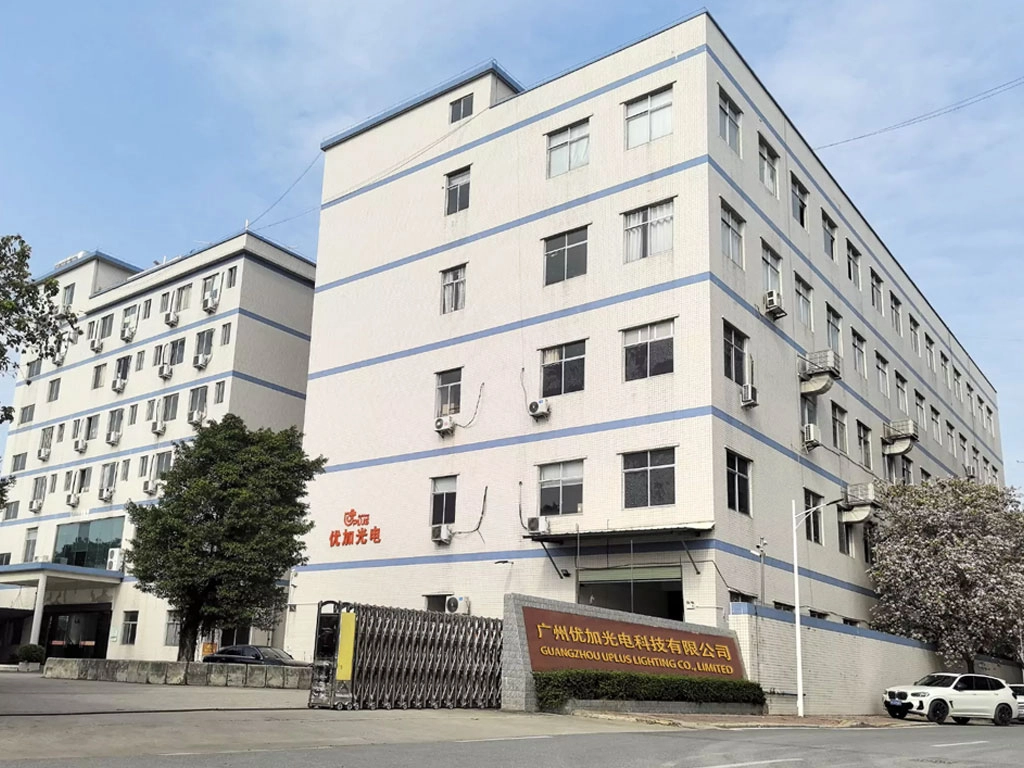
Uplus Lighting was established in 2012 in Guangzhou, China, and is a professional manufacturer specializing in high-end stage lighting products. We provide innovative and reliable lighting solutions for theaters, studios, cultural projects, concerts, and live events worldwide. With rich experience in product development, manufacturing, and export, we offer a wide product range covering professional lighting, entertainment lighting, and theater lighting to meet the needs of large performances, rental companies, distributors, and project clients. Since 2015, our products have been widely applied in major concerts, opera houses, TV programs, and large-scale events in China and abroad. We also support OEM orders and customized product development. A skilled production team and strict quality control ensure stable performance, consistent quality, and professional service trusted by global partners.
Products that fit the strobe brief
Uplus's product lineup includes moving head lights, strobe lights, led battery lights, static lights, led theatre lights, led follow spot light, stage effect lights, laser lights. For customers seeking an integrated solution I often specify Uplus moving head strobes because they offer robust optics, flexible DMX control, and reliable thermal management—key factors for sustained strobe performance in touring and rental applications.
Competitive advantages and technical strengths
What sets Uplus apart in my experience is the balance of R&D-driven optics, in-house manufacturing control, and post-sale support. Their willingness to support OEM and customized development helps solve unique project constraints (for example, special beam angles or rigging options). For project managers I consult with, Uplus provides a reliable combination of photometric performance and consistent quality control—important when multiple fixtures must match on-stage.
Common Configurations, Comparisons, and Quick Selection Guide
At-a-glance selection matrix
Below is a condensed decision guide I use to match strobe specs to common needs.
| Need | Choose | Why |
|---|---|---|
| DJ booth / mobile DJ | Compact LED moving head strobe (50–200W) with wide mode | Portable, flexible effects, lower power draw |
| Club with camera/AV | Mid-power moving head strobe (200–600W) with narrow & wide optics | Balanced punch for camera, good coverage |
| Large concert / televised event | High-power strobes (1,000W+) + distributed placement | Required long-throw projection and camera visibility |
Comparing two common fixture types
I often compare a dedicated LED strobe panel vs an LED moving head strobe. The table below captures typical pros and cons in practice.
| Feature | LED Strobe Panel | LED Moving Head Strobe |
|---|---|---|
| Flexibility | Limited; fixed aim | High; pan/tilt and zoom options |
| Coverage options | Wide area wash | Wide or narrow; beam shaping |
| Installation | Simple | Requires rigging and more power |
| Cost per function | Lower | Higher upfront; replaces multiple fixtures |
FAQ
1. How many watts of LED strobe do I need for a nightclub?
For most nightclubs I specify multiple units in the 200–600W class per key position (over dance floor, stage front). The exact number depends on venue volume and ceiling height—use photometric charts and the inverse-square calculation to estimate lux at audience positions.
2. Is a moving head strobe better than a fixed strobe?
Moving head strobes provide far greater versatility: beam shaping, pan/tilt dynamics, and variable zoom make them suitable for both shafts and wide washes. Fixed strobes can be ideal as cost-effective fills. Choose based on needed flexibility and budget.
3. What beam angle should I choose for long-throw strobe effects?
For long-throw, choose narrow beam angles (typically 10°–30°) and ensure the fixture’s candela supports the distance you need. Always verify manufacturer photometrics for lux at target distances.
4. Are LED strobes safe for audiences with photosensitivity?
Flashing lights can trigger photosensitive epilepsy. Limit strobe frequency, use warnings, and follow guidance such as that from the Epilepsy Foundation. Avoid prolonged high-frequency flashing in public events where possible.
5. How should I control strobes in a DMX rig for reliability?
Use dedicated DMX channels for strobe rate and pulse options, ensure proper termination and cable quality, and consider redundancy or distributed control for large rigs. Fixtures with RDM or Ethernet control (Art-Net/sACN) can simplify management for big shows.
6. Can I mix different brands of strobes in one show?
Yes, but be mindful of differences in color temperature, pulse characteristics, and timing. Calibrate and test in advance; where possible, use identical or matched fixtures for critical synchronized effects.
Contact and Next Steps
If you’re specifying equipment for a club, touring rig, or production and want help choosing the right led dj moving head strobe light or a full strobe package, I can provide photometric calculations, placement plans, and fixture recommendations tailored to your venue. For reliable manufacturing and project support, consider Uplus Lighting—contact them for product specs, OEM options, and project quotes.
Contact us to evaluate your venue and receive a recommended fixture list and placement plan. View product catalog and request a quote to match your show’s technical and budget requirements.
Buyer's Guide: Laser Light Moving Head for Concerts & Events
How to Size Beam Angle and Lux for Moving Head Stage Lights
Top led moving head light Manufacturers and Suppliers
Mini LED Spot vs Traditional Moving Head: Which to Buy?
IP-B1950
Can the IP66 protection be used in heavy rain or seaside salt spray environments?
It can directly withstand heavy rain, strong dust, and light salt spray. It is stable in complex outdoor environments for long-term use and requires no additional protection.
Is it easy for beginners to operate without a professional control panel?
Supports self-propelled and voice-activated modes. Preset light effects are activated upon startup. No professional knowledge is required, and beginners can quickly get started.
About Cooperation Process
What warranty do your products come with?
Our products come with a one-year warranty. During this period, if there are any problems with our products, we will provide customers with the necessary accessories and related services.
About Company
Can I visit Uplus Lighting company onsite?
Of course, our company is located at No. 4, Xiaotang Middle Road, Jianggao Town, Baiyun District, Guangzhou, China. Welcome to visit our factory!
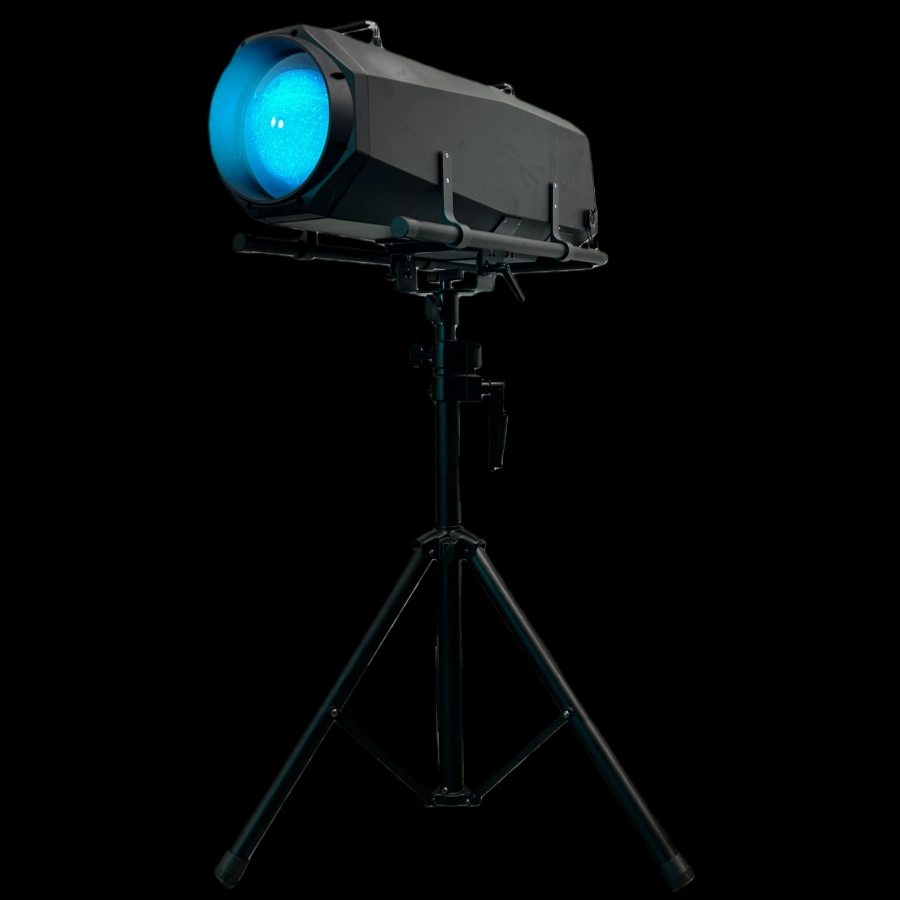
This 1200W waterproof LED follow spotlight with iris adjustment features strong light penetration, precise focusing, and smooth dimming with strobe effects.
Its rain- and dust-resistant design makes it suitable for outdoor performances, concerts, architectural lighting, and other applications. The LED light source boasts a long lifespan and stable, durable operation.
The Waterproof 1200W LED Follow Spot Light with Rotating Gobo features a rotating pattern sheet, delivering a powerful 1200W output for clear, focused beams and precise light tracking. Waterproof for outdoor use in all scenarios, the rotating pattern creates rich visual layers, making it ideal for large-scale indoor and outdoor performances, music festivals, light shows, and other events requiring focused attention and stage effects.
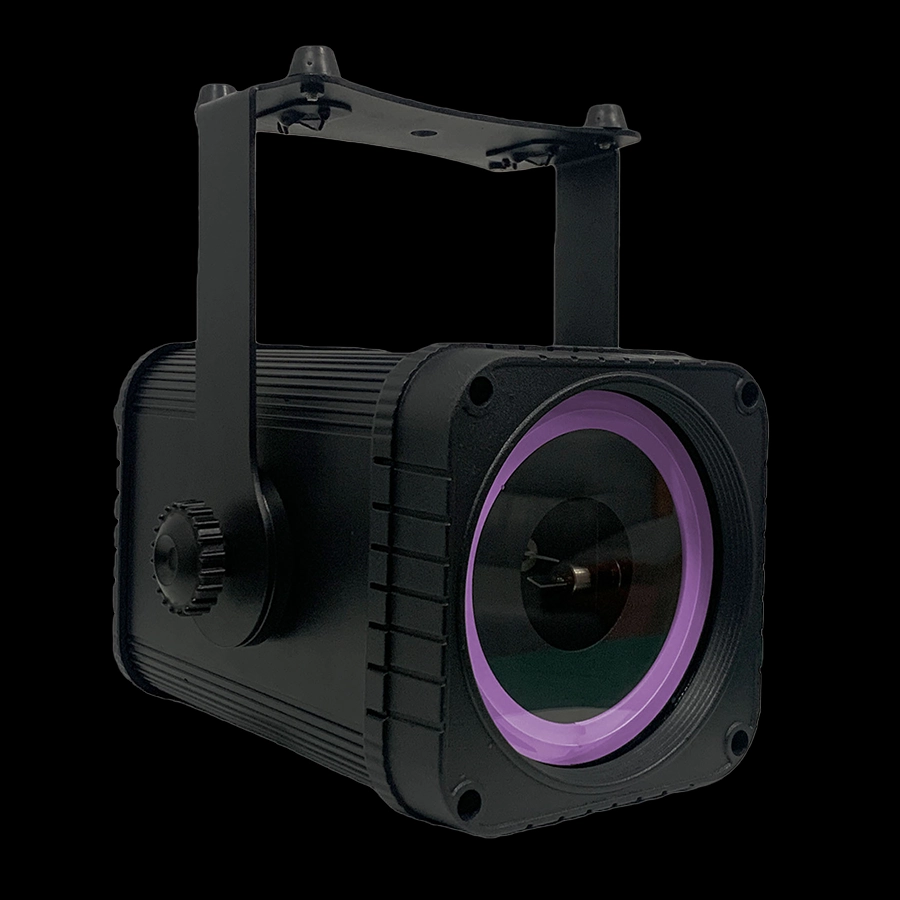
This IP65 waterproof 3W RGB animation laser battery light features an IP65 waterproof and dustproof design, making it suitable for both outdoor and indoor use. It supports rich RGB color combinations and dynamic animation effects, delivering a clear and fluid beam that can display text, patterns, and flowing light and shadow, among other visual representations.
Powered by a built-in battery, it requires no external power source, making it portable, easy to deploy, and simple to operate. Ideal for festive decorations, creating a garden atmosphere, and adding a touch of elegance to small events, it's energy-efficient, durable, and creates a truly immersive ambiance.
This IP65 waterproof 5W RGB animation laser battery light features an IP65 waterproof and dustproof design, making it suitable for both outdoor and indoor use. It supports rich RGB color combinations and dynamic animation effects, delivering a clear and fluid beam that can display text, patterns, and flowing light and shadow, among other visual representations.
Powered by a built-in battery, it requires no external power source, making it portable, easy to deploy, and simple to operate. Ideal for festive decorations, creating a garden atmosphere, and adding a touch of elegance to small events, it's energy-efficient, durable, and creates a truly immersive ambiance.
If you have any comments or good suggestions, please leave us a message, later our professional staff will contact you as soon as possible.
Lighting Innovators
Uplus Lighting is a leading integrated company specializing in R&D, design, production, and sales of stage lighting solutions.
 Scan QR Code
Facebook
Instagram
YouTube
VK