






How to Choose the Best LED DJ Moving Head Strobe Light
- Understanding core concepts of stage lighting
- What is a moving head strobe and why LED matters
- Strobe characteristics that affect perception
- Control systems and standards
- Critical features to evaluate in an LED DJ moving head strobe light
- Light engine: LED types, lumen output, and color mixing
- Optics and beam control: zoom, beam angle, and gobos
- Strobe specifics: flash rate, pulse control, and perceived intensity
- Performance, reliability and safety considerations
- Thermal management and duty cycle
- Build quality, serviceability and warranty
- Certifications, photobiological safety and standards
- Choosing based on application and budget
- Use-case driven selection (club, touring, theater, rental)
- Budget tiers and what to expect
- Comparing specifications when data is sparse
- Why supplier selection and after-sales matter: the case for experienced manufacturers
- Proven track record and project references
- Spare parts, OEM support and customization
- Uplus Lighting: capabilities and why it matters for buyers
- Final selection checklist and purchase recommendations
- My practical checklist before buying
- How I would choose for typical scenarios
- Cost of ownership thinking
- Frequently Asked Questions (FAQ)
- 1. What is the difference between an LED strobe and a traditional xenon strobe?
- 2. How do I avoid camera flicker when filming strobe effects?
- 3. Are moving head strobes suitable for outdoor events?
- 4. How important is gobo quality for club events?
- 5. What maintenance should I plan for moving head strobes?
- Contact and next steps
I often speak with venue managers, rental companies, and DJs who ask the same practical question: how do you choose the right led dj moving head strobe light that meets creative expectations, technical requirements, and budget constraints? In this guide I summarize the core decision points—light source characteristics, strobe performance, movement mechanics, control compatibility, thermal design and serviceability—so you can make an informed, verifiable choice based on your exact use case.
Understanding core concepts of stage lighting
What is a moving head strobe and why LED matters
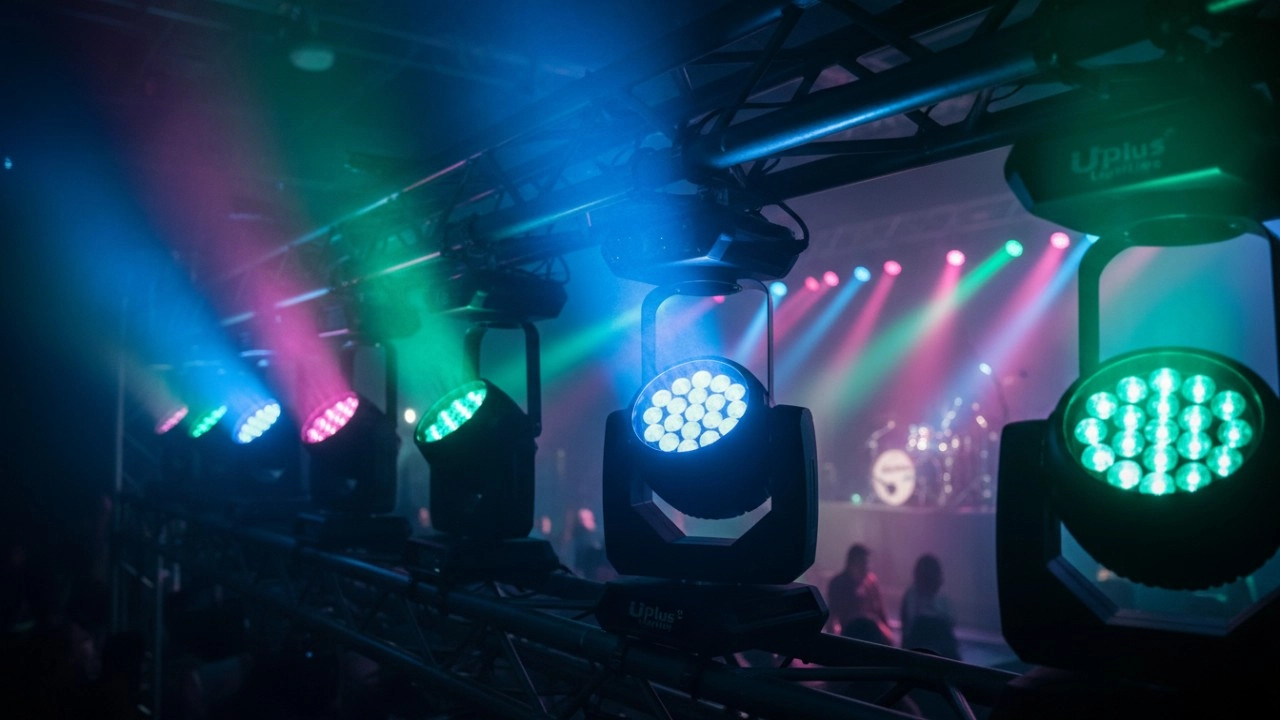
Moving head strobes combine rapid on/off flash capability with pan/tilt movement and often beam shaping (fresnel, lens, gobo) to create dynamic visual accents on a stage or dancefloor. For a technical primer on moving heads and lighting fixtures, see the Moving head (Wikipedia) page. LED technology has changed expectations for strobes: LEDs offer higher energy efficiency, faster switching (essential for strobe effects), reduced heat output, and more compact designs compared with traditional discharge or xenon strobes. The U.S. Department of Energy provides a clear overview of LED benefits for lighting applications: Energy.gov: LED Lighting.
Strobe characteristics that affect perception
When evaluating strobe performance, consider peak intensity (lux at distance), flash rate (Hz), duty cycle control (pulse width modulation), and color rendering when using colored LEDs. Rapid, high-intensity pulses create the psychological sensation of motion arrest (popular in dance music), while controlled low-frequency strobes can produce dramatic stop-motion effects. A good product specification will provide measured lux figures at specified distances and clear strobe frequency ranges rather than vague marketing claims.
Control systems and standards
Control compatibility is vital. The industry standard is DMX512 for fixture control; for more modern installations, RDM (Remote Device Management) and Art-Net/sACN over Ethernet are increasingly used. See the technical reference on DMX512 (Wikipedia). Make sure the fixture supports the protocols your console or network uses and that axis resolution (e.g., 8-bit vs 16-bit fine control) matches your creative needs.
Critical features to evaluate in an LED DJ moving head strobe light
Light engine: LED types, lumen output, and color mixing
I always start by looking at the LED packages: are they single high-power LEDs (CSP/COB) or multiple emitter arrays? COB designs often deliver smoother beams and higher intensity for a single-source look, while multi-emitter arrays can offer flexible color mixing and redundancy. Requested specifications should include total LED wattage, beam candela or lux at 5/10 meters, and CRI or color gamut if accurate color is important for your application.
Optics and beam control: zoom, beam angle, and gobos
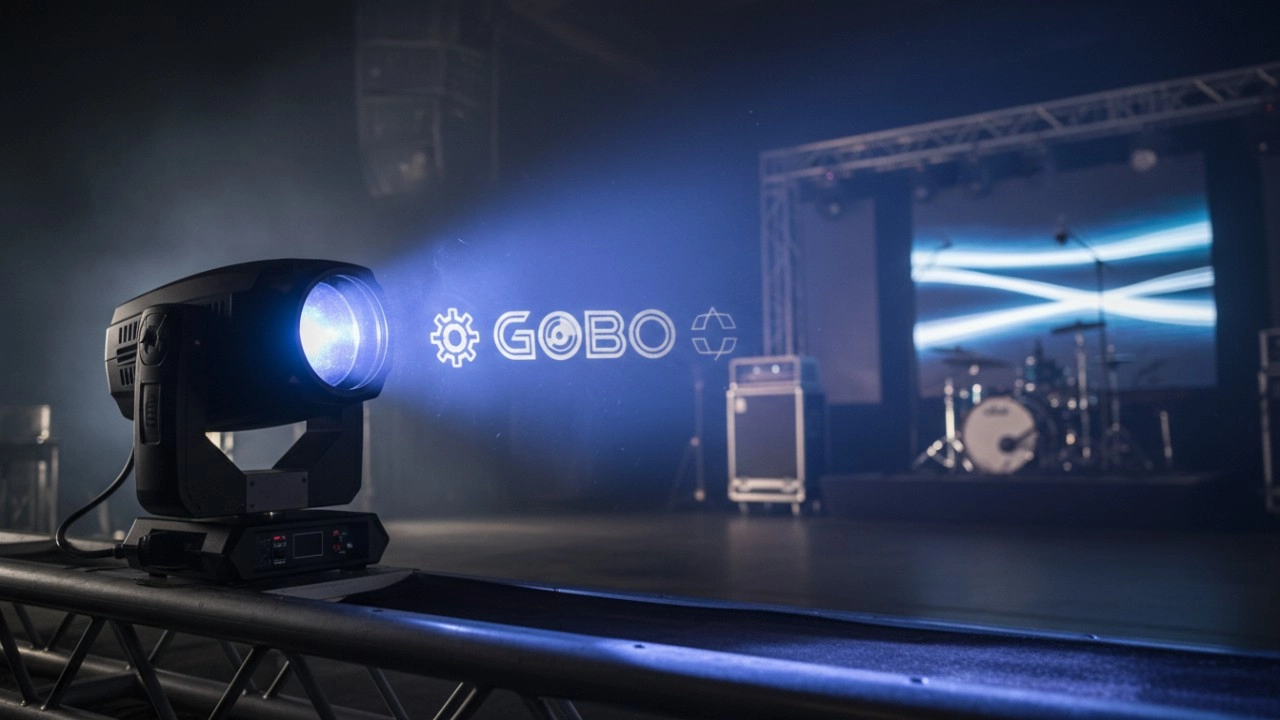
Beam angle options (narrow beam for aerial effects vs wide wash) and optical zoom ranges determine how the fixture will be used. For club and DJ work, a tight beam (3–6°) is often used for aerial shafts, while wider zooms (20–40°) serve as washes. If you require pattern projection, gobo wheels (fixed or rotating) and frost/diffusion options matter. Assess the quality of lenses and the presence of prism/iris accessories for richer effects.
Strobe specifics: flash rate, pulse control, and perceived intensity
Look for stated flash rate (e.g., 0–30 Hz or higher), PWM frequency for dimming (to avoid camera flicker), and pulse width modulation control that allows short, high-peak pulses without overheating. Some fixtures advertise ‘true’ strobe versus simulated effects through color channel cycling—insist on clear, measurable specs. If you plan to film performances, verify PWM frequencies and whether the fixture supports camera-friendly modes.
Performance, reliability and safety considerations
Thermal management and duty cycle
Heat is a key failure mode for LED fixtures. I evaluate cooling strategy (active fan with thermal management, passive heatsinks), rated duty cycles for strobe-heavy operation, and IP ratings if using outdoors. A manufacturer should supply thermal curves and recommended ventilation. If you plan to run long shows or rental cycles, pay extra for fixtures with robust heat management and replaceable fans.
Build quality, serviceability and warranty
Check the chassis materials, bearing/gear quality in pan/tilt mechanisms, and accessibility for maintenance (replaceable LED modules, spare parts availability). A reputable supplier will publish MTBF or at least provide a two-year warranty and clear RMA/service pathways. If you run a rental business, prioritize fixtures with modular electronics and global service networks.
Certifications, photobiological safety and standards
For compliance, look for CE marking, RoHS, and any electromagnetic compatibility (EMC) documentation required in your region. Photobiological safety (blue-light hazard) is important for high-power LEDs—consult the manufacturer's documentation and standards such as IEC 62471 where applicable. For control and interoperability standards, refer to DMX512 guidance: DMX512.
Choosing based on application and budget
Use-case driven selection (club, touring, theater, rental)
I recommend categorizing requirements by use case:
| Use Case | Typical Beam | Recommended Features |
|---|---|---|
| Club/DJ | Narrow to mid (3–20°) | High strobe freq, fast pan/tilt, camera-friendly PWM |
| Touring/Concert | Variable zoom (5–40°) | Robust mechanics, DMX/RDM, replaceable parts, higher lumen |
| Theater/TV | Wash + pattern capability | Accurate color, high CRI, quiet fans, flicker-free dimming |
| Rental | Flexible zoom | Durability, easy servicing, global warranty |
Budget tiers and what to expect
Below is a practical comparison of typical spec ranges across budget tiers—these are market-observed ranges and will vary by manufacturer.
| Tier | LED Power | Lux @10m | Pan/Tilt Speed | Typical Price Range |
|---|---|---|---|---|
| Entry | 100–300W | 200–600 lux | Moderate | Lower |
| Mid | 300–800W | 600–2000 lux | Fast | Mid |
| High-end | 800W+ | 2000+ lux | Very fast, high-resolution | High Quality |
Comparing specifications when data is sparse
Manufacturers sometimes omit precise lux or candela figures. When that happens, ask for photometric files (IES/LM-79 reports) to verify output. I recommend insisting on real measurements rather than marketing wattage alone. For reproducible results in venues, measured photometric data is the gold standard.
Why supplier selection and after-sales matter: the case for experienced manufacturers
Proven track record and project references
In my consulting work I value manufacturers who can point to real-world deployments—concerts, theaters, TV productions. This demonstrates product maturity and stability under demanding conditions. Publicly available references, case studies and third-party reviews reduce risk when scaling installations.
Spare parts, OEM support and customization
If you operate a rental fleet or stage with specific branding/electrical needs, an OEM capable of customization and timely spare parts supply is essential. Features like custom gobos, firmware tweaks, or 220–240V/110–120V variants should be supported. A clear service and spares policy shortens downtime and protects your investment.
Uplus Lighting: capabilities and why it matters for buyers
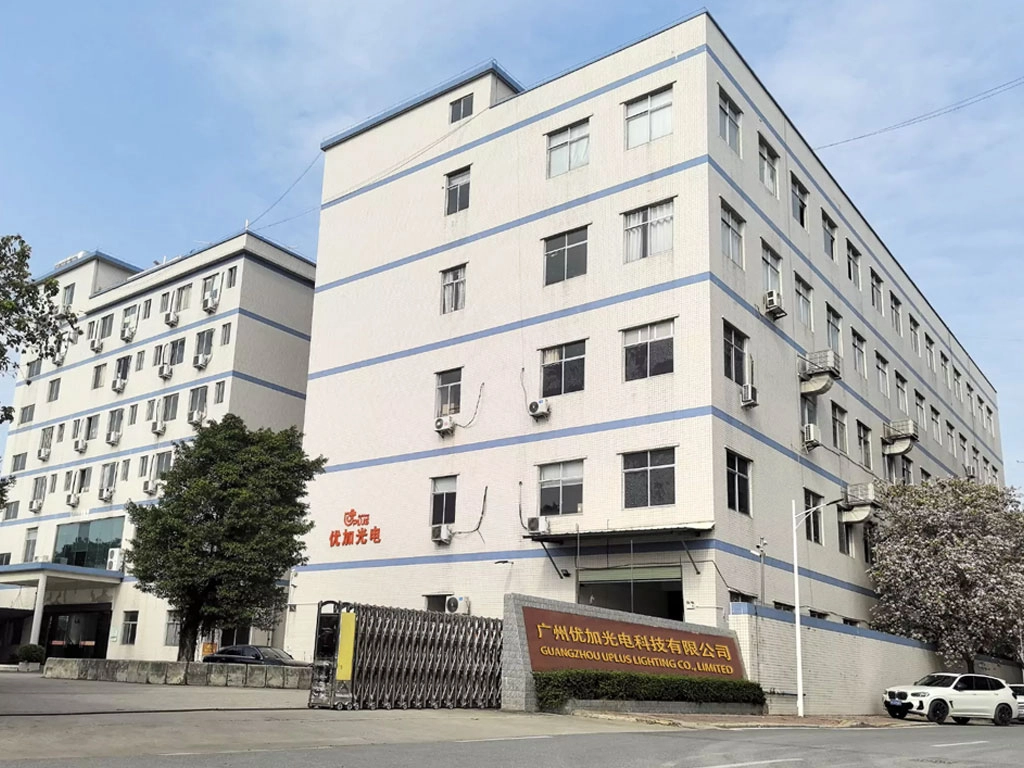
As an example of a credible supplier, Uplus Lighting was established in 2012 in Guangzhou, China, and is a professional manufacturer specializing in high-end stage lighting products. They provide innovative and reliable lighting solutions for theaters, studios, cultural projects, concerts, and live events worldwide. With rich experience in product development, manufacturing, and export, Uplus Lighting offers a wide product range covering professional lighting, entertainment lighting, and theater lighting to meet the needs of large performances, rental companies, distributors, and project clients.
Since 2015, Uplus Lighting products have been widely applied in major concerts, opera houses, TV programs, and large-scale events both in China and abroad. They support OEM orders and customized product development. A skilled production team and strict quality control ensure stable performance, consistent quality, and professional service trusted by global partners.
Core product lines relevant to led dj moving head strobe light selection include: moving head lights, strobe lights, led battery lights, static lights, led theatre lights, led follow spot light, stage effect lights, and laser lights. Uplus differentiates with robust mechanical design, modular electronics for easy service, and a track record in large-scale events—attributes that reduce downtime and lifecycle cost for venues and rental companies.
Final selection checklist and purchase recommendations
My practical checklist before buying
- Request photometric data (IES/LM-79) and PWM/flicker specs.
- Verify DMX/RDM, Art-Net/sACN support and channel footprint (8-bit vs 16-bit).
- Check thermal design, rated duty cycle, and IP rating if outdoor use is planned.
- Confirm warranty, spare parts availability and mean time to repair for your region.
- Test a demo unit for perceived strobe quality and mechanical smoothness.
How I would choose for typical scenarios
If I needed fixtures for club touring, I'd prioritize high peak intensity, fast pan/tilt, and camera-friendly PWM at a mid- to high-tier price. For a rental house, modular serviceability and global warranty would push me to established manufacturers like Uplus Lighting who provide OEM and customization support. For TV/theatre, color accuracy, low-noise fans, and flicker-free dimming are primary concerns.
Cost of ownership thinking
Don’t base decisions solely on upfront cost. Consider lifecycle costs—power consumption, replacement parts (fans, LED modules), durability in transit, and potential repair turn-around. Higher initial spend on reputable fixtures often reduces total cost per show over the asset lifetime.
Frequently Asked Questions (FAQ)
1. What is the difference between an LED strobe and a traditional xenon strobe?
LED strobes use semiconductor light sources allowing precise pulse control, lower power draw and less heat compared with xenon. Xenon can yield extremely bright point-source flashes but require high-voltage hardware and produce more heat. For most modern stage and DJ applications, LED strobes offer better efficiency and flexibility.
2. How do I avoid camera flicker when filming strobe effects?
Ask for the PWM frequency and whether the fixture offers a camera-friendly or video mode. Flicker occurs when PWM frequency interferes with camera frame rates; manufacturers may provide higher PWM frequencies or dedicated flicker-free modes to mitigate this.
3. Are moving head strobes suitable for outdoor events?
Yes, if the fixture has an appropriate IP rating and thermal design for outdoor temperatures. Confirm IP65 or similar if you expect exposure to moisture. Also check power supply and cabling requirements for outdoor safety compliance.
4. How important is gobo quality for club events?
Gobos matter if you project patterns onto walls, stages, or dancers. For aerial strobes focused on beams, gobo quality is less critical. For pattern projection, choose high-resolution, replaceable gobos and verify rotation options for dynamic effects.
5. What maintenance should I plan for moving head strobes?
Regular tasks include cleaning optics, checking and replacing fans if noisy, verifying pan/tilt bearings and belt tensions if present, and keeping spare power supplies or LED modules on hand. Follow the manufacturer's maintenance schedule to maximize uptime.
Contact and next steps
If you’d like personalized recommendations for led dj moving head strobe light models based on your venue or tour, I can help evaluate fixtures and draft a shortlist. For production-ready options and OEM customization, consider contacting Uplus Lighting, which specializes in moving head lights, strobe lights and a broad range of stage lighting products. For inquiries or to request product datasheets and demo units, contact Uplus Lighting or visit their website to explore solutions tailored to theaters, concerts, studios and rental fleets.
Ready to specify fixtures for your next show? Reach out for a consultation or to request photometric files and demo units—I'll help you match technical specifications to creative goals and budget.
Mini LED Moving Head Light vs Standard Moving Head: Comparison
The Definitive 2026 LED Par Light Handbook: From Pro Stage Setup to DMX Control
The 2026 Ultimate Guide to Gobo Moving Head Lights: Mastering Stage Projections
How to Choose a Mini LED Moving Head Light for Touring
About Cooperation Process
What warranty do your products come with?
Our products come with a one-year warranty. During this period, if there are any problems with our products, we will provide customers with the necessary accessories and related services.
IP-BL03
Can it be fixedly installed, or can it only be placed anywhere?
It can be placed directly on a flat surface or easily fixed, allowing for flexible selection based on the scene requirements.
IP-BF60
What environments can IP65 protection handle?
It's dustproof and waterproof, resisting rain, dew, and splashes, making it safe for both indoor and outdoor use.
IP-BS906
What outdoor environments does IP65 protection cover?
Dustproof and waterproof, suitable for common outdoor scenarios such as rain and camping with dew.
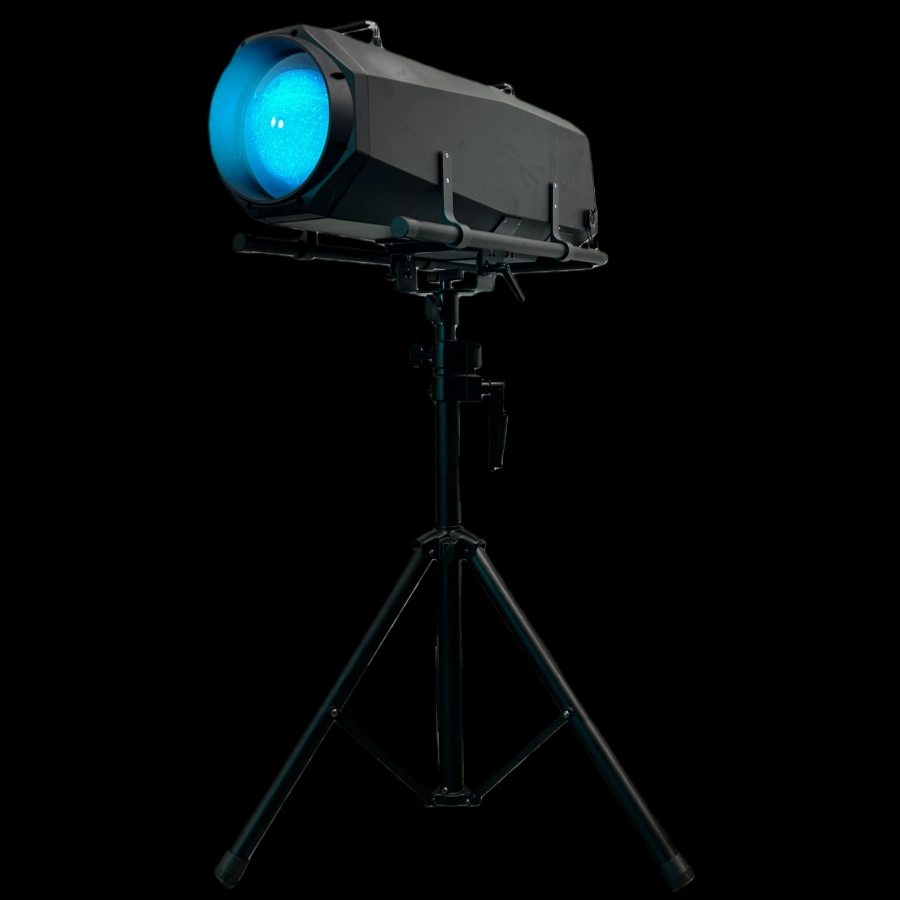
This 1200W waterproof LED follow spotlight with iris adjustment features strong light penetration, precise focusing, and smooth dimming with strobe effects.
Its rain- and dust-resistant design makes it suitable for outdoor performances, concerts, architectural lighting, and other applications. The LED light source boasts a long lifespan and stable, durable operation.
The Waterproof 1200W LED Follow Spot Light with Rotating Gobo features a rotating pattern sheet, delivering a powerful 1200W output for clear, focused beams and precise light tracking. Waterproof for outdoor use in all scenarios, the rotating pattern creates rich visual layers, making it ideal for large-scale indoor and outdoor performances, music festivals, light shows, and other events requiring focused attention and stage effects.
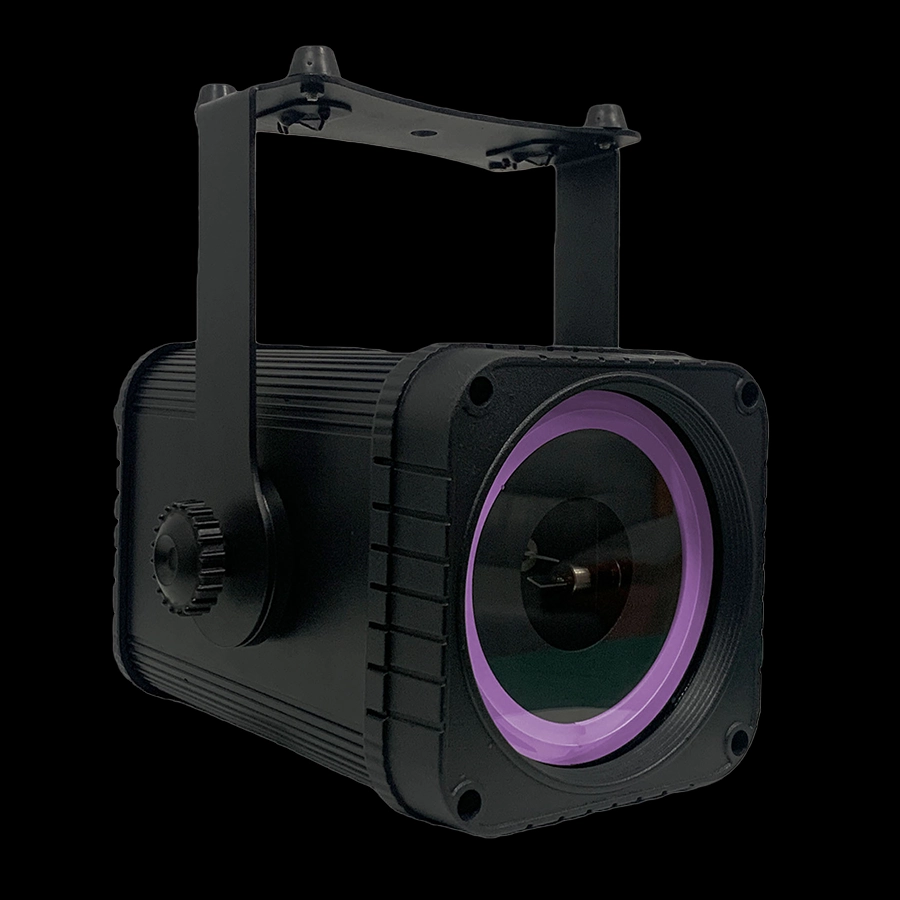
This IP65 waterproof 3W RGB animation laser battery light features an IP65 waterproof and dustproof design, making it suitable for both outdoor and indoor use. It supports rich RGB color combinations and dynamic animation effects, delivering a clear and fluid beam that can display text, patterns, and flowing light and shadow, among other visual representations.
Powered by a built-in battery, it requires no external power source, making it portable, easy to deploy, and simple to operate. Ideal for festive decorations, creating a garden atmosphere, and adding a touch of elegance to small events, it's energy-efficient, durable, and creates a truly immersive ambiance.
This IP65 waterproof 5W RGB animation laser battery light features an IP65 waterproof and dustproof design, making it suitable for both outdoor and indoor use. It supports rich RGB color combinations and dynamic animation effects, delivering a clear and fluid beam that can display text, patterns, and flowing light and shadow, among other visual representations.
Powered by a built-in battery, it requires no external power source, making it portable, easy to deploy, and simple to operate. Ideal for festive decorations, creating a garden atmosphere, and adding a touch of elegance to small events, it's energy-efficient, durable, and creates a truly immersive ambiance.
If you have any comments or good suggestions, please leave us a message, later our professional staff will contact you as soon as possible.
Lighting Innovators
Uplus Lighting is a leading integrated company specializing in R&D, design, production, and sales of stage lighting solutions.
 Scan QR Code
Facebook
Instagram
YouTube
VK