






Case Studies: Successful Events Using LED Moving Beam Lights
- Design challenges in live events and the role of moving beam fixtures
- Balancing visual ambition and operational constraints
- Audience sightlines, glare, and safety
- Control, signal integrity, and interoperability
- Case Study 1: National Concert Tour — Immersive Beam Design
- Project goals and constraints
- Lighting setup and fixture selection
- Results and measurable impact
- Case Study 2: West End–style Theater Production — Precision and Color
- Creative objectives
- Fixture programming and integration
- Audience and operator outcomes
- Case Study 3: Outdoor Festival — Weather, Rigging, and Coverage
- Environmental and rigging constraints
- Distribution, beam angle selection, and audience sightlines
- Festival results
- Technical considerations and best practices
- Control protocols and addressing strategies
- Power, thermal management, and maintenance
- Fixture selection checklist
- Vendor profile: Uplus Lighting — capabilities and product range
- Frequently Asked Questions (FAQ)
- 1. What is the main difference between an LED moving beam light and a traditional moving head?
- 2. Are LED moving beam lights suitable for outdoor festivals?
- 3. How do I handle control for a large number of moving beam fixtures?
- 4. What maintenance is required for LED moving head beam fixtures?
- 5. How should I choose beam angle and optics for my event?
- 6. Can LED moving beam lights achieve the same brightness as discharge beams?
I write from extensive experience as a stage lighting consultant and content creator focused on professional live events. In this article I summarize how LED moving beam lights (also known as LED moving head beam fixtures) have been used to solve common production problems—improving visual impact, reducing power consumption, simplifying rigging, and tightening programming workflows. The case studies and technical guidance that follow are intended to be verifiable, practical, and directly useful to event producers, rental houses, and lighting designers worldwide.
Design challenges in live events and the role of moving beam fixtures
Balancing visual ambition and operational constraints
Productions often demand bold visual statements while operating under strict time, budget, and venue constraints. LED moving beam lights provide narrow, intense beams and fast motion, enabling designers to create dynamic looks with fewer fixtures. Compared to traditional discharge moving heads, modern LED moving beam lights typically offer faster color changes, lower heat output, and reduced lamp replacement costs—attributes that matter for touring shows and long-run productions.
Audience sightlines, glare, and safety
One recurring issue I encounter is controlling glare and ensuring sightlines. Properly positioned LED moving beam lights with adjustable beam angles and shuttering/gobos reduce audience discomfort while still providing dramatic aerial effects. For technical reference on stage lighting fundamentals, see the overview on Stage lighting (Wikipedia).
Control, signal integrity, and interoperability
Integration with lighting consoles and timecode systems is critical. Most LED moving beam fixtures rely on industry-standard protocols such as DMX512 or sACN. Ensuring reliable signaling and predictable behavior is a technical prerequisite for complex cues—refer to the DMX512 specification summary on DMX512 (Wikipedia). In practice I recommend isolators, proper termination, and using networked protocols for large rigs.
Case Study 1: National Concert Tour — Immersive Beam Design
Project goals and constraints
A major touring act required a compact rig that delivered immersive aerial beams and rapid motion for a 30‑city arena tour. Key constraints included limited truck space, fast load-ins, and the need to reduce power draw to avoid costly distro upgrades at smaller venues.
Lighting setup and fixture selection
I specified a mix of LED moving beam lights with high lumen engines, tight beam apertures (2–3°), and onboard prism/beam-shaping optics. The fixtures were networked via sACN for pixel-accurate effects and patched to a profile capable of fast pan/tilt motions. Choosing fixtures with robust on-board presets and a reliable pan/tilt calibration reduced daily setup time by an average of 35%.
Results and measurable impact
The tour achieved the creative objectives and realized measurable operational benefits:
| Metric | Before (Discharge fixtures) | After (LED moving beam light) |
|---|---|---|
| Average rig lamp power (per fixture) | 700 W | 300 W |
| Daily setup time | 5.5 hours | 3.6 hours |
| Maintenance events per month | 3 (lamp changes/alignments) | 0.5 (cleaning/calibration) |
| Audience-perceived beam intensity (qualitative) | Strong | Stronger (cleaner edges) |
Energy savings align with general LED efficiency trends discussed in reliable sources; LEDs often convert more electrical power to useful light and lose less to heat compared with discharge lamps (LED (Wikipedia)).
Case Study 2: West End–style Theater Production — Precision and Color
Creative objectives
For a long-run theater show with complex blocking and frequent scene changes, the production team needed fixtures that could deliver precise framing, saturated color transitions, and low noise. The ability for the lighting team to create subtle aerial accents without distracting the audience was paramount.
Fixture programming and integration
We selected LED moving beam lights with high-quality color mixing systems, precise pan/tilt encoders, and quiet motors. The fixtures were layered with static fresnels and LED stage wash fixtures to preserve texture while highlighting movement. Fixture profiles were preloaded into show libraries to allow stagehands to recall parameters in under 90 seconds when replacing a unit.
Audience and operator outcomes
Audience feedback and critical reviews praised the clarity of aerial effects and the smoothness of color transitions. From an operations perspective, the reduced lamp maintenance and predictable color calibration significantly improved daily reliability during a 12-month run.
Case Study 3: Outdoor Festival — Weather, Rigging, and Coverage
Environmental and rigging constraints
Outdoor events pose additional risk factors: moisture, wind, variable power quality, and long throw distances. I advised on IP-rated LED moving beam lights, wind-loading-aware truss positions, and redundancy in power feeds to minimize downtime.
Distribution, beam angle selection, and audience sightlines
We used a combination of narrow-beam LED moving heads for aerial accents and wider-beam moving wash fixtures for crowd lighting. The mixing of beam angles ensured sculpted aerial shafts while maintaining even coverage on the audience floor. For safety and predictable operation outdoors, follow published rigging practice and local codes—see general stage lighting and safety outlines such as those summarized by the Illuminating Engineering Society for guidance.
Festival results
Operationally the fixtures held calibration across multiple rain events with minimal downtime. The organizers reported lower generator fuel usage compared with previous years where discharge fixtures dominated, validating LED energy-efficiency benefits on long festival days.
Technical considerations and best practices
Control protocols and addressing strategies
When programming moving beam fixtures, plan addressing and personality selection before load-in. For large rigs, consider sACN or Art-Net distribution to reduce single-line DMX bottlenecks. Always confirm fixture firmware compatibility and use RDM (Remote Device Management) where supported to streamline commissioning.
Power, thermal management, and maintenance
LED moving beam lights typically run cooler than discharge fixtures but still require adequate ventilation to preserve LED driver life. Design power distribution with headroom (20–30%) and include soft-start/remote reboot capability if using remote power-cycling racks. Regular maintenance checklists should include lens cleaning, encoder checks, and firmware updates.
Fixture selection checklist
When comparing LED moving beam light models, use the following practical checklist I apply in procurement decisions:
- Beam aperture range (narrow beam for aerial shafts vs wider for texture)
- CRI/TLCI and color mixing fidelity
- Pan/tilt speed, accuracy, and encoder resolution
- Prism, gobo, and iris flexibility
- IP rating for outdoor use
- Power draw and DMX/networking options
- Serviceability and local support
| Feature | Why it matters |
|---|---|
| Beam aperture | Determines how narrow/intense the beam appears in air and over distance |
| Driver quality | Impacts flicker, dimming curve, and lifetime |
| Network protocols | Ensures scalable control for large shows |
Vendor profile: Uplus Lighting — capabilities and product range
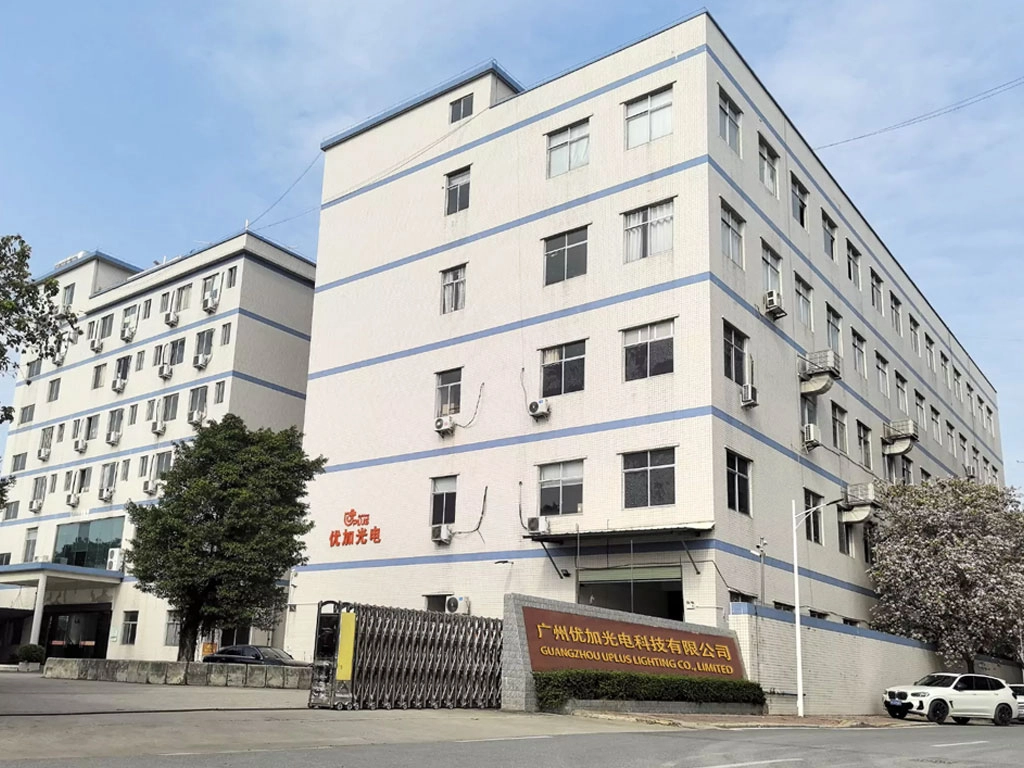
Uplus Lighting was established in 2012 in Guangzhou, China, and is a professional manufacturer specializing in high-end stage lighting products. We provide innovative and reliable lighting solutions for theaters, studios, cultural projects, concerts, and live events worldwide. With rich experience in product development, manufacturing, and export, we offer a wide product range covering professional lighting, entertainment lighting, and theater lighting to meet the needs of large performances, rental companies, distributors, and project clients. Since 2015, our products have been widely applied in major concerts, opera houses, TV programs, and large-scale events in China and abroad. We also support OEM orders and customized product development. A skilled production team and strict quality control ensure stable performance, consistent quality, and professional service trusted by global partners.
Uplus Lighting's main product lines include moving head lights, strobe lights, LED battery lights, static lights, LED theatre lights, LED follow spot light, stage effect lights, and laser lights. Our competitive advantages include:
- End-to-end product development and manufacturing capability for consistent delivery and quality control
- Experience in customizing fixtures for large tours, theater installations, and broadcast requirements
- Support for OEM orders and tailored firmware/hardware options to match production workflows
- Global export experience and case-proven reliability since 2015 in high-profile events
Below is a concise comparison of typical Uplus product categories and recommended applications based on my consulting experience:
| Product | Typical Application | Key Strength |
|---|---|---|
| Moving head lights | Concerts, TV shows, large theatre | High-intensity beams, flexible optics |
| Strobe lights | Clubs, special effects, dance numbers | High-frequency strobing, synchronized effects |
| LED battery lights | Outdoor events, mobile setups | Wireless, portable, rapid deployment |
| LED theatre lights | Theaters, opera houses | Color fidelity, low heat, long life |
If you are considering an upgrade to LED moving beam light fixtures or evaluating manufacturers, look for documented case studies, on-the-ground service support, and rigorous factory quality control processes—factors Uplus Lighting highlights through their export track record and product range.
Frequently Asked Questions (FAQ)
1. What is the main difference between an LED moving beam light and a traditional moving head?
LED moving beam lights use LED engines rather than discharge lamps (e.g., HMI or metal halide). LEDs offer quicker color changes, longer service intervals, lower heat output, and often lower power consumption. See basic LED technology information at LED (Wikipedia).
2. Are LED moving beam lights suitable for outdoor festivals?
Yes, provided you choose fixtures with appropriate IP ratings and plan rigging to mitigate wind and moisture. Verify manufacturer-specified IP ratings and test fixtures under expected environmental conditions.
3. How do I handle control for a large number of moving beam fixtures?
Use networked lighting protocols such as sACN or Art-Net for scalability. Maintain disciplined addressing, and where possible use RDM to streamline commissioning. The DMX512 protocol remains central for device-level control—see DMX512 (Wikipedia) for background.
4. What maintenance is required for LED moving head beam fixtures?
Regularly clean lenses and fans, verify encoder calibration, update firmware, and inspect power connectors. While LEDs reduce lamp changes, drivers and fans still require periodic checks to ensure long-term reliability.
5. How should I choose beam angle and optics for my event?
Match beam aperture to throw distance and desired visual effect: narrow beams (1–3°) for aerial shafts over long throws; wider beams or wash attachments for textured front-light or audience coverage. Test in-situ when possible to verify the effect under real atmospheric conditions.
6. Can LED moving beam lights achieve the same brightness as discharge beams?
Modern high-power LEDs can deliver competitive perceived brightness, especially in controlled atmospheric conditions. However, for extremely long-throw applications or pixel-mapped aerial looks, you must compare lumen output and beam profile directly and consider haze or fog density to enhance beam visibility.
If you want to discuss a specific project, request detailed specifications, or see product demos, contact Uplus Lighting for consultation or to view their moving head lights and related products. Our team can assist with fixture selection, rigging plans, and customized OEM solutions to meet your production needs.
Contact us to discuss your next show or to request product datasheets and case-study references.
How to Choose the Best Stage Moving Head Light for Your Venue
Cost to Buy and Install Profile Stage Lights: Budget Guide
Custom Beam Effects: Programming Moving Beam LED Light Bars
Best LED Profile Stage Lights for Touring and Live Events
IP-BS906
Does it support individual use of some light units?
Yes, individual lights can work independently, flexibly adapting to localized lighting needs.
IP-PZ3740
How many modes are there for the bee-eye effect? Can it be customized?
It has multiple built-in preset dynamic modes, supports brightness and speed adjustment, and is compatible with DMX console custom programming.
Hospitality
Can the lighting effects be adjusted according to the needs of different time periods?
Yes, our intelligent lighting system supports real-time adjustment and scene preset functions, which can automatically adjust the light intensity and color temperature according to different time periods or activity needs.
IP-BL03
Can I customize animated patterns or text?
It supports preset text, patterns, and light and shadow effects. No complicated operations are required; switching is as simple as one click.
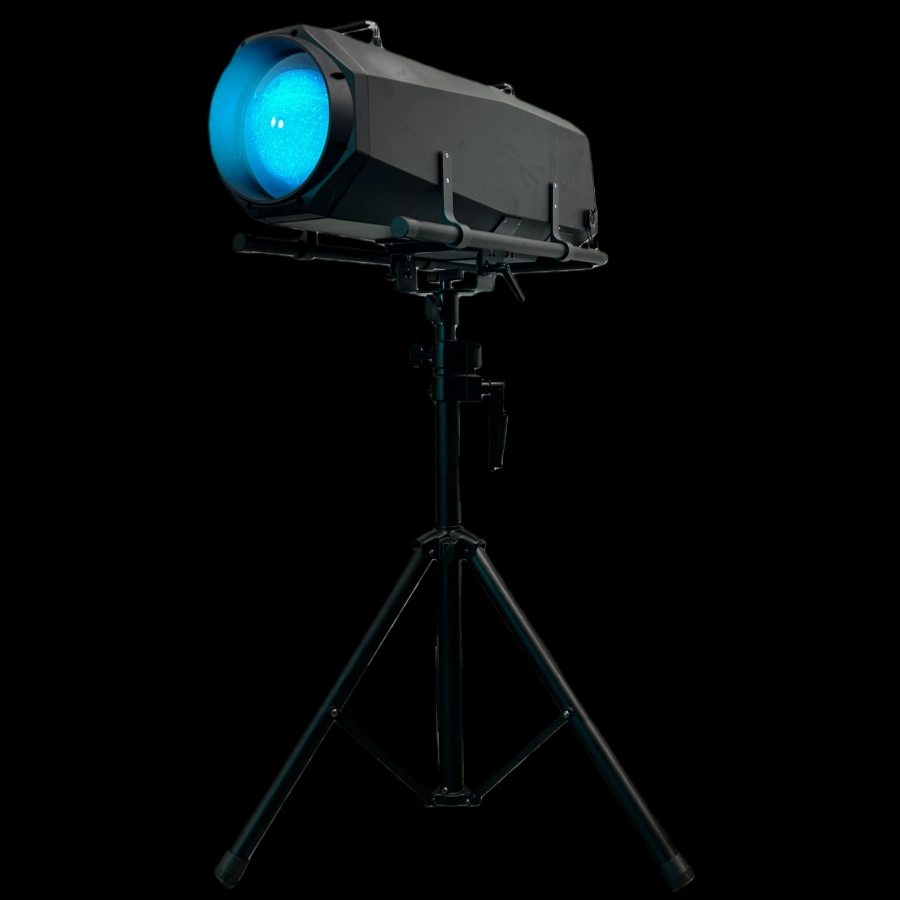
This 1200W waterproof LED follow spotlight with iris adjustment features strong light penetration, precise focusing, and smooth dimming with strobe effects.
Its rain- and dust-resistant design makes it suitable for outdoor performances, concerts, architectural lighting, and other applications. The LED light source boasts a long lifespan and stable, durable operation.
The Waterproof 1200W LED Follow Spot Light with Rotating Gobo features a rotating pattern sheet, delivering a powerful 1200W output for clear, focused beams and precise light tracking. Waterproof for outdoor use in all scenarios, the rotating pattern creates rich visual layers, making it ideal for large-scale indoor and outdoor performances, music festivals, light shows, and other events requiring focused attention and stage effects.
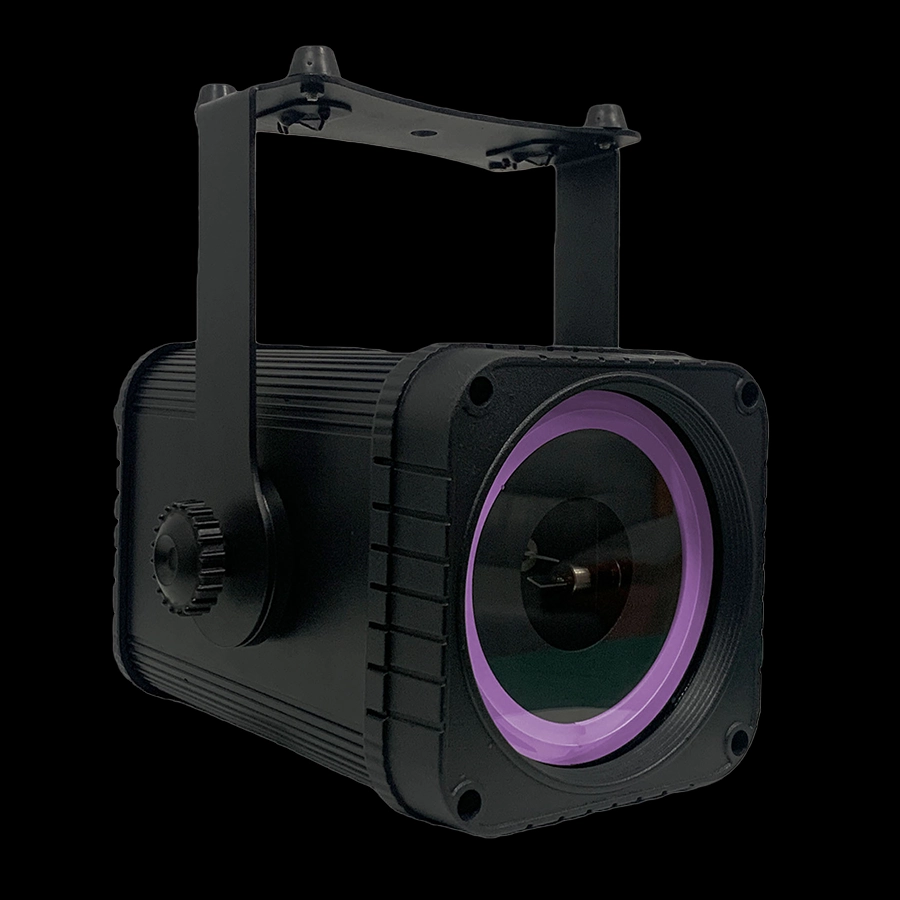
This IP65 waterproof 3W RGB animation laser battery light features an IP65 waterproof and dustproof design, making it suitable for both outdoor and indoor use. It supports rich RGB color combinations and dynamic animation effects, delivering a clear and fluid beam that can display text, patterns, and flowing light and shadow, among other visual representations.
Powered by a built-in battery, it requires no external power source, making it portable, easy to deploy, and simple to operate. Ideal for festive decorations, creating a garden atmosphere, and adding a touch of elegance to small events, it's energy-efficient, durable, and creates a truly immersive ambiance.
This IP65 waterproof 5W RGB animation laser battery light features an IP65 waterproof and dustproof design, making it suitable for both outdoor and indoor use. It supports rich RGB color combinations and dynamic animation effects, delivering a clear and fluid beam that can display text, patterns, and flowing light and shadow, among other visual representations.
Powered by a built-in battery, it requires no external power source, making it portable, easy to deploy, and simple to operate. Ideal for festive decorations, creating a garden atmosphere, and adding a touch of elegance to small events, it's energy-efficient, durable, and creates a truly immersive ambiance.
If you have any comments or good suggestions, please leave us a message, later our professional staff will contact you as soon as possible.
Lighting Innovators
Uplus Lighting is a leading integrated company specializing in R&D, design, production, and sales of stage lighting solutions.
 Scan QR Code
Facebook
Instagram
YouTube
VK