






Top 7 Moving Head Lights Compared: Power, Beam, Price
- How to Choose a Moving Head Light: buyer priorities and
- Understanding the user's intent behind Best Moving Head Light
- Key technical metrics that determine performance
- Semantic search keywords to use and where to look
- Top 7 Moving Head Lights Compared
- Comparison table: power, beam type, and price tier
- Detailed model-type breakdown (how categories map to use-cases)
- How beam type affects fixture selection
- Deep Dive: Performance Metrics and Real-World Testing
- Measuring output and beam quality
- Color rendering, gobos and optical systems
- Reliability, maintenance, and total cost of ownership
- Why Uplus Lighting: company profile, product fit and competitive advantages
- Uplus Lighting background and credibility
- Uplus core product lines and moving head offerings
- Competitive differentials and service
- Buyer's checklist: matching a moving head to your project
- Shortlist questions to answer before you buy
- How to validate performance claims
- Frequently Asked Questions (FAQ)
- 1. What is the best moving head light for concerts?
- 2. Are LED moving heads as bright as discharge-lamp fixtures?
- 3. How important is DMX/RDM and Art-Net support?
- 4. What maintenance should I budget for?
- 5. How do I assess beam quality before purchase?
- 6. Can Uplus Lighting supply OEM or customized moving heads?
- Final recommendations and call to action
This guide evaluates the Best Moving Head Light options by power (output), beam type (spot/beam/wash), and total cost of ownership to help buyers in local markets (rental houses, theatres, churches, concert production) find the right fixtures fast. It blends industry-standard metrics, practical on-site considerations and manufacturer-level product positioning for accurate local procurement decisions.
How to Choose a Moving Head Light: buyer priorities and
Understanding the user's intent behind Best Moving Head Light
When people search for Best Moving Head Light they are usually trying to solve one of three problems: 1) pick a fixture for a specific application (concert, theatre, TV); 2) compare output and beam characteristics to meet lighting design goals; or 3) balance budget versus reliability and service. This article addresses all three by comparing fixtures across power, beam type and price while highlighting key technical metrics buyers should verify.
Key technical metrics that determine performance
- Output: lumens and lux (@ specified distance) indicate usable brightness. For touring and large stages you want higher lux at 10–30 m.
- Beam quality: beam angle, iris, zoom range, and lens quality determine edge definition and usable focus.
- Light source and power class: 700 W discharge, 1200 W discharge or LED equivalents (e.g., 600–1200 W LED engines) affect output and thermal management.
- Control & connectivity: DMX512, RDM, Art-Net/sACN compatibility and fixture profiles for console integration matter in professional contexts. See DMX512 standards for details: DMX512 (Wikipedia).
- Serviceability & warranty: modular optics, replaceable lamps/LED engines, and manufacturer service network lower total cost of ownership.
Semantic search keywords to use and where to look
Throughout this guide you will see naturally embedded semantic keywords useful for research and purchase: moving head spotlight, LED moving head light, moving head wash, moving head beam, moving head spot, best moving head light for concerts, budget moving head light, high-output moving head.
Top 7 Moving Head Lights Compared
Comparison table: power, beam type, and price tier
| Rank / Model (category) | Typical light source | Beam type | Output class (typical) | Price range (USD, street) |
|---|---|---|---|---|
| 1. High-output Beam/Spot (High Quality touring) | 1,000–2,000 W discharge / high-power LED | Narrow beam / tight spot | Extremely high (suitable for 30+m throw) | $8,000–$25,000 |
| 2. Hybrid Spot/Beam (High Quality) | 1,000–1,200 W discharge / LED hybrid | Spot to beam (zoom + gobos) | Very high | $5,000–$15,000 |
| 3. Compact Beam (rental-friendly) | 350–700 W discharge or LED | Tight beam, fast movement | High for size | $2,500–$7,000 |
| 4. Moving Head Wash (LED) | 200–1,200 W LED engines | Wide wash (15°–60°) | Medium to high (color mixing) | $1,200–$8,000 |
| 5. Moving Head Spot (mid-range) | 300–800 W discharge / LED | Spot with color/GOBOs | Medium to high | $1,500–$6,000 |
| 6. Budget LED Moving Head | 100–350 W LED | Spot/wash combo | Low to medium (suitable for small venues) | $300–$1,200 |
| 7. Specialty / Follow-spot style moving head | LED or small discharge | Narrow to mid beam (follow applications) | Varies | $2,000–$10,000 |
Notes: Price and output ranges are indicative and depend on brand, lamp type and feature set (gobos, frost, prisms). For industry-standard background on stage lighting types and fixture taxonomy see Stage lighting (Wikipedia).
Detailed model-type breakdown (how categories map to use-cases)
Rather than endorsing a single model, professionals choose by class. Examples:
- Large arena concerts: High Quality beam/spot fixtures with 1,000 W+ lamps or equivalent LED engines for long throw and tight, saturated beams.
- Theatre and touring: hybrid spot/beam units with reliable color wheels, framing shutters and quiet operation.
- Rental companies: compact beam units that balance output and weight for fast rigging and demount.
- Houses of worship / small venues: budget LED moving heads offer color washes and simple beam effects at low cost.
How beam type affects fixture selection
Beam fixtures are used for graphical shafts and long throws; spots for sharp gobos and framing; washes for even color fields. Choose based on fixture beam angle, zoom range and whether prism/frost options are fitted. Practical note: a moving head that lists a narrow beam angle but uses a low-output LED will not be visible on a large stage—always check lux at distance or ask for manufacturer photometrics.
Deep Dive: Performance Metrics and Real-World Testing
Measuring output and beam quality
Manufacturers provide lux or lumen charts with distance. Trust lab photometrics (usually measured at 1m or at typical throws) and cross-check with independent test reviews from industry media. If you need a rule of thumb: for medium-sized theatres expect 1,500–6,000 lux at 10 m from a professional spot; touring beam fixtures can exceed those values significantly at the same distance.
Color rendering, gobos and optical systems
Quality optics and color mixing systems (CMY, CTO correction or 7-color wheels) determine color fidelity and gobo edge definition. For TV/studio work, CRI/TLCI and color stability matter—request spectral data from manufacturers for exact matching.
Reliability, maintenance, and total cost of ownership
Consider lamp replacement cost (for discharge fixtures), LED lifetime (hours to 70% lumen maintenance, L70), and ease of module swaps. A higher initial cost High Quality can be justified by reduced lamp/LED replacement and lower service intervals. Industry guidance and standards on safety and maintenance are discussed by organizations such as ESTA and other regional bodies—see DMX512 and general lighting safety resources: DMX512.
Why Uplus Lighting: company profile, product fit and competitive advantages
Uplus Lighting background and credibility
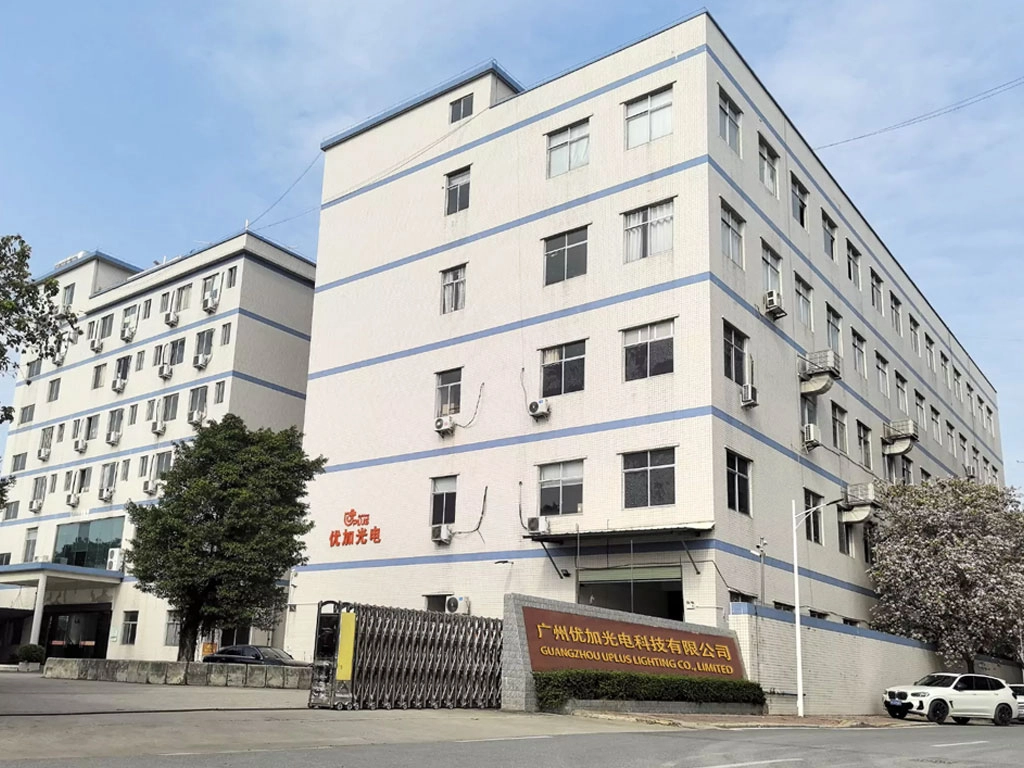
Uplus Lighting was established in 2012 in Guangzhou, China, and is a professional manufacturer specializing in high-end stage lighting products. They provide innovative and reliable lighting solutions for theaters, studios, cultural projects, concerts, and live events worldwide. With deep experience in product development, manufacturing and export, Uplus has delivered products since 2015 to major concerts, opera houses and TV programs in China and abroad, and supports OEM and custom development.
Uplus core product lines and moving head offerings
Uplus Lighting's core product categories include moving head lights, strobe lights, LED battery lights, static lights, LED theatre lights, LED follow spot lights, stage effect lights and laser lights. Their moving head range covers beam, spot and wash classes suitable for rental companies, theatres and large performance projects. Technical strengths claimed by Uplus include stable performance, consistent quality control and a skilled production team for timely OEM customization.
Competitive differentials and service
What differentiates Uplus in the market: integrated R&D and production in Guangzhou enabling cost-effective customization, a product range targeting both rental-grade and installed-theatre markets, and an export-focused QA process that supports global partners. For buyers seeking OEM or project-custom fixtures, Uplus can offer collaborative development and localized support through distributor networks.
Buyer's checklist: matching a moving head to your project
Shortlist questions to answer before you buy
- What is the maximum throw distance and venue size?
- Do you need narrow beams, framing shutters, or full-color CMY mixing?
- Is on-board control, RDM and network compatibility required?
- What are acceptable weight, power and transport constraints for your crew?
- Do you prefer LED engines (lower maintenance) or discharge lamps (some still provide higher peak output)?
How to validate performance claims
Ask vendors for photometric reports, IES files and independent test results. When possible, request a demo rental day to see real performance in your venue. Check warranty terms and spare parts lead times.
Frequently Asked Questions (FAQ)
1. What is the best moving head light for concerts?
For large concerts you typically want a high-output beam or hybrid spot with 1,000 W+ equivalent output for long throws, precise gobos and fast movement. Prioritize fixtures with high-quality optics, reliable cooling and network control. Use photometric data to validate long-throw lux.
2. Are LED moving heads as bright as discharge-lamp fixtures?
Modern high-power LED moving heads have closed the gap in many cases. LED engines offer lower maintenance and faster color changes, but some High Quality discharge fixtures still produce higher instantaneous peak output for extreme long-throw beam applications. Check L70 LED lifetimes and manufacturer photometrics to compare.
3. How important is DMX/RDM and Art-Net support?
Very important for professional installations and touring. DMX512 is the baseline control protocol; RDM enables remote device management and Art-Net/sACN enables networked control from consoles and media servers. Confirm compatibility with your control system. See DMX512 overview: https://en.wikipedia.org/wiki/DMX512.
4. What maintenance should I budget for?
For discharge fixtures, lamp replacements and ballast checks are regular costs. For LED fixtures, budget for fan or driver replacements over a multi-year period and check expected L70 hours. Always keep key spares (drivers, fans, connectors) and plan for firmware updates and cleaning of optics.
5. How do I assess beam quality before purchase?
Request beam shots, IES files and demo sessions. Look for sharp gobo edges, uniform color mixing across zoom range, and low lens flare. Independent tests and rental-house demos are invaluable.
6. Can Uplus Lighting supply OEM or customized moving heads?
Yes. Uplus supports OEM orders and customized product development, with an experienced production team and strict quality control to ensure stable performance and consistent quality for global partners.
Final recommendations and call to action
Choosing the Best Moving Head Light requires balancing required output, beam behavior and budget while considering serviceability and control compatibility. For large-scale touring choose high-output beam/spot fixtures; for studio and theatre prioritize color rendering and quiet operation; for rental and multi-purpose use choose reliable hybrid or compact beam units.
If you need tailored recommendations for your venue, event or rental fleet, contact Uplus Lighting for product datasheets, photometrics and demo arrangements. Uplus Lighting’s product range—moving head lights, strobe lights, LED battery lights, static lights, LED theatre lights, LED follow spot lights, stage effect lights and laser lights—covers most production needs and can be customized to your project requirements. Reach out to Uplus for quotes, OEM options and technical consultation.
Contact / View products: Visit the Uplus Lighting site or contact their sales team for datasheets, IES files and demo unit availability (OEM & customization supported).
Best moving head wash light manufacturers and supplier brands
Weatherproofing and IP Ratings for Outdoor LED Stage Light Bars
Energy Efficient Moving Head Wash Lights: LED Options & Savings
Custom Beam Effects: Programming Moving Beam LED Light Bars
About After Sales Support
Quick response
All your requests will be answered within 8 working hours.
IP-BS906
Is splicing and installation complicated?
The interfaces are robust, splicing is simple, and one person can quickly complete the assembly.
About Company
Our service?
We have a professional team that can provide and customize products for you.
IP-WASH1980
What is the maximum number of lights that can be controlled simultaneously when controlling multiple lights?
Multiple lights can be synchronized via DMX512 or master-slave mode. Theoretically, there is no limit, but the specific number depends on the console's load capacity.
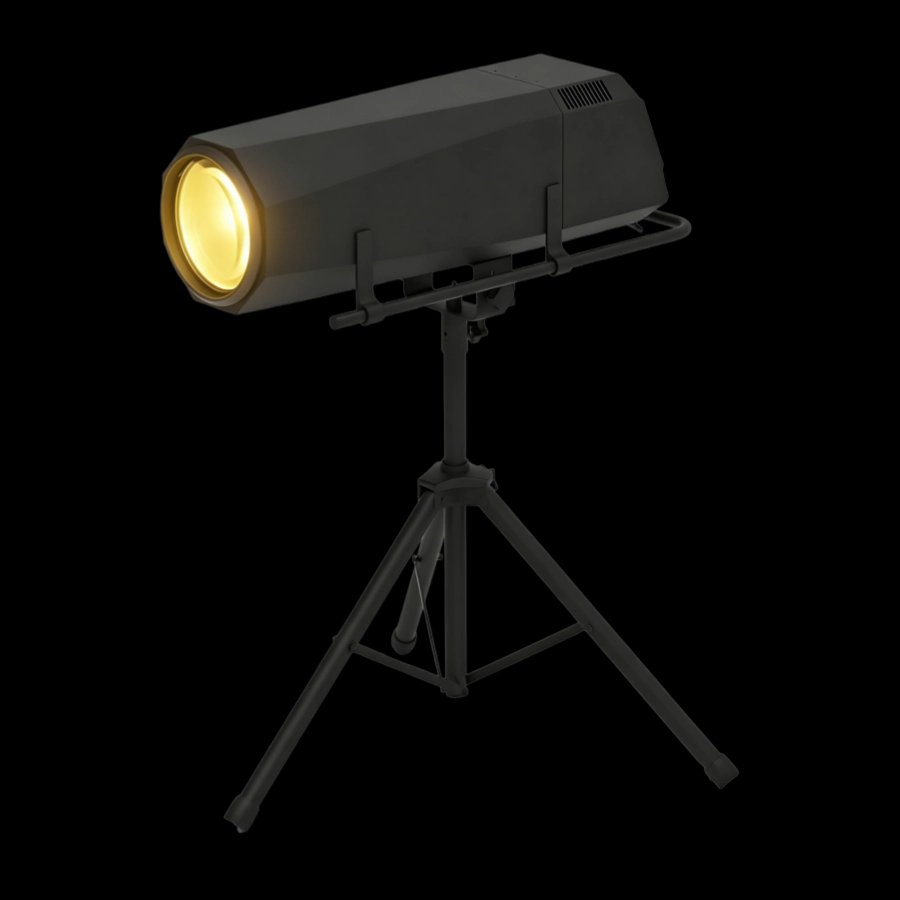
This 1200W waterproof LED follow spotlight with iris adjustment features strong light penetration, precise focusing, and smooth dimming with strobe effects.
Its rain- and dust-resistant design makes it suitable for outdoor performances, concerts, architectural lighting, and other applications. The LED light source boasts a long lifespan and stable, durable operation.
The Waterproof 1200W LED Follow Spot Light with Rotating Gobo features a rotating pattern sheet, delivering a powerful 1200W output for clear, focused beams and precise light tracking. Waterproof for outdoor use in all scenarios, the rotating pattern creates rich visual layers, making it ideal for large-scale indoor and outdoor performances, music festivals, light shows, and other events requiring focused attention and stage effects.
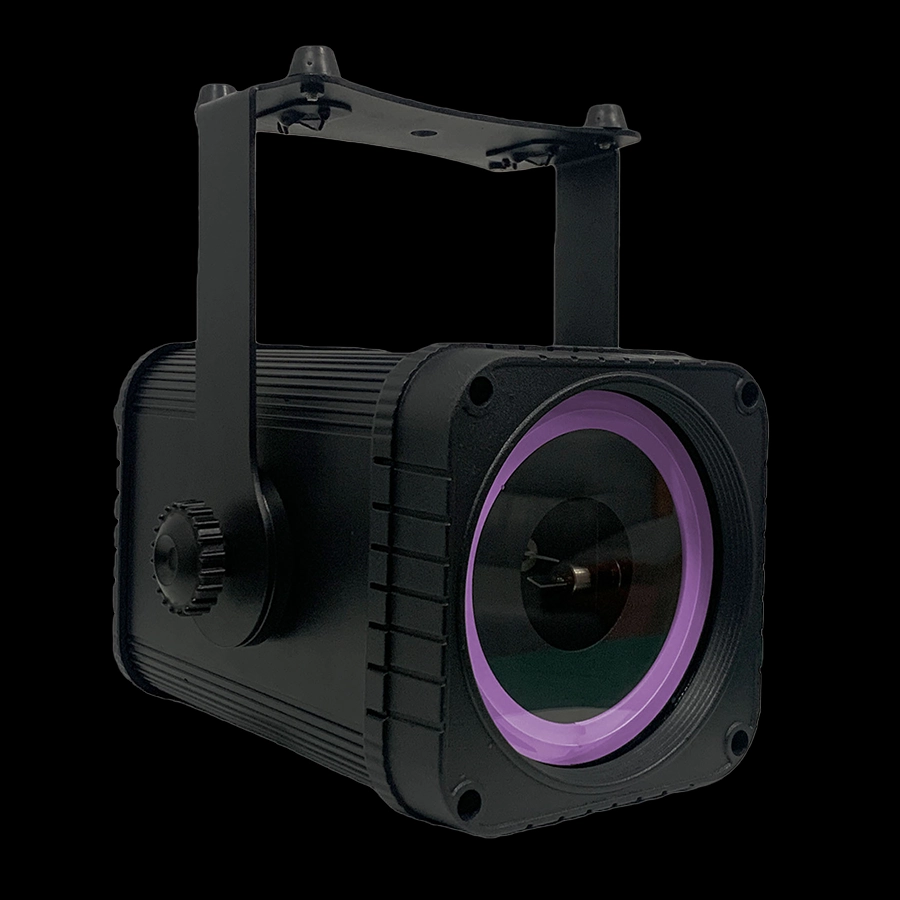
This IP65 waterproof 3W RGB animation laser battery light features an IP65 waterproof and dustproof design, making it suitable for both outdoor and indoor use. It supports rich RGB color combinations and dynamic animation effects, delivering a clear and fluid beam that can display text, patterns, and flowing light and shadow, among other visual representations.
Powered by a built-in battery, it requires no external power source, making it portable, easy to deploy, and simple to operate. Ideal for festive decorations, creating a garden atmosphere, and adding a touch of elegance to small events, it's energy-efficient, durable, and creates a truly immersive ambiance.
This IP65 waterproof 5W RGB animation laser battery light features an IP65 waterproof and dustproof design, making it suitable for both outdoor and indoor use. It supports rich RGB color combinations and dynamic animation effects, delivering a clear and fluid beam that can display text, patterns, and flowing light and shadow, among other visual representations.
Powered by a built-in battery, it requires no external power source, making it portable, easy to deploy, and simple to operate. Ideal for festive decorations, creating a garden atmosphere, and adding a touch of elegance to small events, it's energy-efficient, durable, and creates a truly immersive ambiance.
If you have any comments or good suggestions, please leave us a message, later our professional staff will contact you as soon as possible.
Lighting Innovators
Uplus Lighting is a leading integrated company specializing in R&D, design, production, and sales of stage lighting solutions.
 Scan QR Code
Facebook
Instagram
YouTube
VK