






DMX Features: Best Moving Head Lights for sale Companies
- Why DMX and Moving Heads Matter in Modern Productions
- DMX basics and why it drives buying decisions
- Integration with lighting consoles and networks
- Types of Moving Head Lights and How to Choose
- Moving head spot (profile) — precision and gobos
- Moving head wash — color blending and smooth coverage
- Moving head beam and hybrid fixtures — long-throw effects
- Key DMX Features to Evaluate When Buying the Best Moving Head Light
- DMX channels, profiles, and control complexity
- Light engine & optical performance: lumen output, CRI, and zoom
- Mechanical precision, duty cycle, and serviceability
- Best Moving Head Lights for Sale — How Companies Compete
- What professional buyers look for from manufacturers
- Comparing moving head categories: a practical table
- Price, warranty, and total cost of ownership
- Uplus Lighting — Manufacturer Profile and Why They Matter
- Practical Buying Checklist — How to Choose the Best Moving Head Light
- Match the fixture type to the application
- Verify DMX support and documentation
- Request photometrics, warranty, and service terms
- FAQ — Common Questions When Buying Moving Head Lights
Summary for geo-indexing and quick scan: Choosing the Best Moving Head Light requires understanding DMX features (DMX512 channel mapping, addressability, presets), optical performance (lumens, beam angle, zoom range), mechanical reliability (pan/tilt resolution, duty cycle), and manufacturer support (warranty, OEM/custom capability). This article explains these factors, compares moving head types, and shows how reputable companies — including Uplus Lighting (Guangzhou, China) — compete on quality, specs, and service for live events, theaters, and rental markets.
Why DMX and Moving Heads Matter in Modern Productions
DMX basics and why it drives buying decisions
DMX (Digital Multiplex) remains the industry standard control protocol for stage lighting. See the DMX512 technical overview on Wikipedia for the standard history and technical limits. When choosing the Best Moving Head Light, buyers must evaluate the unit's DMX implementation: channel footprint, compatibility with common consoles, support for RDM (Remote Device Management), and how presets/ scenes are accessed. A well-mapped DMX profile reduces programming time and increases interoperability across brands.
Integration with lighting consoles and networks
Moving heads are often used in complex rigs where networked control (Art-Net, sACN) and console compatibility matter. Check whether fixtures support RDM for remote addressing and diagnostics and whether manufacturers provide accurate DMX channel charts and fixture personality files for consoles like MA Lighting grandMA, ETC Eos, or ChamSys. The Entertainment Services and Technology Association (ESTA) and PLASA provide industry best practices: see ESTA and PLASA for standards and guidance.
Types of Moving Head Lights and How to Choose
Moving head spot (profile) — precision and gobos
Spot moving heads (profile) are optimized for sharp beams, framing shutters, rotating gobos, and crisp framing. They are the right choice when you need pattern projection, iris or framing shutters for theatrical wash and specials. Important spec highlights: gobo quantity and size, gobo indexing speed, framing shutters, color wheel positions, and zoom range. For productions that require detailed shaping and texture, spot fixtures are frequently the Best Moving Head Light choice.
Moving head wash — color blending and smooth coverage
Wash moving heads prioritize even beam projection and color mixing using multi-chip LEDs or advanced optics. Key buyer criteria include color quality (CRI/TLCI), mixing method (RGBW, CMY, or virtual color mixing), zoom range, and soft-edge beam characteristics. Rental companies and theatres often specify wash fixtures for stage coverage, cyclorama lighting, and smooth audience washes.
Moving head beam and hybrid fixtures — long-throw effects
Beam fixtures produce narrow, intense shafts of light for arena and concert looks; hybrid fixtures combine beam, spot, and wash functions into one unit. For festivals and large venues, beam output (lux at distance), narrowest beam angle, and motorized iris/zoom performance are decisive. Hybrids trade some specialization for flexibility — useful for touring companies reducing headcount and inventory.
Key DMX Features to Evaluate When Buying the Best Moving Head Light
DMX channels, profiles, and control complexity
Review the DMX channel modes (e.g., 16/24/32/48/512 modes) and the fixture’s personality files. Lower channel modes simplify programming but restrict access to advanced features; high-channel modes allow granular control over effects (pixel mapping, individual LED rings). Manufacturers should publish reliable DMX charts and downloadable personality files for major consoles — a mark of professional support.
Light engine & optical performance: lumen output, CRI, and zoom
Compare LED power, rated lumen output, CRI/TLCI values, and zoom range. CRI/TLCI in the 80–95 range indicates accurate color rendering suitable for broadcast and theatre. Keep in mind that advertised lumen figures can vary by measurement method — rely on manufacturer photometric files when available. For technical guidance on photometry and lighting instruments, refer to industry references like stage lighting documentation.
Mechanical precision, duty cycle, and serviceability
Pan/tilt resolution (16-bit vs 8-bit), movement speed ranges, backlash control, and fixture cooling strategy affect performance and reliability. Rental houses and touring productions prioritize robust gear with easy access to consumables (fans, lenses), clear maintenance manuals, and available spare parts.
Best Moving Head Lights for Sale — How Companies Compete
What professional buyers look for from manufacturers
Buyers evaluating vendors for the Best Moving Head Light prioritize: product reliability, consistent photometric performance, CE/ETL compliance, warranty terms, support for OEM/custom requests, and manufacturer transparency (published DMX charts, photometric files, spare parts lists). For large projects, companies often request factory acceptance testing (FAT) and sample units.
Comparing moving head categories: a practical table
Below is a practical comparison of moving head categories rather than specific models. These categories help buyers filter options quickly based on application.
| Category | Typical Uses | Key Specs to Check | Typical Output / Range |
|---|---|---|---|
| Spot (Profile) | Theatre specials, pattern projection, TV | Gobos, framing, zoom 8–40°, CRI/TLCI | Moderate lumens; sharp edges; 8–40° zoom |
| Wash | Stage coverage, cyclorama, broadcast | CRI/TLCI, zoom 12–60°, homogenized optics | High even lux; soft edge; wide zoom |
| Beam | Arena concerts, aerial effects | Narrow beam angle 1–6°, high output, motorized iris | Very high apparent brightness; narrow 1–6° beam |
| Hybrid | Rental, multi-purpose venues | Combined gobo/wash/beam functions, mid-high output | Flexible; compromises between spot and wash |
Note: Typical ranges are generalized. For precise photometric data, request IES files from manufacturers. Industry guidance on photometrics and instrument types can be found on Wikipedia - Stage lighting and standards bodies such as ESTA.
Price, warranty, and total cost of ownership
Price influences decision but total cost of ownership (TCO) includes serviceability, replacement parts, and energy consumption. LED moving heads typically have lower running costs than discharge lamp fixtures. Evaluate manufacturer warranty length and local service presence, especially if you operate multiple events or long tours.
Uplus Lighting — Manufacturer Profile and Why They Matter
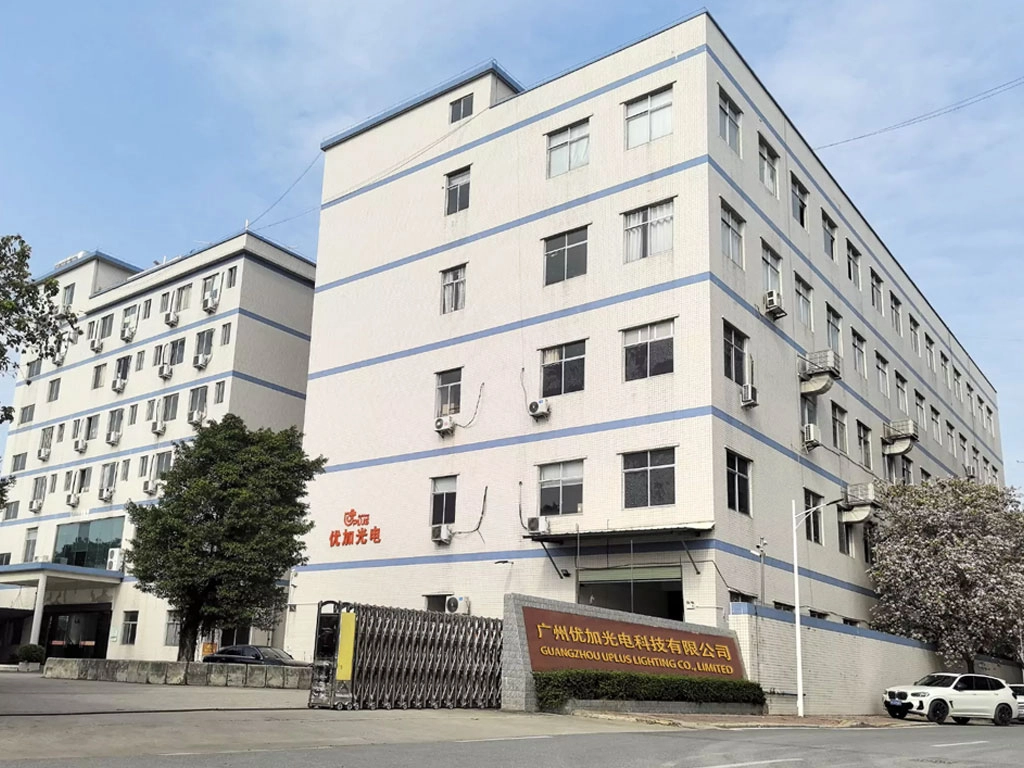
Uplus Lighting was established in 2012 in Guangzhou, China, and is a professional manufacturer specializing in high-end stage lighting products. We provide innovative and reliable lighting solutions for theaters, studios, cultural projects, concerts, and live events worldwide. With rich experience in product development, manufacturing, and export, we offer a wide product range covering professional lighting, entertainment lighting, and theater lighting to meet the needs of large performances, rental companies, distributors, and project clients. Since 2015, our products have been widely applied in major concerts, opera houses, TV programs, and large-scale events in China and abroad. We also support OEM orders and customized product development. A skilled production team and strict quality control ensure stable performance, consistent quality, and professional service trusted by global partners.
Uplus Lighting strengths and main product categories: moving head lights, strobe lights, led battery lights, static lights, led theatre lights, led follow spot light, stage effect lights, laser lights. Their competitive advantages include:
- Manufacturing depth: in-house R&D and production lines improving consistency and enabling OEM/custom projects.
- Quality control: factory testing and photometric verification for repeatable performance in rental fleets and fixed installations.
- Global experience: products deployed in concerts, theater houses, and TV productions since 2015, demonstrating field-proven reliability for complex shows.
- Technical support: published DMX charts, personality files, and willingness to work with integrators on fixture profiles.
For buyers seeking reliable moving head lights for sale, evaluating vendors like Uplus Lighting on those criteria — photometric transparency, DMX documentation, service network, and OEM capability — helps ensure you select the Best Moving Head Light for your application.
Practical Buying Checklist — How to Choose the Best Moving Head Light
Match the fixture type to the application
Identify whether your main need is texture and gobos (spot), full-stage color (wash), aerial shafts (beam), or flexibility (hybrid). This decision reduces the candidate pool quickly.
Verify DMX support and documentation
Obtain the DMX channel charts, fixture personality files, and, if possible, an example scene file for your console. Confirm whether RDM is supported for remote addressing and status reporting.
Request photometrics, warranty, and service terms
Ask for IES files, warranty details, recommended spare parts, and service lead times. For rental and touring operations, ask about factory refurbishment options and bulk purchase terms.
FAQ — Common Questions When Buying Moving Head Lights
- Q: What DMX mode should I choose — low or high channel count?
A: Choose the mode that balances programming efficiency and access to features. For simple rigs, a lower-channel mode is easier to manage. For bespoke effects (pixel mapping, multi-ring control), choose a higher-channel mode. Always confirm available personalities for your console. - Q: How do I compare lumen figures between manufacturers?
A: Compare using manufacturer-provided photometric (IES) files under the same measurement conditions. Ask for lux at distance charts rather than relying solely on raw lumen numbers. - Q: Is RDM necessary for moving head fixtures?
A: RDM is highly valuable for large systems because it enables remote addressing, firmware updates, and status monitoring, saving setup time and reducing errors. - Q: Should I pick LED or discharge lamp moving heads?
A: LED fixtures offer lower power consumption, longer lamp life, and more flexible color mixing. Discharge lamp fixtures can still provide very high output and color fidelity in some specialized theatrical applications, but LEDs dominate modern installations. - Q: How important is serviceability for rental companies?
A: Extremely important — rapid access to spare parts, modular serviceable components (fans, lenses, gobos), and clear maintenance schedules reduce downtime and TCO. - Q: Where can I find verified industry standards on lighting control and safety?
A: Refer to ESTA and PLASA resources for industry practice, and to the DMX512 standard for control protocol details. See ESTA and PLASA.
If you need a tailored recommendation based on your venue size, rig complexity, or rental profile, contact the manufacturer or a technical consultant for a fixture specification and cost analysis. For product inquiries or to view Uplus Lighting's moving head lines and other stage lighting solutions, please contact their sales team or request a product catalogue and photometric files.
Contact / View Products: For direct enquiries about moving head lights for sale, OEM customization, or to request IES/DMX files and warranty terms, contact Uplus Lighting via their official channels. They can provide sample units, FAT reports, and fixture personality files to ensure compatibility with your console and project timeline.
Compare LED Stage Light Bar Specs: Power, Beam, Color
Profile Stage Lights Maintenance: Extend Lifespan & Reduce Costs
Energy Efficiency and Heat Management in LED Stage Light Bars
Weatherproofing and IP Ratings for Outdoor LED Stage Light Bars
About Cooperation Process
What warranty do your products come with?
Our products come with a one-year warranty. During this period, if there are any problems with our products, we will provide customers with the necessary accessories and related services.
IP-MH6200 4in1
How long will continuous use last before overheating occurs? How is the heat dissipation?
It has a built-in high-efficiency heat dissipation system, preventing overheating even after several hours of continuous high-intensity use, ensuring stability.
IP-BF60
Is charging convenient? Is a dedicated charger required?
Charging is convenient. It supports standard charging interfaces, so no dedicated charger is needed. Daily charging is hassle-free.
IP-BS906
How long is the battery life? Does it support fast charging?
Battery life is adapted to single-use needs. Supports regular charging for convenience.
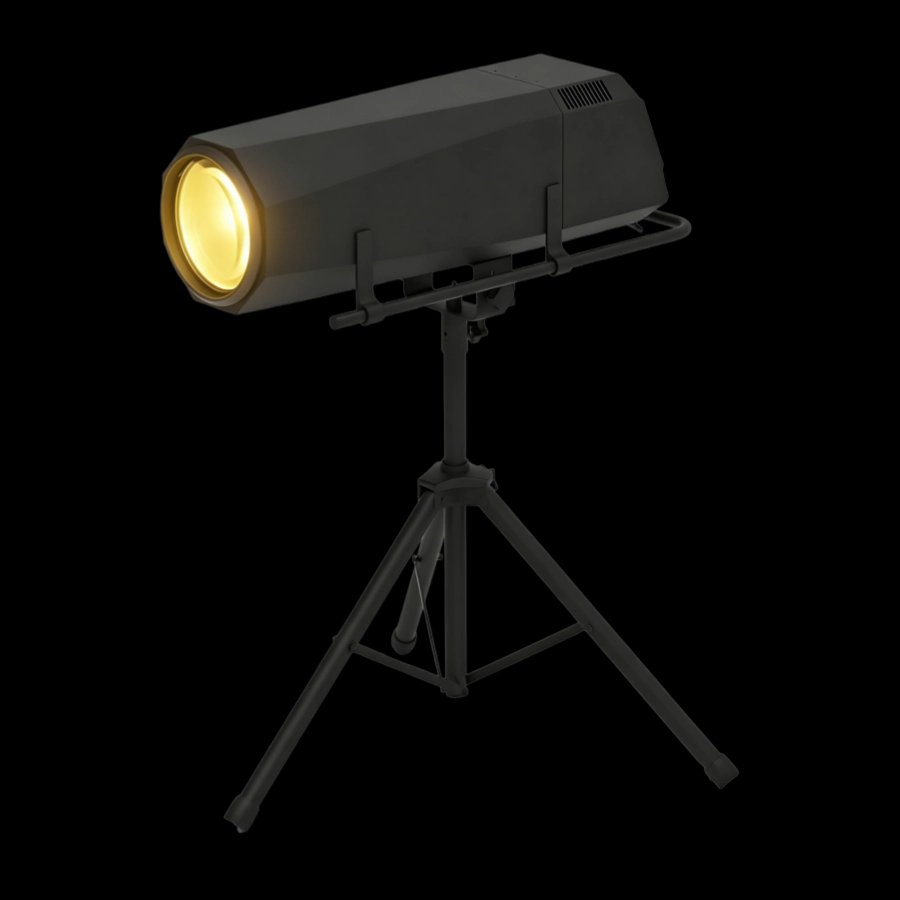
This 1200W waterproof LED follow spotlight with iris adjustment features strong light penetration, precise focusing, and smooth dimming with strobe effects.
Its rain- and dust-resistant design makes it suitable for outdoor performances, concerts, architectural lighting, and other applications. The LED light source boasts a long lifespan and stable, durable operation.
The Waterproof 1200W LED Follow Spot Light with Rotating Gobo features a rotating pattern sheet, delivering a powerful 1200W output for clear, focused beams and precise light tracking. Waterproof for outdoor use in all scenarios, the rotating pattern creates rich visual layers, making it ideal for large-scale indoor and outdoor performances, music festivals, light shows, and other events requiring focused attention and stage effects.
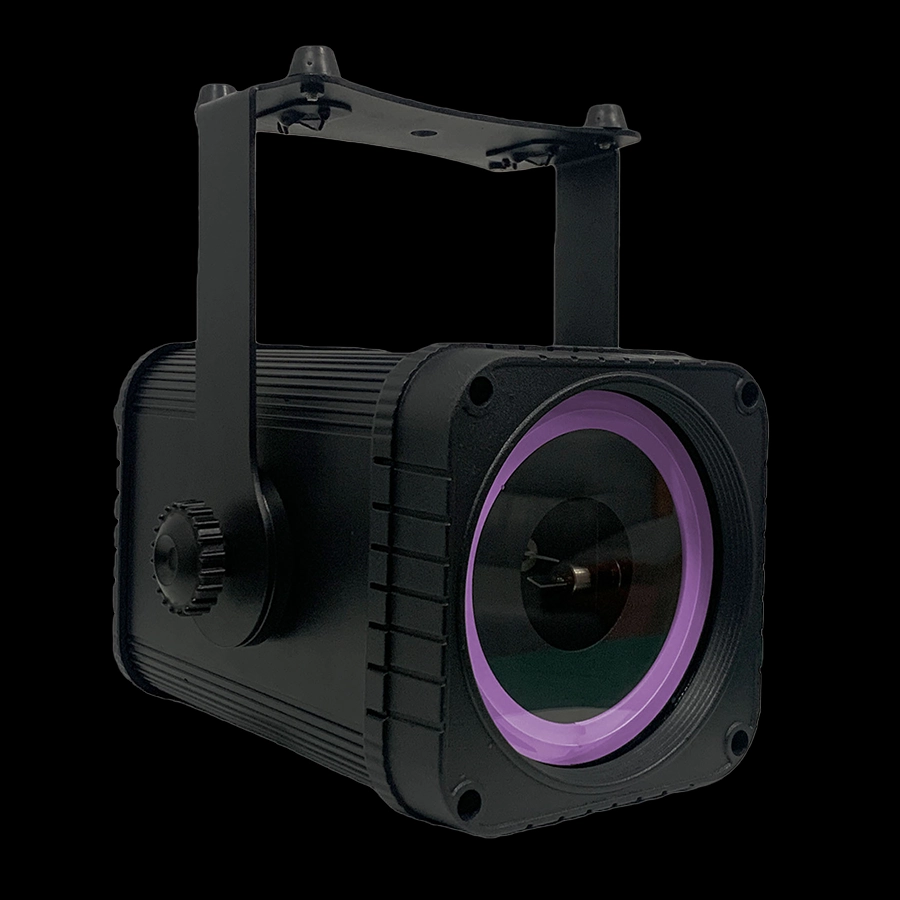
This IP65 waterproof 3W RGB animation laser battery light features an IP65 waterproof and dustproof design, making it suitable for both outdoor and indoor use. It supports rich RGB color combinations and dynamic animation effects, delivering a clear and fluid beam that can display text, patterns, and flowing light and shadow, among other visual representations.
Powered by a built-in battery, it requires no external power source, making it portable, easy to deploy, and simple to operate. Ideal for festive decorations, creating a garden atmosphere, and adding a touch of elegance to small events, it's energy-efficient, durable, and creates a truly immersive ambiance.
This IP65 waterproof 5W RGB animation laser battery light features an IP65 waterproof and dustproof design, making it suitable for both outdoor and indoor use. It supports rich RGB color combinations and dynamic animation effects, delivering a clear and fluid beam that can display text, patterns, and flowing light and shadow, among other visual representations.
Powered by a built-in battery, it requires no external power source, making it portable, easy to deploy, and simple to operate. Ideal for festive decorations, creating a garden atmosphere, and adding a touch of elegance to small events, it's energy-efficient, durable, and creates a truly immersive ambiance.
If you have any comments or good suggestions, please leave us a message, later our professional staff will contact you as soon as possible.
Lighting Innovators
Uplus Lighting is a leading integrated company specializing in R&D, design, production, and sales of stage lighting solutions.
 Scan QR Code
Facebook
Instagram
YouTube
VK