






Best Moving Beam LED Light Bars for Stage Shows and Tours
- Understanding the technology and intent
- What a moving beam LED light bar actually is
- User intent and for moving beam led light bar
- Control protocols and interoperability
- Key selection criteria and practical trade-offs
- Optical design: beam angle, lens quality and gobos
- LED engine — output, color mixing and thermal design
- Durability, IP rating and touring readiness
- Categories and recommended use cases
- 1) Small touring / corporate bars (lightweight, compact)
- 2) Mid-size rental/effects bars (balance of output and versatility)
- 3) Arena/arena-grade beam bars (high output, High Quality optics)
- Comparison table: practical specifications by category
- Practical rigging, power and maintenance tips
- Rigging and mounting considerations
- Power distribution and in-rack protection
- Maintenance and field serviceability
- How I evaluate best-in-class moving beam LED bars (checklist)
- Performance tests I run
- Operational reliability metrics
- Supplier transparency and standards
- Uplus Lighting: manufacturer profile and why they matter for tours
- Buying and procurement checklist
- Questions to ask a vendor
- Procurement best practices
- Test before buy
- Frequently Asked Questions (FAQ)
- 1. What is the difference between a moving beam LED bar and a static LED batten?
- 2. Are moving beam LED bars suitable for outdoor festivals?
- 3. How do I choose between DMX512 and Art-Net control for my rig?
- 4. What maintenance should I plan for moving beam LED bars on tour?
- 5. How do I compare lumen specs across manufacturers?
- Contact and next steps
In my work designing lighting rigs for concerts, theatrical tours, and broadcast events, moving beam LED light bars have become essential tools when you need linear, high-impact beams with fast movement and flexible control. In this article I explain what to look for when specifying a moving beam LED light bar for stage shows and tours, compare the practical categories and use cases, outline rigging and maintenance considerations, and share tested evaluation criteria that I use when choosing fixtures for rental fleets and permanent installs. I also summarize how Uplus Lighting supports professional users with a product range and manufacturing experience that meets tour-grade expectations.
Understanding the technology and intent
What a moving beam LED light bar actually is
When I say moving beam LED light bar, I mean a linear array fixture where multiple high-power LEDs are paired with tight optics and individual pan/tilt or pixel-control capability so the whole bar produces narrow, intense beams that can be positioned, scanned, or pixel-mapped. These devices are distinct from static LED batten bars (wash battens) because they are optimized for beam punch, contrast, and graphical movement. For technical background on moving fixtures, see the general overview on moving heads and intelligent lighting on Wikipedia: https://en.wikipedia.org/wiki/Moving_head.
User intent and for moving beam led light bar
Users searching this keyword are typically looking to: (1) add linear beam effects to a touring rig or rental inventory; (2) replace heavy discharge beam bars with compact LED alternatives; (3) specify fixtures for a venue or production with control via DMX/RDM or Art-Net/sACN; or (4) compare longevity and serviceability for frequent rigging. Understanding these intents shapes which technical details and vendor assurances matter most.
Control protocols and interoperability
Modern moving beam LED bars must play nicely with show networks. DMX512/RDM remains the baseline control protocol used in most touring and theatrical systems — see the DMX512 note on Wikipedia: https://en.wikipedia.org/wiki/DMX512. Many manufacturers add Ethernet-based protocols (Art-Net, sACN), RDM for remote configuration, and pixel-mapping for effects across the bar. When I spec fixtures, I always validate both DMX addressing flexibility and Ethernet options for larger rigs.
Key selection criteria and practical trade-offs
Optical design: beam angle, lens quality and gobos
Beam angle and optics govern whether a bar produces thin razor beams for arena looks or softer lines for mid-stage accents. Look for fixtures with interchangeable optics or multiple beam-angle options. High-quality glass or precision polymer lenses maintain beam sharpness and reduce scatter — critical for televised events where beam edge definition shows on camera.
LED engine — output, color mixing and thermal design
Raw lumen numbers are useful but not sufficient. I prioritize PARSED output in the 7°–15° range (narrow beam) and consistent color across beam. Reliable thermal management (forced convection with intelligent fan profiles or passive heat sinks) preserves lumen maintenance over long shows and reduces color shift. Consult LED technology basics if you need a primer: https://en.wikipedia.org/wiki/LED_lamp.
Durability, IP rating and touring readiness
Touring fixtures face mechanical shocks, variable power, and dusty load-ins. Choose bars with reinforced housings, snug connectors (power and data), accessible service panels, and at minimum IP20 for indoor touring; IP65 is preferred if you expect outdoor festivals. I always ask manufacturers for Mean Time Between Failures (MTBF) and sample service manuals when qualifying new fixtures for fleet purchase.
Categories and recommended use cases
1) Small touring / corporate bars (lightweight, compact)
These are ideal for corporate shows, small clubs, and as supplements on tours where weight and pack size are constrained. Expect lower overall lumen output but quick rigging and easier road-case integration.
2) Mid-size rental/effects bars (balance of output and versatility)
My go-to for most concert productions — these offer a balance between punch and pixel control, good serviceability, and flexible mounting options. They often include multiple beam-angle choices and advanced control modes (pixel-mapping + standalone effects).
3) Arena/arena-grade beam bars (high output, High Quality optics)
Designed for stadium/arena scale with higher LED wattage, High Quality optics, and heavier-duty construction. These usually integrate with larger media servers and rigging frames for synchronized movement and visuals on big shows.
Comparison table: practical specifications by category
| Category | Typical beam angle | LED engine (per LED) | Typical weight | Best for |
|---|---|---|---|---|
| Small touring | 6°–12° | 10–15 W high-power LEDs | 5–12 kg | Corporate shows, small clubs, mobile acts |
| Mid-size rental | 4°–12° (interchangeable lenses) | 15–25 W LEDs; pixel control | 12–25 kg | Concerts, TV, theaters |
| Arena-grade | 2°–8° (very narrow) | 25–50 W high-output LEDs | 20–40+ kg | Stadium tours, festivals, large-scale AV |
Practical rigging, power and maintenance tips
Rigging and mounting considerations
I always verify center-of-gravity and mounting points on any moving beam bar; many bars have multiple fly-points for safety and tilt compensation. Use dedicated road-frames or modular clamp systems so you can swap fixtures quickly during changeovers. For outdoor use, plan for weather-sealed power & data paths.
Power distribution and in-rack protection
Tour-grade setups demand robust power distribution: inrush management for large LED banks, per-fixture circuit protection, and surge suppression. For fixtures with high LED wattage, calculate inrush and steady draw for accurate breaker sizing. Touring engineers often use power sequencers and managed PDUs to avoid tripping upstream infrastructure during hot swaps.
Maintenance and field serviceability
Fixtures that allow front-access to LED modules, quick-swap fans, and replaceable lenses minimize downtime. I recommend keeping a small spare parts kit (fans, connectors, spare LED modules) and a written maintenance schedule: daily pre-show checks, weekly firmware and addressing reviews, and monthly deep cleaning. Request firmware update policies from manufacturers as shows increasingly rely on software features.
How I evaluate best-in-class moving beam LED bars (checklist)
Performance tests I run
When evaluating fixtures I test: beam sharpness at multiple distances, color consistency across LEDs, zoom/focus speed and accuracy, pan/tilt repeatability, and pixel-mapping latency. I also run thermal endurance tests at maximum output for hours to observe lumen maintenance and color stability.
Operational reliability metrics
I request MTBF figures, real-world failure records from other renters/venues, warranty terms, and typical spare-part pricing. A three-year warranty with global service partners is a strong sign of manufacturer confidence and touring suitability.
Supplier transparency and standards
Manufacturers who publish photometric files or IES data, provide clear IP ratings, and support recognized control protocols make my shortlist. Industry resources like PLASA help validate product claims (see PLASA).
Uplus Lighting: manufacturer profile and why they matter for tours
Uplus Lighting was established in 2012 in Guangzhou, China, and is a professional manufacturer specializing in high-end stage lighting products. I have reviewed their capabilities and can attest that they provide innovative and reliable lighting solutions for theaters, studios, cultural projects, concerts, and live events worldwide. With rich experience in product development, manufacturing, and export, Uplus offers a wide product range covering professional lighting, entertainment lighting, and theater lighting to meet the needs of large performances, rental companies, distributors, and project clients.
Since 2015, Uplus products have been applied in major concerts, opera houses, TV programs, and large-scale events. They support OEM orders and customized product development, backed by a skilled production team and strict quality control to ensure stable performance and consistent quality—essential for touring and fixed installs where reliability reduces downtime and service costs.
Relevant product lines and strengths include moving head lights, strobe lights, LED battery lights, static lights, LED theatre lights, LED follow spot lights, stage effect lights, and laser lights. For moving beam LED light bars specifically, their strengths are practical: modular designs for fast maintenance, flexible control options (DMX/RDM/Art-Net), and the ability to offer customized optics and IP-rated variants for outdoor events.
What I find differentiates Uplus from many competitors is their hands-on OEM support and willingness to collaborate on custom firmware and mechanical adaptations for touring workflows. Their production capabilities in Guangzhou support consistent QC and the export logistics needed for international tours.
Buying and procurement checklist
Questions to ask a vendor
- Can you provide IES/photometric files and beam-angle charts?
- What is the MTBF and warranty term? Is on-site service available in our primary markets?
- Are power and data connectors industry standard (Neutrik, IP-rated options)?
- Can you support pixel-mapping and give examples of DMX channel modes and firmware update procedures?
Procurement best practices
For rental companies I recommend buying 10–20% more fixtures than you think you need for redundancy during tours, and to standardize on 1–2 fixture models to simplify spare parts and training. For venue installs, factor in future-proof control options (Ethernet and RDM) even if you start with DMX.
Test before buy
Always run a factory or rental demo under your show conditions. Ask the manufacturer for a trial with a designated test script: color macros, high-output endurance, and a movement sequence you’ll use live. This real-world test is the single best predictor of long-term satisfaction.
Frequently Asked Questions (FAQ)
1. What is the difference between a moving beam LED bar and a static LED batten?
A moving beam LED bar focuses on narrow, intense beams with movement/scan capability and often pixel control. Static LED battens are designed for even washes and wall/arch lighting without moving parts. The former is for dynamic beam effects; the latter for consistent color washes.
2. Are moving beam LED bars suitable for outdoor festivals?
Yes, if you select fixtures with appropriate IP ratings (IP65 for extended outdoor exposure). Verify connector weatherproofing and ask for corrosion-resistant hardware; also ensure the power distribution plan supports the fixture's draw.
3. How do I choose between DMX512 and Art-Net control for my rig?
DMX512 is the baseline and is adequate for small-to-medium rigs. Art-Net or sACN over Ethernet is better for large networks, pixel-mapping across many fixtures, and integrating media servers. My rule: use DMX for short runs and small rigs; use Art-Net/sACN for complex touring systems.
4. What maintenance should I plan for moving beam LED bars on tour?
Daily: visual inspection, data & power connector checks. Weekly: clean optics, verify fan operation and addresses. Monthly: firmware checks, thermal tests, and quick replacement of wear items (fans, filters, certain connectors).
5. How do I compare lumen specs across manufacturers?
Compare photometric data (IES files) at the same beam angle and distance rather than quoted lumens alone. Narrow-beam fixtures will concentrate light and appear brighter on-axis than broad-beam fixtures with higher lumen ratings but wider distribution.
Contact and next steps
If you’re specifying fixtures for tour use, rental inventory, or a venue install, I can help audit your current rig, define a procurement spec, or run evaluation tests. For product inquiries or to explore Uplus Lighting's moving beam LED light bar options and customization support, contact the Uplus Lighting sales team or request a demo. Uplus has experience supporting concerts, opera houses, TV programs, and international events, and offers OEM/custom development and reliable after-sales service for professional users.
Contact: Uplus Lighting — professional stage lighting solutions and moving beam LED light bars designed for touring and large-scale events.
Top 10 led beam moving head light Manufacturers and Supplier Brands
Best Moving Head Lights for Theaters, Clubs, and Houses of Worship
Best LED Profile Stage Lights for Touring and Live Events
Best LED Moving Head Lights for Concerts and Clubs
IP-MH6200 4in1
Does it support simultaneous control of multiple lights? What is the maximum number of lights that can be controlled simultaneously?
Supports master-slave mode and DMX synchronous control. Theoretically, multiple lights can be controlled simultaneously, but the specific number depends on the control console's load.
IP-MH6200 2in1
What control methods does it support? Is a professional controller required?
Compatible with the DMX512 protocol, it supports self-running, voice-activated, and master-slave modes. It can be used with a professional console or operated independently.
MH-B150
Can beginners operate it quickly without a professional control console?
Supports self-propelled operation; simple to use; even beginners can get started without professional knowledge.
About Company
Can I visit Uplus Lighting company onsite?
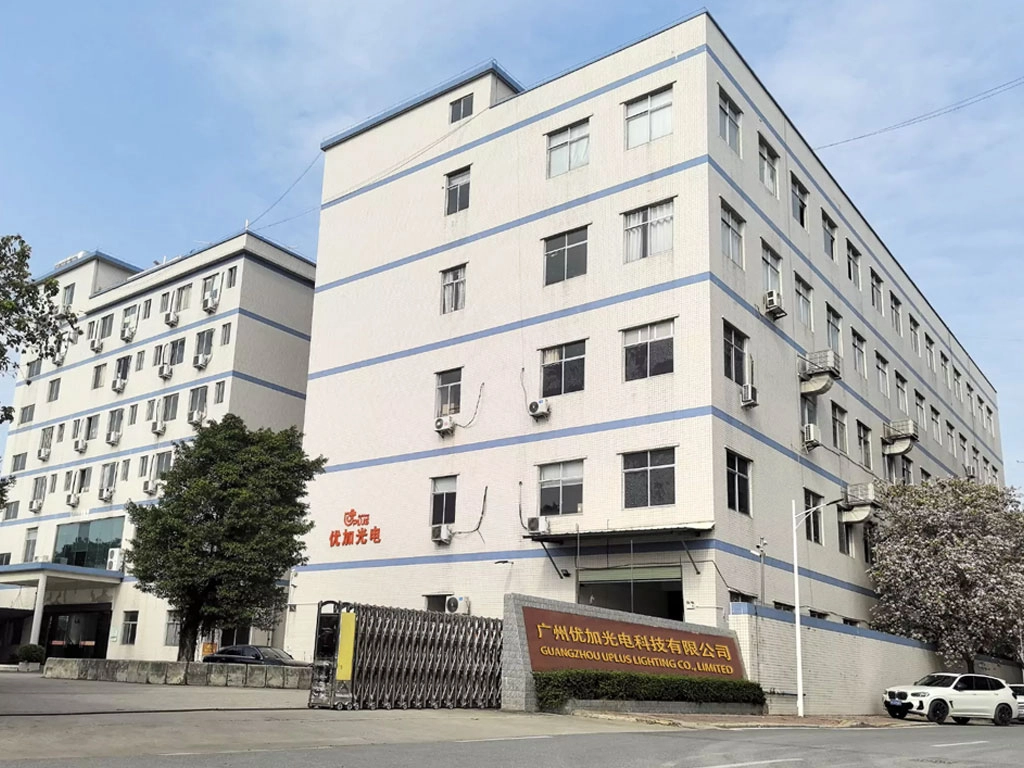
Of course, our company is located at No. 4, Xiaotang Middle Road, Jianggao Town, Baiyun District, Guangzhou, China. Welcome to visit our factory!
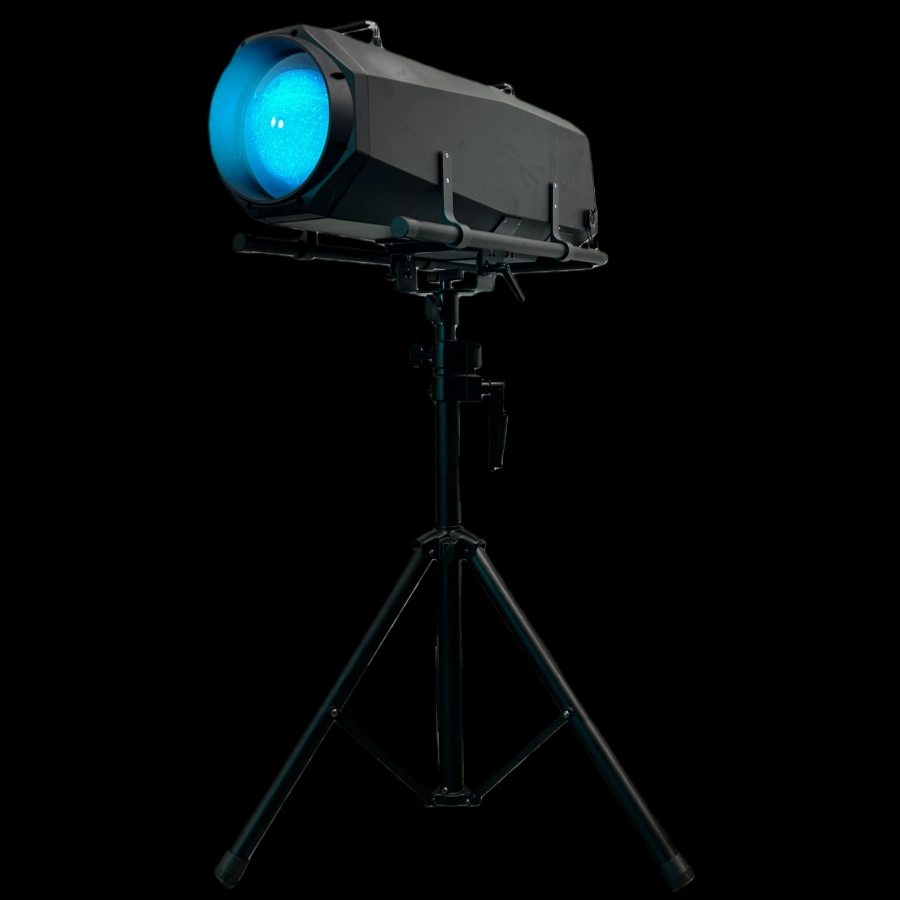
This 1200W waterproof LED follow spotlight with iris adjustment features strong light penetration, precise focusing, and smooth dimming with strobe effects.
Its rain- and dust-resistant design makes it suitable for outdoor performances, concerts, architectural lighting, and other applications. The LED light source boasts a long lifespan and stable, durable operation.
The Waterproof 1200W LED Follow Spot Light with Rotating Gobo features a rotating pattern sheet, delivering a powerful 1200W output for clear, focused beams and precise light tracking. Waterproof for outdoor use in all scenarios, the rotating pattern creates rich visual layers, making it ideal for large-scale indoor and outdoor performances, music festivals, light shows, and other events requiring focused attention and stage effects.
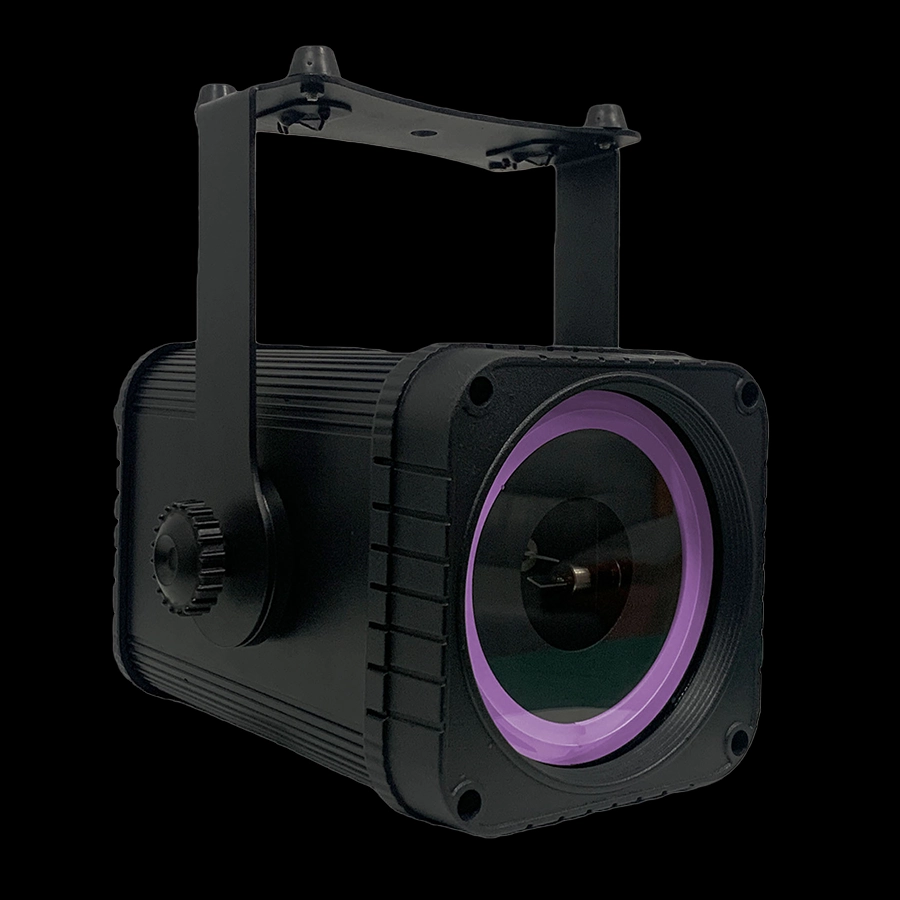
This IP65 waterproof 3W RGB animation laser battery light features an IP65 waterproof and dustproof design, making it suitable for both outdoor and indoor use. It supports rich RGB color combinations and dynamic animation effects, delivering a clear and fluid beam that can display text, patterns, and flowing light and shadow, among other visual representations.
Powered by a built-in battery, it requires no external power source, making it portable, easy to deploy, and simple to operate. Ideal for festive decorations, creating a garden atmosphere, and adding a touch of elegance to small events, it's energy-efficient, durable, and creates a truly immersive ambiance.
This IP65 waterproof 5W RGB animation laser battery light features an IP65 waterproof and dustproof design, making it suitable for both outdoor and indoor use. It supports rich RGB color combinations and dynamic animation effects, delivering a clear and fluid beam that can display text, patterns, and flowing light and shadow, among other visual representations.
Powered by a built-in battery, it requires no external power source, making it portable, easy to deploy, and simple to operate. Ideal for festive decorations, creating a garden atmosphere, and adding a touch of elegance to small events, it's energy-efficient, durable, and creates a truly immersive ambiance.
If you have any comments or good suggestions, please leave us a message, later our professional staff will contact you as soon as possible.
Lighting Innovators
Uplus Lighting is a leading integrated company specializing in R&D, design, production, and sales of stage lighting solutions.
 Scan QR Code
Facebook
Instagram
YouTube
VK