







Laser lights have revolutionized visual effect shows in entertainment and exhibition in today’s world. With breathtaking accuracy, high-colors, and colorful effects, laser lights are the designer darling that targets effective lighting designs. Installed on stage shows, architectural exhibitions, or theme parks, laser lights go on making their own mark on the visual story world. In this guidebook, we discuss the two broad categories of laser lights, review their use for indoor and outdoor purposes, provide tips on how to select the best laser light, and address safety advice best practices – all under Uplus Lighting , a reliable home brand.
Understanding the Type of Laser Light: Industrial or Entertainment Laser
Laser lights are of two massive categories: Entertainment Laser lights and industrial laser lights. Both utilize the technology of laser but for another purpose, design, and application.
Vivid Color and Programmable Effects
Entertainment lasers are utilized in an attempt to create breathtaking visual effects. They are even programmable so that they emit beams of different colors, sophisticated patterns, or even text and graphics. Million-color RGB laser systems provide millions of colors for designers to have plenty of room to design complex animations and programmed visual sequences. With the newest control protocols and software, each effect can be precisely timed against stage action or music, making these lasers an absolute requirement for great shows.
Long Throw and High Brightness Capability
Party lasers, especially outdoor lasers , are designed to give optimal brightness and beam clarity from the distance. High output guarantee provides that images can still be clear and noticeable even in well-lit areas or over wide open spaces. Outdoor Laser products are designed to cut through atmospheric disturbance like fog or ambient light so the viewer experience will not be disrupted and interactive in event spaces.
Narrow Beam Angle and Directionality
One of the features of laser lights that set them apart is their narrow beam angle. While regular light installations disperse the light to humongous areas, lasers have tightly collimated beams. It is this type of precision that makes it possible to project clean-shape shapes, delicate light trails, and kinetic motion that makes lifting any stage or architectural element possible.
Indoor vs. Outdoor Laser: A Detailed Look at Entertainment Laser Varieties
Among all categories of entertainment lasers under Entertainment Laser’s brand, indoor and Outdoor Laser types stand out as of the most fundamental difference. They have been constructed with varying technical specifications and purposes. From mini club lasers to outdoor show machinery with greater power, the choice is based on the target location and size of the audience.
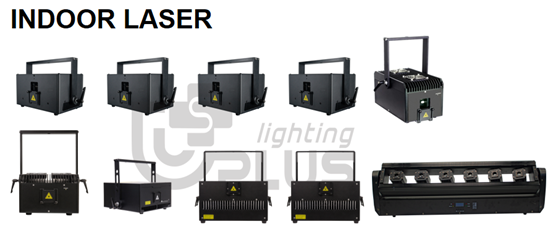
Indoor Laser Lights: Compact Power for Small Spaces
Indoor laser lights are typically of 1W-20W power and 1W stepped. They are meant to achieve fascistic effects indoors in events such as clubs, theatres, or event centers. As they are low-power, they can achieve the visual effect but not be risky to the public audience. Being small in size, they also fit ideally in on-site installs or space-restricted installs yet still provide professional-grade output.

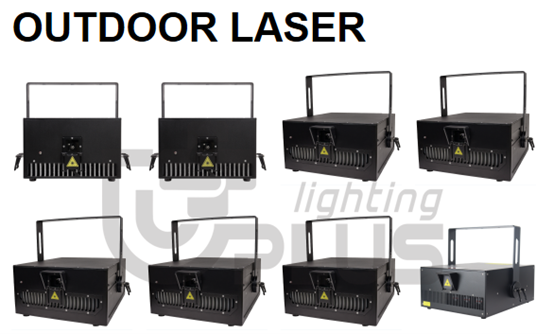
Outdoor Laser Lights: Particularly for Visual Effect in Broad Range
Outdoor laser lights are even more intense, usually between 10W and 50W, usually 5W or 10W increments. They are housed in weatherproof casings and made to be compatible with varied climatic conditions. With brightness and long beam distance, they are perfect for concert performances, building lighting, or light displays in the community. The majority of Outdoor Laser systems offer features like automatic pattern generation, time-coded programming, and fireworks or music synchronization that enhance the overall visual impact.

Extended Accessories: Enhancing Stability and Control
For effective operation and high-quality performance, entertainment lasers are often paired with some accessories. They may involve professional-grade control systems such as FB4 controllers that allow network-based setup and automation. Signal cables, weather-resistant power cables, and ILDA-compatible connectors are also essential in providing high-quality performance. Uplus Lighting offers a series of stable accessories that guarantee system stability and adapt to different lighting design configurations.
5 Key Factors to Consider When Choosing a Laser Light
Laser lights have been employed in concerts, clubs, exhibitions, and outdoor performances. To make an effective choice, one needs to consider performance-affecting factors, safety, and quality of effect. Five most important things to remember before buying a laser light are:
Power Output and Beam Diameter
The power output of the laser determines the brightness and distance the beam will travel. Higher power yields more light but is more susceptible to eye safety. For indoor performances, 1W–10W suffices. For outdoor performances, 10W–50W is ideal to ensure proper visibility at a distance. Even with scanning devices like galvanometers that reduce energy concentration by rapidly scanning the beam, direct exposure to eyes must still be avoided. Choosing the right power based on the venue size optimizes safety and performance.
Multiple Laser Pattern Effects
There should be an excellent laser light that offers beyond a single unidirectional beam. Sophisticated models come with text projection for projecting one’s own word or logo, ideal for use in corporate or special announcements. They also come with the facility to produce travelling graphics, in the form of geometric shapes as well as primitive 3D animation, producing drama and glamour to any act. Beam scanning at high speeds offers a dynamic, dynamic visual panache. All these characteristics make the laser light universal in an attempt to fit diverse events and occasions and provide the spectators with an immersive experience.

DMX512 Intelligent Control
DMX512 is among the most utilized lighting protocols. DMX lights can be combined with lighting desks for total syncing with other effects. The mode has laser control screens that can be synchronized with lighting cues and beat for music. DMX reduces hands-on operation during live shows. FB4 and computer software support professional control for certain laser systems so users can design and program their own individual graphics and sequences. They offer full creative control for professional stage production.
Dust Protection and Sealing
Laser lights have sensitive elements like mirrors and lenses. Dust, smoke, or oil droplets can reduce lightness or ruin the coating of the elements. For this reason, sealing is required. A sealed laser light with dust-proof glass reduces maintenance needs and protects the optical components. The lens should be inspected at regular intervals, but repeated cleaning should not be done because it wears off the coating. Choosing a sealed model enhances the product life and keeps it at the same level of performance after some time.

Real Power Accuracy
Some of the less expensive laser lights to purchase overestimate their power, and this may lead to lowered performance or the creation of safety risks. You should be certain that the amount of power that is delivered is actually shown. Products of high-quality manufacturers ensure that you obtain authentic levels of power, identical levels of brightness, and higher durability. Technical inspection and customer comments also help ensure the quality of a laser light. Always buy tested specifications to prevent wasting money on substandard or dangerous devices.
Common Application Instances of Laser Lights
Laser lights are used in various entertainment and event places, with their corresponding power levels and visual effect needs. Using the proper power based on the nature of the event provides the best performance and visual effect.
Bars and Clubs
For nightclubs and clubs, 1W to 5W output lasers are typically best. Those installations generally comprise the lower ceilings and smaller spaces in which greater quantities of soft but high-energy lighting are required. There, the lasers may be used to produce strobe-like flash beam effects and low-output sweep patterns that stimulate the dance floor but not the crowds. Coupled with movement and rhythm-determined graphics, they produce an energetic atmosphere without necessarily calling for great quantities of output intensity.
Weddings and Private Parties
Weddings and parties are enhanced by the application of laser lights at the power range of 3W to 10W. Parties and weddings need more personalized lighting, e.g., text projection—names of the couple or congratulatory messages—and the creation of soft romantic laser curtains. The middle power ensures safe, beautiful effects that project without intrusiveness. Indoor or semi-outdoor parties are given elegance and memory by these laser lights.
Concerts and Theaters
Theatrical shows, concerts, and indoor stages typically require lasers between 10W and 20W. This allows for comprehensive 3D laser animations to be projected and stage elements to be delineated by vivid beams. These powerful lasers deliver intense visual effect and support choreography and live performance, offering depth and dimension to the show. The enhanced beam power is featured in large auditoriums and invites spectator involvement.
Outdoor Music Festivals
Outdoor concerts require the most powerful laser lights, typically in 20W to 50W. These concerts are held in large open arenas and require long ranges of visibility and intense beam displays. These types of high-power lasers are able to produce tremendous sky projections, easily visible beam effects, and large field animations that wow huge crowds. They are required to create wonderful, realistic effects within outdoor evening environments such that the images look good even at distances.
Architectural Projection
When projecting laser effects onto large buildings or landmarks, a power range of 30W to 50W is recommended. This allows for broad surface coverage and highly visible patterns, even from long distances. These high-powered lasers can map dynamic visuals—such as animated designs, moving text, or seasonal themes—onto complex architectural surfaces. Used in urban installations or public celebrations, they turn structures into vivid storytelling platforms that capture attention and elevate cityscapes.
Safety Measures when Using Laser Lights
While laser lights give spectacular visual effects, their safe operation is quite crucial—especially in public or high-power applications. Following proper safety measures avoids injury, ensures compliance with the law, and maintains the equipment at its lifespan.
Avoiding Exposure to Direct Vision
The most important safety measure is never allowing laser beams to hit directly against a person’s eyes. Even low-power lasers may be irritating or create short-term vision issues, while high-power units may be hazardous, even inducing permanent damage to the eyes. Test beam paths rigorously during installation and never employ audience-facing angles at eye level. Scanning units help distribute energy across broader surfaces, but safety filters and careful programming are still required, especially for lasers over 5W.
Follow Local Laser Regulations for Outdoor Use
When using laser lights outdoors—such as music festivals or building projections—adherence to local safety rules and permit requirements is essential. The majority of areas restrict the upwards direction of high-power beams to prevent interference with aircraft or neighboring buildings. Ensure reference to local laser safety rules, and where necessary, consultation with a certified laser safety officer before usage. Adherence to these rules not only offers safety to the public but also protects organizers from potential legal and financial losses.
Keep Optics and Cooling Systems Clean
Laser lights must be maintained regularly to function safely and efficiently. Dust or residue can settle on lenses and mirrors over time, reducing brightness or causing heat buildup. Regularly inspect optical elements and clean them with the proper tools to avoid scratching the coating. Also, inspect the device’s cooling system—fan-based or liquid-cooled—to prevent overheating during long shows. Regular maintenance extends the life of equipment and keeps visual effects uncluttered and reliable.
Conclusion
Laser lights are a new technology of modern visual narration that can transform ordinary environments into breathtaking spectacles. Whether creating an in-the-round indoor show or lighting up a skyline with a powerful Outdoor Laser, knowing the various types, uses, and safety procedures is essential to realizing your creative vision. From small Entertainment Laser systems for clubs to heavy-duty, weather-resistant units for outdoor venues, Uplus Lighting provides a complete range of options designed specifically for professionals in lighting design. By selecting the right system, staying alert on safety measures, and optimizing the use of top-level control technologies, you can lead your event toward a visual wonder that is remembered. Trust expert engineering, diligent design, and top-notch assistance to have every beam of light a part of a cohesive and inspirational production. For more information, see: Stage lighting manufacturer – Uplus Lighting or contact Uplus Lighting team: Contact – Uplus Lighting .
 Scan QR Code
Facebook
Instagram
YouTube
VK