






How to compare power consumption of different moving head lights?
Stage moving head lights are pivotal in creating dynamic and captivating lighting effects for various events. Understanding their power consumption, selection criteria, and maintenance requirements is crucial for optimizing performance and efficiency.
1. How do the power consumption and energy efficiency of LED moving head lights compare to traditional halogen fixtures?
LED moving head lights are significantly more energy-efficient than traditional halogen fixtures. While conventional halogen or incandescent lights typically consume between 300W and 2,000W, LED moving heads usually operate within a range of 50W to 400W. This reduction in power usage translates to substantial energy savings over time. For instance, replacing a 1,000W halogen fixture with a 200W LED moving head can save approximately 800W per fixture. Over a 4-hour show, this equates to an energy saving of 3.2 kWh per fixture, amounting to $0.38 per show at an electricity cost of $0.12 per kWh. When scaled across multiple fixtures and performances, the savings become even more significant. ((https://www.upluslighting.com/guides/led-wash-light-moving-heads-energy-efficiency/))
2. What factors should be considered when selecting the appropriate wattage for moving head lights in different venue sizes?
Selecting the appropriate wattage for moving head lights depends on several factors:
Venue Size and Type: For small venues or home use, low-power moving head lights (50W–150W) are suitable. In commercial venues like bars or karaoke bars, higher-power fixtures (150W or more) are preferred to accommodate larger spaces and diverse lighting requirements. Professional performance venues, such as theaters and concerts, typically use high-power moving head lights (up to 1,200W) to meet precise lighting control needs.
Lighting Requirements: Consider the desired brightness, beam quality, and effects needed for the event. Higher wattage fixtures provide stronger brightness and richer color rendering, which is essential for large-scale events.
Budget Constraints: Higher wattage fixtures are more expensive, both in terms of initial investment and operational costs. It's important to balance the need for performance with budget limitations.
3. How does the lifespan of LED moving head lights impact maintenance costs compared to traditional fixtures?
LED moving head lights are designed for longevity, with LED sources commonly rated for 50,000 to 100,000 hours before reaching approximately 70% of their initial lumen output (L70). This extended lifespan reduces the frequency of lamp replacements compared to traditional fixtures, leading to lower maintenance costs. For example, a $3,000 moving head might expect $150–$300 per year in parts and labor under regular use.
4. What are the key specifications to evaluate when comparing different moving head light models?
When comparing moving head light models, consider the following specifications:
Lumen Output: Indicates the brightness of the fixture. For instance, a 200W LED moving head can produce up to 20,000 lumens, comparable to higher-wattage traditional fixtures.
Beam Angle and Zoom Range: Determines the spread and focus of the light. A fixture with a zoom range of 4°–60° offers versatility for various applications.
Color Rendering Index (CRI) and Correlated Color Temperature (CCT): Assess the quality and accuracy of color reproduction. High CRI values (above 90) and appropriate CCTs (e.g., 5,600K for daylight) are desirable.
Control Protocols: Ensure compatibility with your existing control systems, such as DMX512, Art-Net, or sACN.
Maintenance Requirements: Evaluate the ease of maintenance, availability of spare parts, and the manufacturer's support services.
5. How do moving head lights differ from static stage lights in terms of flexibility and application?
Moving head lights offer high flexibility with pan/tilt movements, color changes, gobo effects, and zoom capabilities, making them suitable for concerts, touring shows, and large events. In contrast, static stage lights, such as LED PARs or Fresnels, are typically used in theaters, TV studios, and fixed installations, providing consistent lighting without movement. The choice between moving head and static lights depends on the specific requirements of the event and venue.
6. What are the environmental and operational benefits of transitioning from traditional stage lighting to LED moving head lights?
Transitioning to LED moving head lights offers several benefits:
Energy Efficiency: LED fixtures consume significantly less power, reducing electricity costs and the environmental impact associated with energy consumption.
Reduced Heat Output: LEDs emit less heat, decreasing the need for extensive cooling systems and enhancing comfort for performers and crew.
Lower Maintenance Costs: The extended lifespan of LEDs reduces the frequency of lamp replacements and associated maintenance expenses.
Improved Lighting Quality: LEDs provide better color mixing, instant on/off capabilities, and more precise control over lighting effects.
In conclusion, understanding the power consumption, selection criteria, and maintenance requirements of stage moving head lights is essential for optimizing performance and efficiency. By considering these factors, you can make informed decisions that enhance the visual impact of your events while managing operational costs effectively.
For personalized recommendations and a detailed quote, please contact us at albee@upluslighting.com or visit our website at www.upluslighting.com.
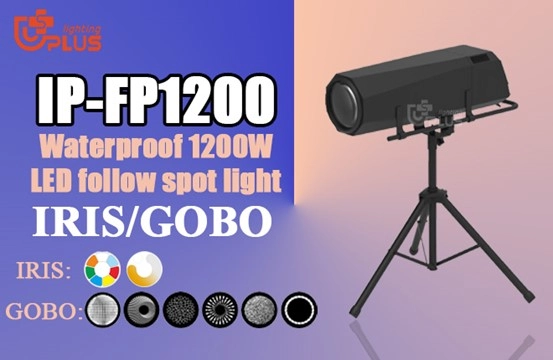
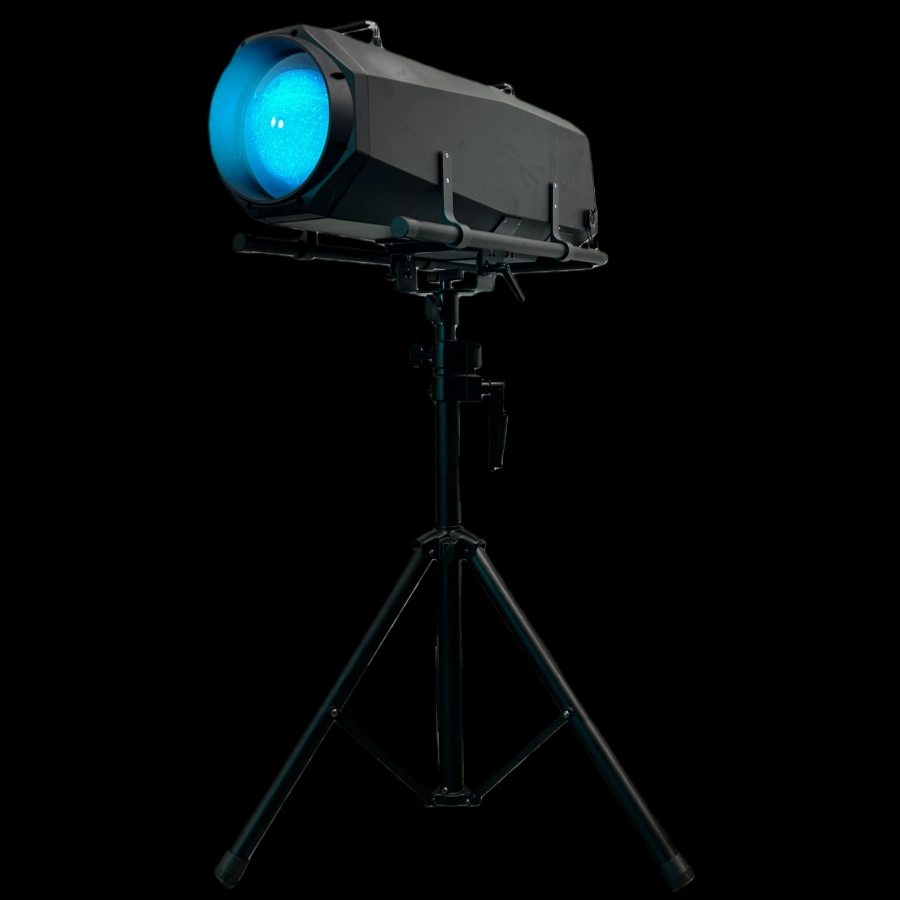
This 1200W waterproof LED follow spotlight with iris adjustment features strong light penetration, precise focusing, and smooth dimming with strobe effects.
Its rain- and dust-resistant design makes it suitable for outdoor performances, concerts, architectural lighting, and other applications. The LED light source boasts a long lifespan and stable, durable operation.
The Waterproof 1200W LED Follow Spot Light with Rotating Gobo features a rotating pattern sheet, delivering a powerful 1200W output for clear, focused beams and precise light tracking. Waterproof for outdoor use in all scenarios, the rotating pattern creates rich visual layers, making it ideal for large-scale indoor and outdoor performances, music festivals, light shows, and other events requiring focused attention and stage effects.
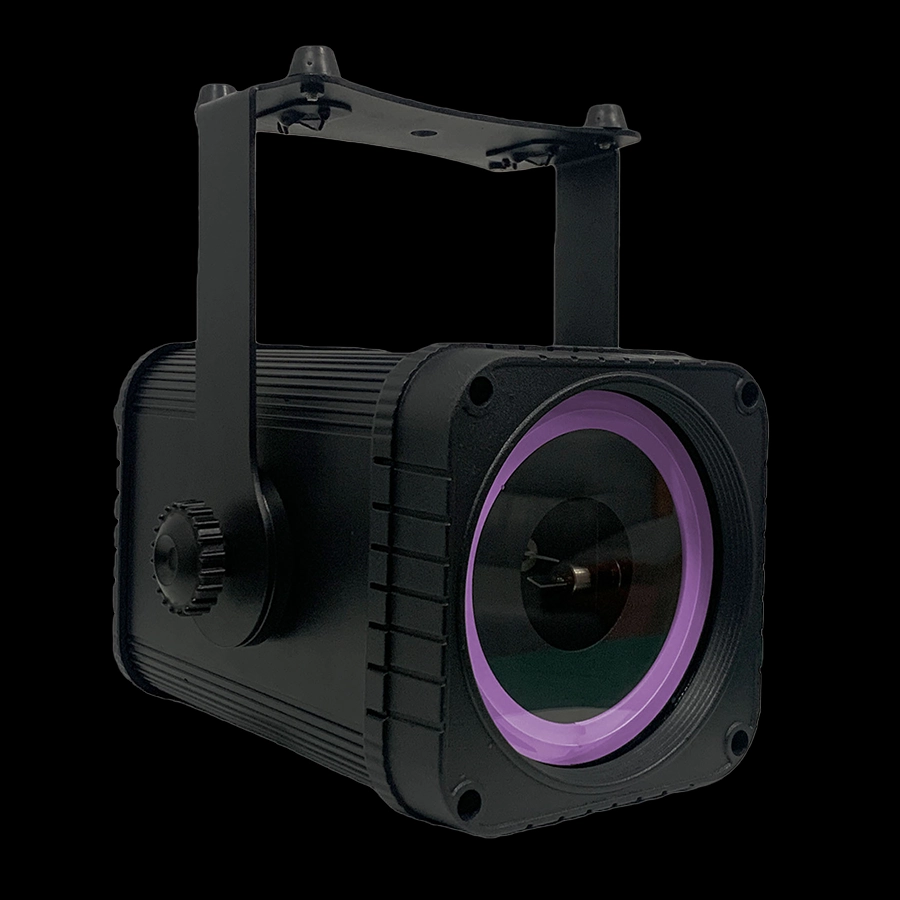
This IP65 waterproof 3W RGB animation laser battery light features an IP65 waterproof and dustproof design, making it suitable for both outdoor and indoor use. It supports rich RGB color combinations and dynamic animation effects, delivering a clear and fluid beam that can display text, patterns, and flowing light and shadow, among other visual representations.
Powered by a built-in battery, it requires no external power source, making it portable, easy to deploy, and simple to operate. Ideal for festive decorations, creating a garden atmosphere, and adding a touch of elegance to small events, it's energy-efficient, durable, and creates a truly immersive ambiance.
This IP65 waterproof 5W RGB animation laser battery light features an IP65 waterproof and dustproof design, making it suitable for both outdoor and indoor use. It supports rich RGB color combinations and dynamic animation effects, delivering a clear and fluid beam that can display text, patterns, and flowing light and shadow, among other visual representations.
Powered by a built-in battery, it requires no external power source, making it portable, easy to deploy, and simple to operate. Ideal for festive decorations, creating a garden atmosphere, and adding a touch of elegance to small events, it's energy-efficient, durable, and creates a truly immersive ambiance.
Stay updated on our latest news
If you have any comments or good suggestions, please leave us a message, later our professional staff will contact you as soon as possible.
Lighting Innovators
Uplus Lighting is a leading integrated company specializing in R&D, design, production, and sales of stage lighting solutions.
 Scan QR Code
Facebook
Instagram
YouTube
VK