






- Introduction
- What is a stage lighting bar and what is it used for?
- How do you choose the right stage lighting bar for your event or venue?
- What is the difference between an LED wash bar and a pixel mapping bar?
- Where are the best positions to mount and rig a stage lighting bar?
- How do you control a stage lighting bar using DMX?
- Can you use LED stage lighting bars for outdoor performances?
- What are the benefits of using linear wash lighting in stage design?
- How many DMX channels does a stage lighting bar typically require?
- Conclusion
- Call to Action
The Ultimate Guide to Stage Lighting Bars: Choosing the Best LED Wash or Pixel Mapping Setup
Introduction
A captivating stage presence is built on dynamic, versatile illumination, and few tools achieve this better than a stage lighting bar. Whether you are illuminating an intimate theater production, a massive concert, or a corporate keynote, linear lighting fixtures have become indispensable instruments for modern lighting designers. They offer a unique blend of powerful illumination and creative flexibility that traditional par cans or moving heads often cannot replicate.
Understanding how to leverage an LED batten or a complex pixel-controlled fixture can dramatically transform your visual presentation. From bathing a set in a seamless stage wash effect to creating mesmerizing, high-energy chases, these fixtures are true workhorses. Their elongated profile makes them perfect for edging stages, lining trusses, and creating structural geometry in mid-air.
In this comprehensive guide, we will explore everything you need to know about stage lighting bars. We will answer the most pressing questions lighting professionals and event planners have, helping you navigate the technical specifications, networking with a DMX control system, and the boundless creative possibilities of these essential stagecraft fixtures.
What is a stage lighting bar and what is it used for?
A stage lighting bar—frequently referred to as an LED batten, strip light, or linear wash fixture—is an elongated lighting instrument housing a row of light-emitting diodes (LEDs). Unlike traditional point-source lights that emit a circular beam, a lighting bar projects a wide, linear throw of light. This distinct shape allows it to cover large areas of a stage, backdrop, or set piece evenly without the obvious overlapping circles caused by traditional round fixtures.
These fixtures are primarily used to create a uniform wash of color over a wide surface. When placed along the floor to illuminate a cyclorama wall or backdrop, they eliminate the dark spots and scalloping that degrade the visual quality of a set. Their slim, low-profile design also means they can be easily hidden behind scenery, tucked under risers, or placed along the downstage edge without blocking the audience's view.
Beyond basic background washing, modern stage lighting bars are frequently used as "eye-candy" fixtures. Because they can be mounted facing the audience, lighting designers use them to create structural lines of light, blinding strobe effects, or dynamic color chases that pulse in time with the music. This dual utility makes them a staple in both subtle theatrical environments and high-energy concert touring.
How do you choose the right stage lighting bar for your event or venue?
Selecting the ideal stage lighting bar requires a careful assessment of your venue's size, the type of events you host, and your creative requirements. The first factor to consider is the light output and wattage. For a small indoor theater or an intimate club, standard 3-watt or 5-watt LED diodes will provide ample brightness. However, for an arena-sized concert or a daytime outdoor festival, you will need high-output fixtures featuring 10-watt or 15-watt LEDs to cut through ambient light and thick atmospheric haze.
The color mixing capabilities of the fixture are equally important to consider. Basic models offer standard RGB (Red, Green, Blue) mixing, but professional-grade fixtures typically include RGBW (adding White) or RGBAW+UV (adding Amber, White, and Ultraviolet). A broader color palette allows for more precise color matching, richer ambers, warmer whites, and deeper, more saturated theatrical hues. If you need natural-looking skin tones for broadcast or corporate events, prioritizing fixtures with a high CRI (Color Rendering Index) is essential.
Finally, evaluate the beam angle and optical design. A narrow beam angle (e.g., 10 to 15 degrees) is perfect for creating sharp, piercing curtains of light or precise pixel effects in mid-air. Conversely, a wider beam angle (e.g., 40 to 60 degrees) is necessary if your primary goal is to wash a large backdrop from a short throw distance. Some premium bars even offer motorized zoom, providing the ultimate flexibility to switch between a tight, punchy beam and a wide, soft wash on the fly.
What is the difference between an LED wash bar and a pixel mapping bar?
While they may look identical from the outside, LED wash bars and pixel mapping bars serve fundamentally different creative purposes based on their internal electronics. An LED wash bar operates as a single, unified light source. When you send a command to change the color to red or dim the brightness, the entire bar responds uniformly. This makes them highly efficient and easy to program for tasks like lighting a backdrop or providing a general stage wash, requiring very few control channels.
A pixel mapping bar, on the other hand, allows for independent control of every single LED—or small clusters of LEDs—within the fixture. This advanced level of pixel control means that one end of the bar can be blue while the other is red, or a white strobe effect can fluidly "run" down the length of the fixture. This transforms the lighting bar from a simple illumination tool into a low-resolution video display element capable of showing complex patterns, text, and fluid animations.
The choice between the two dictates your programming complexity and console requirements. Pixel mapping bars require significantly more processing power and networking bandwidth to operate. Lighting designers often use specialized media servers or advanced lighting consoles to "map" custom video content across dozens of these bars, creating massive, synchronized visual canvases that are a core aesthetic in modern electronic dance music (EDM) and pop concerts.
Where are the best positions to mount and rig a stage lighting bar?
The physical versatility of the stage lighting bar allows it to be rigged in numerous positions, each achieving a distinct visual effect. One of the most common applications is cyc or backdrop lighting. By placing the bars end-to-end on the floor at the upstage edge (uplighting) or hanging them from an upstage truss (downlighting), designers can create a smooth, deeply saturated canvas of color behind the performers to establish mood and depth.
Another highly popular mounting position is along the downstage edge to serve as footlights. Placing low-profile LED battens at the front of the stage pointing upward provides an excellent theatrical footlight effect. This helps eliminate harsh shadows on performers' faces caused by steep overhead lighting, and it adds a dramatic, glowing dynamic to the overall stage picture without obstructing the audience's sightlines.
For modern, high-energy designs, rigging lighting bars on overhead trusses or vertical side towers creates striking geometric architectures. Designers frequently arrange them in continuous lines to frame the stage portal, form floating geometric shapes (like squares, triangles, or chevrons), or point them directly at the audience to serve as aggressive blinder effects. This architectural approach relies heavily on the clean, linear nature of the fixture.
How do you control a stage lighting bar using DMX?
Controlling a stage lighting bar effectively requires an understanding of the digital communication standard used throughout the entertainment industry. The standard protocol for this is DMX512, which allows a central lighting console to send precise digital instructions to multiple fixtures over a daisy-chained cable network. By assigning a unique starting DMX address to your lighting bar, you tell the fixture exactly which instructions to listen to on the network.
To connect the system, you run a 3-pin or 5-pin XLR data cable from the output of your DMX controller into the "DMX In" port of your first lighting bar. From there, you connect the "DMX Out" of that fixture to the "DMX In" of the next, continuing this daisy chain until all fixtures are sequentially linked. To prevent data reflections and erratic lighting behavior, it is a crucial best practice to insert a DMX terminator plug into the output of the final fixture in the chain.
Once connected and addressed, the lighting console uses specific DMX channels to control the fixture's various attributes. For a simple setup, moving a fader on the console might increase the red intensity, while another fader controls the overall master dimmer or strobe rate. Advanced control involves programming complex cues, automated chases, and color fades into the console's memory, allowing for flawless, synchronized playback during a live performance.
Can you use LED stage lighting bars for outdoor performances?
Yes, LED stage lighting bars can absolutely be used for outdoor performances, provided you select fixtures specifically engineered to withstand environmental hazards. Standard indoor fixtures will quickly fail or pose a safety hazard if exposed to rain, heavy humidity, or wind-blown dust. Therefore, outdoor-rated stage lighting bars are built with sealed aluminum housings, specialized waterproof cable connectors, and robust internal gaskets to protect the sensitive internal electronics.
When sourcing fixtures for an outdoor festival or architectural installation, you must look at the device's IP (Ingress Protection) rating. As defined by the IEC 60529 international standard, this two-digit code specifies the level of protection against solid objects and liquids. For outdoor stage lighting, an IP65 rating is the industry minimum. The "6" ensures the fixture is completely dust-tight, while the "5" signifies protection against low-pressure water jets from any direction, making it safe for use in heavy rain.
For extreme environments or permanent outdoor architectural installations, you may even encounter IP67-rated lighting bars. These fixtures are built to an even higher tolerance, capable of surviving temporary submersion in water. Regardless of the fixture's rating, it is crucial to ensure that all data and power cables used in the outdoor rig are equally weather-rated to maintain the electrical integrity and safety of the entire lighting system.
What are the benefits of using linear wash lighting in stage design?
The primary benefit of using linear wash lighting is the homogenous coverage it provides. Because the light source is physically stretched across a bar (often ranging from 0.5 to 1 meter in length), it naturally emits a wide, flat beam. This eliminates the overlapping beam edges, intense hot spots, and harsh shadows that occur when trying to wash a flat surface using multiple circular fixtures. The result is a flawlessly smooth gradient of color across walls, sets, and curtains.
Another significant advantage is modularity and scalability. Stage lighting bars are designed with flat edges allowing them to be placed tightly end-to-end to create continuous, unbroken ribbons of light of any length. This allows designers to seamlessly scale their lighting rig to fit any venue size. Whether you need a short strip to line a DJ booth or a massive continuous border framing a festival stage, linear fixtures lock together to achieve the desired scale without breaking the visual aesthetic.
Finally, linear wash lighting maximizes spatial efficiency. Stage real estate is often highly contested, with audio monitors, bulky set pieces, and performers competing for limited space. The low-profile, narrow footprint of a stage lighting bar allows it to be tucked tightly against walls, hidden inside custom set pieces, or lined neatly along the edge of the stage. They deliver immense light output while remaining visually unobtrusive when powered off.
How many DMX channels does a stage lighting bar typically require?
The number of DMX channels a stage lighting bar requires varies drastically depending on its internal functionality and the specific operational mode (or "personality") you choose on the fixture. In its simplest form, an LED wash bar operating as a single unified light source might only require 3 to 7 DMX channels. For example, a basic 4-channel mode might allocate Channel 1 to Red, Channel 2 to Green, Channel 3 to Blue, and Channel 4 to a Master Dimmer. This is highly efficient and leaves plenty of room on your DMX universe for other lights.
However, when you introduce pixel mapping capabilities, the channel count increases exponentially. If you have a 1-meter bar with 12 independently controllable RGB LED segments, the fixture will require at least 36 channels just for basic color control (12 segments × 3 colors). Once you add master dimmers, strobe channels, and built-in macro effects, a single bar can easily consume 40 to 50 channels.
For ultra-high-resolution pixel bars used in premium touring rigs and television broadcasts, the channel count can be staggering. Some advanced bars feature 72 or more individual LED pixels, each with RGBW parameters, pushing the requirement well past 300 channels per fixture. Because a single standard DMX universe only holds 512 channels, lighting designers often have to utilize advanced networking protocols like Art-Net or sACN to manage the dozens of data universes required to run a complex, pixel-mapped linear lighting rig.
Conclusion
Stage lighting bars have fundamentally reshaped the way designers approach stagecraft, offering an unparalleled mix of raw illumination power and intricate visual effects. From laying down flawless blankets of saturated color to executing mind-bending pixel animations, these linear fixtures are a core component of any modern lighting inventory.
By understanding the distinct differences between standard wash battens and pixel-mapped variants, evaluating the correct IP ratings for your environment, and mastering the necessary DMX channel requirements, you can confidently specify the perfect fixtures for your next production. Ultimately, investing in the right stage lighting bar will elevate the production value of your venue, ensuring that every performance leaves a lasting, visually stunning impression on your audience.
Call to Action
Contact our team of lighting experts today to schedule a consultation and find the perfect stage lighting bar setup for your venue's unique needs!
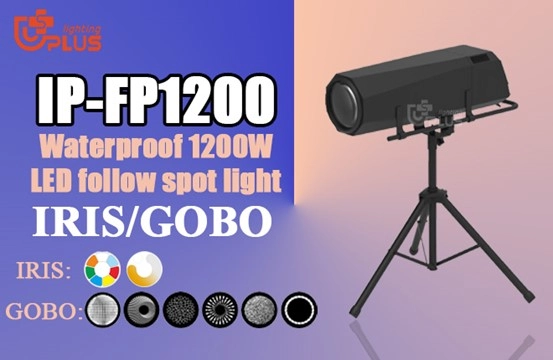
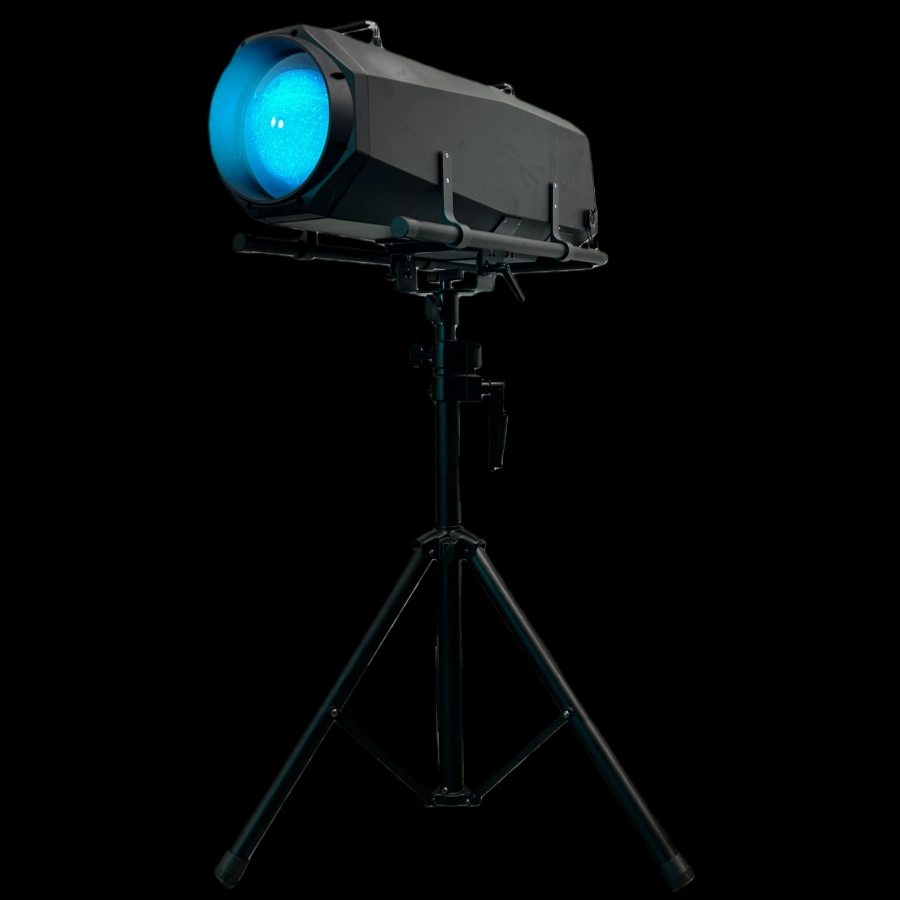
This 1200W waterproof LED follow spotlight with iris adjustment features strong light penetration, precise focusing, and smooth dimming with strobe effects.
Its rain- and dust-resistant design makes it suitable for outdoor performances, concerts, architectural lighting, and other applications. The LED light source boasts a long lifespan and stable, durable operation.
The Waterproof 1200W LED Follow Spot Light with Rotating Gobo features a rotating pattern sheet, delivering a powerful 1200W output for clear, focused beams and precise light tracking. Waterproof for outdoor use in all scenarios, the rotating pattern creates rich visual layers, making it ideal for large-scale indoor and outdoor performances, music festivals, light shows, and other events requiring focused attention and stage effects.
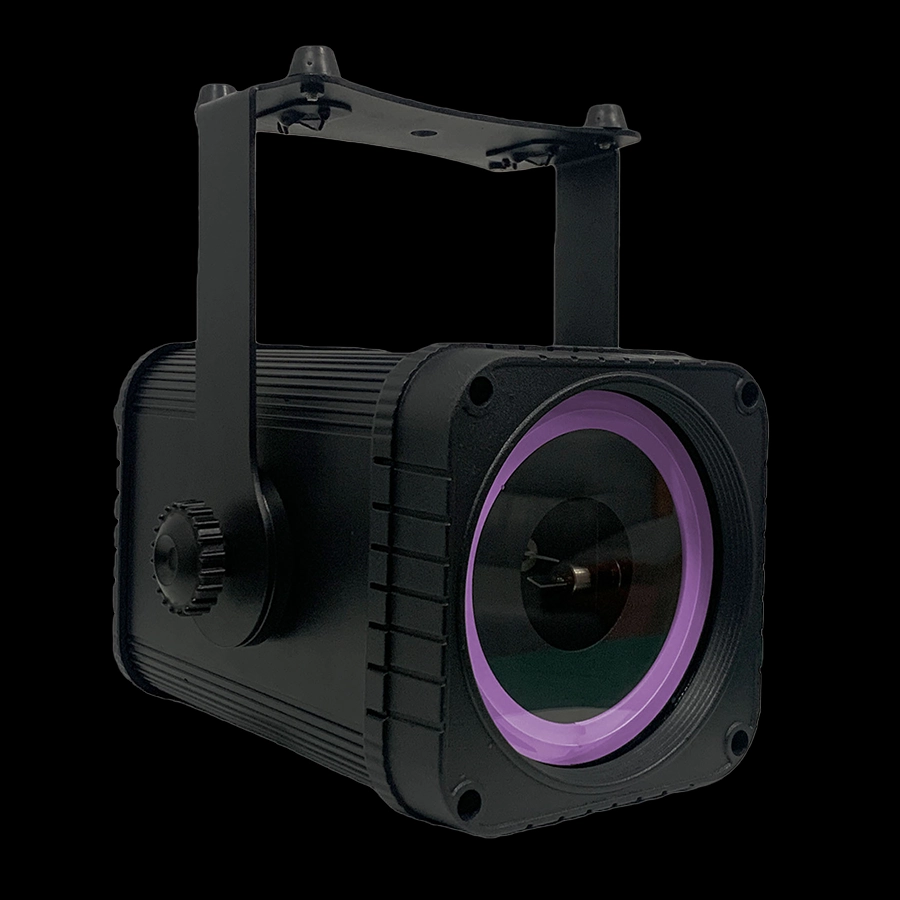
This IP65 waterproof 3W RGB animation laser battery light features an IP65 waterproof and dustproof design, making it suitable for both outdoor and indoor use. It supports rich RGB color combinations and dynamic animation effects, delivering a clear and fluid beam that can display text, patterns, and flowing light and shadow, among other visual representations.
Powered by a built-in battery, it requires no external power source, making it portable, easy to deploy, and simple to operate. Ideal for festive decorations, creating a garden atmosphere, and adding a touch of elegance to small events, it's energy-efficient, durable, and creates a truly immersive ambiance.
This IP65 waterproof 5W RGB animation laser battery light features an IP65 waterproof and dustproof design, making it suitable for both outdoor and indoor use. It supports rich RGB color combinations and dynamic animation effects, delivering a clear and fluid beam that can display text, patterns, and flowing light and shadow, among other visual representations.
Powered by a built-in battery, it requires no external power source, making it portable, easy to deploy, and simple to operate. Ideal for festive decorations, creating a garden atmosphere, and adding a touch of elegance to small events, it's energy-efficient, durable, and creates a truly immersive ambiance.
Stay updated on our latest news
If you have any comments or good suggestions, please leave us a message, later our professional staff will contact you as soon as possible.
Lighting Innovators
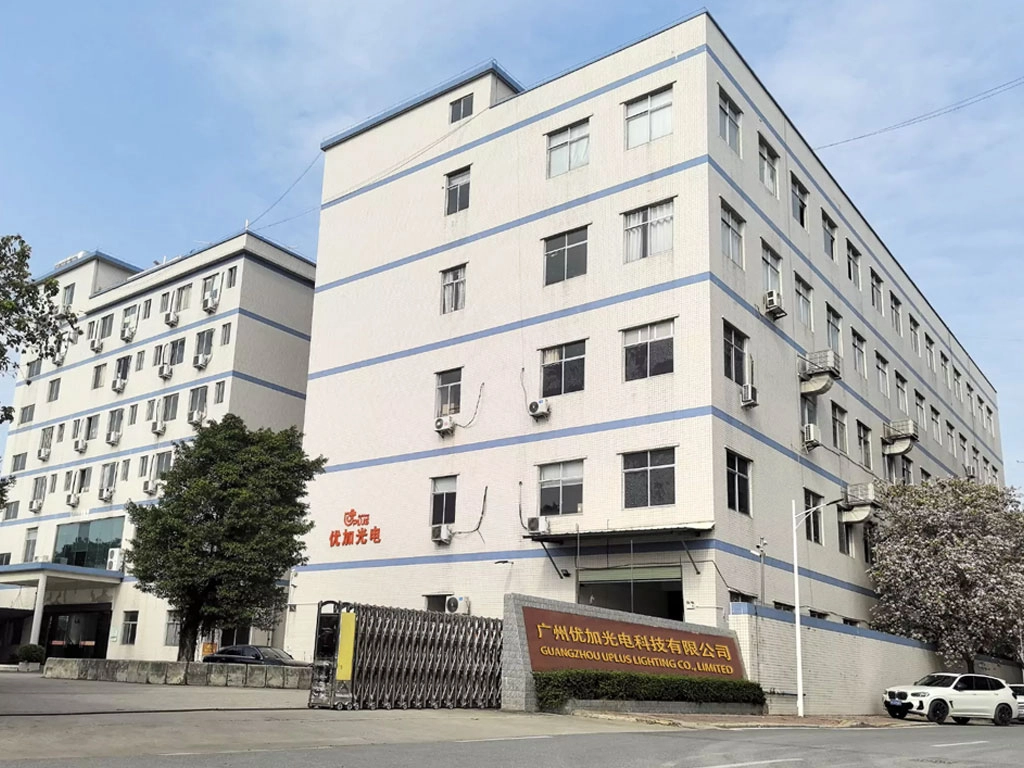
Uplus Lighting is a leading integrated company specializing in R&D, design, production, and sales of stage lighting solutions.
 Scan QR Code
Facebook
Instagram
YouTube
VK