






What DMX control options to expect in bee eye moving lights?
When selecting stage lighting, particularly Bee Eye moving lights, it's crucial to understand their features and control options to ensure they meet your performance needs. Below are six specific questions frequently asked by beginners, along with in-depth answers to guide your decision-making process.
1. What are the key features of Bee Eye moving lights that distinguish them from traditional moving head lights?
Bee Eye moving lights are designed to create dynamic, kaleidoscopic effects by utilizing a rotating lens disc in front of a multi-LED array. This setup allows for the projection of intricate patterns and textures, adding depth and visual interest to performances. Unlike traditional moving head lights, which typically produce a single beam, Bee Eye lights can generate multiple beams that fan out and recombine, creating a more immersive visual experience.
2. How does the DMX control protocol integrate with Bee Eye moving lights, and what functionalities does it offer?
The DMX512 protocol is the industry standard for controlling stage lighting, including Bee Eye moving lights. It allows for precise management of various aspects of the fixture, such as pan and tilt movements, color mixing, intensity, strobing effects, and lens rotation. By assigning specific DMX channels to each function, lighting designers can synchronize multiple fixtures, create complex lighting sequences, and ensure cohesive visual effects across the stage.
3. What are the typical DMX channel modes available for Bee Eye moving lights, and how do they affect control complexity?
Bee Eye moving lights often support multiple DMX channel modes, such as 10, 17, or 22 channels, each offering varying levels of control detail. For instance, a 10-channel mode might provide basic control over pan, tilt, color mixing, and strobe effects, suitable for simpler setups. In contrast, a 17-channel mode could offer additional fine-tuning capabilities, including precise lens rotation and speed adjustments, allowing for more intricate programming. Selecting the appropriate channel mode depends on the complexity of your lighting design and the level of control required.
4. How do individual LED control and pixel mapping enhance the versatility of Bee Eye moving lights?
Individual LED control and pixel mapping enable each LED within a Bee Eye moving light to be addressed separately for color and intensity via DMX. This feature allows for the creation of dynamic visual effects, such as displaying text, logos, or intricate patterns directly on the fixture's face. By dividing the LEDs into controllable zones, lighting designers can craft complex visual sequences that respond to music or other performance elements, enhancing the overall impact of the show.
5. What are the considerations for power planning when integrating multiple Bee Eye moving lights into a stage setup?
When planning the power requirements for multiple Bee Eye moving lights, it's essential to account for each fixture's power consumption and the total available circuit capacity. For example, if each fixture consumes approximately 100W, a 15A/120V circuit (1,800W) can support up to 18 fixtures, while a 20A/120V circuit (2,400W) can support up to 24 fixtures. It's crucial to ensure that the total power draw does not exceed the circuit's capacity to prevent overloading and potential electrical hazards.
6. How do control modes like Master/Slave, Sound-Activated, and Auto-Run function in Bee Eye moving lights, and when are they appropriate to use?
Bee Eye moving lights often offer multiple control modes to suit different performance scenarios:
Master/Slave Mode: In this mode, one fixture acts as the master, and all connected fixtures mirror its behavior via DMX daisy chain. This setup is useful for synchronized multi-head shows without a controller, as the master runs its own program or manual settings, and every slave follows in sync.
Sound-Activated Mode: The built-in microphone triggers movement, color changes, and effects in response to ambient audio (music, beats). This mode is ideal for events where lighting needs to dynamically respond to live music or sound without external control.
Auto-Run Mode: Built-in preprogrammed sequences run on power-up, with the fixture panning, tilting, rotating, and changing colors through its internal program library automatically. This mode is suitable for installations where the lighting needs to operate autonomously without external control.
Understanding these control modes allows lighting designers to choose the most appropriate operation method based on the specific requirements of their performance or installation.
In conclusion, Bee Eye moving lights offer unique visual effects and versatile control options that can significantly enhance stage performances. By understanding their features, DMX control capabilities, and operational modes, you can make informed decisions to achieve the desired lighting effects for your events.
For a personalized quote or more information, please contact us at albee@upluslighting.com or visit our website at www.upluslighting.com.
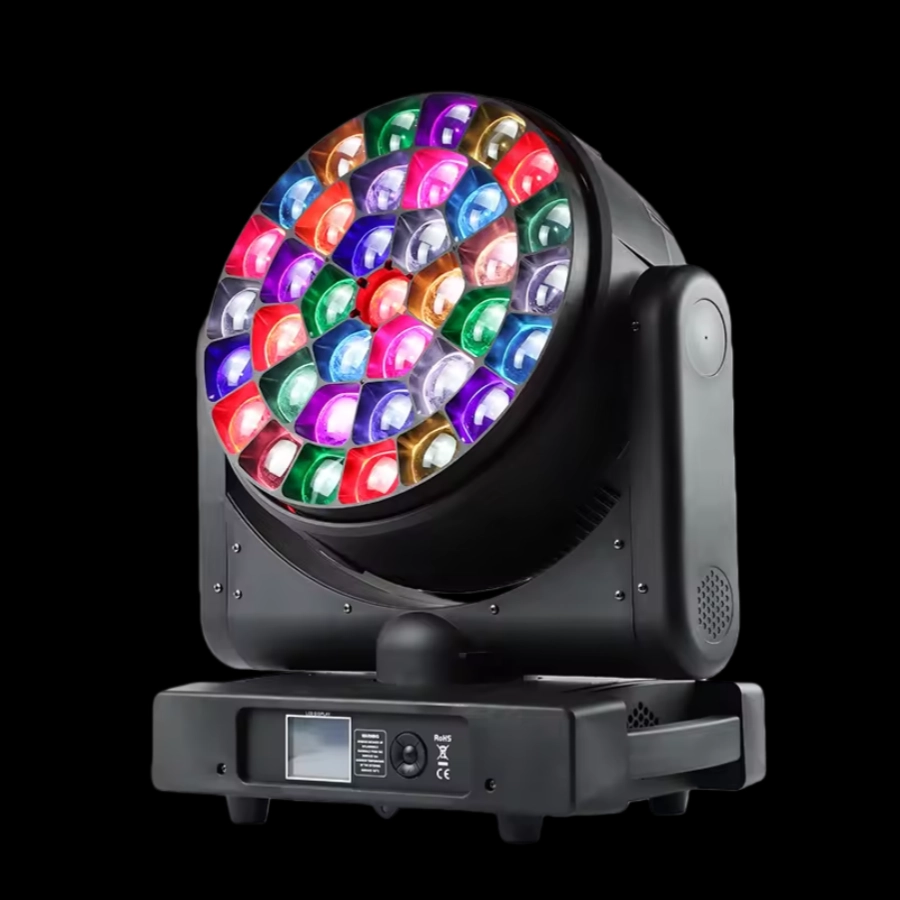
K25: 37*40W Wash zoom & Bee eye moving head, 37*40W LEDs integrate wall washing, zoom and bee eye triple light effects, precise light control, rich light effect layers, suitable for professional scenarios such as stage performances and cultural tourism lighting.
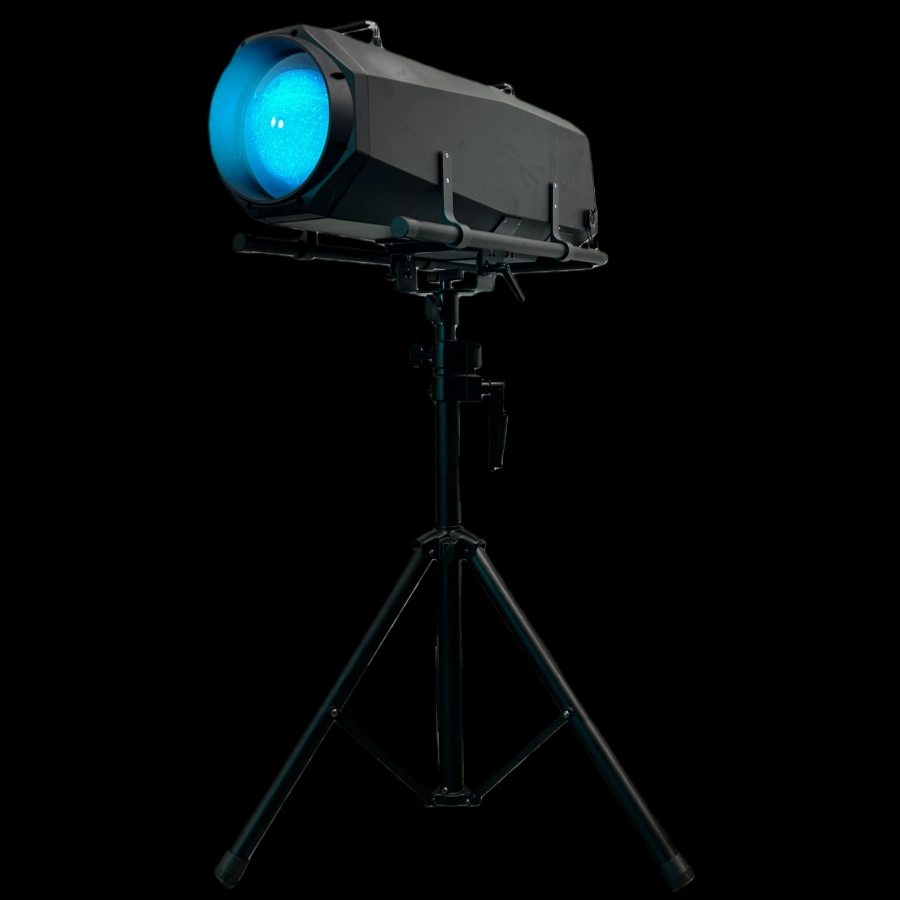
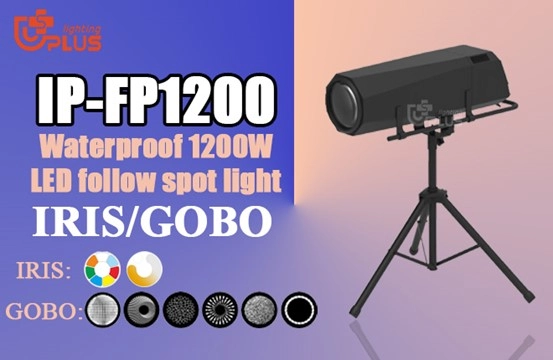
This 1200W waterproof LED follow spotlight with iris adjustment features strong light penetration, precise focusing, and smooth dimming with strobe effects.
Its rain- and dust-resistant design makes it suitable for outdoor performances, concerts, architectural lighting, and other applications. The LED light source boasts a long lifespan and stable, durable operation.
The Waterproof 1200W LED Follow Spot Light with Rotating Gobo features a rotating pattern sheet, delivering a powerful 1200W output for clear, focused beams and precise light tracking. Waterproof for outdoor use in all scenarios, the rotating pattern creates rich visual layers, making it ideal for large-scale indoor and outdoor performances, music festivals, light shows, and other events requiring focused attention and stage effects.
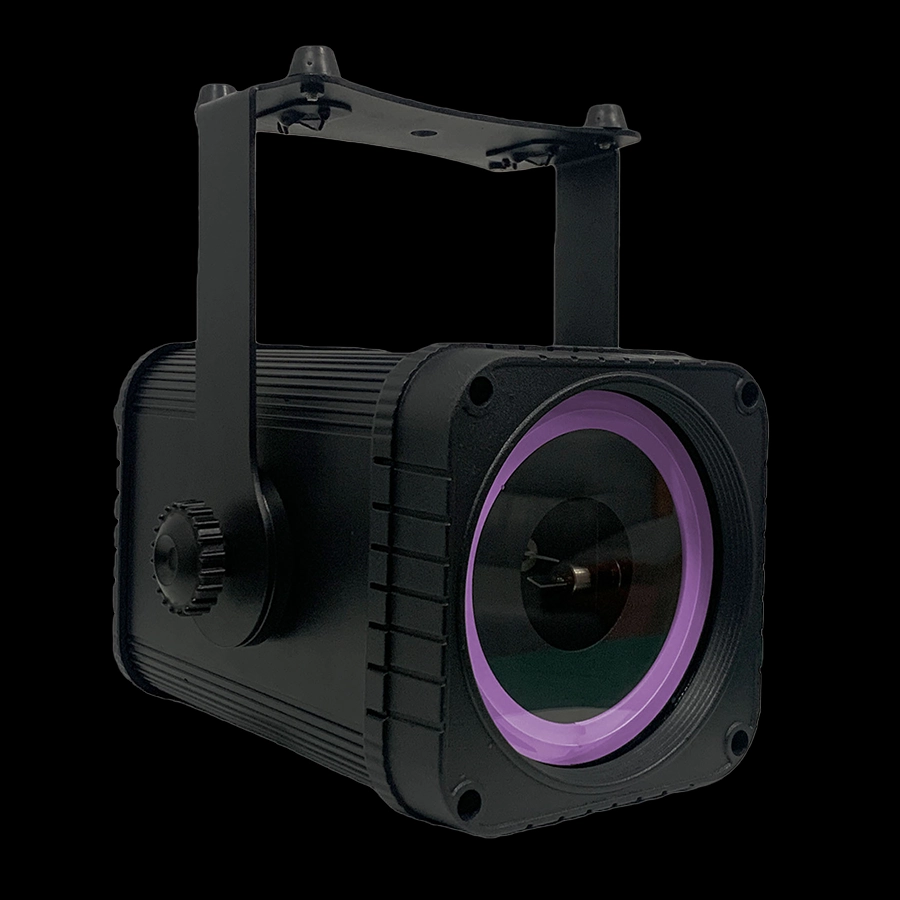
This IP65 waterproof 3W RGB animation laser battery light features an IP65 waterproof and dustproof design, making it suitable for both outdoor and indoor use. It supports rich RGB color combinations and dynamic animation effects, delivering a clear and fluid beam that can display text, patterns, and flowing light and shadow, among other visual representations.
Powered by a built-in battery, it requires no external power source, making it portable, easy to deploy, and simple to operate. Ideal for festive decorations, creating a garden atmosphere, and adding a touch of elegance to small events, it's energy-efficient, durable, and creates a truly immersive ambiance.
Stay updated on our latest news
If you have any comments or good suggestions, please leave us a message, later our professional staff will contact you as soon as possible.
Lighting Innovators
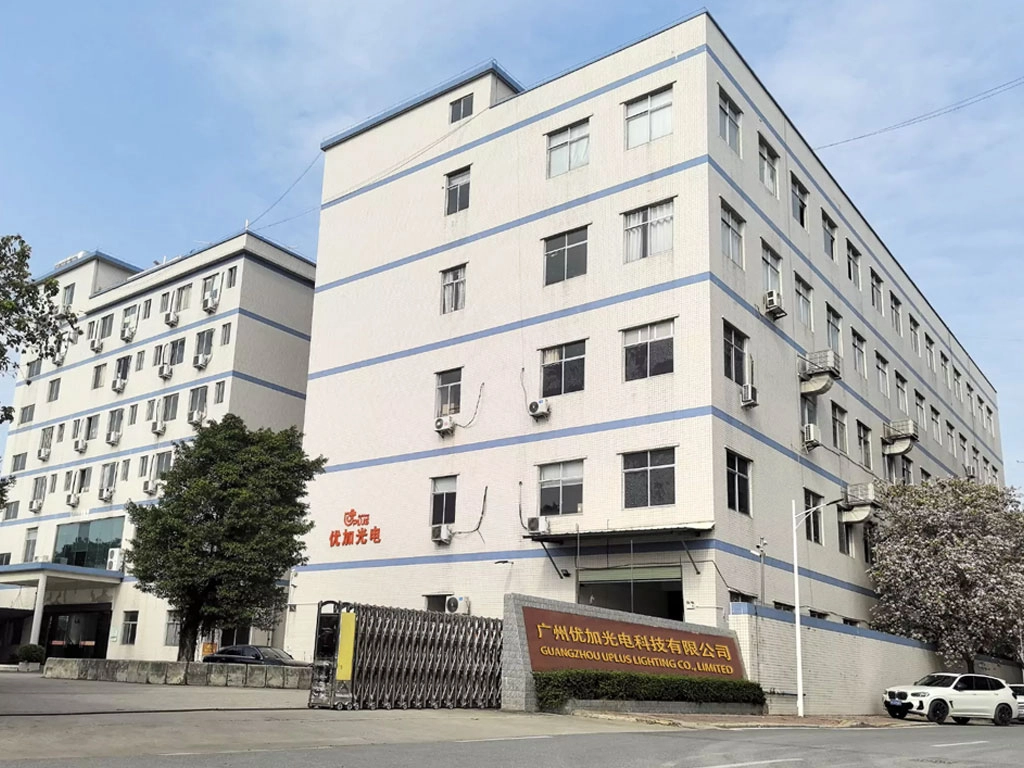
Uplus Lighting is a leading integrated company specializing in R&D, design, production, and sales of stage lighting solutions.
 Scan QR Code
Facebook
Instagram
YouTube
VK