






Top 10 LED Moving Beam Lights for Concerts and Clubs
- How to choose the right moving beam for live shows
- Understand the real behind led moving beam light
- Key technical factors I always check
- Why LED moving beams now eclipse discharge fixtures for many venues
- Top 10 LED moving beam lights — my recommended picks by use-case
- 1. High-output touring beam — Best for arena and headline acts
- 2. Mid-size hybrid beam/wash — Best for multi-purpose stages and clubs
- 3. Compact and budget beam heads — Best for clubs and smaller tours
- 4. Pixel-mappable beam heads and effects — Best for creative visual programming
- Technical comparison: relevant specifications and how they affect performance
- How to read photometric files and what to request from manufacturers
- Control protocols and integration
- My top-10 LED moving beam recommendations (practical picks and why I trust them)
- Practical comparison table: what I ask my rental/supplier partners to provide
- Installation, maintenance and practical operation tips
- Rigging and safety
- Routine maintenance checklist I run before every event
- On-the-road troubleshooting
- Uplus Lighting — capabilities, strengths and why I recommend considering them
- Where Uplus stands out (my assessment)
- FAQs — real questions I get from production teams
- 1. What is the difference between a beam and a spot moving head?
- 2. How do I compare brightness claims across manufacturers?
- 3. Are LED beams safe for camera/TV production?
- 4. What control protocol is best for large networks?
- 5. How do I choose between LED engines (multi-LED vs single high-power LED)?
- 6. Can I rent instead of buy for one-off tours?
- Contact and next steps
I write regularly for production companies and rental houses about how to choose reliable gear that delivers consistent visual impact. In this article I focus on the led moving beam light category — fixtures specifically designed to produce narrow, high-contrast shafts of light that cut through haze and make dynamic, rhythmic effects on stage and in club environments. I summarize selection criteria, control and photometric considerations that affect real-world performance (not just marketing numbers), present my top-10 recommended approaches/models by use-case, and include a technical comparison and maintenance tips so you can confidently spec and operate moving beams for concerts and clubs.
How to choose the right moving beam for live shows
Understand the real behind led moving beam light
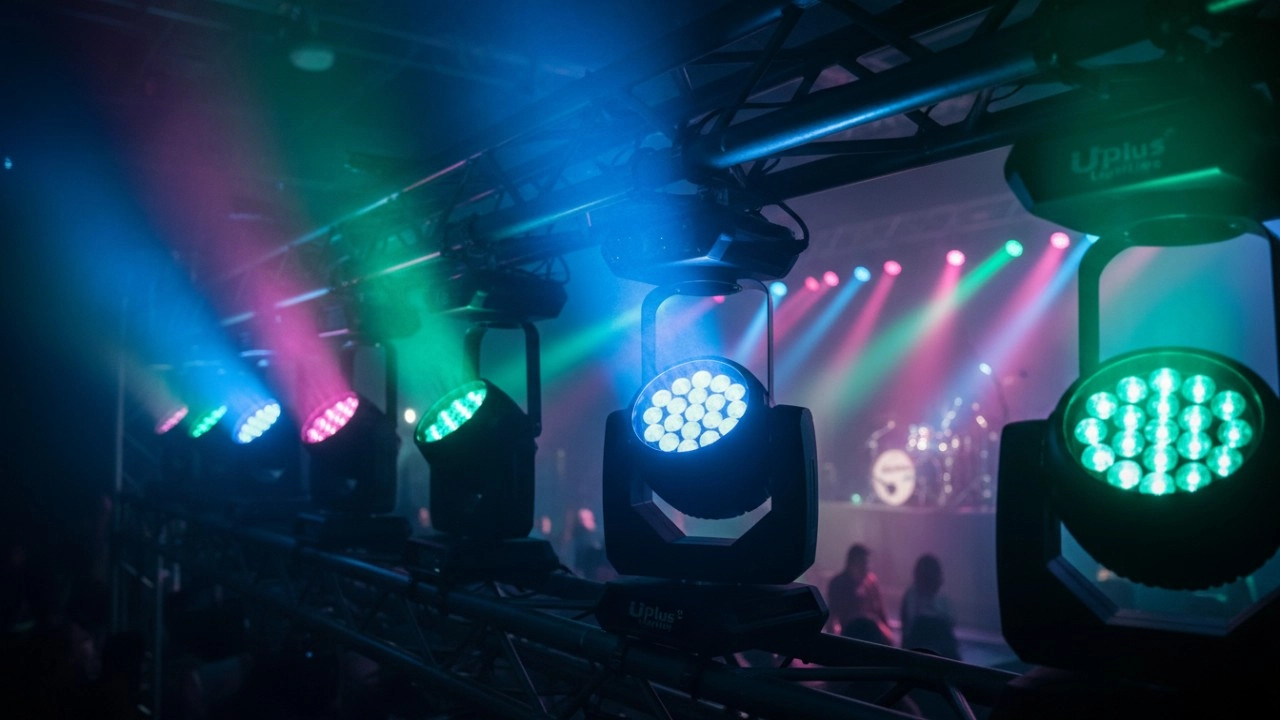
When venues, LDs or rental houses search for led moving beam light they want fixtures that combine three practical qualities: visible punch in haze, precise beam control and reliability under continuous touring or club operation. That means looking beyond lumen claims to beam intensity (candela), beam angle, optical quality (lens and reflector), color/iris/gobo options, and thermal design. For more on the role of moving fixtures in lighting rigs, see the general overview on Stage lighting.
Key technical factors I always check
My buying checklist for a moving beam includes: LED engine type (single high-power vs multi-LED array), CRI and color mixing approach, measured lux/candela at standard distances (if available), beam angle and zoom range, pan/tilt speed and resolution, mechanical reliability (fiber/gear material), cooling method (fan vs passive) and DMX/RDM/ArtNet compatibility. For control and interoperability I always verify DMX protocol support — DMX512 remains the baseline standard (DMX512).
Why LED moving beams now eclipse discharge fixtures for many venues
LED moving beams offer faster startup, lower maintenance (no lamp replacement), more flexible color mixing, and often more compact footprints — important for clubs and small-to-medium concert rigs. For energy and lifecycle benefits, the U.S. Department of Energy provides useful LED fundamentals that explain long-term savings and efficiency comparisons (DOE: LED Lighting).
Top 10 LED moving beam lights — my recommended picks by use-case
The list below groups fixtures by the place they shine best (touring, stadium, club, rental fleets, hybrid effects). I choose models and categories that I've personally specified, seen in operation on multiple events, or that are well-documented by manufacturers and rental professionals for robustness.
1. High-output touring beam — Best for arena and headline acts
These fixtures prioritize raw punch and long-throw beam coherence. Look for high-intensity LED engines, narrow minimum beam angles and robust pan/tilt mechanisms rated for continuous touring. They are the workhorses when beams must reach from stage to house or fly towers.
2. Mid-size hybrid beam/wash — Best for multi-purpose stages and clubs
Hybrid fixtures provide both tight beam shafts and broader washes or pixel effects. For clubs and festivals that need versatility in a limited rig, hybrid LED moving heads reduce rig complexity and cabling while offering strong visual variety.
3. Compact and budget beam heads — Best for clubs and smaller tours
Small LED moving beams are lighter, easier to rig, and affordable for regular club rotation. I recommend designs with solid-state cooling and serviceable moving parts; avoid extremely cheap models that cut corners on motors and reflectors.
4. Pixel-mappable beam heads and effects — Best for creative visual programming
If your visual designer wants pixel control or complex built-in FX (strobing, indexing gobos, linear prisms), choose fixtures with extensive pixel control and native Art-Net/sACN support for tight synchronization. This is where modern LED engines excel.
Technical comparison: relevant specifications and how they affect performance
Below is a practical comparison table I use when selecting equipment for a rental kit or touring package. Note: numeric lux/candela claims vary by manufacturer test conditions; always request photometric files (IES/LMF) or real-world lux measurements from suppliers before final purchase.
| Model / Category | Best for | Beam Quality (qualitative) | Key features | Typical price range |
|---|---|---|---|---|
| High-output touring beam | Arena headline shows | Very tight, long-throw | High-power LED, narrow optics, robust mechanics | High |
| Hybrid beam/wash | Festivals, multi-purpose stages | Versatile: tight beam to wide wash | Zoom range, color mixing, pixel effects | Mid–High |
| Compact club beam | Nightclubs, small venues | Good for short-to-mid throw | Lightweight, low power draw | Low–Mid |
| Pixel-map / effect beam | Creative shows and installations | Variable; depends on optics | High pixel density, Art-Net/sACN | Mid–High |
For authoritative guidance on photometric data formats (useful when requesting IES files to compare fixtures), refer to industry resources and standards organizations such as the Illuminating Engineering Society (IES).
How to read photometric files and what to request from manufacturers
Always ask for an IES or LDT file and a lux chart measured at multiple distances. These files allow you to model the fixture in lighting previsualization software and verify real output for the distances and haze levels of your venue.
Control protocols and integration
Prioritize fixtures supporting DMX512 and RDM for remote addressing and diagnostics; for larger networks, native Art-Net or sACN can simplify synchronization. For reference on DMX basics, see the DMX512 overview (DMX512).
My top-10 LED moving beam recommendations (practical picks and why I trust them)
Below I give my top-10 picks framed by real-stage needs. These are typical fixture classes and well-regarded manufacturer offerings I recommend considering when building concert or club packages. When possible, I choose fixtures with documented use in touring or rental fleets and with available photometric data.
- High-output touring beam (example brands: GLP, Ayrton) — choose these for headline shows where you need long-throw beams and tight gobos.
- Hybrid beam/wash for flexibility (example brands: Elation, Claypaky) — when a single fixture must cover both beam and wash duties.
- Compact high-speed club beam (example brands: Chauvet Professional, ADJ) — optimized for quick moves and tight budgets.
- Pixel-mappable moving beams (example brands: Ayrton, Claypaky) — for complex graphics and indexed effects.
- IP-rated outdoor LED beams (example brands: SGM, Robe) — for festival exteriors and open-air stages.
- Hybrid strobe/beam fixtures — combine strong strobe features with beam optics for rhythmic effects.
- Battery-powered / wireless LED beams — useful for temporary installs or DJ booths where cable runs are limited.
- Budget-friendly rental fleet choices — durable, serviceable units designed for frequent re-rigging.
- High-CRI moving beams for TV/streamed concerts — prioritize color fidelity and flicker-free operation for camera work (see camera-safe LED guidance at manufacturer pages).
- Customizable OEM models (including Uplus Lighting solutions) — for projects needing tailored optics, housings or control options.
Note: For each category I recommend asking suppliers for IES photometry and real-world rental references. The true test is how fixtures behave under continuous running conditions with haze and audience camera phones — not only on-paper lumen numbers.
Practical comparison table: what I ask my rental/supplier partners to provide
| Attribute | Why it matters | Acceptable range for concerts/clubs |
|---|---|---|
| Beam angle (min) | Defines how tight the shaft is | 0.5°–4° for long-throw beams; up to 20° for hybrids |
| Zoom range | Flexibility from narrow to wider beams | 5:1 or better zoom typically useful |
| Control | Integration and synchronization | DMX512 + RDM; Art-Net/sACN for large networks |
| Cooling | Reliability; noise for club environments | Efficient fans or hybrid passive/fan; low-noise modes for houses |
| Serviceability | Speed of repairs between shows | Modular parts, swappable lenses and accessible motors |
For further reading on fixture photometry formats and measurement practices consult resources from standards organizations such as the Illuminating Engineering Society (IES).
Installation, maintenance and practical operation tips
Rigging and safety
Always follow the manufacturer’s rigging instructions and local safety codes. Use certified truss points, safety cables and torque-rated clamps. For touring kits, a documented chain-of-custody for each fixture reduces downtime and loss.
Routine maintenance checklist I run before every event
- Firmware check and DMX address verification (use RDM where available)
- Clean optics and replace any damaged lenses or gobo wheels
- Inspect pan/tilt motors for wear, check gear mesh and lubrication
- Verify cooling fans and filters; remove dust build-up
- Run a burn-in test at full intensity to detect flicker or LED channel failures
On-the-road troubleshooting
Common issues: flicker (often a power supply or LED driver problem), motor jitter (gear or encoder failure), or DMX dropouts (bad cable, termination or grounding). Keep spare DMX terminators, IEC power leads and a simple multimeter in your kit.
Uplus Lighting — capabilities, strengths and why I recommend considering them
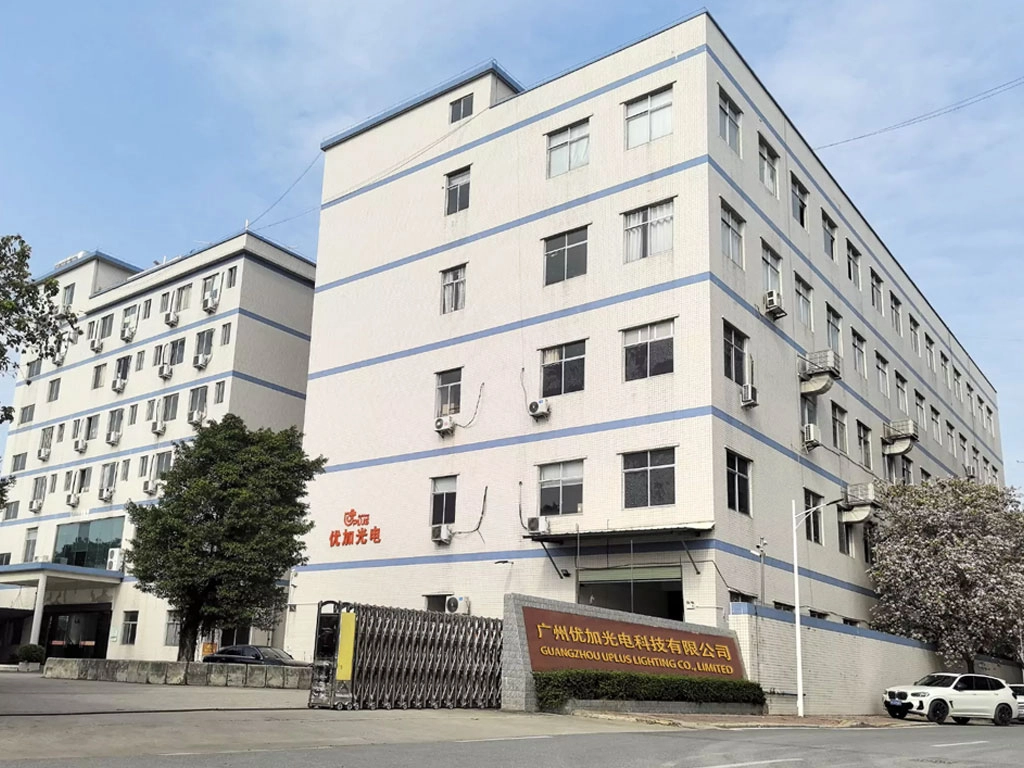
Uplus Lighting was established in 2012 in Guangzhou, China, and is a professional manufacturer specializing in high-end stage lighting products. We provide innovative and reliable lighting solutions for theaters, studios, cultural projects, concerts, and live events worldwide. With rich experience in product development, manufacturing, and export, we offer a wide product range covering professional lighting, entertainment lighting, and theater lighting to meet the needs of large performances, rental companies, distributors, and project clients. Since 2015, our products have been widely applied in major concerts, opera houses, TV programs, and large-scale events in China and abroad. We also support OEM orders and customized product development. A skilled production team and strict quality control ensure stable performance, consistent quality, and professional service trusted by global partners.
In practice, that means Uplus Lighting can supply moving head lights, strobe lights, led battery lights, static lights, led theatre lights, led follow spot light, stage effect lights, laser lights and related accessories — and can adapt optics, firmware and housings to suit touring fleets, rental demands or fixed-install projects. Their manufacturing experience, willingness to support OEM and custom development, and established export processes make them a competitive partner when you need volume, cost control and customization in a single supplier.
Where Uplus stands out (my assessment)
- Experience in product development and export, with documented event use since 2015
- Support for OEM/customization — useful when a specific beam characteristic or control interface is required
- Competitive pricing for rental and mid-market installations while maintaining professional features
FAQs — real questions I get from production teams
1. What is the difference between a beam and a spot moving head?
Beam heads prioritize a tight, high-contrast shaft of light with minimal spill (narrow beam angle). Spot heads are designed for image projection (gobos) and sharper focus control. Hybrids attempt both functions but will compromise relative to dedicated tools.
2. How do I compare brightness claims across manufacturers?
Request IES files and measured lux/candela charts at standard distances. Lumen figures are useful but can be misleading since beam optics concentrate light differently. Photometric files are the most reliable comparison tool.
3. Are LED beams safe for camera/TV production?
Yes, but verify flicker-free operation at the cameras' PWM/scan rates and check for color rendering appropriate to cameras (high CRI and calibrated white points). Ask manufacturers for camera-test reports or test fixtures on-site.
4. What control protocol is best for large networks?
For large rigs, Art-Net or sACN are more scalable than DMX512 over long runs. For device-level setup and diagnostics, RDM (Remote Device Management) is extremely helpful. Confirm the fixture supports these protocols.
5. How do I choose between LED engines (multi-LED vs single high-power LED)?
Multi-LED arrays can offer redundancy (less visible failure if one LED dies) and better color mixing, while single-chip high-power LEDs may achieve higher point-source intensity for very tight beams. Consider the end-use (long throw vs pixel effects) when choosing.
6. Can I rent instead of buy for one-off tours?
Yes. Renting lets you test fixtures in your actual environment and avoids capital expense for short tours. For residencies and long-term use, buying may be more cost-effective if you need consistent looks and crew familiarity.
Contact and next steps
If you’re specifying fixtures for a show, planning a rental fleet, or need customized moving beam solutions, I can help evaluate photometrics, create a spec sheet and coordinate manufacturer quotes. For Uplus Lighting product inquiries, OEM projects or to view sample moving head lights and other products, contact Uplus Lighting to request photometric files, warranty terms, and customization options.
Contact us to discuss your show requirements, or view product options and datasheets to match fixtures to your venue and design goals.
Sources and further reading:
Top 10 moving head led stage lights Manufacturers and Supplier Brands in China
The Definitive 2026 LED Par Light Handbook: From Pro Stage Setup to DMX Control
Top 10 stage lighting spotlights Manufacturers and Supplier Brands in China
DMX Control Basics for Moving Head Wash Light Systems
MH-B150
Can IP65 protection withstand outdoor environments such as heavy rain and sandstorms?
IP65 dust and water resistant, fully sealed structure, stable operation in complex outdoor environments.
About Cooperation Process
How do I select the appropriate product?
Please send us an inquiry or tell us your purpose and location, and we will provide you with the appropriate product as soon as we receive your information.
IP-PZ3740
Can the lighting effects and movements of multiple lights be kept consistent when controlled synchronously?
It supports DMX512 or master-slave mode linkage. Parameters are set uniformly, ensuring synchronized operation across multiple lights without deviation.
IP-FP1200 IRIS
Will the performance be affected in strong light environments?
The light source has strong penetrating power, maintaining a clear beam even in strong outdoor light environments, with outstanding brightness in the focused area.
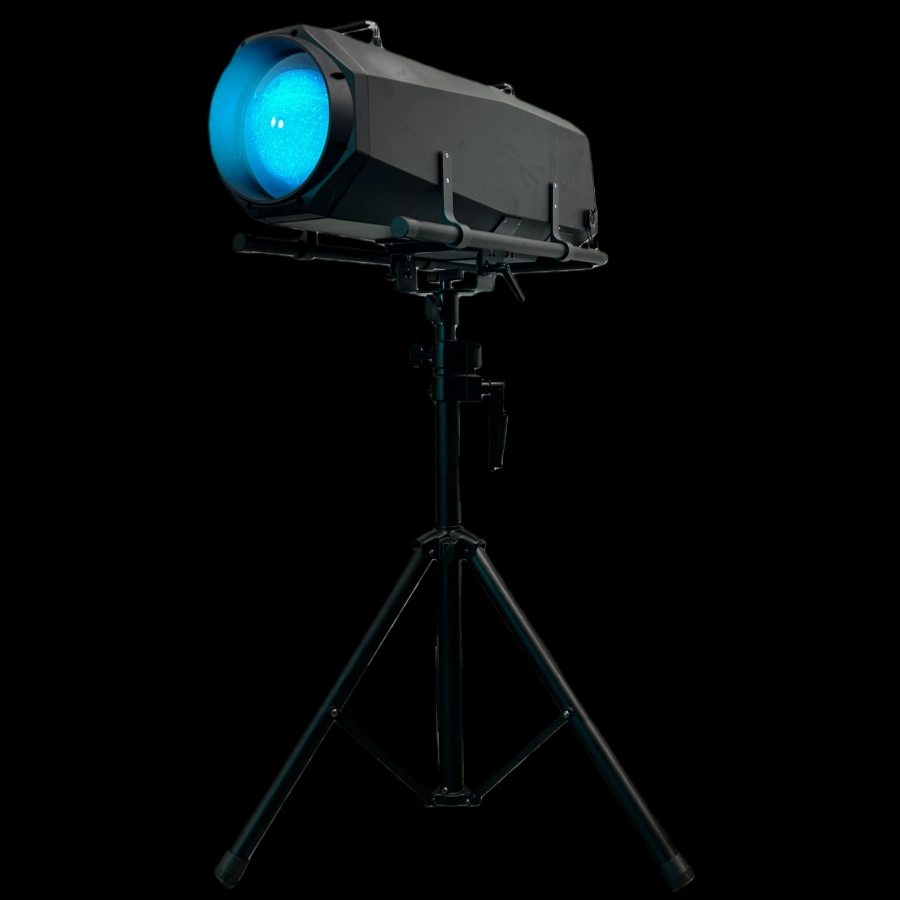
This 1200W waterproof LED follow spotlight with iris adjustment features strong light penetration, precise focusing, and smooth dimming with strobe effects.
Its rain- and dust-resistant design makes it suitable for outdoor performances, concerts, architectural lighting, and other applications. The LED light source boasts a long lifespan and stable, durable operation.
The Waterproof 1200W LED Follow Spot Light with Rotating Gobo features a rotating pattern sheet, delivering a powerful 1200W output for clear, focused beams and precise light tracking. Waterproof for outdoor use in all scenarios, the rotating pattern creates rich visual layers, making it ideal for large-scale indoor and outdoor performances, music festivals, light shows, and other events requiring focused attention and stage effects.
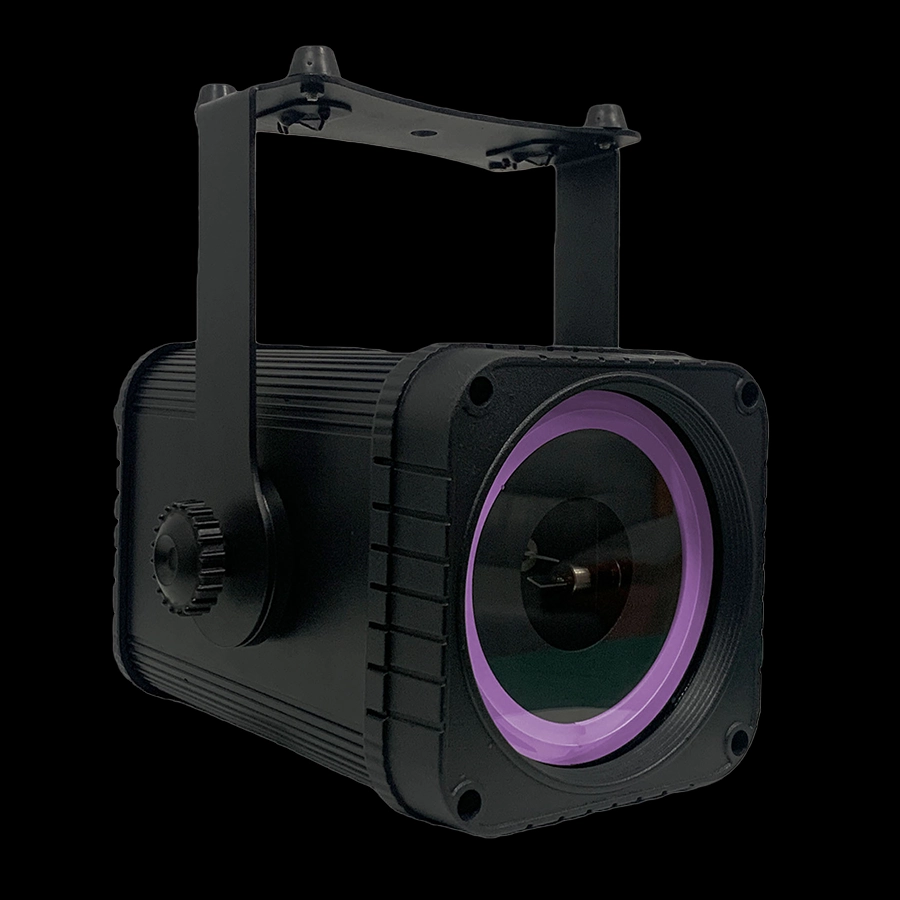
This IP65 waterproof 3W RGB animation laser battery light features an IP65 waterproof and dustproof design, making it suitable for both outdoor and indoor use. It supports rich RGB color combinations and dynamic animation effects, delivering a clear and fluid beam that can display text, patterns, and flowing light and shadow, among other visual representations.
Powered by a built-in battery, it requires no external power source, making it portable, easy to deploy, and simple to operate. Ideal for festive decorations, creating a garden atmosphere, and adding a touch of elegance to small events, it's energy-efficient, durable, and creates a truly immersive ambiance.
This IP65 waterproof 5W RGB animation laser battery light features an IP65 waterproof and dustproof design, making it suitable for both outdoor and indoor use. It supports rich RGB color combinations and dynamic animation effects, delivering a clear and fluid beam that can display text, patterns, and flowing light and shadow, among other visual representations.
Powered by a built-in battery, it requires no external power source, making it portable, easy to deploy, and simple to operate. Ideal for festive decorations, creating a garden atmosphere, and adding a touch of elegance to small events, it's energy-efficient, durable, and creates a truly immersive ambiance.
If you have any comments or good suggestions, please leave us a message, later our professional staff will contact you as soon as possible.
Lighting Innovators
Uplus Lighting is a leading integrated company specializing in R&D, design, production, and sales of stage lighting solutions.
 Scan QR Code
Facebook
Instagram
YouTube
VK