






Renting vs Buying Profile Stage Lights: Pros, Cons, ROI
- How profile stage lights work and why they matter
- What I mean by profile stage lights
- Key capabilities and common uses
- Standards and industry guidance
- Renting vs buying: financial comparison
- Simple cost categories I use in analysis
- Comparative feature matrix
- Practical ROI example (transparent assumptions)
- Operational and logistical considerations
- Inventory management and technical staff
- Transport, insurance and depreciation
- Technical obsolescence and technology refresh
- Decision frameworks and real-world examples
- Rule-of-thumb frameworks I use
- Example 1 — Regional theater
- Example 2 — Production company/rental house
- Brand perspective: Uplus Lighting — who we are and how we fit
- Practical checklist: how I recommend you decide
- Step 1 — Build your usage profile
- Step 2 — Get real quotes
- Step 3 — Consider a hybrid approach
- FAQ
- 1. How many profile stage lights should a small theater own?
- 2. Do LED profile lights save money compared to traditional lamp-based ERS?
- 3. What is a realistic rental rate for profile fixtures?
- 4. How do I account for technical obsolescence?
- 5. Can I finance profile stage lights?
- Closing advice and contact
I work with theaters, rental houses and production companies to optimize lighting inventories and budgets. When teams ask whether to rent or buy profile stage lights — the ellipsoidal/spot fixtures used for sharp beams, gobo projection and precise shaping — the right answer depends on usage frequency, capital availability, maintenance capacity, and long-term programming strategy. In this article I walk through technical differences, operational trade-offs, a transparent ROI model with verifiable assumptions, and a practical decision framework to help you choose with confidence.
How profile stage lights work and why they matter
What I mean by profile stage lights
By profile stage lights I refer to fixtures designed to create a defined shaft of light with controllable beam edge, focus, shutters, and often gobo wheels — historically ellipsoidal reflector spotlights (ERS) like the Source Four and, more recently, LED-based profile fixtures and followspots. The Wikipedia entry for the Ellipsoidal Reflector Spotlight gives a concise technical baseline: https://en.wikipedia.org/wiki/Ellipsoidal_reflector_spotlight.
Key capabilities and common uses
Profile units are chosen for hard-edged key light, portrait washes, front-of-house specials, and detailed gobo projection. They are different from moving heads and wash fixtures because of their optical focus, shutter control and gobo/iris capabilities — attributes vital for plays, opera, and proscenium concerts. When choosing a profile I look at output (lumens/lux), color rendering (CRI/TLCI), gobo size, lens tube lengths (for field angles), and DMX/console compatibility.
Standards and industry guidance
For technical best practice and safety standards, organizations such as the United States Institute for Theatre Technology (USITT) and trade groups like PLASA publish guidance on rigging, electrical loading and fixture selection. I recommend consulting these resources for compliance and interoperability considerations.
Renting vs buying: financial comparison
Simple cost categories I use in analysis
When I model costs I include: purchase price, depreciation, maintenance & spare parts, storage, insurance, operator training, and opportunity costs of capital. For renting I include daily/weekend rates, transport, insurance, and any technician charges. The ROI framework I use follows standard definitions: return on investment (ROI) = (Net Benefit / Cost). See Investopedia for a clear ROI definition: https://www.investopedia.com/terms/r/returnoninvestment.asp.
Comparative feature matrix
| Factor | Rent | Buy |
|---|---|---|
| Upfront cost | Low | High |
| Flexibility (fixture types) | High — choose models per show | Lower — fixed inventory |
| Long-term per-event cost | Variable, can be higher if frequent | Lower after break-even use |
| Maintenance & storage | Included in vendor price | Owned responsibility |
| Depreciation & resale | N/A | Recoverable partly via resale |
Practical ROI example (transparent assumptions)
To make purchasing vs renting tangible, here is a sample scenario for a single profile fixture (ellipsoidal/LED profile). I state assumptions clearly so you can adapt them to local prices.
| Item | Assumption (USD) |
|---|---|
| Purchase price (new LED profile) | $2,200 |
| Annual maintenance & spares (estimate) | $150 |
| Operational life (years) | 8 years |
| Average rental rate per event (day) | $120 |
| Average events per year needing a profile | 18 days |
Annual cost to buy (straight-line, neglecting time value of money) = (Purchase / Life) + Maintenance = ($2,200 / 8) + $150 = $275 + $150 = $425 per year.Annual rental cost = Rental rate * events = $120 * 18 = $2,160 per year.Break-even number of rental days = Purchase price / Rental rate = $2,200 / $120 ≈ 18.3 days.
Interpretation: If you expect to use the fixture more than ~18 days per year under these assumptions, buying yields lower annualized cost. If usage is less, renting is cheaper. These calculations align with general ROI frameworks and should be adjusted for financing costs, tax treatment (capital allowances), and resale value.
Operational and logistical considerations
Inventory management and technical staff
Owning fixtures requires storage, regular maintenance (lens cleaning, lamp replacement or driver checks in LED fixtures), and trained techs for repair and operation. If you run a small theater without on-site electricians, vendor support through rentals reduces risk. For rental companies, the inverse is true — buying increases asset base but requires service capacity.
Transport, insurance and depreciation
Renting shifts transport and insurance responsibilities to the rental house (depending on contract). Owned fixtures need storage conditions (humidity control), insurance covering theft and transit, and an asset register for depreciation. Industry bodies provide guidance on safe rigging and maintenance; USITT and PLASA resources are useful references (USITT, PLASA).
Technical obsolescence and technology refresh
LED engine improvements, higher CRI, and networked control (RDM, Art-Net/sACN) mean fixtures can become dated. Renting provides access to the latest profiles (higher output, better color) without capital expense. If you prioritize cutting-edge looks, a hybrid approach (core inventory plus rentals for flagship shows) often offers the best balance.
Decision frameworks and real-world examples
Rule-of-thumb frameworks I use
I recommend evaluating three axes: frequency, criticality, and cash. A simple decision matrix I use is:
- If frequency > break-even days AND you have cash or financing => Buy.
- If frequency < break-even days AND programming varies => Rent.
- If fixtures are strategically critical (brand shows, house specials) => Buy the core; rent for variety.
Example 1 — Regional theater
A 300-seat theater with monthly productions and conservative budgets benefits from owning a small bank of quality profile fixtures (4–8 units) to cover most productions, and renting specialized units for touring shows or special effects. Owning guarantees availability and consistent color matching across seasons.
Example 2 — Production company/rental house
For rental houses, the calculus favors purchasing a wide inventory to meet client demand. They need to manage depreciation and refresh cycles, and they may choose to sell older units after 3–5 years as trade-ins — a lifecycle strategy that preserves cashflow and keeps inventory current.
Brand perspective: Uplus Lighting — who we are and how we fit
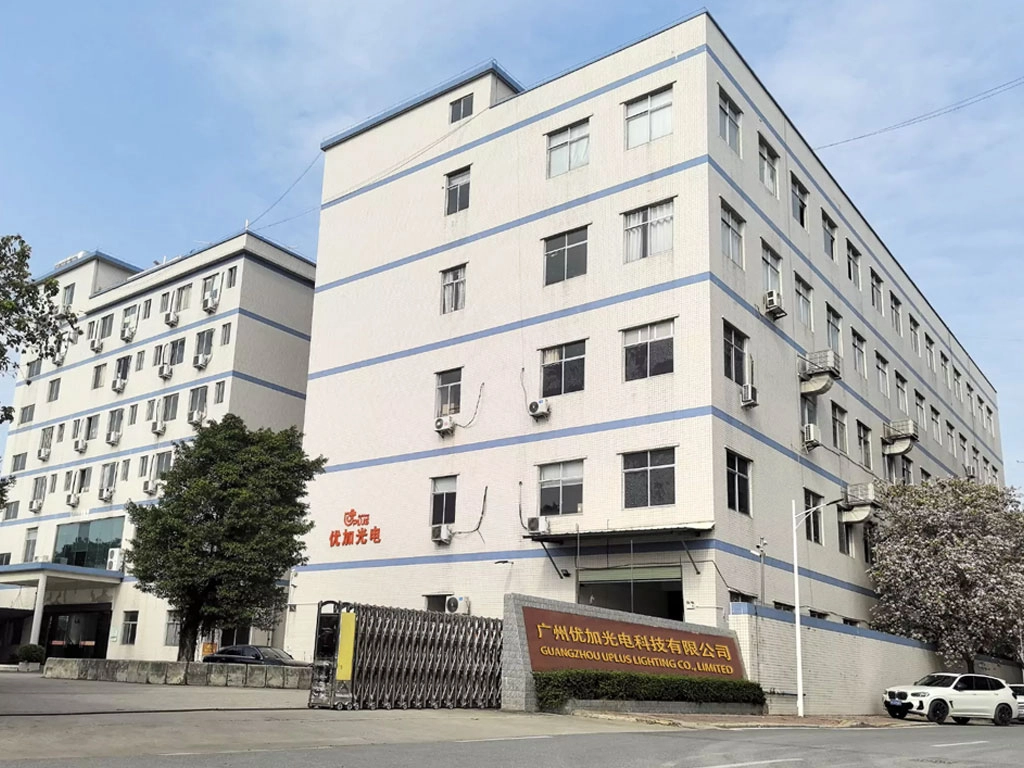
Uplus Lighting was established in 2012 in Guangzhou, China, and is a professional manufacturer specializing in high-end stage lighting products. We provide innovative and reliable lighting solutions for theaters, studios, cultural projects, concerts, and live events worldwide. With rich experience in product development, manufacturing, and export, we offer a wide product range covering professional lighting, entertainment lighting, and theater lighting to meet the needs of large performances, rental companies, distributors, and project clients. Since 2015, our products have been widely applied in major concerts, opera houses, TV programs, and large-scale events in China and abroad. We also support OEM orders and customized product development. A skilled production team and strict quality control ensure stable performance, consistent quality, and professional service trusted by global partners.
How Uplus Lighting aligns with the rent vs buy decision: our product range — moving head lights, strobe lights, led battery lights, static lights, led theatre lights, led follow spot light, stage effect lights, laser lights — is designed to serve both purchasers and renters. For buyers (theaters and permanent venues) we offer reliable LED profiles and followspots with long warranties, consistent color performance, and parts availability. For rental companies we provide robust designs optimized for frequent handling, streamlined spare-part kits, and OEM customization options to meet branding and rigging preferences.
Competitive advantages I note when recommending Uplus to clients: a vertically integrated supply chain (helps with consistent quality and lead-times), experience in concert and broadcast applications (proven reliability under demanding conditions), and flexible OEM/custom options which help rental houses maintain market differentiation. If you're evaluating purchase vs rental, Uplus products are positioned to offer low total cost of ownership and strong after-sales support.
Practical checklist: how I recommend you decide
Step 1 — Build your usage profile
List expected events per year requiring profiles, number of units per event, and special requirements (gobo projection, color temperature, mobility). This quantifies break-even and total cost scenarios.
Step 2 — Get real quotes
Request purchase quotes (including warranty, spare parts) and rental quotes (including transport, insurance). Factor in tax treatment and financing offers — these materially affect ROI.
Step 3 — Consider a hybrid approach
Owning a core set of versatile profile stage lights (e.g., 4–8 LED profiles and one manual followspot) while renting specialty fixtures often reduces risk and preserves creative flexibility. This hybrid model is my most frequent recommendation.
FAQ
1. How many profile stage lights should a small theater own?
For a 200–500 seat proscenium theater, I typically recommend a core bank of 4–12 profiles depending on staging needs. This covers key specials and front-of-house specials while allowing rentals for large productions.
2. Do LED profile lights save money compared to traditional lamp-based ERS?
LED profiles usually have higher upfront costs but lower running costs (no lamps to replace, lower power consumption) and longer service intervals. When you build a TCO model including electricity and lamp replacement, LEDs often win over 3–5 years for regular use.
3. What is a realistic rental rate for profile fixtures?
Rental rates depend on region and fixture type. As shown above, a representative rental day might range from $80–$150 for a mid-range profile in many markets; consult local rental houses for accurate quotes. Always confirm inclusions (transport, insurance, tech fees).
4. How do I account for technical obsolescence?
Plan a refresh cycle (3–8 years depending on technology). For owned fleets, budget for upgrades or trade-ins. Rentals allow you to access newer technology without replacement costs.
5. Can I finance profile stage lights?
Yes — many manufacturers and dealers offer leasing or financing. Financing spreads capital cost and can make buying attractive if your cashflow supports it. Include interest and fees in ROI calculations.
Closing advice and contact
Deciding whether to rent or buy profile stage lights is a practical exercise: quantify your usage, get real quotes, and include maintenance, insurance and obsolescence in your model. My default recommendation for many clients is a hybrid strategy — own a dependable core inventory for operational certainty, and rent specialty or high-output profiles as needed.
If you'd like help modeling your specific ROI or evaluating fixtures for purchase or rental, contact Uplus Lighting to discuss product options or custom solutions. Our team can provide spec sheets, sample ROI calculations tailored to your pricing, and guidance on lifecycle planning. For product enquiries and technical consultation, reach out to Uplus Lighting — we support OEM orders and customized product development and will help you choose the right moving head lights, strobe lights, led battery lights, static lights, led theatre lights, led follow spot light, stage effect lights, and laser lights for your needs.
Cost to Buy and Install Profile Stage Lights: Budget Guide
Customizing LED Stage Light Bars: Color, Effects, and Pixel Mapping
Energy Efficient Moving Beam LED Light Bars for Venues
Top 10 mini moving head lights Manufacturers and Supplier Brands in 2026
IP-BL05
Can it be fixedly installed, or can it only be placed anywhere?
It can be placed directly on a flat surface or easily fixed, allowing for flexible selection based on the scene requirements.
IP-BS906
Is the light glaring?
The light is soft and even, suitable for various scenarios such as decoration and supplementary lighting, and is not glaring.
About Cooperation Process
What warranty do your products come with?
Our products come with a one-year warranty. During this period, if there are any problems with our products, we will provide customers with the necessary accessories and related services.
IP-PZ3740
Can IP66 protection be used long-term in salt spray and dusty environments near the sea?
It can withstand heavy rain, strong dust, and light salt spray. It is stable in complex outdoor environments for long-term use and requires no additional protection.
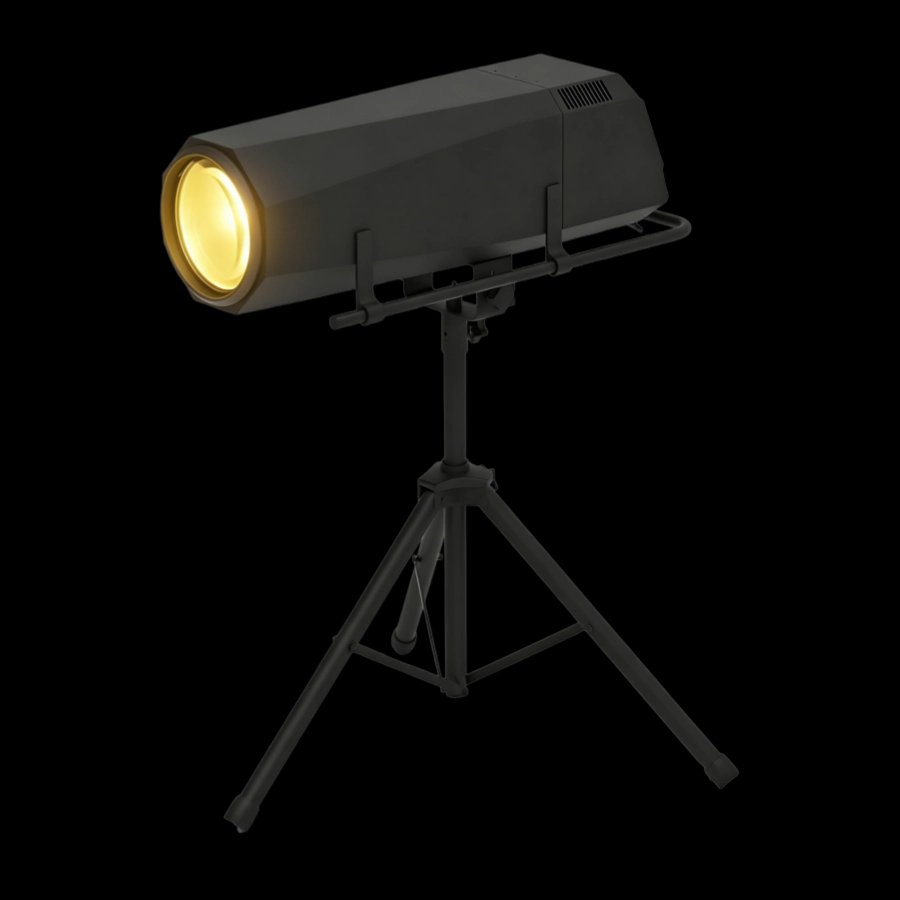
This 1200W waterproof LED follow spotlight with iris adjustment features strong light penetration, precise focusing, and smooth dimming with strobe effects.
Its rain- and dust-resistant design makes it suitable for outdoor performances, concerts, architectural lighting, and other applications. The LED light source boasts a long lifespan and stable, durable operation.
The Waterproof 1200W LED Follow Spot Light with Rotating Gobo features a rotating pattern sheet, delivering a powerful 1200W output for clear, focused beams and precise light tracking. Waterproof for outdoor use in all scenarios, the rotating pattern creates rich visual layers, making it ideal for large-scale indoor and outdoor performances, music festivals, light shows, and other events requiring focused attention and stage effects.
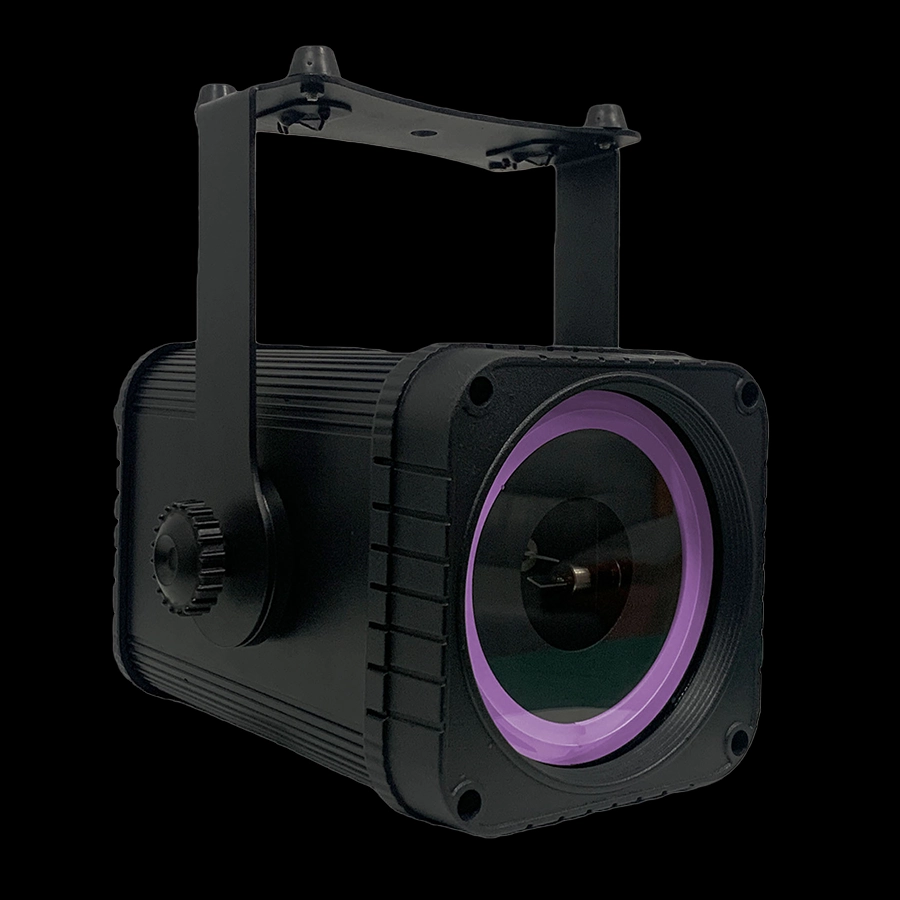
This IP65 waterproof 3W RGB animation laser battery light features an IP65 waterproof and dustproof design, making it suitable for both outdoor and indoor use. It supports rich RGB color combinations and dynamic animation effects, delivering a clear and fluid beam that can display text, patterns, and flowing light and shadow, among other visual representations.
Powered by a built-in battery, it requires no external power source, making it portable, easy to deploy, and simple to operate. Ideal for festive decorations, creating a garden atmosphere, and adding a touch of elegance to small events, it's energy-efficient, durable, and creates a truly immersive ambiance.
This IP65 waterproof 5W RGB animation laser battery light features an IP65 waterproof and dustproof design, making it suitable for both outdoor and indoor use. It supports rich RGB color combinations and dynamic animation effects, delivering a clear and fluid beam that can display text, patterns, and flowing light and shadow, among other visual representations.
Powered by a built-in battery, it requires no external power source, making it portable, easy to deploy, and simple to operate. Ideal for festive decorations, creating a garden atmosphere, and adding a touch of elegance to small events, it's energy-efficient, durable, and creates a truly immersive ambiance.
If you have any comments or good suggestions, please leave us a message, later our professional staff will contact you as soon as possible.
Lighting Innovators
Uplus Lighting is a leading integrated company specializing in R&D, design, production, and sales of stage lighting solutions.
 Scan QR Code
Facebook
Instagram
YouTube
VK