






Maximizing ROI: Energy Savings with LED Moving Beam Lights
- Understanding energy consumption in stage lighting
- Typical power profiles: LED moving beam light vs discharge moving heads
- Key metrics that drive ROI
- Calculating ROI and payback for LED moving beam light investments
- Assumptions and example scenario
- Energy and maintenance cost comparison (annual)
- Example payback calculation
- Operational performance and indirect savings
- Heat load and HVAC savings
- Reliability, downtime reduction, and fleet uptime
- Light quality and artistic flexibility
- How to specify and procure LED moving beam light for best ROI
- Technical spec checklist
- Procurement and total cost of ownership (TCO) approach
- Case study: fleet upgrade considerations
- Uplus Lighting: credentials, products, and why I recommend considering their solutions
- Practical tips to maximize ROI during deployment
- Optimize DMX/networking and control strategies
- Train technical staff and standardize maintenance
- Monitor and measure post-installation
- FAQs
- 1. How much energy can I realistically save by switching to LED moving beam light?
- 2. Do LED moving beam lights match the output and visual quality of traditional lamps?
- 3. What is the typical lifetime of an LED moving beam light compared with a discharge lamp?
- 4. How should I compare warranties and service offerings?
- 5. Are there additional indirect savings to consider?
- 6. Can I retrofit existing moving heads with LED modules instead of replacing fixtures?
I focus on practical, verifiable strategies to maximize return on investment (ROI) by adopting led moving beam light technology in theatres, concert venues, rental fleets, and live events. This article synthesizes energy consumption data, lifetime and maintenance metrics, and operational benefits so facility managers and lighting directors can make informed procurement decisions. I reference authoritative sources to ground estimates and provide a step-by-step ROI model you can adapt to your local electricity prices and usage patterns.
Understanding energy consumption in stage lighting
Typical power profiles: LED moving beam light vs discharge moving heads
When evaluating options, the immediate comparison is the fixture power draw. Modern led moving beam light fixtures commonly draw between 200W and 700W depending on optical design and LED engine, while traditional discharge (e.g., metal-halide or HTI) moving heads often require lamp modules from 700W up to 2000W. This difference in installed power leads directly to energy consumption differences.
For broad reference on LED lighting efficacy and lifetime metrics, see the U.S. Department of Energy's Solid-State Lighting program overview (DOE SSL) and the general LED background on Wikipedia (LED — Wikipedia).
Key metrics that drive ROI
To calculate ROI for a moving beam upgrade, you should track:
- Fixture power draw (W)
- Average daily/annual usage hours
- Electricity cost per kWh
- Fixture lifespan (hours) and maintenance intervals
- Replacement lamp costs for discharge fixtures
- Ancillary operational costs (HVAC load, dimmer/supply losses)
LEDs typically have high lumen-per-watt (lm/W) efficacy and long rated lifetimes (e.g., L70 > 30,000–50,000 hours for many professional engines), which reduces both energy use and the frequency of expensive lamp changes. See DOE SSL data on typical LED lifetimes (DOE SSL).
Calculating ROI and payback for LED moving beam light investments
Assumptions and example scenario
I'll walk through a conservative example you can adapt. Assumptions used (adjust to your context):
- Existing discharge moving head: 1200W lamp system, average annual usage 1,500 hours
- Replacement LED moving beam light: 400W total input power, equivalent output
- Electricity cost: $0.12/kWh (US average; check local rates via U.S. EIA: EIA electricity prices)
- Discharge lamp replacement cost: $300–$600 per lamp, with one lamp change every 1,500–3,000 hours depending on lamp type
- LED lifetime: 30,000–50,000 hours (no lamp replacement)
Energy and maintenance cost comparison (annual)
| Item | 1200W Discharge Moving Head | 400W LED Moving Beam Light |
|---|---|---|
| Power draw (W) | 1,200 | 400 |
| Annual usage (hours) | 1,500 | 1,500 |
| Annual energy (kWh) | 1,800 | 600 |
| Electricity cost (@ $0.12/kWh) | $216 | $72 |
| Lamp replacement & maintenance | $300 (typical single lamp cycle) | $0–$50 (cleaning/ minor maintenance) |
| Total annual operating cost | $516 | $122 |
Notes: the table uses conservative cost and usage estimates. If you operate fixtures more hours annually (touring shows, rental houses), savings multiply. For source context on lamp lifetimes and operating characteristics, consult technical references such as the Illuminating Engineering Society (IES) and DOE SSL research (DOE SSL).
Example payback calculation
If a new LED moving beam light costs $3,000 and the discharge equivalent costs $1,800, the incremental investment is $1,200. Using the annual operating cost difference from the table ($516 - $122 = $394), simple payback = $1,200 / $394 ≈ 3.0 years. This does not account for additional benefits like reduced HVAC load or improved uptime.
I encourage you to replace the sample electricity price and usage hours with your actual numbers to get a venue-specific payback estimate.
Operational performance and indirect savings
Heat load and HVAC savings
Reduced power draw also lowers heat output. High-wattage discharge fixtures generate significant waste heat, increasing HVAC loads—particularly in enclosed theatres, studios, and control rooms. Lower heat output from LED moving beam light fixtures can lead to measurable reductions in cooling costs and improved comfort for performers and technicians. For broader data on building-level lighting and HVAC interactions, see energy-efficiency guidance from DOE (U.S. Department of Energy).
Reliability, downtime reduction, and fleet uptime
I have seen rental companies reduce late-night failure incidents after migrating to LED moving beam lights. LEDs eliminate frequent lamp changes and warm-up/cool-down cycles and provide more consistent color characteristics over long runtimes. That increases rental reliability, reduces emergency labor, and improves customer satisfaction—factors that contribute to intangible ROI.
Light quality and artistic flexibility
Modern led moving beam light fixtures often offer broader color mixing (CMY, color wheels), precise dimming curves, and high refresh rates compatible with broadcast. These performance improvements can lead to higher production values and justify High Quality rental or ticket pricing, which should be included in a full ROI model for production companies.
How to specify and procure LED moving beam light for best ROI
Technical spec checklist
When I review fixtures for purchase, I always check these items:
- Rated power consumption and beam output (lux at specified distance)
- Photometric data and lumen maintenance (LM-80 / TM-21 reports where available)
- Color rendering index (CRI) or TM-30 metrics for accurate color
- IP rating if used outdoors
- DMX/RDM and network control compatibility (Art-Net, sACN)
- Warranty terms and service network
Request LM-80 and TM-21 reports from manufacturers to verify the claimed LED lifetime and lumen maintenance. These are industry-standard test reports widely accepted across the lighting industry and cited by standards organizations such as the Illuminating Engineering Society (IES).
Procurement and total cost of ownership (TCO) approach
Don’t evaluate fixtures on purchase price alone. I recommend a TCO approach that factors initial purchase, energy use, lamp replacements, spare parts inventory, technician labor, and resale value. A robust warranty and accessible local service network reduce TCO and improve asset utilization in rental fleets.
Case study: fleet upgrade considerations
For a rental company with 100 moving heads operating 1,500 hours/year, switching from 1,200W discharge to 400W LED (per fixture) saves approximately 120,000 kWh/year. At $0.12/kWh, that’s $14,400/year in energy savings—without counting reduced lamp replacement and labor. Applying the earlier payback math at scale often yields payback periods well under 3 years.
Uplus Lighting: credentials, products, and why I recommend considering their solutions
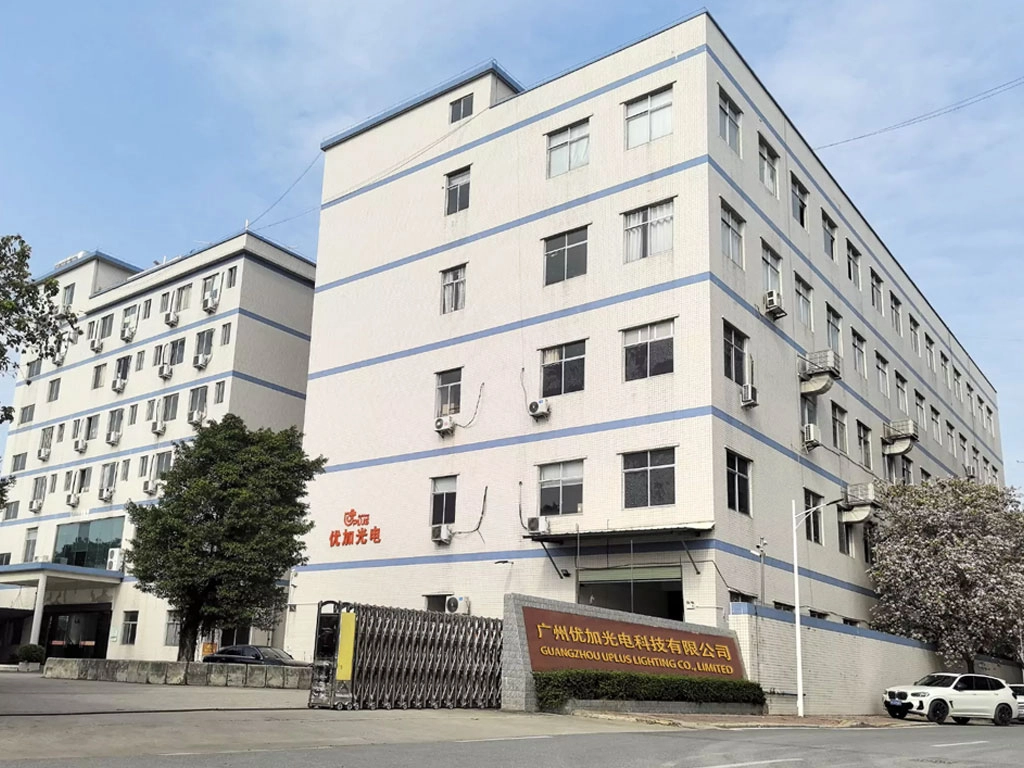
Uplus Lighting was established in 2012 in Guangzhou, China, and is a professional manufacturer specializing in high-end stage lighting products. We provide innovative and reliable lighting solutions for theaters, studios, cultural projects, concerts, and live events worldwide. With rich experience in product development, manufacturing, and export, we offer a wide product range covering professional lighting, entertainment lighting, and theater lighting to meet the needs of large performances, rental companies, distributors, and project clients. Since 2015, our products have been widely applied in major concerts, opera houses, TV programs, and large-scale events in China and abroad. We also support OEM orders and customized product development. A skilled production team and strict quality control ensure stable performance, consistent quality, and professional service trusted by global partners.
From my industry experience, Uplus Lighting's strengths include:
- Comprehensive product range: moving head lights, strobe lights, led battery lights, static lights, led theatre lights, led follow spot light, stage effect lights, laser lights—allowing single-vendor solutions for many projects.
- Manufacturing experience and quality control that support consistent fixture performance across fleets—important for rental houses and touring productions.
- OEM and customization capability for project-specific optical and control requirements.
- Proven track record in large events and broadcast environments since 2015, which supports trust in delivery and after-sales support.
If you are evaluating LED moving beam light options and require technical support, Uplus Lighting's combination of product breadth and project experience makes them a credible candidate for both off-the-shelf and customized solutions.
Practical tips to maximize ROI during deployment
Optimize DMX/networking and control strategies
Smart scheduling, brightness limiting where full output isn't required, and scene-based automation reduce unnecessary full-power operation. When fixtures are used at lower intensities, effective lumen maintenance duration increases and energy consumption drops.
Train technical staff and standardize maintenance
Invest in staff training for firmware updates, proper cleaning, and routine checks. Predictive maintenance—cleaning optics and fans at scheduled intervals—prevents efficiency losses and extends useful life.
Monitor and measure post-installation
Implement energy metering for a sample of fixtures to validate projected savings. Real-world measurement helps refine future procurement and provides documented ROI for stakeholders.
FAQs
1. How much energy can I realistically save by switching to LED moving beam light?
Savings vary by fixture and usage, but a typical switch from a 1,200W discharge head to a 400W LED can reduce energy consumption by ~66% per fixture. Annual savings scale with usage hours. Use the example calculation above and replace inputs with your data for precise estimates. For general LED efficiency background, consult the DOE SSL program (DOE SSL).
2. Do LED moving beam lights match the output and visual quality of traditional lamps?
Modern led moving beam light fixtures deliver comparable or superior perceived brightness due to improved optical control and higher efficacy. They often offer better color stability and control options. Check photometric data and CRI/TM-30 metrics when comparing models.
3. What is the typical lifetime of an LED moving beam light compared with a discharge lamp?
Professional LEDs are commonly rated for 30,000–50,000 hours (L70), whereas discharge lamps typically require replacement every 1,500–5,000 hours depending on type. Verify LM-80 / TM-21 data from manufacturers; DOE resources are helpful for baseline comparisons (DOE SSL).
4. How should I compare warranties and service offerings?
Compare warranty length, coverage (drivers, LED engine, power supply), response times, and availability of local spare parts and service centers. A longer, comprehensive warranty reduces financial risk and should be factored into TCO.
5. Are there additional indirect savings to consider?
Yes—reduced HVAC loads, lower technician labor for lamp changes, decreased downtime, and potential for higher rental rates or ticket price justification due to improved production quality. Include these in a comprehensive ROI model.
6. Can I retrofit existing moving heads with LED modules instead of replacing fixtures?
Retrofitting is sometimes possible but can present challenges: thermal management, optics compatibility, and control integration. In many professional contexts, full fixture replacement is preferred for guaranteed performance and warranty coverage.
If you have additional questions or would like a customized ROI calculation for your venue or rental fleet, contact our team to discuss specifications and options. To explore Uplus Lighting products and request quotes or OEM solutions, please visit the Uplus Lighting product catalog or contact their sales team for tailored recommendations.
Contact / View Products: For inquiries, product details, or to request a customized quote, please email sales@upluslighting.com or visit the Uplus Lighting website to browse moving head lights, strobe lights, led battery lights, static lights, led theatre lights, led follow spot light, stage effect lights, and laser lights.
Energy Efficiency and Heat Management of 7r Beam Moving Head
Top 10 LED Moving Beam Lights for Concerts and Clubs
How to Choose Mini LED Spot Moving Heads for Weddings & Events
Customizing LED Stage Light Bars: Color, Effects, and Pixel Mapping
IP-BS906
Does it support individual use of some light units?
Yes, individual lights can work independently, flexibly adapting to localized lighting needs.
IP-WASH1980
Can the IP66 protection rating be used long-term in heavy rain and dusty environments?
The IP66 sealing design can directly withstand heavy rain and heavy dust. No additional protection is needed for long-term outdoor use, ensuring stability.
IP Mini Blinder
Can the strobe mode and frequency be customized?
Supports multiple mode switching, with flexible frequency adjustment to suit different environments.
IP-BL03
Is the laser brightness sufficient? What size space is it suitable for?
The 3W RGB laser has moderate brightness and a clear beam, suitable for small to medium-sized spaces such as courtyards, balconies, and small gathering places.
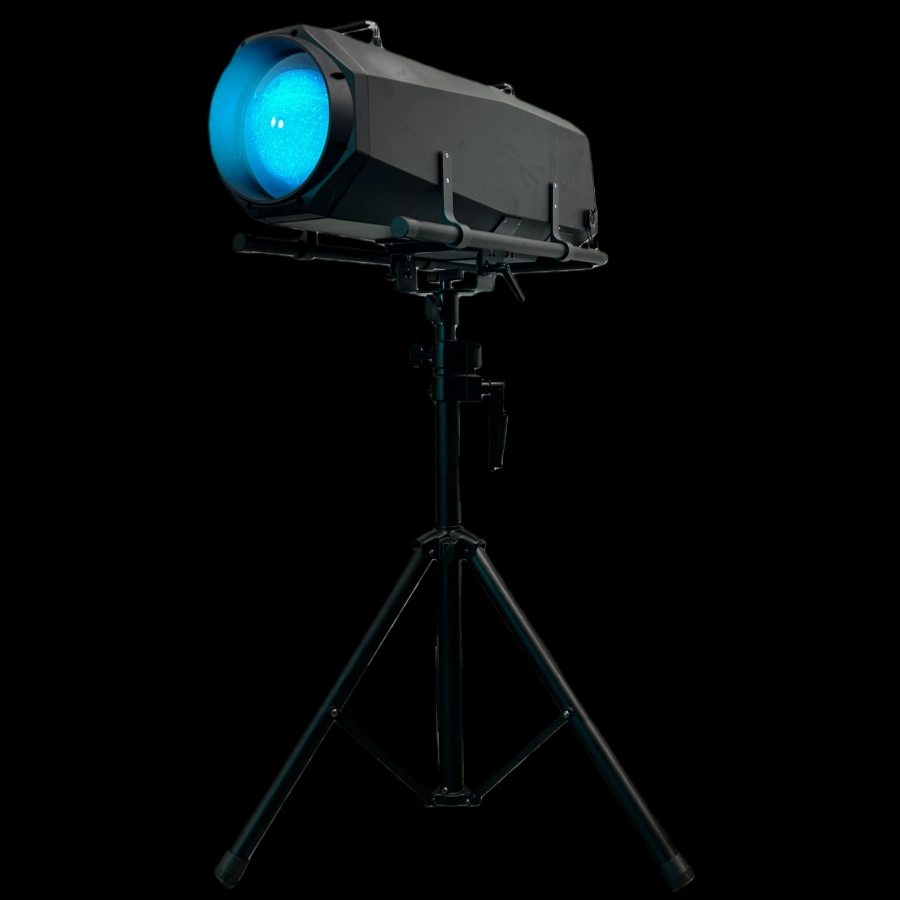
This 1200W waterproof LED follow spotlight with iris adjustment features strong light penetration, precise focusing, and smooth dimming with strobe effects.
Its rain- and dust-resistant design makes it suitable for outdoor performances, concerts, architectural lighting, and other applications. The LED light source boasts a long lifespan and stable, durable operation.
The Waterproof 1200W LED Follow Spot Light with Rotating Gobo features a rotating pattern sheet, delivering a powerful 1200W output for clear, focused beams and precise light tracking. Waterproof for outdoor use in all scenarios, the rotating pattern creates rich visual layers, making it ideal for large-scale indoor and outdoor performances, music festivals, light shows, and other events requiring focused attention and stage effects.
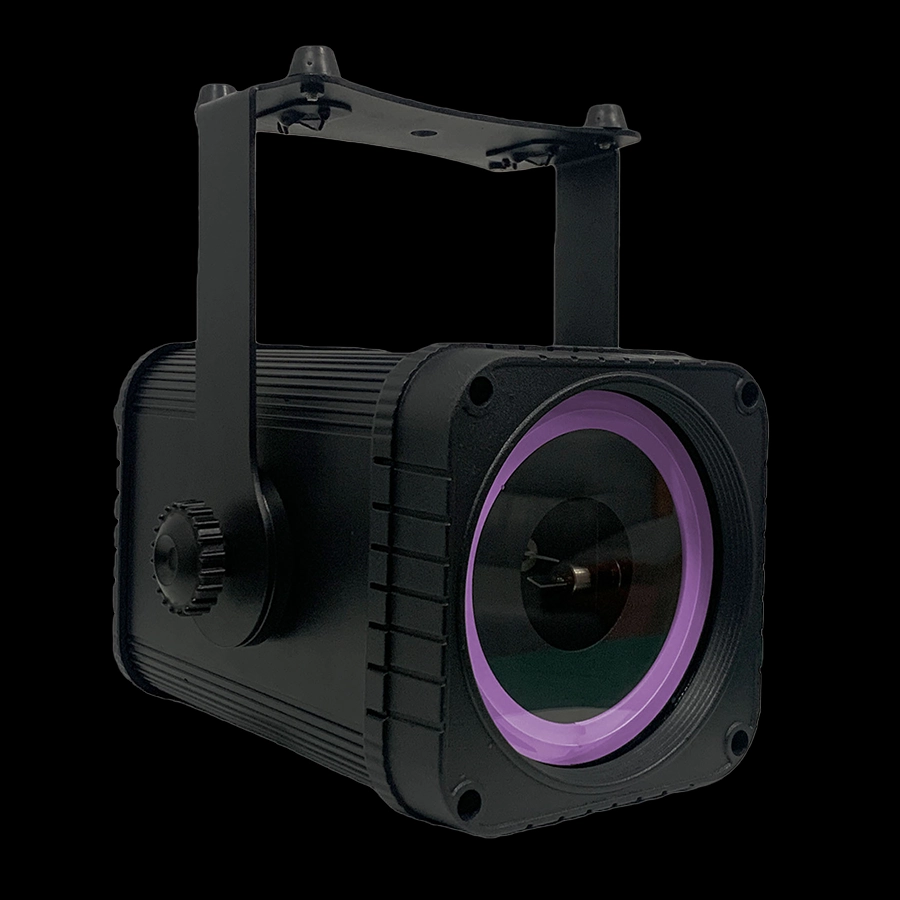
This IP65 waterproof 3W RGB animation laser battery light features an IP65 waterproof and dustproof design, making it suitable for both outdoor and indoor use. It supports rich RGB color combinations and dynamic animation effects, delivering a clear and fluid beam that can display text, patterns, and flowing light and shadow, among other visual representations.
Powered by a built-in battery, it requires no external power source, making it portable, easy to deploy, and simple to operate. Ideal for festive decorations, creating a garden atmosphere, and adding a touch of elegance to small events, it's energy-efficient, durable, and creates a truly immersive ambiance.
This IP65 waterproof 5W RGB animation laser battery light features an IP65 waterproof and dustproof design, making it suitable for both outdoor and indoor use. It supports rich RGB color combinations and dynamic animation effects, delivering a clear and fluid beam that can display text, patterns, and flowing light and shadow, among other visual representations.
Powered by a built-in battery, it requires no external power source, making it portable, easy to deploy, and simple to operate. Ideal for festive decorations, creating a garden atmosphere, and adding a touch of elegance to small events, it's energy-efficient, durable, and creates a truly immersive ambiance.
If you have any comments or good suggestions, please leave us a message, later our professional staff will contact you as soon as possible.
Lighting Innovators
Uplus Lighting is a leading integrated company specializing in R&D, design, production, and sales of stage lighting solutions.
 Scan QR Code
Facebook
Instagram
YouTube
VK