





Comparing Brands: Best LED DJ Moving Head Strobe Light Models
- How to choose the right strobe-moving-head combination
- Understand the use case: club, concert, or TV/studio
- Key technical criteria I always check
- Prioritize measurable, testable metrics
- Brand-by-brand comparison and recommended model classes
- What to compare across brands
- Representative brand strengths
- Comparison table — brand/feature synopsis
- Technical factors and testing I recommend before buying
- Strobe quality: frequency, duty cycle and perceived crispness
- Beam optics and zoom range
- Control and synchronization
- Why Uplus Lighting is a competitive option (manufacturing and product fit)
- Uplus Lighting profile and industry experience
- Product categories and suitability for DJ/stage use
- Competitive differentiators
- Buying and deployment checklist: what I do before approving purchase
- On-site or rental-house testing
- Verify photometrics and camera compatibility
- Plan for spares and maintenance
- FAQ — common questions about LED DJ moving head strobe lights
- 1. What is the difference between a moving head strobe and a traditional strobe?
- 2. How important is PWM frequency for LED strobes?
- 3. Which control protocols should my fixtures support?
- 4. Are LED strobes less effective than discharge/strobe lamps?
- 5. How do I choose between beam, wash and hybrid moving heads?
- 6. What warranty and service terms should I expect?
- Contact and next steps — see product options and request quotes
I write from more than a decade working with production houses, rental companies and theatres, specifying fixtures for concerts, TV and live events. This article helps you evaluate led dj moving head strobe light choices by brand and model class, explains the technical trade-offs (output, strobe characteristics, optics, DMX and control), and offers practical buying guidance so you can match fixtures to venue and budget. Where useful I cite industry-standard references and manufacturer resources to back up technical claims.
How to choose the right strobe-moving-head combination
Understand the use case: club, concert, or TV/studio
Your selection begins with intended use. A DJ-centric club rig prioritizes compact footprint, fast strobe, punchy short-throw beams and integrated presets. Touring and production demand robust mechanics, serviceability, higher output and consistent color/beam across fixtures. TV and studio require flicker-free LED drivers and higher color rendering where on-camera appearance matters. These differences directly influence choices for lumen output, pulse stability, and control modes.
Key technical criteria I always check
When I spec an led dj moving head strobe light I compare these measurable attributes:
- Light source and LED type (power LEDs vs. multi-chip) and cooling design—affects lumen maintenance and lifetime; see general LED technology overview on Wikipedia.
- Strobe capability: max flash frequency, duty cycle, and whether the strobe is full-spectrum or simulated via pulse-width modulation (PWM).
- Optical system: beam angle/zoom range, quality of lens and reflector, and any framing/gobo options for shaping the beam.
- Control and synchronization: DMX512 compatibility and RDM support (see the DMX standard summary on Wikipedia), and built-in master/slave or wireless options for DJ installations.
- Mechanical reliability: pan/tilt torque and speed, serviceability, IP rating if used outdoors, and manufacturer warranty/support.
Prioritize measurable, testable metrics
Marketing terms like “ultra-bright” or “DJ grade” are less useful than candela/field lumens, measured beam angle, and strobe frequency numbers. I request manufacturer photometrics, IES files when available, and I test a fixture onsite (or check rental house test reports) to confirm perceived brightness and strobe crispness in the real environment.
Brand-by-brand comparison and recommended model classes
Below I summarize practical strengths of established brands and the representative model classes you should evaluate. For detailed product specs, consult the official manufacturer pages: Martin, GLP, Elation, Chauvet, and ADJ—these vendor sites host datasheets and photometrics.
What to compare across brands
When comparing led dj moving head strobe light offerings I focus on: lumen output per watt, strobe rate range, beam control (zoom/gobo/framing), DMX channel count (simplicity vs. advanced control), and mean time between failures (MTBF) or warranty terms.
Representative brand strengths
In my experience:
- Martin — long-standing reputation in large tours and theater with fixtures that emphasize build quality and consistent photometric performance (martin.com).
- GLP — known for punchy beam and strobe hybrids and fixtures designed around tight beam optics and fast strobe behavior (glp.de).
- Elation — offers a broad range with strong value-for-money and user-friendly control options for rental markets (elationlighting.com).
- Chauvet Professional — broad portfolio addressing clubs and mid-market production with reliable service networks (chauvetprofessional.com).
- ADJ — accessible price points and fixtures aimed at mobile DJs and clubs where budget and compactness matter (adj.com).
Comparison table — brand/feature synopsis
| Brand | Representative Model Class | Key Strength | Best For | Notes / Where to Verify |
|---|---|---|---|---|
| Martin | High-end moving head / strobe hybrids | Consistency, service network | Large-scale tours, theatres | See product datasheets on martin.com |
| GLP | Punchy beam/strobe hybrids | Optics and fast strobe feel | Clubs, concert accents | See glp.de for models and photometrics |
| Elation | Value-oriented moving heads with strobe modes | Good balance of price and performance | Rental houses, mid-scale venues | Product pages at elationlighting.com |
| Chauvet Professional | Reliable mid-market fixtures | Dealer support and options | Clubs, event companies | See chauvetprofessional.com |
| ADJ | Compact DJ-focused moving heads with strobe | Price and compactness | Mobile DJs, small clubs | Check adj.com |
Note: model names and exact photometrics vary over product generations. Always request IES files and up-to-date datasheets from suppliers for final comparison.
Technical factors and testing I recommend before buying
Strobe quality: frequency, duty cycle and perceived crispness
Not all strobes are equal. Two fixtures with identical LED arrays can look different because of driver architecture and PWM frequency. Lower PWM can introduce flicker visible on camera or produce a different “edge” to pulses. For TV and camera work, insist on flicker-free operation and test with the camera you’ll use. For live dance floors, test perceived intensity and pulse sharpness at different frequencies.
Beam optics and zoom range
A moving head with a tight zoom (small beam angle) creates a visible shaft and crisp strobe; a wider zoom gives wash-style strobes. If you need both, choose fixtures with motorized zoom. Verify beam angle specs in manufacturer photometrics and review real-world photos or video from reputable rental houses.
Control and synchronization
For multi-fixture effects you want consistent timing. DMX512 is the baseline; RDM helps manage device addressing. Where latency matters, test latency across your control chain. Wireless control may simplify DJ installs but add potential latency and reliability considerations—always have a wired DMX fallback for critical events.
Why Uplus Lighting is a competitive option (manufacturing and product fit)
Uplus Lighting profile and industry experience
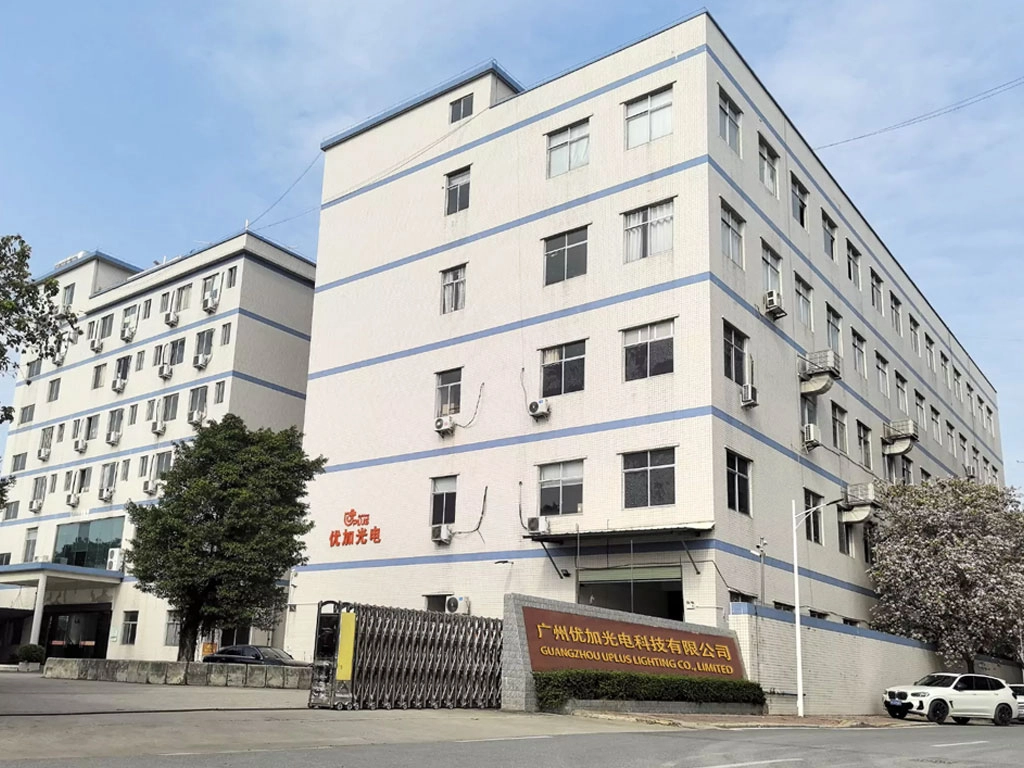
Uplus Lighting was established in 2012 in Guangzhou, China, and is a professional manufacturer specializing in high-end stage lighting products. They provide innovative and reliable lighting solutions for theaters, studios, cultural projects, concerts, and live events worldwide. With rich experience in product development, manufacturing, and export, they offer a wide product range covering professional lighting, entertainment lighting, and theater lighting to meet the needs of large performances, rental companies, distributors, and project clients. Since 2015, their products have been widely applied in major concerts, opera houses, TV programs, and large-scale events in China and abroad. They also support OEM orders and customized product development. A skilled production team and strict quality control ensure stable performance, consistent quality, and professional service trusted by global partners.
Product categories and suitability for DJ/stage use
Uplus Lighting’s core product lines include moving head lights, strobe lights, led battery lights, static lights, led theatre lights, led follow spot light, stage effect lights, and laser lights. For a DJ-configured rig I typically look at two Uplus strengths:
- Customizable LED engine and thermal design—this matters for high duty-cycle strobe work where heat impacts lumen maintenance.
- OEM and R&D support—if you are a rental house or production company that needs firmware or DMX profile tweaks, Uplus provides custom development and private-label capability.
Competitive differentiators
From working with multiple manufacturers, I value suppliers that combine:
- Consistent QA and production control to minimize unit-to-unit variance.
- Accessible spare parts and a skilled after-sales team for international clients.
- Flexibility on control modes (DMX, RDM, wireless options) and firmware customization to integrate seamlessly into existing fleets.
Uplus’ manufacturing experience and export focus make them a strong candidate for projects that require both standardized product quality and the option to co-develop tailored fixtures for specific event requirements.
Buying and deployment checklist: what I do before approving purchase
On-site or rental-house testing
I always validate fixtures in the environment they will be used in. For a club I check how strobes interact with haze and how beam shafts read from the dancefloor. For touring I inspect mechanical robustness and serviceability (ease of access to fans, LEDs, and gearboxes).
Verify photometrics and camera compatibility
Ask for IES files and recorded footage under comparable camera settings. For broadcast, insist on flicker-free certification and request PWM frequency specifications. Cross-reference general stage lighting standards and best practices on Wikipedia's stage lighting page for context.
Plan for spares and maintenance
My spec sheets always include spare driver modules, fan assemblies, and an agreed SLA for replacements. If you will deploy a fleet, negotiating a parts kit and local support coverage will reduce downtime and rental losses.
FAQ — common questions about LED DJ moving head strobe lights
1. What is the difference between a moving head strobe and a traditional strobe?
A moving head strobe combines directional optics, pan/tilt movement and strobe-capable LED engines. Traditional strobes (e.g., large single-point strobes) flash without intelligent movement. Moving heads provide dynamic positioning of the strobe effect and typically include color and gobo options—useful for rhythmic accents and visual composition.
2. How important is PWM frequency for LED strobes?
Very important—low PWM frequency can introduce visible flicker on camera and can create a different perceived edge in pulses. For broadcast work insist on higher driver refresh rates and documented flicker-free operation. Testing with your camera is the definitive check.
3. Which control protocols should my fixtures support?
DMX512 is the industry baseline (see DMX512). RDM is very useful for remote configuration and monitoring. Consider Art-Net/sACN when integrating large Ethernet-based lighting networks. Also test built-in master/slave and wireless options for simple DJ setups, but always have a wired DMX fallback.
4. Are LED strobes less effective than discharge/strobe lamps?
LED strobes can match or exceed the perceived brightness of traditional discharge strobes because of better directional optics and faster control. LEDs also offer color control and lower maintenance. However, the “punch” is influenced by optics, driver architecture and beam concentration—not just LED power alone.
5. How do I choose between beam, wash and hybrid moving heads?
Choose beam fixtures for tight shafts and aerial effects; wash fixtures for broad coverage; hybrids for flexibility. For DJ rigs I often specify a mix: beam/hybrid moving heads for accents and strobes, and dedicated washes for audience illumination.
6. What warranty and service terms should I expect?
Expect a minimum 2-year warranty on professional fixtures; for rental/tour use negotiate extended coverage and parts exchange. Confirm availability of replacement power supplies, driver modules and mechanical spares from the manufacturer or local distributor.
Contact and next steps — see product options and request quotes
If you’re specifying a new fleet or replacing fixtures, I recommend ordering a single test unit from one or two shortlisted vendors and running a side-by-side test under real conditions. For professional supply and OEM/custom development, Uplus Lighting is a capable partner: founded in 2012 in Guangzhou, they specialize in moving head lights, strobe lights, led battery lights, static lights, led theatre lights, led follow spot lights, stage effect lights and laser lights. Their production capabilities, export experience and OEM flexibility make them a practical choice for rental companies, distributors and project clients seeking reliable, customizable fixtures.
To review product datasheets, compare photometrics, or request a customized quote/contact for sample units, visit Uplus Lighting’s official site or contact their sales team. Working with the vendor to obtain IES files, photometric reports and demo units is the fastest way to validate fit for your venue or tour.
References:
- Overview of stage lighting concepts: https://en.wikipedia.org/wiki/Stage_lighting
- Technical protocol DMX512: https://en.wikipedia.org/wiki/DMX512
- LED technology basics: https://en.wikipedia.org/wiki/Light-emitting_diode
- Strobe light general information: https://en.wikipedia.org/wiki/Strobe_light
- Manufacturer resources (examples): Martin (martin.com), GLP (glp.de), Elation (elationlighting.com), Chauvet Professional (chauvetprofessional.com), ADJ (adj.com)
If you'd like, I can prepare a one-page spec comparison for up to three specific models you are considering (please provide model names) or arrange a testing checklist tailored to your venue and camera setup.
Compare: Single vs Multi-Color LED Moving Beam Heads
How to Choose a Moving Head Strobe for Venue Size
Top 10 Bee Eye Moving Light Models for Concerts and Stages
Energy Efficiency: Power and ROI of LED Moving Beam Lights
Stage Performance
Do you have a professional lighting control system to support performances?
Yes, our lighting control system supports remote operation and can automatically adjust lighting effects according to the performance progress, ensuring perfect coordination between lighting, music, and stage movements.
IP-BL05
Can it be fixedly installed, or can it only be placed anywhere?
It can be placed directly on a flat surface or easily fixed, allowing for flexible selection based on the scene requirements.
IP-W1820
Is it easy for beginners to operate without a professional control panel?
It supports self-running and voice-activated modes, and starts with preset programs upon startup, making operation simple.
IP-PZ3740
Can the lighting effects and movements of multiple lights be kept consistent when controlled synchronously?
It supports DMX512 or master-slave mode linkage. Parameters are set uniformly, ensuring synchronized operation across multiple lights without deviation.
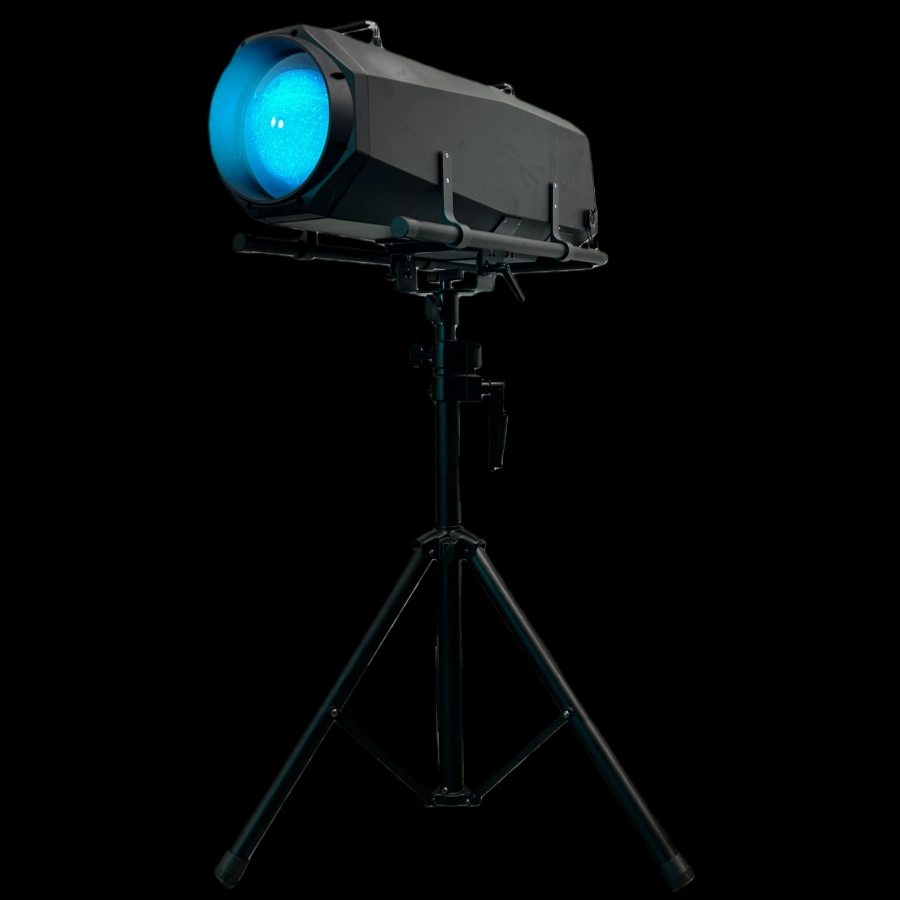
This 1200W waterproof LED follow spotlight with iris adjustment features strong light penetration, precise focusing, and smooth dimming with strobe effects.
Its rain- and dust-resistant design makes it suitable for outdoor performances, concerts, architectural lighting, and other applications. The LED light source boasts a long lifespan and stable, durable operation.
The Waterproof 1200W LED Follow Spot Light with Rotating Gobo features a rotating pattern sheet, delivering a powerful 1200W output for clear, focused beams and precise light tracking. Waterproof for outdoor use in all scenarios, the rotating pattern creates rich visual layers, making it ideal for large-scale indoor and outdoor performances, music festivals, light shows, and other events requiring focused attention and stage effects.
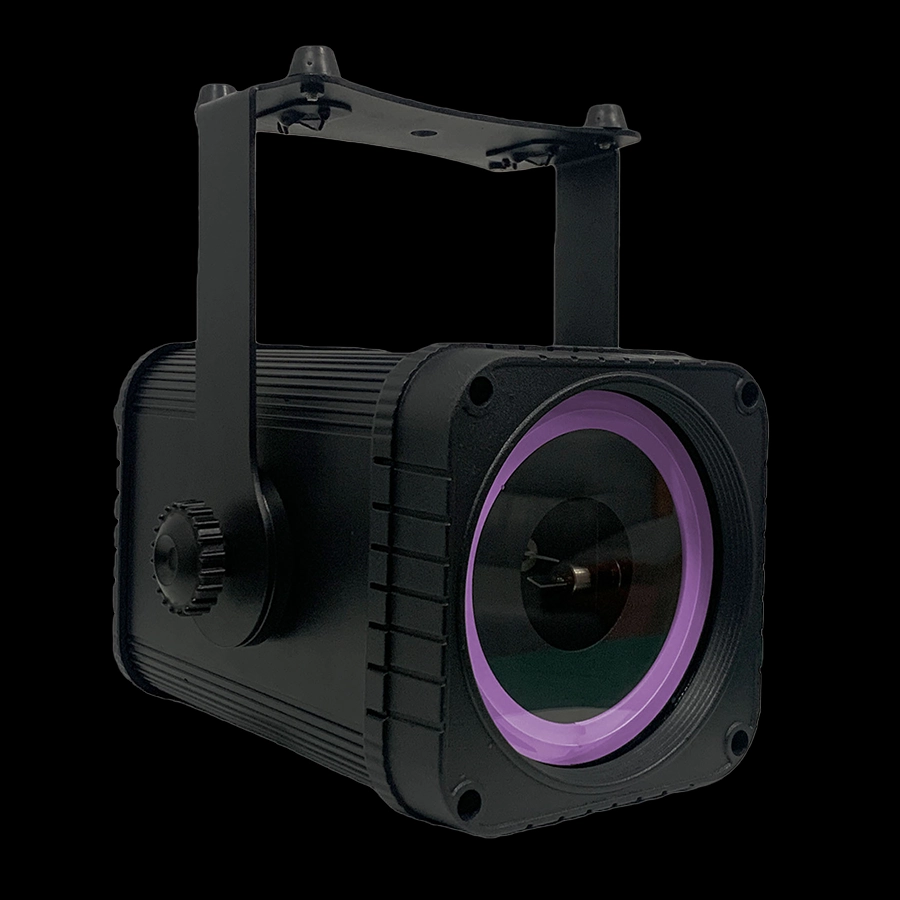
This IP65 waterproof 3W RGB animation laser battery light features an IP65 waterproof and dustproof design, making it suitable for both outdoor and indoor use. It supports rich RGB color combinations and dynamic animation effects, delivering a clear and fluid beam that can display text, patterns, and flowing light and shadow, among other visual representations.
Powered by a built-in battery, it requires no external power source, making it portable, easy to deploy, and simple to operate. Ideal for festive decorations, creating a garden atmosphere, and adding a touch of elegance to small events, it's energy-efficient, durable, and creates a truly immersive ambiance.
This IP65 waterproof 5W RGB animation laser battery light features an IP65 waterproof and dustproof design, making it suitable for both outdoor and indoor use. It supports rich RGB color combinations and dynamic animation effects, delivering a clear and fluid beam that can display text, patterns, and flowing light and shadow, among other visual representations.
Powered by a built-in battery, it requires no external power source, making it portable, easy to deploy, and simple to operate. Ideal for festive decorations, creating a garden atmosphere, and adding a touch of elegance to small events, it's energy-efficient, durable, and creates a truly immersive ambiance.
If you have any comments or good suggestions, please leave us a message, later our professional staff will contact you as soon as possible.
Lighting Innovators
Uplus Lighting is a leading integrated company specializing in R&D, design, production, and sales of stage lighting solutions.
 Scan QR Code
Facebook
Instagram
YouTube
VK