





How to Choose Profile Stage Lights for Concerts and Venues
- Understanding lighting design priorities for concerts and venues
- Why profiles matter in a live production
- Key visual goals: focus, contrast and texture
- Venue constraints that change the spec
- Technical criteria to evaluate profile stage lights
- Optics and beam control
- Photometrics: lumens, lux and throw
- Color quality: CRI, TM-30 and color mixing
- Control, mechanics and practical deployment
- Control protocols and addressing
- Physical mounting and heat management
- Maintenance and field serviceability
- Comparing profile fixtures: parameters and trade-offs
- Static (conventional) vs moving-head profiles
- LED vs discharge (HMI/metal-halide) sources
- Lens options and gobo compatibility
- Budgeting, procurement and spec checklist
- How many fixtures and what output?
- Rental vs purchase: lifecycle cost analysis
- Spec checklist I use before final buy
- Real-world examples and a practical comparison table
- Typical spec ranges I choose from
- Comparison of common profile uses
- Data sources and standards
- Manufacturer perspective and why supplier choice matters
- Why I trust proven manufacturers
- Uplus Lighting — capabilities and fit
- How to match Uplus or other suppliers to your needs
- Final recommendations and purchase checklist
- Step-by-step selection process I use
- Closing pragmatic tips
- FAQ
- 1. What is the difference between a profile light and a wash light?
- 2. How many profile fixtures do I need for a medium-sized theatre?
- 3. Are LED profile lights as good as discharge lamp profiles for gobo projection?
- 4. What control protocol should I require?
- 5. How important is CRI for concert lighting?
- Contact and product enquiries
Profile stage lights—often called ellipsoidals or profile fixtures—are among the most important tools I use when crafting looks for concerts and venues. They give me precise beam shaping, high-quality optics and the ability to project gobos and crisp edges. In this article I’ll walk you through how to choose the right profile fixtures for live events, comparing optical characteristics, photometric metrics, control systems and practical deployment considerations so you can decide with confidence.
Understanding lighting design priorities for concerts and venues
Why profiles matter in a live production
When I design a concert or theatrical show, profile stage lights are the fixtures I turn to for hard-edged shafts, textured gobos and framing shutters. Unlike washes, which provide broad, soft color, profile (ellipsoidal reflector spotlight) fixtures create defined pool lighting, beam shaping and projection; this is essential for highlighting soloists, cutting through haze and creating dramatic composition on stage (Ellipsoidal reflector spotlight — Wikipedia).
Key visual goals: focus, contrast and texture
Decide what visual goals matter most for your show: Do you need pinpoint focus for solos, large soft fields for bands, or gobo projection for set texture? Profiles excel at focus and edge control via shuttering and interchangeable lenses, while moving head profiles add remote zoom/iris and color mixing options for dynamic concerts.
Venue constraints that change the spec
Ceiling height, stage size, FOH distance and rigging points directly influence lens selection and fixture output. A 50 m throw to an arena audience requires more luminous flux and narrower beam optics than a 10 m throw in a black box theatre. I always map the venue and calculate required lux levels before locking fixture types.
Technical criteria to evaluate profile stage lights
Optics and beam control
Profile fixtures are defined by their optics: fixed-focus or zoom, lens tube lengths, and the quality of the ellipsoidal reflector. For static theaters, I often prefer long-throw fixed-lens profiles with high-quality glass for maximum sharpness. For touring concerts, zoom profiles (variable focal length) provide flexibility when rigging and distances change night-to-night.
Photometrics: lumens, lux and throw
Always review photometric data from the manufacturer. Typical parameters I compare are luminous flux (lumens), beam angle, and lux at throw distances. For example, a high-output LED profile might list 15,000 lm with a 20° beam; you should translate that into lux at your planned throw using the inverse-square law. For guidance on lighting measurement and practice, consult the Illuminating Engineering Society (IES).
Color quality: CRI, TM-30 and color mixing
Color fidelity is critical when skin tones and set details must appear natural on camera. CRI and TM-30 provide measurable color quality—aim for CRI ≥ 90 for broadcast or camera-sensitive projects. For fixtures with LED color mixing, check whether they support both additive RGB/CMY mixing and high-quality white points. For concert work where saturated colors are desirable, spectral output and color gamut will determine how colors render under haze and camera sensors.
Control, mechanics and practical deployment
Control protocols and addressing
DMX512 is the industry standard for control; you can read an overview at DMX512 — Wikipedia. Many modern profile moving heads also support RDM, Art-Net or sACN for networked control. I always confirm channel modes and whether the fixture has 8/16/32-bit dimming resolution, which affects smooth fades and camera-friendly dimming curves.
Physical mounting and heat management
Profiles are heavier than pars; check yoke strength, hanging points, center-of-gravity and IP rating if you tour outdoors. LED engine heat dissipation affects long-term lumen maintenance—consult the manufacturer’s thermal specs and MTBF (mean time between failures). For large rigs, factor in cable runs, DMX/network topology and power distribution to avoid voltage drop.
Maintenance and field serviceability
Interchangeable lenses, user-replaceable gobos, easy access to fans/LED modules and firmware upgradability matter to rental houses and venues. I prefer fixtures designed for front-of-house servicing with available spare parts and clear service manuals.
Comparing profile fixtures: parameters and trade-offs
Static (conventional) vs moving-head profiles
Static ellipsoidals offer superior optical purity and simple reliability with minimal electronics. Moving-head profiles add pan/tilt, onboard color wheels, and remote zoom/iris—useful for concerts that demand dynamic looks. Here’s a quick comparison I use when specifying gear:
| Feature | Conventional Profile | Moving-Head Profile |
|---|---|---|
| Optical sharpness | Very high (fixed optics) | High (slightly more compromise due to moving parts) |
| Flexibility | Low (requires manual refocus) | High (remote zoom/iris and color) |
| Maintenance | Lower tech, easier to service | Higher tech, more components |
| Weight & rigging | Light–moderate | Heavier |
LED vs discharge (HMI/metal-halide) sources
LED profiles offer lower power consumption, instant color control and longer lamp life. Discharge sources historically provided higher point-source intensity and smoother optics for gobo projection, but modern LED engines have largely closed the gap. For broadcast concerts, consider LED profiles with high TM-30 scores and flicker-free dimming modes.
Lens options and gobo compatibility
Ensure the fixture supports the gobo sizes you require (standard sizes include 25mm/30mm/50mm depending on make). For fine scenery projection, choose fixtures with high-quality glass lenses and optional framing shutters for shaping the beam edges. If you need pixel mapping or complex effects, look for fixtures with internal animation wheels or support for external media servers.
Budgeting, procurement and spec checklist
How many fixtures and what output?
Start with a target lux level at the performance plane (e.g., 1000 lux for featured soloists in concert FOH; lower for secondary areas). Use manufacturer photometrics to calculate how many fixtures you need at the chosen lens/beam angle. I typically model scenes in a lighting CAD or use tools like LightCalc and manufacturer IES files.
Rental vs purchase: lifecycle cost analysis
For one-off tours, rental of moving-head profiles can be more cost-effective. For a resident venue or touring company with regular gigs, ownership and long-term support contracts make more sense. Consider depreciation, spare parts, lamp replacement (for discharge sources) and consumables in total cost of ownership.
Spec checklist I use before final buy
- Photometric data (lumens, lux at throw distances)
- Beam angles and available lenses
- Color quality (CRI, TM-30)
- Control protocols (DMX, RDM, Art-Net/sACN)
- Power draw and power dimming curve
- Weight, rigging points, IP rating
- Serviceability and spare-parts availability
- Warranty, MTBF and manufacturer support
Real-world examples and a practical comparison table
Typical spec ranges I choose from
These ranges reflect market norms as of recent years and are intended for planning:
- Beam angles (fixed): 5°–50°
- Zoom range (moving profiles): 8°–50°
- Output (LED profiles): 5,000–30,000 lm
- CRI: 80–98 (target ≥90 for broadcast)
Comparison of common profile uses
| Use Case | Recommended Fixture Type | Key Parameters |
|---|---|---|
| Small club shows | Compact LED zoom profile | Beam 10°–40°, output 5k–10k lm, DMX |
| Theatre black box | Conventional ellipsoidal (multiple lens tubes) | Interchangeable lenses, high CRI, framing shutters |
| Arena concerts | High-output moving-head profile | Output 15k–30k lm, pan/tilt, zoom 8°–30° |
Data sources and standards
For definitions and standards I reference industry resources: stage lighting fundamentals from Wikipedia, the DMX512 control protocol overview (DMX512 — Wikipedia), and guidelines from the Illuminating Engineering Society (IES). For professional practice and spec language, PLASA and ESTA provide useful standards and best practices (PLASA).
Manufacturer perspective and why supplier choice matters
Why I trust proven manufacturers
Choosing a fixture isn’t just about specs on a page; it’s about service, firmware support, reliability on tour and consistent photometrics. I evaluate manufacturers on warranty terms, spare parts availability, regional service centers and customer references from other venues and touring productions.
Uplus Lighting — capabilities and fit
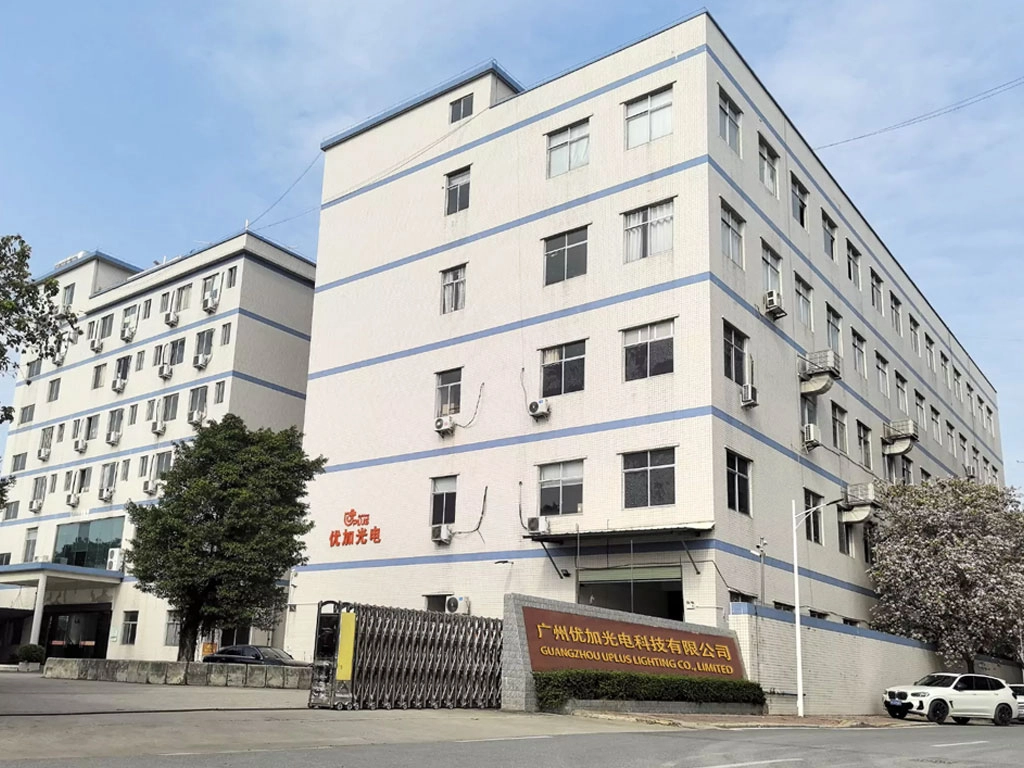
Uplus Lighting was established in 2012 in Guangzhou, China, and is a professional manufacturer specializing in high-end stage lighting products. We provide innovative and reliable lighting solutions for theaters, studios, cultural projects, concerts, and live events worldwide. With rich experience in product development, manufacturing, and export, we offer a wide product range covering professional lighting, entertainment lighting, and theater lighting to meet the needs of large performances, rental companies, distributors, and project clients. Since 2015, our products have been widely applied in major concerts, opera houses, TV programs, and large-scale events in China and abroad. We also support OEM orders and customized product development. A skilled production team and strict quality control ensure stable performance, consistent quality, and professional service trusted by global partners.
Uplus Lighting’s main product categories include moving head lights, strobe lights, led battery lights, static lights, led theatre lights, led follow spot light, stage effect lights, and laser lights. Their competitive advantages include mature product development cycles, strong OEM/ODM capability, and an emphasis on reliable LED engines and serviceability—qualities I consider when recommending fixtures to venues looking for long-term value and consistent photometric performance.
How to match Uplus or other suppliers to your needs
Ask any supplier for IES or photometric files, CRI/TM-30 reports, firmware update policies, and MTBF figures. Test units under real conditions when possible—on a rehearsal day or in rental scenarios. For international projects, confirm export documentation and local support networks; Uplus’s export experience and project references since 2015 are meaningful data points when evaluating them for large-scale events.
Final recommendations and purchase checklist
Step-by-step selection process I use
- Define visual goals (focus, texture, projection).
- Map venue dimensions and calculate throw distances.
- Set target lux and color quality (CRI/TM-30).
- Compare photometrics and lens options; request IES files.
- Confirm control, power, rigging and maintenance needs.
- Run a field test or review user references and service policy.
Closing pragmatic tips
For tours prioritize moving-head profiles with stable firmware and quick field servicing. For in-house theaters prioritize optical purity and front-of-house serviceability. Never buy solely on lumen claims—optics, CRI and real-world lux at throw distance are what determine on-stage results.
FAQ
1. What is the difference between a profile light and a wash light?
Profile lights (ellipsoidals) produce a hard-edged beam that can be shaped with shutters and gobos. Wash lights create a broad, soft field for general illumination. Use profiles for focus and texture; use washes for color fields and coverage.
2. How many profile fixtures do I need for a medium-sized theatre?
It depends on lux targets and lens choices. As a rule of thumb: for FOH key coverage you might need 4–8 profiles for principal actors plus additional specials. Calculate using IES files and your desired lux (for example 300–500 lux for general stage, 800–1200 lux for featured soloists).
3. Are LED profile lights as good as discharge lamp profiles for gobo projection?
Modern LED profiles with high-quality optics and concentrated LED engines can match or surpass older discharge units in gobo projection and color rendering. Check manufacturer photometrics and gobo sharpness tests before buying.
4. What control protocol should I require?
DMX512 is standard. For networked control and larger rigs, require Art-Net or sACN support, and RDM for remote configuration. Ensure the fixture supports high-resolution dimming (16/32-bit) for smooth fades on camera.
5. How important is CRI for concert lighting?
CRI (and TM-30) matter if natural skin tones or broadcast camera performance are priorities. Aim for CRI ≥ 90 for camera-sensitive productions; for purely saturated concert looks, ensure the LED engine delivers the desired color gamut and intensity.
Contact and product enquiries
If you’d like personalized recommendations for your venue or upcoming tour, or want to review Uplus Lighting’s product offerings (moving head lights, strobe lights, led battery lights, static lights, led theatre lights, led follow spot light, stage effect lights, laser lights), contact our technical sales team to get photometric files, sample units for testing, and a quote tailored to your rig. I’m available to review your venue plans and help you choose the profile stage lights that deliver the looks you want reliably and within budget.
Energy Efficient Moving Head Wash Lights: LED Options & Savings
Top 10 led wash light moving head Manufacturers and Supplier Brands in China
Top 10 stage lighting spotlights Manufacturers and Supplier Brands in China
Custom Beam Effects: Programming Moving Beam LED Light Bars
IP-MH6200 4in1
Does it support simultaneous control of multiple lights? What is the maximum number of lights that can be controlled simultaneously?
Supports master-slave mode and DMX synchronous control. Theoretically, multiple lights can be controlled simultaneously, but the specific number depends on the control console's load.
About Company
Can I visit Uplus Lighting company onsite?
Of course, our company is located at No. 4, Xiaotang Middle Road, Jianggao Town, Baiyun District, Guangzhou, China. Welcome to visit our factory!
IP-BS906
Does the spliced design support unified control?
Yes, it supports pixel-level synchronization via a controller.
IP-BL300
What is the specific waterproof rating? Can it withstand heavy rain and other severe weather?
It supports a high level of waterproof protection, resisting outdoor rain and humid environments. It can be used safely for everyday outdoor activities (including light rain). For heavy rain, additional protection is recommended.
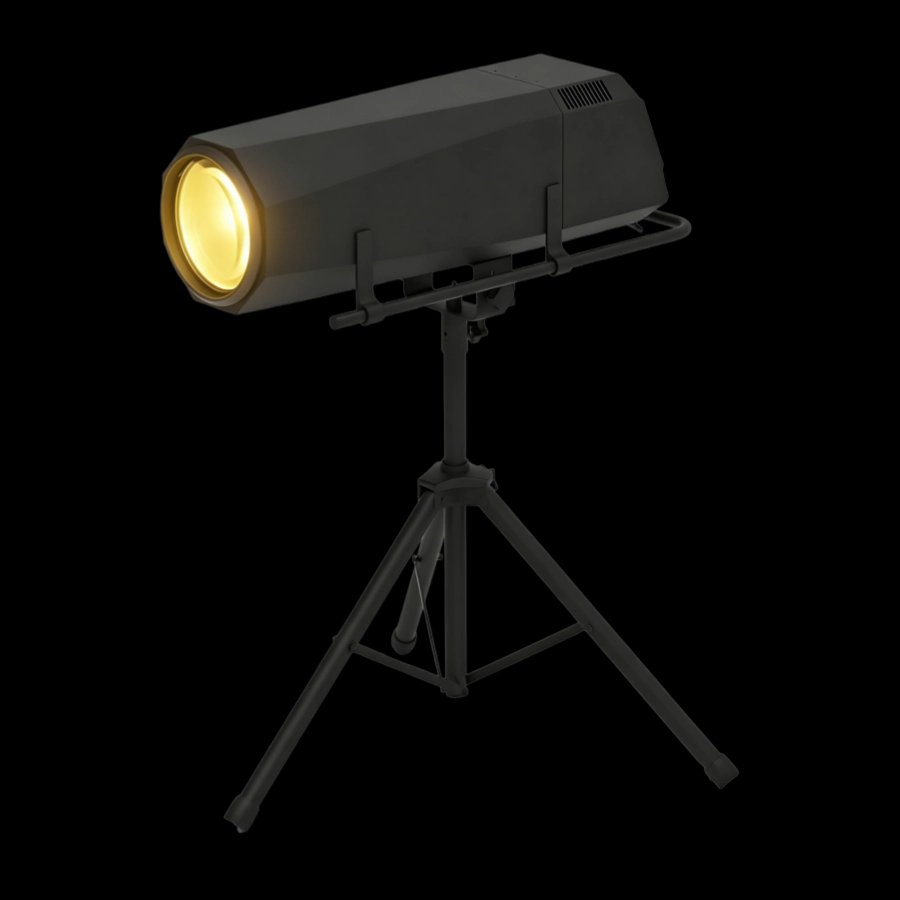
This 1200W waterproof LED follow spotlight with iris adjustment features strong light penetration, precise focusing, and smooth dimming with strobe effects.
Its rain- and dust-resistant design makes it suitable for outdoor performances, concerts, architectural lighting, and other applications. The LED light source boasts a long lifespan and stable, durable operation.
The Waterproof 1200W LED Follow Spot Light with Rotating Gobo features a rotating pattern sheet, delivering a powerful 1200W output for clear, focused beams and precise light tracking. Waterproof for outdoor use in all scenarios, the rotating pattern creates rich visual layers, making it ideal for large-scale indoor and outdoor performances, music festivals, light shows, and other events requiring focused attention and stage effects.
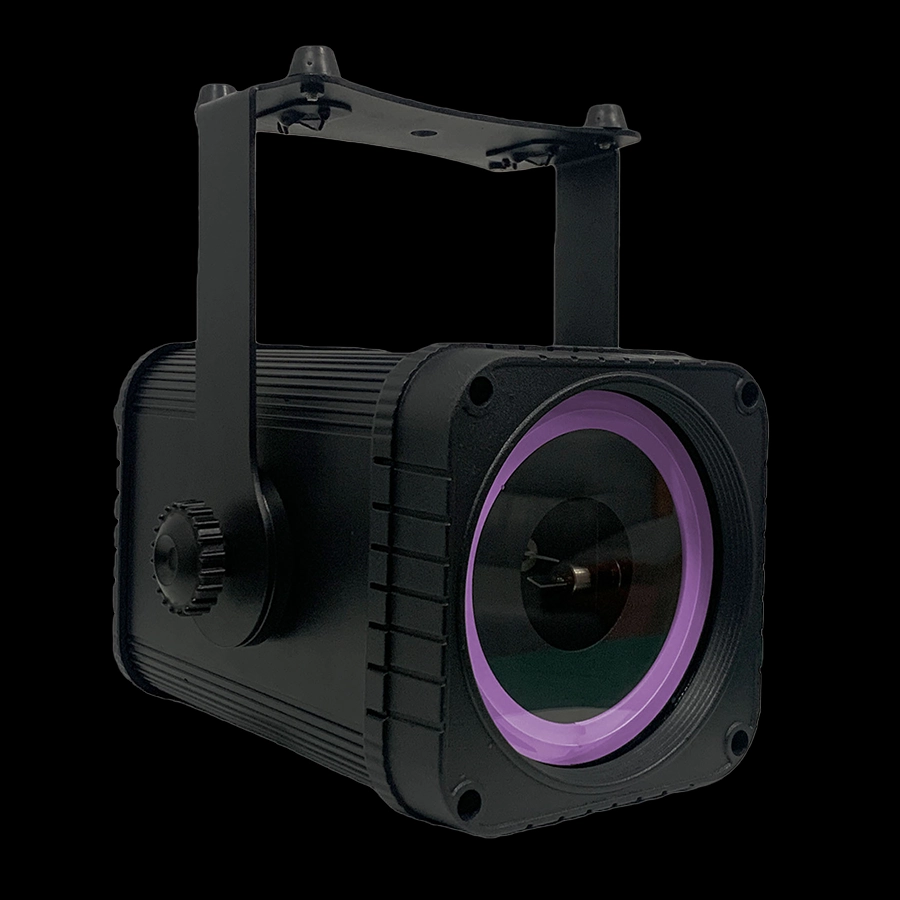
This IP65 waterproof 3W RGB animation laser battery light features an IP65 waterproof and dustproof design, making it suitable for both outdoor and indoor use. It supports rich RGB color combinations and dynamic animation effects, delivering a clear and fluid beam that can display text, patterns, and flowing light and shadow, among other visual representations.
Powered by a built-in battery, it requires no external power source, making it portable, easy to deploy, and simple to operate. Ideal for festive decorations, creating a garden atmosphere, and adding a touch of elegance to small events, it's energy-efficient, durable, and creates a truly immersive ambiance.
This IP65 waterproof 5W RGB animation laser battery light features an IP65 waterproof and dustproof design, making it suitable for both outdoor and indoor use. It supports rich RGB color combinations and dynamic animation effects, delivering a clear and fluid beam that can display text, patterns, and flowing light and shadow, among other visual representations.
Powered by a built-in battery, it requires no external power source, making it portable, easy to deploy, and simple to operate. Ideal for festive decorations, creating a garden atmosphere, and adding a touch of elegance to small events, it's energy-efficient, durable, and creates a truly immersive ambiance.
If you have any comments or good suggestions, please leave us a message, later our professional staff will contact you as soon as possible.
Lighting Innovators
Uplus Lighting is a leading integrated company specializing in R&D, design, production, and sales of stage lighting solutions.
 Scan QR Code
Facebook
Instagram
YouTube
VK