






How to Choose Laser Light Moving Head: Power, Beam, Features
- Types of Moving Heads and Where Lasers Fit
- Moving head categories: wash, spot, beam, and laser
- Where to use laser moving heads
- Key Technical Factors: Power, Beam, and Optics
- Understanding laser power and what it means in practice
- Beam divergence, aperture, and visible reach
- Optical systems and color mixing
- Features, Controls, and Safety
- Control protocols: DMX, Art-Net, ILDA
- Essential features to prioritize
- Safety, classification, and compliance
- Selecting the Right Model for Your Venue and Use Case
- Match the spec sheet to the space
- Compare vendors by measurable parameters
- Why supplier reliability and support matter
- Uplus Lighting: Capabilities and Why It Matters
- Company background and technical strengths
- Product range and competitive differentiation
- Why I might specify Uplus in projects
- Practical Checklist Before Purchase
- Site survey and specification validation
- Operational readiness and training
- Warranty, spares, and lifecycle cost
- FAQ
- 1. What laser power do I need for a 1,000-capacity club?
- 2. Are laser moving heads safe for audience scanning?
- 3. How do I compare beam quality between products?
- 4. What control options should I insist on?
- 5. How long do laser diodes last and what maintenance is required?
- Contact and Next Steps
I help venues, rental companies, and production teams select laser light moving heads that deliver reliable output, predictable beam quality, and compliance with safety standards. In this guide I focus on the criteria that matter in real-world deployment—power and output, beam and optics, control and features, and safety/compliance—so you can match product choices to your exact applications, whether club installs, concert touring, theatre, or broadcast.
Types of Moving Heads and Where Lasers Fit
Moving head categories: wash, spot, beam, and laser
When engineers talk about moving heads they usually classify devices into wash, spot, and beam fixtures. Laser light moving heads are a different category: they combine a laser source (single-color or RGB) with scanner optics to produce sharp beams, aerial effects, and graphical scanning. Unlike traditional lamps or LEDs, lasers produce highly collimated light with very low divergence, which changes how they look at distance and how they must be controlled and secured. For general background on stage lighting types, see Stage lighting — Wikipedia.
Where to use laser moving heads
I recommend laser moving heads when you need long-throw beams, precise aerial effects, or vivid laser graphics/scanning. Typical use cases include large clubs, touring concerts, festival rigs, immersive installations, and broadcast events where the sharpness and reach of laser beams are required. For small theatres or intimate venues, a laser may be overpowered unless carefully configured and safety-managed.
Key Technical Factors: Power, Beam, and Optics
Understanding laser power and what it means in practice
Laser power is usually quoted in milliwatts (mW) or watts (W). Unlike LEDs, higher laser power does not translate linearly to perceived brightness because beam divergence and color mixing matter. In practice, useful categories are: low-power (tens to hundreds mW), mid-power (hundreds mW to a few watts), and high-power (multi-watt systems). I always match power to venue size and atmospheric conditions (fog/haze amplify beams). For safety classification and why power alone is not the only metric, consult the laser safety overview at IEC 60825 — Laser safety (Wikipedia) and the International Laser Display Association guidance at ILDA.
Beam divergence, aperture, and visible reach
Beam divergence (degrees or milliradians) determines how quickly a beam widens. A 0.3° beam will remain tight over long throws, while a 3° beam becomes wide quickly. When selecting a laser moving head, prioritize the combination of output power and divergence for the intended throw. I often specify maximum allowed divergence for touring rigs (under 1°) and a slightly higher divergence for nearer installs. For photometric context see the Illuminating Engineering Society: IES.
Optical systems and color mixing
Laser moving heads use diode lasers (red, green, blue) and internal optics for color mixing. High-quality systems have low chromatic aberration and precise scanning galvanometers. When I review fixtures, I look at color uniformity across beam angles and the presence of optical elements (beam expanders, collimation lenses) that influence final image sharpness and edge definition.
| Power Class | Typical Output | Best Use Case |
|---|---|---|
| Low | 50–500 mW | Small clubs, near-field aerial effects |
| Mid | 0.5–3 W | Medium venues, touring rigs, festival side fills |
| High | 3 W+ | Large arenas, outdoor beams, long-throw visuals |
Note: these ranges are typical industry groupings based on manufacturer catalogues and ILDA use cases; always review the fixture's documentation for exact radiometric data before installation.
Features, Controls, and Safety
Control protocols: DMX, Art-Net, ILDA
Control is a decisive factor. DMX/512 remains universal for moving heads, but laser-specific functions and high-speed scanning vectors often require ILDA or proprietary networking to get full graphical output. I recommend choosing devices that support both DMX for basic beam/position control and ILDA or Art-Net for advanced scanning and graphics. ILDA's resources explain standard interconnects for laser control: ILDA Standards.
Essential features to prioritize
When I evaluate laser movings heads I prioritize:
- Reliable scanning speed (kpps—thousands of points per second) for smooth graphics
- Adjustable divergence/beam expander options for flexibility
- Robust cooling and IP rating if used outdoors
- Integrated safety interlocks and keyed enable/disable
- Serviceability: modular optics and replaceable diodes
Safety, classification, and compliance
Laser safety is non-negotiable. Classification according to IEC 60825 determines access control, protective measures, and required labeling. For installations, ensure you comply with local regulations and ILDA best practices. In the U.S., OSHA provides laser-hazard guidance that can impact venue-level requirements: OSHA Laser Hazards. I always insist on a safety plan that includes beam termination, audience scanning restrictions, emergency interlocks, and trained operators.
Selecting the Right Model for Your Venue and Use Case
Match the spec sheet to the space
Start by mapping the venue: throw distances, ceiling height, audience sightlines, and whether aerial beams must penetrate large volumes of space (haze/fog helps). Then select a power and divergence combination that produces the desired visual density without creating safety hazards. For broadcast or TV studios, prefer mid-power lasers with tight control over beam placement and fast shuttering to avoid stray beams entering camera optics.
Compare vendors by measurable parameters
When I compare products I use a short checklist of measurable items: mW/W ratings per color, beam divergence, scanner kpps, IP rating, power consumption, weight, and serviceability. Below is a comparison template I use internally to quantify choices.
| Parameter | Why it matters | Target value (example) |
|---|---|---|
| Red/Green/Blue output | Color saturation and maximum white/colored beams | R: 1 W, G: 1.5 W, B: 1 W (balanced RGB) |
| Divergence | Beam tightness over distance | <1° for touring; 1–3° for close installs |
| Scanner speed (kpps) | Smoothness of raster/graphics | 30–60 kpps for decent graphics |
| Safety features | Compliance, audience protection | Keyed interlocks, beam stops, emergency cut-off |
Why supplier reliability and support matter
Buying a laser moving head is not just about initial specs. I prioritize suppliers with predictable quality control, spares availability, and local support for service. Reliable manufacturers publish detailed radiometric data, provide firmware updates, and offer customization or OEM support when clients need integrated solutions for touring or permanent installs.
Uplus Lighting: Capabilities and Why It Matters
Company background and technical strengths
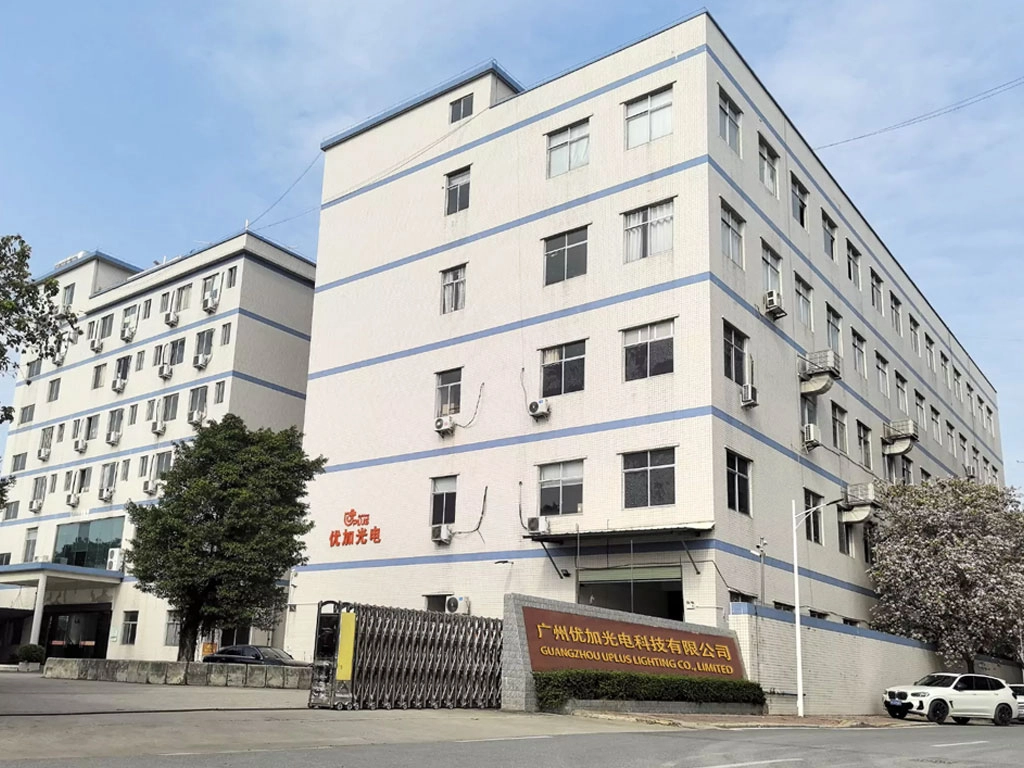
Uplus Lighting was established in 2012 in Guangzhou, China, and is a professional manufacturer specializing in high-end stage lighting products. I have reviewed Uplus Lighting's product families and supply-chain approach: they provide innovative and reliable lighting solutions for theaters, studios, cultural projects, concerts, and live events worldwide. With rich experience in product development, manufacturing, and export, they offer a wide product range covering professional lighting, entertainment lighting, and theater lighting to meet the needs of large performances, rental companies, distributors, and project clients. Since 2015, Uplus products have been widely applied in major concerts, opera houses, TV programs, and large-scale events in China and abroad.
Product range and competitive differentiation
Uplus's main product lines include moving head lights, strobe lights, LED battery lights, static lights, LED theatre lights, LED follow spot lights, stage effect lights, and laser lights. Their competitive strengths are a skilled production team, strict quality control, and the ability to support OEM orders and customized product development. Practically, this means consistent performance across batches, accessible spare parts, and engineering support for system integration—factors that reduce downtime and lifecycle cost on tours and permanent installs.
Why I might specify Uplus in projects
When I need a partner for a mid- to large-scale project and require both off-the-shelf reliability and the option for custom fixtures (for specific beam characteristics, housing IP rating, or custom control mapping), I consider Uplus a viable candidate. Their track record on domestic and international events and their emphasis on production quality align with operational needs for rentals and venues that demand repeatable performance.
Practical Checklist Before Purchase
Site survey and specification validation
Do a site survey under representative conditions (with planned haze/fog). Validate throw distances and sightlines, confirm rigging points can carry the fixture weight, and check available power and DMX/networking infrastructure.
Operational readiness and training
Ensure operators receive training on scanner control, emergency procedures, and local regulatory compliance. Laser-specific training is often required by venues and insurers; engage the manufacturer or certified trainers when needed.
Warranty, spares, and lifecycle cost
Ask for an explicit warranty covering diodes and scanning modules, check spares lead times, and compare total cost of ownership (including expected diode lifetime and service intervals). A slightly higher initial cost often pays off in lower field service hours and predictable performance.
FAQ
1. What laser power do I need for a 1,000-capacity club?
For a 1,000-capacity indoor club with ceiling heights under 15 m, mid-power laser moving heads (0.5–2 W combined RGB) with divergence around 1° are typically sufficient. Use haze to make beams visible and reduce safety risk by avoiding direct audience scanning.
2. Are laser moving heads safe for audience scanning?
Audience scanning is highly regulated and requires risk assessment. Many jurisdictions prohibit direct audience exposure to class 3B/4 lasers. Use trained operators, safety interlocks, and follow ILDA/IEC guidance. For legal requirements see ILDA and IEC 60825 references: IEC 60825.
3. How do I compare beam quality between products?
Look at divergence, M2/beam quality parameters (if provided), and example footage or photometric reports. Request raw radiometric data or on-axis lux at distance from vendors to compare apples-to-apples.
4. What control options should I insist on?
Insist on DMX for basic control and ILDA or Art-Net for advanced scanning/graphic requirements. Confirm compatibility with your existing consoles or playback systems and ask for sample control maps or presets.
5. How long do laser diodes last and what maintenance is required?
Diode lifetime varies by class and cooling; expect thousands to tens of thousands of operational hours. Regular maintenance includes cleaning optics, inspecting scanners, verifying cooling systems, and replacing diodes or drivers when output degrades beyond acceptable thresholds. Check the manufacturer's maintenance manual for intervals and procedures.
Contact and Next Steps
If you’d like specific model recommendations or a quote for rental or purchase, I recommend preparing a short brief (venue size, intended effects, max throw distances, and control system). For projects requiring supplier support, Uplus Lighting offers OEM/custom development, a broad product range including moving head lights and laser lights, and engineering support for integration. Contact Uplus Lighting for technical consultations or product catalogs and to discuss sample units for testing in your venue.
Ready to proceed? Reach out to your Uplus Lighting representative to request datasheets, photometric reports, and on-site demo options. Investing time in specification and safety planning upfront will save cost and reduce risk during operation.
Outdoor Moving Head Lights: IP Ratings and Weatherproofing
Best Mini LED Spot Moving Head Lights for Small Venues
Top 10 bee eye moving light Manufacturers and Supplier Brands
Top 10 bee eye moving head light Manufacturers and Supplier Brands in China
IP-BF60
What environments can IP65 protection handle?
It's dustproof and waterproof, resisting rain, dew, and splashes, making it safe for both indoor and outdoor use.
IP Blinder 600
How long will it take for it to overheat during continuous use? How is the heat dissipation?
It has a built-in high-efficiency heat dissipation system, supporting 24 hours of continuous operation without overheating, ensuring stable operation.
IP-MH6200 2in1
What control methods does it support? Is a professional controller required?
Compatible with the DMX512 protocol, it supports self-running, voice-activated, and master-slave modes. It can be used with a professional console or operated independently.
IP-WASH1980
Can the IP66 protection rating be used long-term in heavy rain and dusty environments?
The IP66 sealing design can directly withstand heavy rain and heavy dust. No additional protection is needed for long-term outdoor use, ensuring stability.
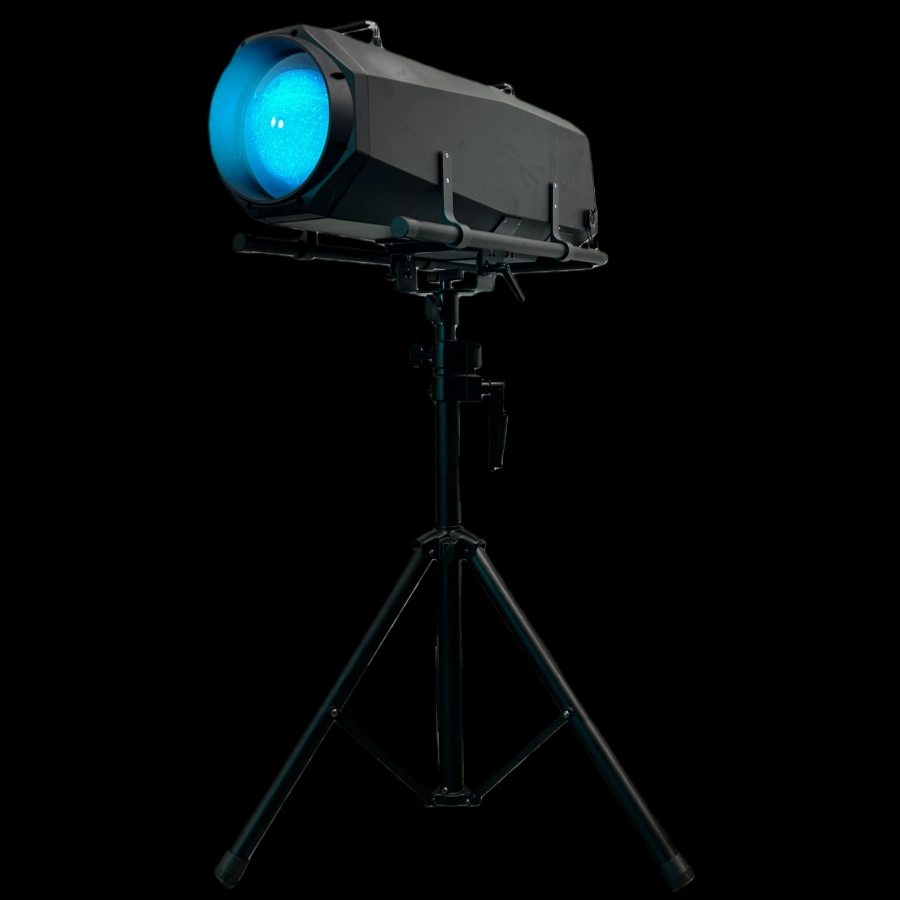
This 1200W waterproof LED follow spotlight with iris adjustment features strong light penetration, precise focusing, and smooth dimming with strobe effects.
Its rain- and dust-resistant design makes it suitable for outdoor performances, concerts, architectural lighting, and other applications. The LED light source boasts a long lifespan and stable, durable operation.
The Waterproof 1200W LED Follow Spot Light with Rotating Gobo features a rotating pattern sheet, delivering a powerful 1200W output for clear, focused beams and precise light tracking. Waterproof for outdoor use in all scenarios, the rotating pattern creates rich visual layers, making it ideal for large-scale indoor and outdoor performances, music festivals, light shows, and other events requiring focused attention and stage effects.
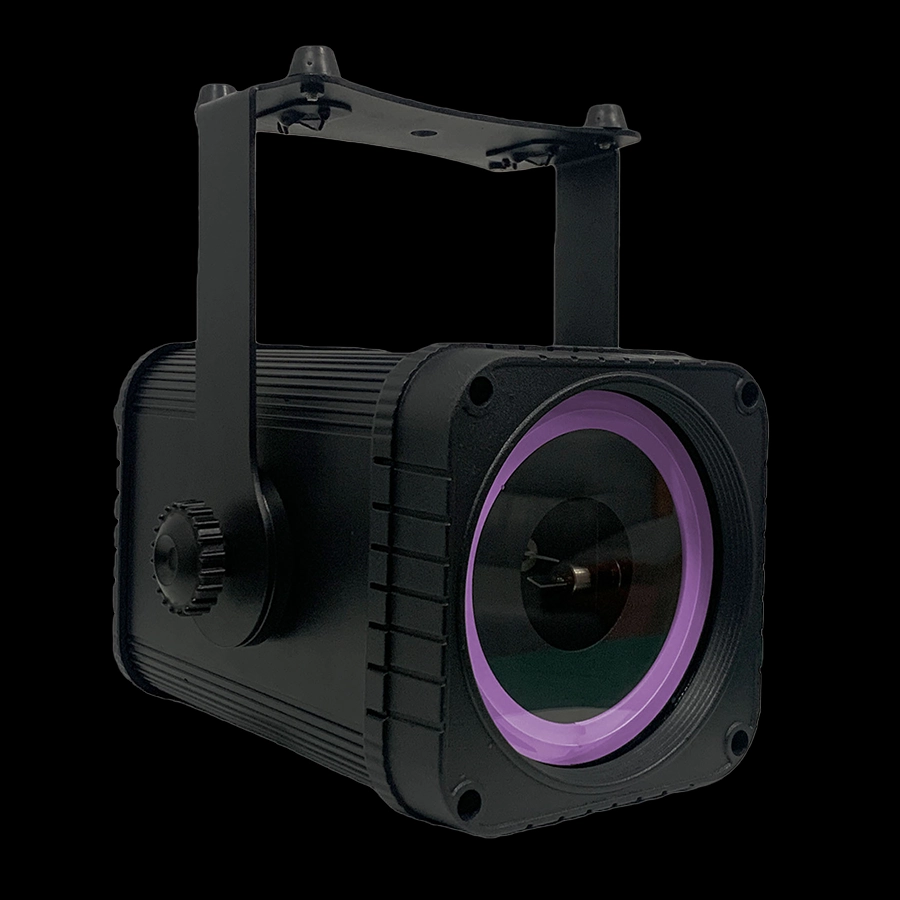
This IP65 waterproof 3W RGB animation laser battery light features an IP65 waterproof and dustproof design, making it suitable for both outdoor and indoor use. It supports rich RGB color combinations and dynamic animation effects, delivering a clear and fluid beam that can display text, patterns, and flowing light and shadow, among other visual representations.
Powered by a built-in battery, it requires no external power source, making it portable, easy to deploy, and simple to operate. Ideal for festive decorations, creating a garden atmosphere, and adding a touch of elegance to small events, it's energy-efficient, durable, and creates a truly immersive ambiance.
This IP65 waterproof 5W RGB animation laser battery light features an IP65 waterproof and dustproof design, making it suitable for both outdoor and indoor use. It supports rich RGB color combinations and dynamic animation effects, delivering a clear and fluid beam that can display text, patterns, and flowing light and shadow, among other visual representations.
Powered by a built-in battery, it requires no external power source, making it portable, easy to deploy, and simple to operate. Ideal for festive decorations, creating a garden atmosphere, and adding a touch of elegance to small events, it's energy-efficient, durable, and creates a truly immersive ambiance.
If you have any comments or good suggestions, please leave us a message, later our professional staff will contact you as soon as possible.
Lighting Innovators
Uplus Lighting is a leading integrated company specializing in R&D, design, production, and sales of stage lighting solutions.
 Scan QR Code
Facebook
Instagram
YouTube
VK