






DMX vs RDM: Control Options for Moving Head Wash Lights
- Why control protocols matter for live productions
- Role of the moving head wash light in productions
- Common operational pain points I see
- DMX vs RDM: technical differences and operational impacts
- Technical overview: DMX (one-way control)
- Technical overview: RDM (two-way management)
- Practical differences that affect moving head wash light workflows
- Choosing the right control scheme for moving head wash lights
- When plain DMX is sufficient
- When RDM provides measurable ROI
- Best practices: cabling, splitters and signal integrity
- DMX and RDM: side-by-side comparison
- Implementing RDM in your rig and how Uplus Lighting helps
- Steps I follow when deploying RDM-capable moving head wash light rigs
- Uplus Lighting: capabilities and product fit
- Integration, warranty and service considerations
- FAQ
- Q1: Can I use RDM on an existing DMX installation?
- Q2: Will RDM slow down my show control?
- Q3: How do I identify if a moving head wash light supports RDM?
- Q4: Are there safety or EMC implications of using RDM?
- Q5: What tools do I need to manage an RDM rig?
- Q6: How much time can RDM save during rig setup?
- Contact & Next Steps
I write from years of hands-on practice as a stage lighting consultant and product strategist. In this article I compare DMX and RDM control schemes for moving head wash lights, focusing on real-world operational implications: addressing, remote configuration, fault diagnosis, and rental/production workflows. I aim to give lighting designers, technicians, rental houses, and production managers a practical, verifiable guide so you can choose the right control strategy and avoid downtime on tour, theatre, or broadcast projects.
Why control protocols matter for live productions
Role of the moving head wash light in productions
Moving head wash lights are workhorse fixtures used for broad color washes, audience lighting, and soft-edge backlight. Their importance in corporate events, concerts, theatre and TV means protocol choices that affect commissioning, addressing, and troubleshooting translate directly into labour hours and show reliability. For background on moving fixtures, see Moving light (Wikipedia).
Common operational pain points I see
From touring rigs to fixed installs, common issues include: incorrect DMX addressing, fixtures configured to the wrong personality (channel layout), inability to identify a misbehaving unit on long daisy-chains, and the time cost of readdressing. These are precisely the problems that control protocol selection (one-way DMX vs bi-directional RDM) helps solve.
DMX vs RDM: technical differences and operational impacts
Technical overview: DMX (one-way control)
DMX512 (commonly shortened to DMX) is the de-facto one-way lighting control protocol. It transmits control values (0–255) over a unidirectional serial link from controller to fixtures. See the DMX technical background at DMX512 (Wikipedia).
Technical overview: RDM (two-way management)
RDM (Remote Device Management, ANSI E1.20) extends DMX with a bi-directional layer that allows controllers or RDM management tools to query fixtures for identity, firmware, sensor data, and to set parameters such as DMX address remotely. The RDM standard and working-group resources are documented by ESTA/PLASA: RDM (ESTA/PLASA) and summarized at RDM (Wikipedia).
Practical differences that affect moving head wash light workflows
Key operational differences include:
- Addressing and commissioning time: RDM lets you remotely set and verify addresses and personalities, saving significant labor for large rigs.
- Fault diagnosis: RDM provides telemetry such as lamp hours, temperature, and error codes which speeds troubleshooting.
- Cabling complexity: RDM works over the same physical cabling as DMX but requires compliant hardware (RDM-capable fixtures and controllers) and careful handling of splitters, opto-isolators and converters.
Choosing the right control scheme for moving head wash lights
When plain DMX is sufficient
I typically recommend straight DMX for small venues and installations where:
- Fixture count is low (e.g., under 12 fixtures) and addressing can be done manually without major disruption.
- The production team is static with a fixed patch and minimal reconfiguration.
- Budget constraints make the adoption of RDM-capable consoles, splitters and management tools impractical.
When RDM provides measurable ROI
RDM becomes valuable when you are dealing with medium to large rigs, frequent re-patches, touring where fixtures are frequently swapped, or when minimizing truck-rolls and onsite labor is important. Specific scenarios where I’ve seen a clear return on investment include:
- Large festivals with hundreds of moving heads where remote addressing saves hours of ladder time.
- Rental houses that need quick identification and diagnostics of a fixture before dispatch.
- Broadcast and theatre where quick fault isolation must be done without interrupting a schedule.
Best practices: cabling, splitters and signal integrity
Whether you use DMX or RDM, cable quality and topology matter. RDM adds the requirement that all links be bi-directional transparent—so passive splitters that break the return path or certain opto-isolators can block RDM. My practical recommendations:
- Use proper DMX cable (120 Ω characteristic impedance). Avoid microphone cable; it will cause reflections and data errors.
- Prefer active, RDM-compatible splitters for any fan-out. Check vendor datasheets that explicitly state RDM support.
- Terminate the DMX line at the furthest fixture with a 120 Ω terminator.
- Keep runs under recommended lengths for reliable baud performance; use repeaters or fiber for very long runs.
DMX and RDM: side-by-side comparison
| Feature | DMX (one-way) | RDM (bi-directional) | Notes / Sources |
|---|---|---|---|
| Direction | Controller → Fixture | Controller ↔ Fixture | DMX512, RDM |
| Addressing | Manual (or via software, but not discoverable) | Remote discoverable and settable | RDM follows ANSI E1.20; see ESTA/PLASA |
| Diagnostics | Limited (requires local indicators) | Extensive (ID, error codes, sensors) | Useful for touring and rental workflows |
| Compatibility | Universally supported | Requires RDM-capable fixtures and controllers | Check product datasheets for RDM compliance |
| Cost | Lower initial cost | Higher initial cost (tools, splitters, hardware) | Operational savings often offset costs on larger rigs |
Data sources: DMX and RDM protocol descriptions at Wikipedia DMX512 and Wikipedia RDM; RDM standard documents at ESTA/PLASA.
Implementing RDM in your rig and how Uplus Lighting helps
Steps I follow when deploying RDM-capable moving head wash light rigs
- Inventory: Verify all fixtures, splitters, and controllers are RDM-capable and running compatible firmware.
- Topology planning: Map out daisy-chains and splitter points; use active RDM splitters where fan-out is required.
- Addressing pass: Use an RDM console or software tool to discover and set addresses, personalities, and labels remotely—this typically reduces commissioning time by 30–70% depending on rig size.
- Test & verify: Query telemetry (temperature, lamp hours) and run fixtures through a short test scene to ensure expected behavior.
Uplus Lighting: capabilities and product fit
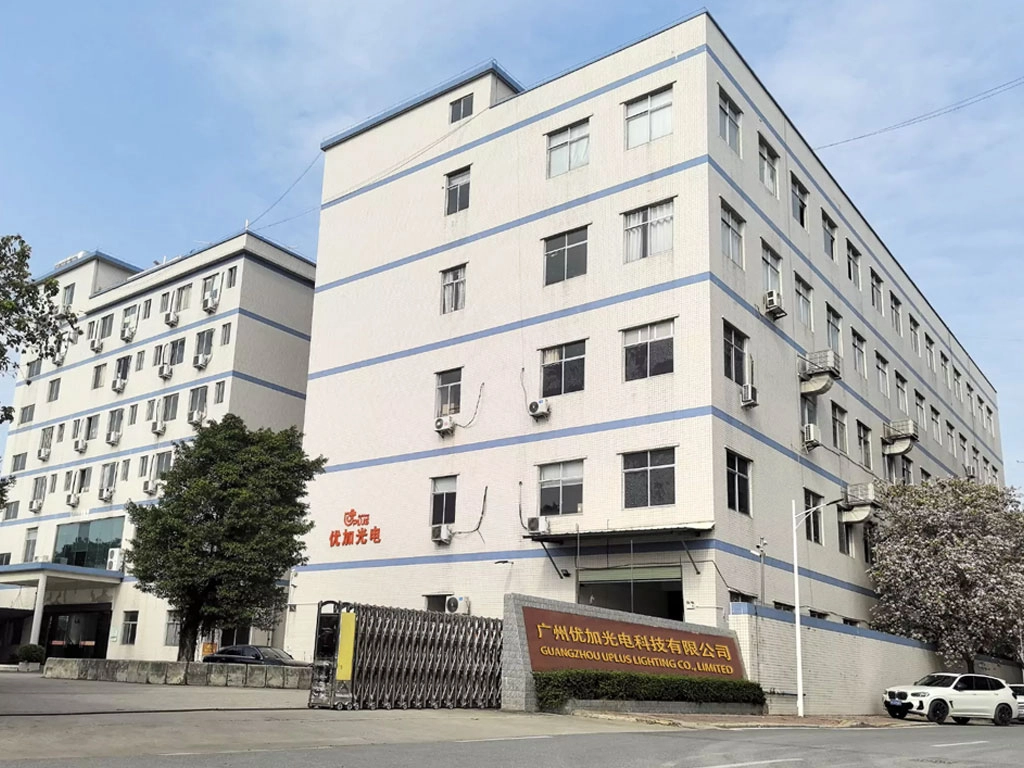
Uplus Lighting was established in 2012 in Guangzhou, China, and is a professional manufacturer specializing in high-end stage lighting products. We provide innovative and reliable lighting solutions for theaters, studios, cultural projects, concerts, and live events worldwide. With rich experience in product development, manufacturing, and export, we offer a wide product range covering professional lighting, entertainment lighting, and theater lighting to meet the needs of large performances, rental companies, distributors, and project clients. Since 2015, our products have been widely applied in major concerts, opera houses, TV programs, and large-scale events in China and abroad. We also support OEM orders and customized product development. A skilled production team and strict quality control ensure stable performance, consistent quality, and professional service trusted by global partners.
Our moving head lights, moving head wash light series, strobe lights, LED battery lights, static lights, LED theatre lights, LED follow spot light, stage effect lights, and laser lights are engineered to meet the demands of professional rigs. For customers who adopt RDM-based workflows, we ensure our fixtures expose standard RDM parameters (address, personality, lamp hours, temperature) and provide firmware support for compatibility with major console vendors. Key competitive differentiators I emphasize for Uplus Lighting:
- Product reliability from rigorous quality control and long-term field validation in concerts and TV productions since 2015.
- Flexible OEM and customization options for project integrators and rental houses.
- Comprehensive product range allowing a single-source procurement for moving head lights and ancillary fixtures.
- Technical support and documentation for implementing RDM in complex rigs, including recommended cabling topologies and splitter choices.
Integration, warranty and service considerations
When I plan a rig I always assess the vendor's post-sales support. For RDM deployments this typically includes:
- Firmware update process and availability of release notes.
- RDM parameter map (which parameters are exposed and writable).
- Replacement/repair turnaround for rental operations.
Uplus Lighting offers OEM support, documented RDM parameter lists on request, and a production QA process that helps reduce early-life failures—critical for tours and televised events.
FAQ
Q1: Can I use RDM on an existing DMX installation?
A1: Often yes, but both ends must be RDM-capable. You need fixtures that support RDM and a controller or management tool that can speak RDM. Also ensure splitters and signal conditioning devices in the chain explicitly support RDM; some passive splitters and certain opto-isolators will block the RDM return path.
Q2: Will RDM slow down my show control?
A2: No. RDM operates in parallel to DMX data but in a separate management layer. Real-time DMX frame rates for cues and chases are unaffected. RDM transactions (discovery, parameter writes) are discrete and scheduled; they are not used for live frame-by-frame control.
Q3: How do I identify if a moving head wash light supports RDM?
A3: Check the product datasheet and firmware notes for RDM support or ask the vendor. RDM-capable fixtures will list compliance to ANSI E1.20 or mention RDM in the communication section. Uplus Lighting fixtures provide RDM parameter documentation on request.
Q4: Are there safety or EMC implications of using RDM?
A4: RDM itself is a protocol layer and does not inherently change electrical safety or electromagnetic compatibility. However, good cabling practice and adherence to cable shielding and grounding guidelines (e.g., proper terminations and avoiding ground loops) remain important for stable DMX/RDM operation.
Q5: What tools do I need to manage an RDM rig?
A5: Typical tools include an RDM-capable lighting console, dedicated RDM management software (many consoles include these features), and RDM-compatible splitters/repeaters. For deeper diagnostics, handheld RDM tools or PC-based RDM utilities are useful. Consult vendor lists to ensure compatibility—ETC and other console vendors provide RDM documentation; see ETC DMX/RDM resources.
Q6: How much time can RDM save during rig setup?
A6: Savings vary, but in my experience, RDM can reduce addressing and inventory time by 30–70% on medium-to-large rigs. The benefit compounds when fixtures are swapped frequently or when rapid reconfiguration is required between shows.
Contact & Next Steps
If you’re planning a new installation, upgrading a rental stock, or evaluating whether to adopt RDM for your moving head wash light fleet, I invite you to contact our team. Uplus Lighting provides technical consultations, RDM-verified product options, OEM customization, and supply for full-stage packages. Reach out to request product datasheets, sample RDM parameter maps, or a quotation for fixtures and splitters—let’s optimize your rig for reliability and efficiency.
Explore our product lines and services or request a consultation: contact Uplus Lighting for moving head lights, strobe lights, LED battery lights, static lights, LED theatre lights, LED follow spot lights, stage effect lights, and laser lights.
How to Choose the Right Power and Beam for Strobe Lights
Top 10 Moving Beam LED Light Bars for Concerts and Tours

7 Crucial Mistakes to Avoid When Implementing City Color Light Systems in 2026
Affordable Moving Head Lights Under $1000: Best Picks
IP-WASH6125
How is the precision of the 5-50° zoom adjustment? Can it accurately adapt to small-area focusing needs?
The zoom adjustment is highly precise, supporting fine-tuning. The 5° narrow angle allows for precise focusing on localized areas, meeting the needs of focused lighting in small areas.
Can the IP66 protection rating be used directly in heavy rain? Will water get in if left outdoors for a long time?
It can directly withstand heavy rain and strong dust. The sealed structure has undergone rigorous testing, and water will not get in even after long-term outdoor placement, ensuring stability.
MH-B150
Is the oscillation angle adjustment precise and smooth?
360° all-around adjustment, precise positioning, and smooth oscillation process without any stuttering.
IP-BF60
What environments can IP65 protection handle?
It's dustproof and waterproof, resisting rain, dew, and splashes, making it safe for both indoor and outdoor use.

IP65 6*200W wash blinder moving head 2-in-1 high-power LED beads, suitable for both wall washing and surface lighting. Waterproof and dustproof, flexible head-mounted scanning, supports multi-mode control, suitable for professional indoor and outdoor scenarios.
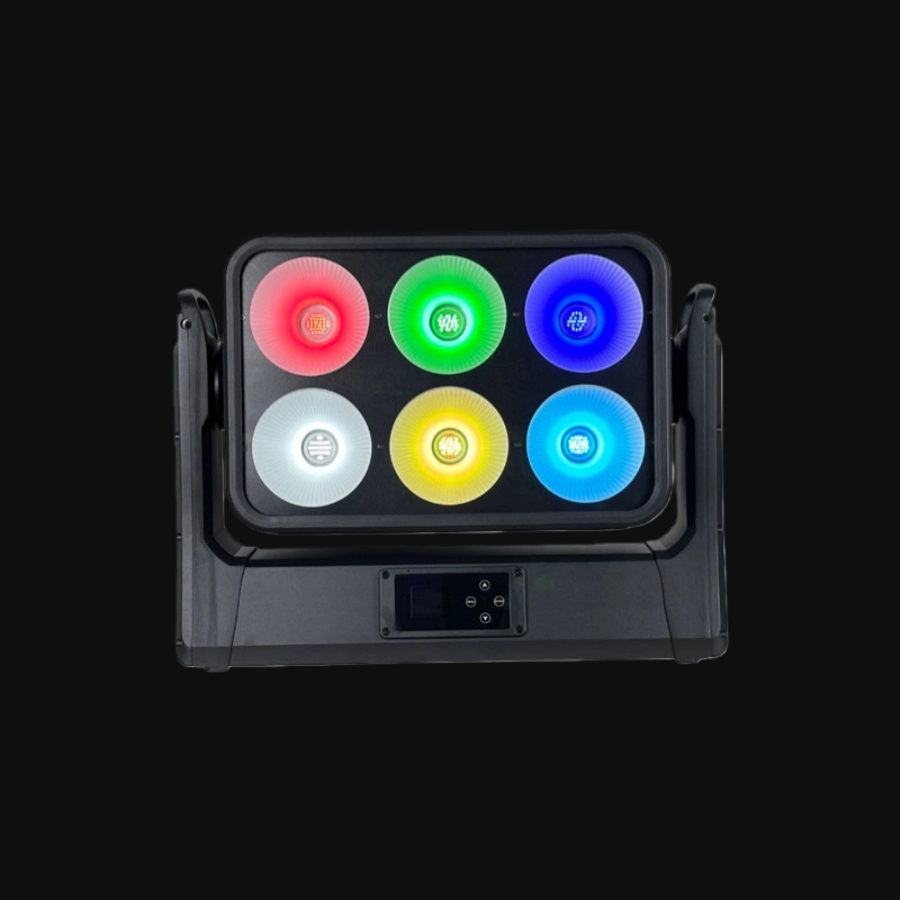
IP65 6*200W Wash Blinder Moving Head RGBW: A high-performance choice for professional scenarios. Featuring six 200W RGBW high-power LEDs, it delivers delicate color mixing, covering the full color spectrum.
Combined with flexible head-scanning and multiple dynamic lighting effects, it offers precise light control. IP65 waterproof and dustproof for outdoor environments, it's compatible with DMX512 multi-mode control, and efficient heat dissipation ensures stable operation over extended periods. Suitable for performances, lighting effects, and other scenarios.
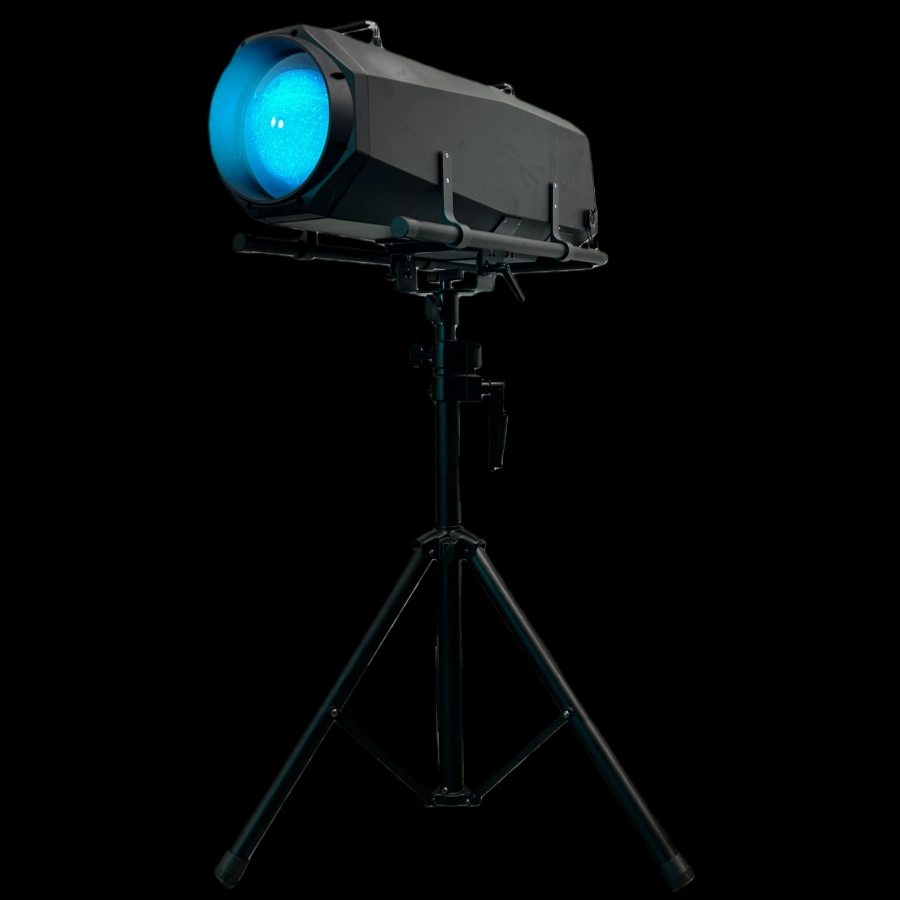
This 1200W waterproof LED follow spotlight with iris adjustment features strong light penetration, precise focusing, and smooth dimming with strobe effects.
Its rain- and dust-resistant design makes it suitable for outdoor performances, concerts, architectural lighting, and other applications. The LED light source boasts a long lifespan and stable, durable operation.
The Waterproof 1200W LED Follow Spot Light with Rotating Gobo features a rotating pattern sheet, delivering a powerful 1200W output for clear, focused beams and precise light tracking. Waterproof for outdoor use in all scenarios, the rotating pattern creates rich visual layers, making it ideal for large-scale indoor and outdoor performances, music festivals, light shows, and other events requiring focused attention and stage effects.
If you have any comments or good suggestions, please leave us a message, later our professional staff will contact you as soon as possible.
Lighting Innovators
Uplus Lighting is a leading integrated company specializing in R&D, design, production, and sales of stage lighting solutions.
 Scan QR Code
Facebook
Instagram
YouTube
VK