






Customizing LED Stage Light Bars: Color, Effects, and Pixel Mapping
- Design principles for effective stage lighting
- Understanding the role of LED stage light bars
- Key specifications to evaluate
- Practical checklist before purchase
- Color control and color mixing
- RGB vs RGBW vs Tunable White vs COB
- Color calibration, gamma, and temperature
- Avoiding camera flicker and strobing
- Effects and pixel mapping techniques
- Pixel mapping fundamentals
- Practical pixel-mapping workflow
- Advanced effects: chases, gradients, and audio-reactive content
- Integration, protocols, and practical setup
- Comparing control protocols
- Wiring, power, and signal topology
- Power considerations and voltage drop
- Choosing fixtures and suppliers
- Types of LED stage light bars and when to use them
- Vendor selection and support
- Testing and commissioning
- Uplus Lighting: experience, products, and why I recommend them
- How Uplus compares to other suppliers
- Working with a manufacturer: tips
- FAQ
- Q: What is the difference between pixel-addressable and non-pixel bars?
- Q: Which control protocol should I choose for large pixel installations?
- Q: How do I prevent LED flicker on camera?
- Q: How do I plan power distribution for long LED bar runs?
- Q: Can I map video directly to LED stage light bars?
- Q: What documentation should I request from a manufacturer?
As a lighting designer and consultant with years of experience specifying fixtures for theaters, concerts, and broadcast productions, I often recommend LED stage light bars because of their flexible form factor, pixel-addressability, and compact power draw. This article explains how to customize LED stage light bars for color, effects, and pixel mapping so you can choose the right hardware, avoid common pitfalls (flicker on camera, data addressing errors, power drop), and implement reliable show control for live and broadcast scenarios.
Design principles for effective stage lighting
Understanding the role of LED stage light bars
LED stage light bars are linear fixtures used as washes, pixel strips, or eye-candy elements. They can provide even field light or independent pixels for graphics and pixel-mapped effects. When I design, I consider beam angle, pixel pitch, color mixing, and the fixture's electrical and data topology. For background washes I prioritize color consistency and CRI; for pixel mapping I prioritize refresh rate and pixel density.
Key specifications to evaluate
When selecting a led stage light bar, review the following specs: LED type (SMD vs COB), pixel count, pixels per meter (ppm), beam angle, CRI/Tc (correlated color temperature), power consumption (W/px), IP rating (for outdoor use), control protocol (DMX, Art-Net, sACN), and refresh rate. These drive both visual outcomes and installation logistics. For example, a 30 Hz refresh rate can flicker on slow-motion cameras — I aim for >1,000 Hz PWM refresh for broadcast where possible.
Practical checklist before purchase
- Confirm pixel map capability and maximum pixels per universe.
- Check required control interface: 3-pin/5-pin DMX, Ethernet (Art-Net/sACN), or pixel SPI/WS281x style.
- Plan power injection points for long runs (voltage drop is real on 12–24 V chains).
- Verify fixture cooling and duty cycle for long shows or touring.
Color control and color mixing
RGB vs RGBW vs Tunable White vs COB
Different led stage light bar architectures offer varying color fidelity and mixing. RGB mixes red, green, blue to create colors but can lack warm whites and pastel fidelity. RGBW adds a dedicated white LED, improving white balance and lowering channel usage for subtle tints. Tunable white and full-spectrum COB (chip-on-board) fixtures provide smoother blends and higher CRI, important for theater and camera work. I typically specify RGBW or COB for broadcast or theatrical work where skin tones and subtle color rendering matter.
Color calibration, gamma, and temperature
Color output is affected by gamma, LED binning, and firmware. For consistent color across multiple bars, perform a calibration step: measure correlated color temperature (CCT) and adjust per-fixture calibration (many professional fixtures support per-fixture white balance calibration). Use software or control consoles that allow lookup table (LUT) or gamma correction. For technical reference on colorimetry and lighting standards, see the Illuminating Engineering Society and CIE guidance (CIE standards not reproduced here). For background on stage lighting fundamentals, see the general overview on Stage lighting - Wikipedia.
Avoiding camera flicker and strobing
Camera flicker occurs when LED PWM frequency interacts with camera shutter/frame rate. To prevent this: select fixtures with high PWM frequency (ideally >2 kHz for broadcast), use constant-current drivers with low ripple, and test fixture output under camera conditions (variable shutter speeds). If flicker appears, increase refresh/PWM where firmware allows or change camera exposure settings. Research on video capture and LED flicker is discussed in lighting engineering literature and production best practices; a practical rule is to avoid low-frequency PWM for any camera-facing elements.
Effects and pixel mapping techniques
Pixel mapping fundamentals
Pixel mapping assigns control channels or pixel addresses to coordinates on a virtual surface, so content (video, animation) is played back across fixtures as if the LED bars were a screen. For led stage light bar installations I map pixels in a grid (X, Y) or in strip order depending on the artistic intent. Tools like MadMapper, Resolume, or light-specific media servers perform this mapping; for large productions, hardware media servers provide deterministic timing and synchronization.
Practical pixel-mapping workflow
- Plan physical layout and cable runs; document pixel order and orientation for each bar.
- Create a logical matrix in your mapping software matching physical structure.
- Test with single-color and chaser patterns to verify addressing and orientation.
- Implement gamma correction and per-fixture calibration to ensure color continuity.
Addressing mistakes are the most common problem. I always label fixtures and keep a verified map file alongside the showfile to speed troubleshooting.
Advanced effects: chases, gradients, and audio-reactive content
Chases and gradients are basic; the power of pixel bar arrays lies in animated textures, audio-reactive visuals, and synchronized patterns across many fixtures. For audio-reactive effects, run the audio analysis on the media server or a dedicated controller (LightJams, TouchDesigner) and feed the resultant DMX/Art-Net or pixel data to the fixtures. When designing effects, consider pixel density — a low pixel-per-meter bar will not render fine detail well.
Integration, protocols, and practical setup
Comparing control protocols
Choosing the right protocol influences scalability and latency. Below is a compact comparison I use to advise clients:
| Protocol | Max channels / universe | Transport | Typical use case |
|---|---|---|---|
| DMX512 | 512 channels | Serial (RS-485) | Simple fixtures, traditional lighting desks |
| Art-Net | Many universes over Ethernet | UDP/Ethernet | Large pixel installations, media servers |
| sACN (E1.31) | Many universes over Ethernet | UDP/Ethernet | Modern networked lighting, shows requiring standards compliance |
Sources: DMX512 - Wikipedia, Art-Net - Wikipedia, sACN (Streaming ACN) - Wikipedia.
Wiring, power, and signal topology
For pixel bars, choose a topology appropriate to the protocol: DMX daisychained via 5-pin or 3-pin XLR with proper termination for traditional fixtures; Ethernet with proper switches for Art-Net/sACN. For addressable pixel bars using SPI-style protocols, short runs and dedicated controllers are typical; however for professional shows I recommend fixtures with networked pixel control (Art-Net/sACN) to scale reliably.
Power considerations and voltage drop
Voltage drop on long 12V or 24V runs causes color shift and dimming at the end of a chain. I calculate expected current draw (W/px × number of pixels / voltage = A) and plan power injection every recommended interval. Use heavy-gauge cables on long runs and stage-distribution practices (fused tap points, centralized PSU racks) for reliability. Document power distribution clearly in the technical rider and rigging paperwork.
Choosing fixtures and suppliers
Types of LED stage light bars and when to use them
| Type | Strengths | Limitations |
|---|---|---|
| Static RGB/RGBW bars | Good wash, lower cost, easy control | Not pixel-addressable, limited effects |
| Pixel-addressable LED bars | Per-pixel effects, mapping, graphics | Higher channel counts, more complex setup |
| COB linear wash | Very even wash, high CRI | Less pixel granularity for graphics |
| Beam/eye bars | Tight beam effects, aerial looks | Hotspots, limited wash |
Vendor selection and support
Choose vendors who provide clear technical documentation, firmware update mechanisms, and reliable after-sales support. For touring and rental, modular designs and replaceable cabling (EtherCON, powerCON, XLR) lower downtime. I prioritize manufacturers with a track record on major productions and good QC processes.
Testing and commissioning
Commissioning is critical. My workflow: unpack and inspect, record firmware version, perform bench tests (color, pixel order), network test, and then on-rig smoke tests before cable dressing. Keep a spare fixture and spare cables on tour; they save shows.
Uplus Lighting: experience, products, and why I recommend them
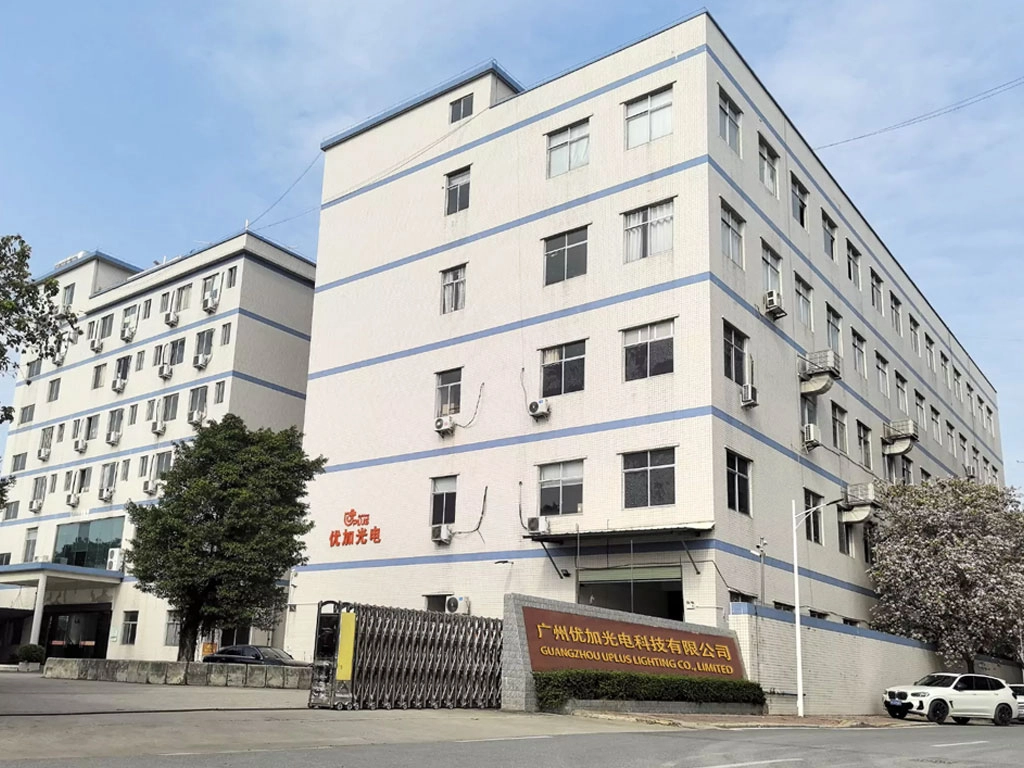
Uplus Lighting was established in 2012 in Guangzhou, China, and is a professional manufacturer specializing in high-end stage lighting products. We provide innovative and reliable lighting solutions for theaters, studios, cultural projects, concerts, and live events worldwide. With rich experience in product development, manufacturing, and export, we offer a wide product range covering professional lighting, entertainment lighting, and theater lighting to meet the needs of large performances, rental companies, distributors, and project clients. Since 2015, our products have been widely applied in major concerts, opera houses, TV programs, and large-scale events in China and abroad. We also support OEM orders and customized product development. A skilled production team and strict quality control ensure stable performance, consistent quality, and professional service trusted by global partners.
Uplus Lighting's core strengths I value as a designer are:
- End-to-end product development and mature manufacturing processes that reduce firmware and hardware variance between production runs.
- Strong export experience and compliance awareness for international shows.
- Support for OEM/custom development when a project requires a purpose-built fixture or a unique pixel density.
- Consistent after-sales support and QC that make them suitable for rental houses and touring acts.
Main products relevant to led stage light bar projects include: moving head lights, strobe lights, led battery lights, static lights, led theatre lights, led follow spot light, stage effect lights, and laser lights. For projects requiring pixel-mapped bars, Uplus offers fixtures with clear documentation, Art-Net/sACN compatibility, and practical design for touring and installation.
How Uplus compares to other suppliers
Compared with commodity manufacturers, Uplus emphasizes professional-grade electronics and QC. Against High Quality Western brands, Uplus offers competitive pricing with strong customization capabilities. My clients choose Uplus when they need a balance of professional feature sets, customization, and cost efficiency.
Working with a manufacturer: tips
- Define exact pixel/addressing requirements and request sample fixtures before bulk orders.
- Ask for per-batch test reports and firmware revision logs.
- Negotiate support for replacement parts and clear shipping timelines for tours.
FAQ
Q: What is the difference between pixel-addressable and non-pixel bars?
A: Pixel-addressable bars allow each LED (or group of LEDs) to be controlled independently, enabling graphics and per-pixel effects. Non-pixel bars are controlled as zones or whole-fixture color mixes, suitable for washes but not for detailed imagery.
Q: Which control protocol should I choose for large pixel installations?
A: For large installations, Ethernet-based protocols like Art-Net or sACN are preferred because they scale across many universes and integrate easily with media servers. DMX512 is fine for smaller or traditional setups but becomes cumbersome when each pixel consumes multiple channels.
Q: How do I prevent LED flicker on camera?
A: Use fixtures with high PWM/refresh rates, test under camera conditions, and apply proper firmware settings. Also ensure stable power and minimal driver ripple. If flicker persists, consult the fixture supplier for firmware adjustments or choose fixtures designed for broadcast.
Q: How do I plan power distribution for long LED bar runs?
A: Calculate current draw, factor in voltage drop, and plan power injection points every recommended length (per manufacturer). Use thicker gauge power cables for long runs and avoid daisy-chaining too many bars on a single 12/24 V feed.
Q: Can I map video directly to LED stage light bars?
A: Yes, using a media server or mapping software you can map video assets to the pixel layout of your bars. Ensure your pixel density supports the desired resolution and that your network can carry the necessary universes.
Q: What documentation should I request from a manufacturer?
A: Ask for pixel addressing charts, firmware revision history, power draw per pixel, wiring diagrams, DMX/Art-Net channel maps, and IP rating/environmental specs. These speed installation and reduce surprises on site.
If you'd like guidance on choosing the right led stage light bar for your project, pixel density calculations, or a quote for custom fixtures, contact Uplus Lighting or request a sample demo. Visit our product pages to view moving head lights, strobe lights, led battery lights, static lights, led theatre lights, led follow spot light, stage effect lights, and laser lights — or get in touch for OEM and custom development support.
Contact/Consultation CTA: For project consultation, product specifications, or to request a demo unit, please contact Uplus Lighting's sales and technical team to discuss your requirements and receive a tailored solution.
Top 7r Beam Moving Head Uses for Concerts and Tours
Top 10 stage led light bar Manufacturers and Supplier Brands
Best Moving Head Lights 2026: Buyer's Guide for Stage Pros
LED Moving Beam Light Comparison: Features vs Price
IP-MH6200 2in1
Is the power consumption of 6 sets of 200W LED beads too high? What about energy consumption?
LED beads are highly energy-efficient. Although the total power is relatively high, it consumes less energy than traditional lighting fixtures. The heat dissipation system is also highly efficient, ensuring long-term use without problems.
Hospitality
How energy-efficient are your devices?
We use the latest generation of LED lighting fixtures, which provide high brightness while significantly reducing energy consumption, saving more than 60% energy compared to traditional lighting fixtures.
How do we operate the equipment if we don't have a professional technical team?
We provide detailed operation manuals and remote technical support to ensure that even without a professional team, you can easily operate the equipment.
About Cooperation Process
Who should I contact if I receive a damaged item?
If you receive a damaged item, please take a photo and send it to us. We will then confirm with the logistics company whether it is a shipping issue or a problem with our product packaging. After verification, we will resend the product or provide compensation.
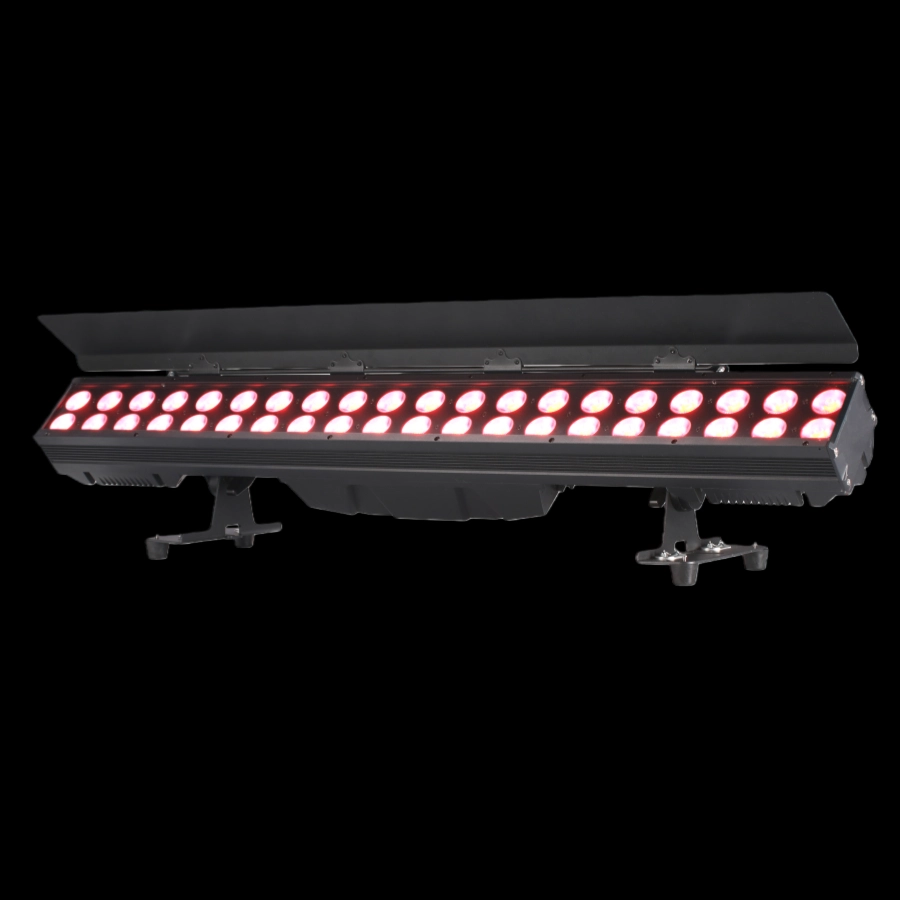
The IP65 two-row 40*10W RGBW led pixel link bar is a high-protection pixel bar light. It adopts a dual-row design with 40 10W RGBW four-in-one LED beads, supports pixel-level independent light control and multi-lamp linkage, and has an IP65 protection rating, making it rainproof and dustproof. It is compatible with DMX512 control and can present rich dynamic light effects, making it suitable for creating linear light and shadow effects in outdoor lighting, stage backgrounds, cultural and tourism landscapes and other scenarios.
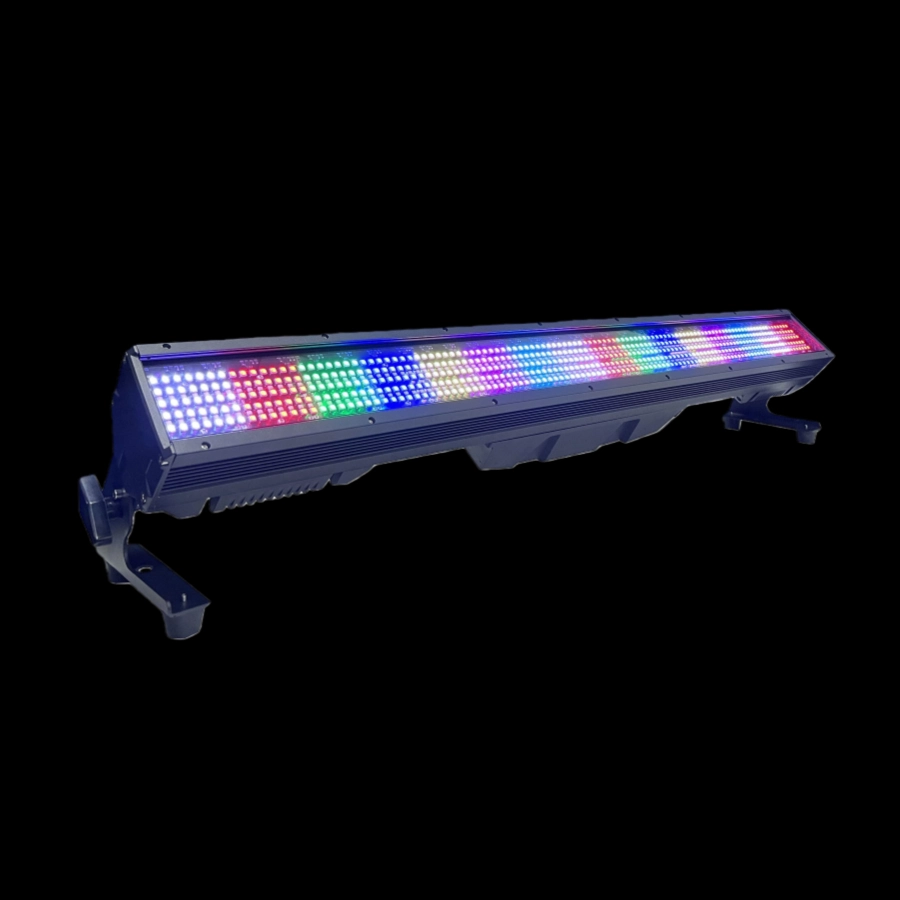
The IP65 waterproof 400W LED Link Strobe bar is a high-protection cascaded strobe light strip equipped with a 400W high-power LED light source. The strobe frequency is adjustable and supports seamless linkage of multiple lights. The IP65 protection rating can withstand outdoor wind, rain, and dust. It is compatible with DMX512 control, easy to install, and suitable for creating dynamic light and shadow in outdoor performances, cultural tourism night tours, architectural lighting and other scenarios.
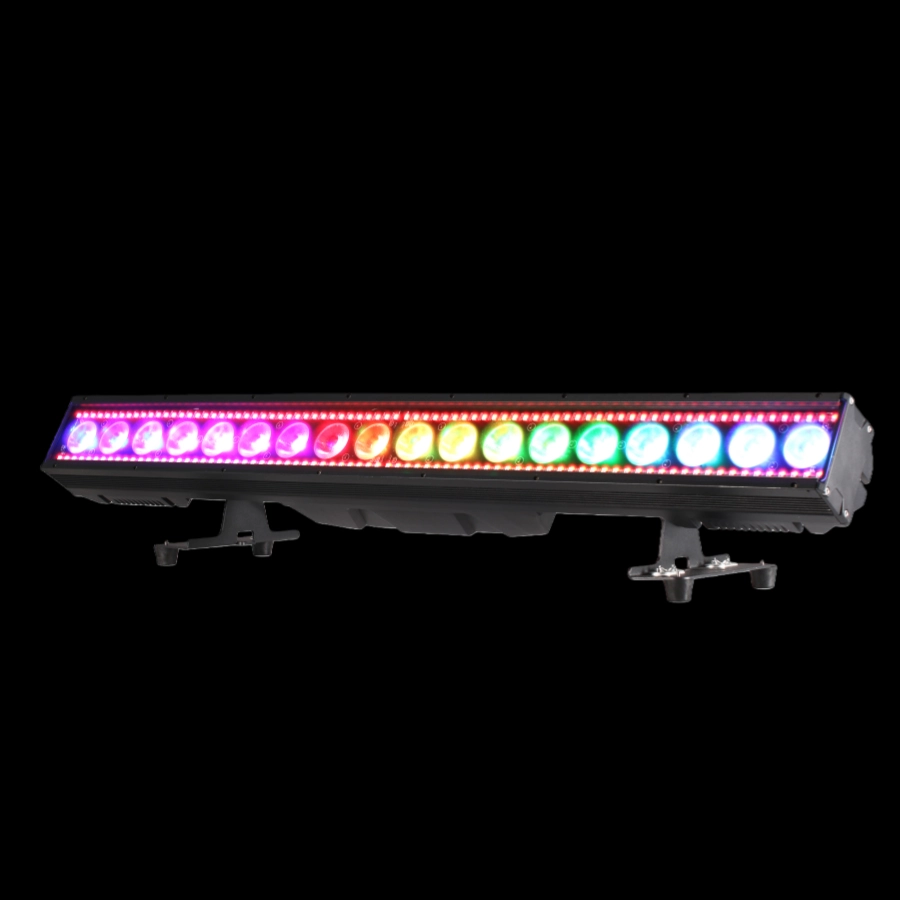
The IP65 waterproof 18*30W RGBWAUV LED pixel bar is a high-performance outdoor pixel bar light. It is equipped with 18 30W RGBWAUV six-in-one LED beads, supports pixel-level independent light control, and can present rich colors and dynamic light effects. With an IP65 protection rating, it is highly dustproof and waterproof, compatible with multiple control modes such as DMX512, flexible splicing and easy installation, and suitable for linear light and shadow shaping in outdoor performances, cultural and tourism lighting, stage backgrounds and other scenarios.
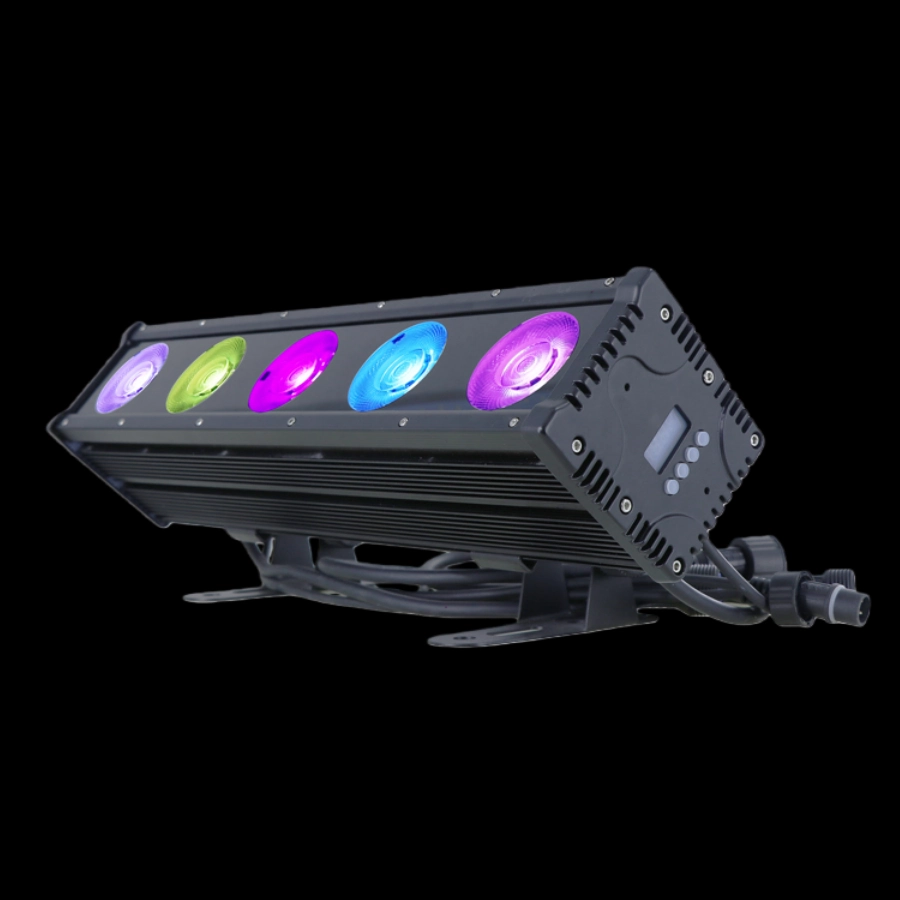
The Outdoor 5x45W COB Pixel BAR is a high-performance outdoor COB pixel light strip, equipped with five 45W RGBW four-in-one COB LEDs, each of which can be independently controlled, resulting in smooth color transitions and abundant brightness. It is IP65 protected against wind, rain, and dust, and supports DMX512/RDM/master-slave control, making it suitable for creative lighting designs in scenarios such as cultural and tourism landscape lighting, dynamic lighting of building facades, and outdoor stage effect lighting.
If you have any comments or good suggestions, please leave us a message, later our professional staff will contact you as soon as possible.
Lighting Innovators
Uplus Lighting is a leading integrated company specializing in R&D, design, production, and sales of stage lighting solutions.
 Scan QR Code
Facebook
Instagram
YouTube
VK