





Custom Beam Effects: Programming Moving Beam LED Light Bars
- Why beam control matters in live production
- Perception and audience focus
- Safety and venue considerations
- Consistency across rigs
- Choosing and specifying moving beam LED light bars
- Optical and LED configurations
- Control channels and pixel-mapping
- Power, heat, and physical rigging
- Control protocols and mapping strategies
- Comparing DMX512, Art-Net, and sACN
- Addressing strategies for pixel bars
- Latency and refresh considerations
- Programming techniques for custom beam effects
- Layering motion and intensity
- Using macros and pixel effects
- Show automation and cueing
- Troubleshooting and on-the-fly adjustments
- Common issues and quick fixes
- Calibration and color matching
- Documenting the show for repeatability
- Production examples and presets
- Four practical presets I use
- Example timeline for a 3-minute song
- Data-backed design choices
- Uplus Lighting: capabilities and how we fit your needs
- References and standards I use
- Moving lights and LED fundamentals
- Control protocols and networking
- FAQ (frequently asked questions)
- 1. What is the difference between a moving beam LED light bar and a moving head?
- 2. How do I avoid flicker on camera when using LED beam bars?
- 3. How many DMX channels do pixel-enabled moving beam LED light bars need?
- 4. Can I mix moving beam LED light bars from different manufacturers in one show?
- 5. What are practical beam angles for cutting through haze at mid-sized venues?
- 6. How can I reduce programming time when working with many bars?
I design and program custom beam effects for live productions using moving beam LED light bars. In this article I explain how I approach fixture selection, control mapping, optical beam shaping, effect layering, and show automation so you can reproduce high-impact beam looks reliably on stage and for broadcast. I also cover best practices for integrating moving beam LED light bars into DMX, Art-Net, or sACN networks and provide production-minded troubleshooting tips that save time during load-in and rehearsals.
Why beam control matters in live production
Perception and audience focus
Beams are one of the quickest ways to direct audience attention and create depth on stage. A narrow, high-intensity beam cuts through haze and defines performance space, while broader beams are better for wash and color blending. When programming moving beam led light bars, I balance beam angle, intensity, and motion to shape the audience’s visual journey across a set or song.
Safety and venue considerations
Controlling beams also reduces the risk of blinding performers or cameras. I always check sight lines and follow venue policies; many venues restrict direct beams into audience seating or require additional safety limits in the console. Additionally, for broadcast or TV, flicker and strobing interaction with camera shutter speeds are major concerns—always test on camera early in rehearsal.
Consistency across rigs
When touring, fixture batch differences and firmware revisions can change beam color and focus. I use fixture profiles and pre-show calibration cues so that moving beam led light bar looks are repeatable across venues and rigs, reducing programming time each day.
Choosing and specifying moving beam LED light bars
Optical and LED configurations
Not all LED bars are optimized for narrow beam effects. Look for fixtures with tightly collimated optics or dedicated beam lenses and a high-percentage single-color LED element for peak intensity. RGBW and multi-chip LEDs give color flexibility but can soften the pure white beam due to multiple emitters; if you need razor-sharp white beams, prioritize better collimation and lumen output per LED.
Control channels and pixel-mapping
Many modern moving beam led light bar fixtures offer pixel control, allowing you to treat sections of the bar as individual sources for scanning, chasing, and gradients. Decide early whether you need full pixel mapping (higher channel count) or simpler pan/tilt and intensity channels to keep DMX complexity manageable.
Power, heat, and physical rigging
High-output beam bars draw significant power and generate heat; verify circuit capacity and ventilation on trusses. Weight and center-of-gravity affect truss spread and motor stress—always consult the fixture datasheet and the venue rigging engineer.
Control protocols and mapping strategies
Comparing DMX512, Art-Net, and sACN
Choosing a transport affects latency, wiring, and the number of fixtures you can address. Below I compare the three main control protocols I use in production:
| Protocol | Typical Topology | Addressing / Capacity | Best Use |
|---|---|---|---|
| DMX512 (DMX512) | Daisy-chain, physical 5-pin | 512 channels / universe | Simple rigs, direct console-to-fixtures, low-latency |
| Art-Net (Art-Net) | UDP over Ethernet | Multiple universes over LAN | Large installations, flexible routing |
| sACN/Streaming ACN (sACN) | UDP multicast, Ethernet | Multiple universes, scalable | Broadcast and networked control with robust timing |
Source: protocol descriptions from Wikipedia linked above. I typically use Art-Net or sACN for touring rigs with many moving beam led light bar fixtures because Ethernet simplifies distribution and reduces bulky DMX snakes.
Addressing strategies for pixel bars
When pixel-mapping moving beam led light bars, I plan addressing so that visual patterns map logically from stage left to right and from top to bottom on stacked bars. Use a channel map spreadsheet to avoid accidental reversed pixels. For large arrays, allocate continuous universes to contiguous sections to maintain predictable patching during programming and troubleshooting.
Latency and refresh considerations
Networked transports add a few milliseconds compared to direct DMX; however, with proper network design (managed switches, VLANs for lighting), latency can be negligible. I always reserve a dedicated network or VLAN for lighting to avoid packet congestion from other systems on show day.
Programming techniques for custom beam effects
Layering motion and intensity
Great beam looks come from layering. I usually program a base layer for steady position and intensity, a mid layer for slow motion (sweeps, pendulum), and a top layer for staccato hits or syncopated motion. Using submasters or playbacks lets me blend these live without destroying the underlying structure.
Using macros and pixel effects
Modern consoles and media servers offer pixel effects that generate complex chases and gradients. For moving beam led light bar fixtures, I often create custom macros that combine narrowing the beam (if the fixture has a zoom), strobing intensity curves, and pixel-level color sweeps that are tempo-synced to the music using MIDI or SMPTE timecode.
Show automation and cueing
Automation reduces operator load and increases repeatability. I build cues that contain only the parameters the next action needs to change (sparse cueing). Where possible I use labelling and notes in the console to indicate why a cue exists—this saves valuable time during tech and helps the operator maintain the intended look when adapting to live changes.
Troubleshooting and on-the-fly adjustments
Common issues and quick fixes
Typical problems with moving beam led light bars include channel mismatch, reversed pixels, flicker on camera, and overheating. For channel issues, I use a handheld DMX reader or console test pages to isolate the fixture. For flicker, test on camera early and adjust PWM frequency or use fixtures with higher refresh rates. For overheating, reduce intensity or redistribute fixtures to improve airflow.
Calibration and color matching
I perform a quick color match pass during tech: set fixtures to 6500K white, then use a calibrated color meter or camera white balance to compare. If fixtures from different batches differ, compensate in console color macros or use per-fixture color offsets where supported.
Documenting the show for repeatability
I keep a versioned show file, a PDF patch, and a concise cue list that includes timings, fixture notes, and any non-standard settings. This documentation is essential for handover to local engineers or for tours where the lighting operator changes between dates.
Production examples and presets
Four practical presets I use
1) Narrow Piercing Beam: Full intensity, 2°–5° beam, slow sweep, minimal strobe. Use for lead vocal highlights.
2) Rhythmic Strobe Chase: Moderate beam width, pixel chase synced to song tempo using MIDI clock.
3) Color Wash with Beam Accents: Low-intensity wash across the bar, with intermittent high-intensity white beam hits on key beats.
4) Camera-Friendly Soft Beam: Slightly widened beam with reduced PWM-related flicker, used for televised broadcasts.
Example timeline for a 3-minute song
Start (00:00–00:30): Atmospheric slow sweeps. Verse (00:30–01:15): Low-intensity color wash with isolated beam hits. Chorus (01:15–01:45): High-intensity narrow beams and pixel chases. Bridge (01:45–02:15): Strobe accents, reduced intensity for dynamic contrast. Final chorus (02:15–03:00): Full-impact beams, synced big hits, fade out.
Data-backed design choices
When choosing beam widths and strobe rates, I consider audience distance and camera frame rates. For television, avoid strobe rates near common camera shutter frequencies (e.g., 50 Hz/60 Hz multiples) to prevent aliasing. This practice is consistent with guidance on lighting for broadcast; manufacturers often publish PWM frequency ranges in their datasheets—review them before specifying fixtures.
Uplus Lighting: capabilities and how we fit your needs
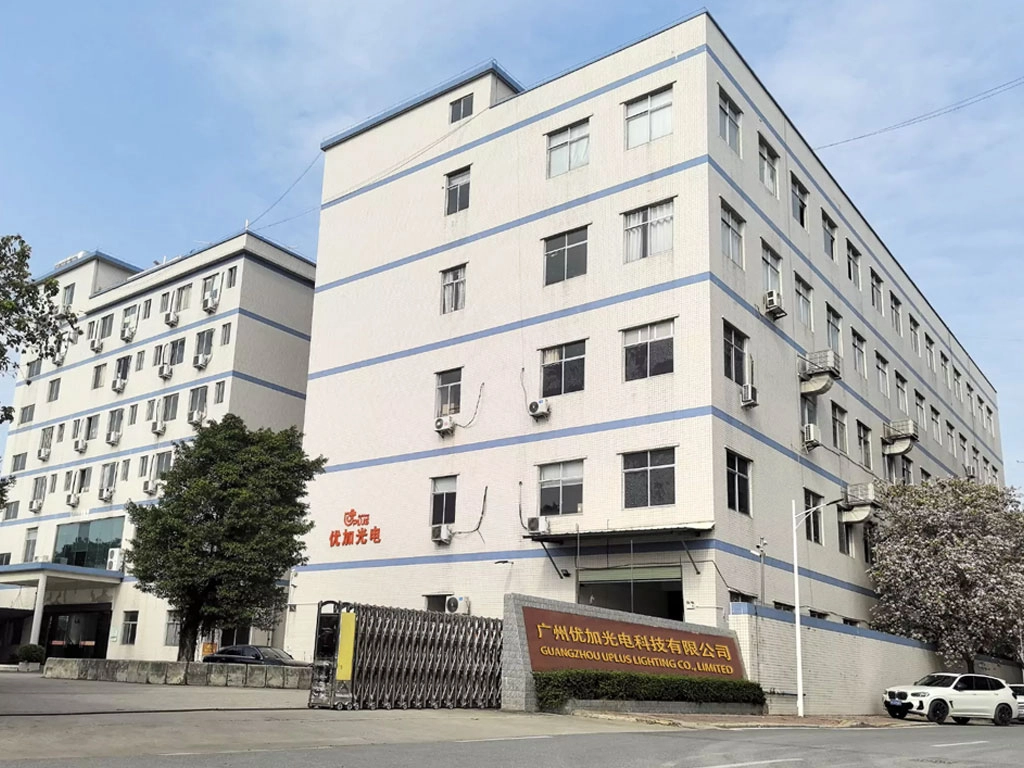
Uplus Lighting was established in 2012 in Guangzhou, China, and is a professional manufacturer specializing in high-end stage lighting products. We provide innovative and reliable lighting solutions for theaters, studios, cultural projects, concerts, and live events worldwide. With rich experience in product development, manufacturing, and export, we offer a wide product range covering professional lighting, entertainment lighting, and theater lighting to meet the needs of large performances, rental companies, distributors, and project clients. Since 2015, our products have been widely applied in major concerts, opera houses, TV programs, and large-scale events in China and abroad. We also support OEM orders and customized product development. A skilled production team and strict quality control ensure stable performance, consistent quality, and professional service trusted by global partners.
Uplus Lighting’s core product strengths relevant to moving beam projects include moving head lights, strobe lights, led battery lights, static lights, led theatre lights, led follow spot lights, stage effect lights, and laser lights. Our competitive advantages are a focus on R&D for optical quality, robust firmware and control compatibility (DMX/Art-Net/sACN), and the ability to tailor beam optics and pixel control to project needs. For rental companies and integrators, we provide consistent production tolerances across batches and responsive technical support to help with show-day calibrations and software integration.
References and standards I use
Moving lights and LED fundamentals
For general background on moving lights see the Wikipedia entry on moving lights: https://en.wikipedia.org/wiki/Moving_light. For LED technology fundamentals see: https://en.wikipedia.org/wiki/Light-emitting_diode.
Control protocols and networking
DMX512: https://en.wikipedia.org/wiki/DMX512
Art-Net: https://en.wikipedia.org/wiki/Art-Net
sACN/Streaming ACN: https://en.wikipedia.org/wiki/Streaming_ACN
FAQ (frequently asked questions)
1. What is the difference between a moving beam LED light bar and a moving head?
A moving head is a single fixture with pan/tilt and optical zoom designed to create concentrated beams. A moving beam LED light bar is a linear array of LEDs (often with motorized tilt or pixel control) that can create long linear beams, multi-segment chases, and wall-wash effects. Both can be used for beams, but bars offer pixel mapping and linear patterns not possible with a single moving head. See the moving light primer: https://en.wikipedia.org/wiki/Moving_light.
2. How do I avoid flicker on camera when using LED beam bars?
Test fixtures on camera early. If you see flicker, check the fixture’s PWM frequency in its datasheet and avoid shutter speeds that alias with that frequency. Some fixtures allow adjusting PWM or offer high-frequency drivers designed for broadcast. Also test strobe and chase rates against camera frame rate.
3. How many DMX channels do pixel-enabled moving beam LED light bars need?
It varies. A simple bar with pan/tilt/intensity might use a small set of channels; pixel bars with individual pixel control can use many channels per fixture (e.g., 3 channels per RGB pixel). For example, a 16-pixel RGB bar could require 48 channels or more. That’s why networked transport (Art-Net/sACN) is useful for larger pixel installations. Consult the specific fixture’s manual for exact channel counts.
4. Can I mix moving beam LED light bars from different manufacturers in one show?
Yes, but expect color and beam characteristic differences. I recommend performing a color match and building per-fixture offsets or macros to compensate. Where possible, use fixtures from the same product family to minimize variance.
5. What are practical beam angles for cutting through haze at mid-sized venues?
For mid-sized venues (audience 500–2000), 2°–6° beam angles provide strong shaft definition. Wider beams (10°–30°) work better for washes. Always test in the actual venue conditions with haze to confirm the perceived look.
6. How can I reduce programming time when working with many bars?
Use group presets, fixture templates, and pixel effect libraries. Pre-define common macros (e.g., narrow beam sweep, tempo-synced chase) and use submasters or cuelists to layer effects. Documentation and consistent addressing conventions dramatically reduce troubleshooting time on load-in.
If you have a specific project, I can review your rig and showfile and recommend fixture selection, channel mapping, and production-ready presets tailored to your workflow. Contact our sales and technical team at Uplus Lighting to discuss moving beam LED light bar models and custom development.
Contact & product info: For inquiries about moving beam LED light bars, OEM requests, or to view our product catalog, please contact Uplus Lighting via our website or email. We offer technical consultation and customized fixtures for rental, production, and installation markets.
Best Mini LED Moving Head Lights for Small Venues
DMX vs Wireless Control for LED DJ Moving Head Strobe Lights
Price Bands and Cost Comparison for LED Profile Fixtures
Top 10 stage lighting spotlights Manufacturers and Supplier Brands in China
IP-BL300
Does it meet safety standards? What safety precautions are in place?
It meets professional stage lighting safety standards, has overcurrent and overtemperature protection functions, avoids direct light beams into the eyes during use, and conforms to professional event safety regulations.
Stage Performance
Do you provide equipment installation and commissioning services?
We provide complete design and product supply services, but do not include on-site installation and commissioning services. Our product design and control system are simple and easy to operate. Customers can install it themselves as needed, or we can provide remote technical support.
About Product Choice
Are your products compliant with EU/US safety?
Uplus’s products adhere to strict international safety standards.
IP Mini Blinder
Can it be used in heavy rain and dusty environments with IP65 protection?
Yes, IP65 dust and water resistance ensures stable operation in complex outdoor environments.
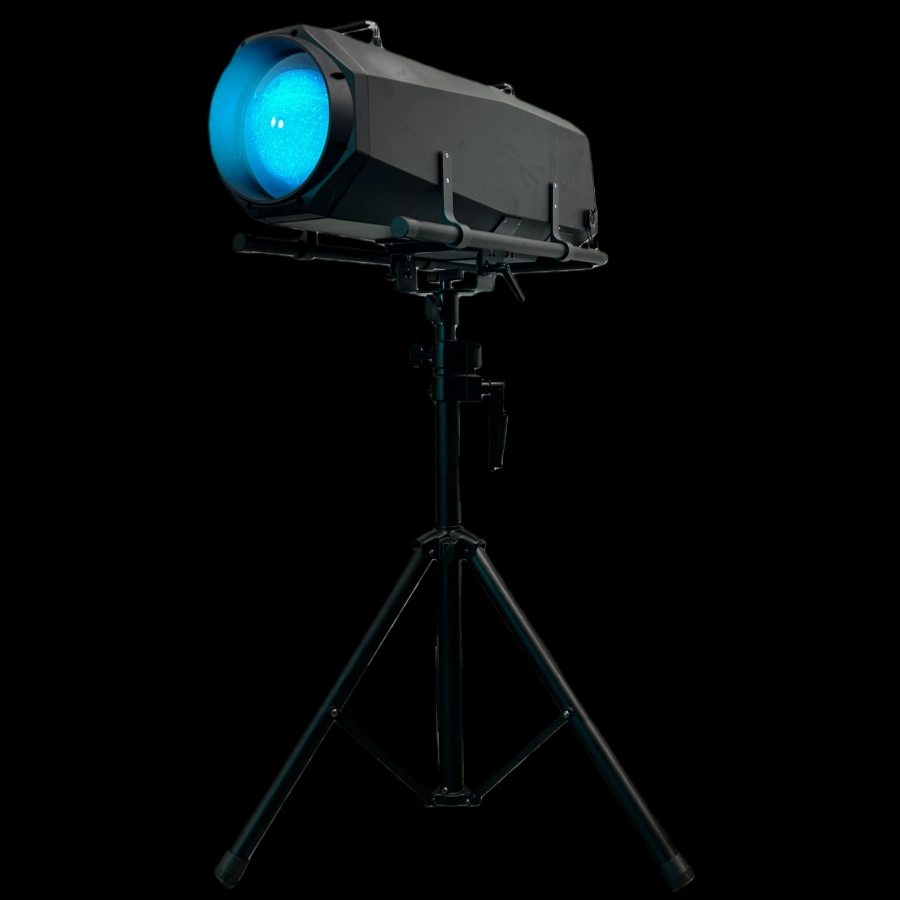
This 1200W waterproof LED follow spotlight with iris adjustment features strong light penetration, precise focusing, and smooth dimming with strobe effects.
Its rain- and dust-resistant design makes it suitable for outdoor performances, concerts, architectural lighting, and other applications. The LED light source boasts a long lifespan and stable, durable operation.
The Waterproof 1200W LED Follow Spot Light with Rotating Gobo features a rotating pattern sheet, delivering a powerful 1200W output for clear, focused beams and precise light tracking. Waterproof for outdoor use in all scenarios, the rotating pattern creates rich visual layers, making it ideal for large-scale indoor and outdoor performances, music festivals, light shows, and other events requiring focused attention and stage effects.
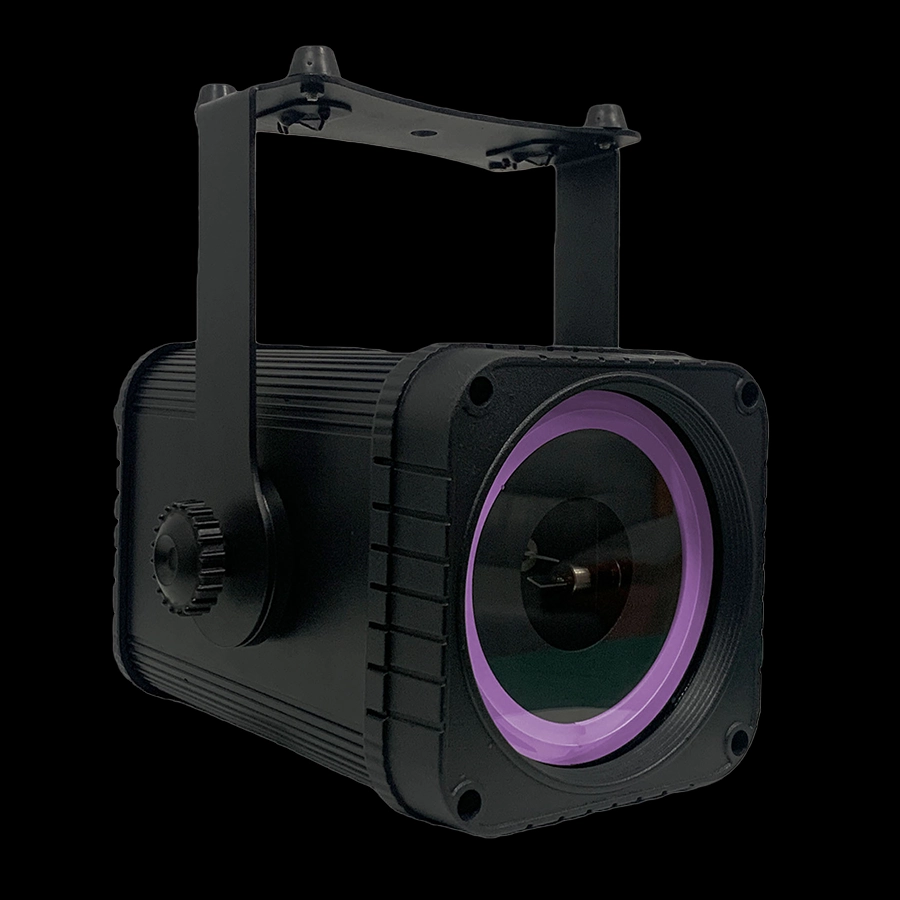
This IP65 waterproof 3W RGB animation laser battery light features an IP65 waterproof and dustproof design, making it suitable for both outdoor and indoor use. It supports rich RGB color combinations and dynamic animation effects, delivering a clear and fluid beam that can display text, patterns, and flowing light and shadow, among other visual representations.
Powered by a built-in battery, it requires no external power source, making it portable, easy to deploy, and simple to operate. Ideal for festive decorations, creating a garden atmosphere, and adding a touch of elegance to small events, it's energy-efficient, durable, and creates a truly immersive ambiance.
This IP65 waterproof 5W RGB animation laser battery light features an IP65 waterproof and dustproof design, making it suitable for both outdoor and indoor use. It supports rich RGB color combinations and dynamic animation effects, delivering a clear and fluid beam that can display text, patterns, and flowing light and shadow, among other visual representations.
Powered by a built-in battery, it requires no external power source, making it portable, easy to deploy, and simple to operate. Ideal for festive decorations, creating a garden atmosphere, and adding a touch of elegance to small events, it's energy-efficient, durable, and creates a truly immersive ambiance.
If you have any comments or good suggestions, please leave us a message, later our professional staff will contact you as soon as possible.
Lighting Innovators
Uplus Lighting is a leading integrated company specializing in R&D, design, production, and sales of stage lighting solutions.
 Scan QR Code
Facebook
Instagram
YouTube
VK