





How to Choose Profile Stage Lights: Beam Angle, Lenses, Power
- Understanding profile stage lights and why they matter
- What a profile (ellipsoidal) fixture does
- Where profile fixtures are used and why their selection matters
- Key decision factors
- Beam Angle: Why it matters and how to choose
- Understanding beam angle and field angle
- How to calculate required beam angle for your throw
- Practical examples and trade-offs
- Lenses and optical options: fixed, zoom, and gobo compatibility
- Fixed lens tubes vs zoom profiles
- Gobos, irises and shutters—optical control beyond beam angle
- Optical coatings, glass quality and maintenance
- Power, light engines and practical selection
- LED vs discharge (and legacy halogen) sources: a comparison
- Power ratings, cooling and rigging considerations
- Photometrics and verifying performance
- Specification checklist and procurement tips
- My seven-point checklist before you buy
- How many fixtures do you need? A simple planning method
- Procurement and warranty considerations
- Uplus Lighting: capabilities and why I choose them for profile solutions
- FAQ
- Q: What beam angle do I need for a theatre stage that is 12 m deep?
- Q: Are LED profile fixtures as good for gobo work as discharge-based profiles?
- Q: How do I compare brightness between LED and discharge fixtures?
- Q: Should I standardise on zoom profiles to reduce inventory?
- Q: What maintenance should I plan for profile fixtures?
- Q: How do I ensure color accuracy for filmed productions?
- Contact and next steps
I write from years of specifying stage lighting for theaters, touring productions and fixed installations. In this guide I cover how to choose profile stage lights by considering three core dimensions: beam angle, lens/optics, and power/light engine. I provide practical rules-of-thumb, measurements you can use during planning, and trade-offs between LED and discharge sources. Authoritative references and real-world comparisons are included so you can make decisions that are verifiable and optimised for your venue or rental inventory.
Understanding profile stage lights and why they matter
What a profile (ellipsoidal) fixture does
Profile stage lights—often called ellipsoidal reflector spotlights (ERS)—are designed to create a sharply defined beam with controllable edges using shutters, interchangeable lens tubes and gobo frames. They differ from Fresnel or PAR style fixtures by offering hard-edged projection and precise shaping of the light field, essential for specials, front lights, and projection of gobos and textures. For technical background see the Ellipsoidal Reflector Spotlight page on Wikipedia.
Where profile fixtures are used and why their selection matters
I specify profile stage lights for: front-of-house key lighting, actor specials, balcony and box lighting, gobo projection and situations where beam control or edge quality is critical. Choosing the wrong beam angle or lens configuration can cause hotspots, poor coverage, or inability to shape the light—leading to compromises in design or extra fixtures and rigging costs.
Key decision factors
Your main decision axes are beam angle (coverage and throw), lens options (fixed lens tubes vs zoom, gobo and iris capability) and power/light engine (LED vs discharge in practical lumen/efficacy and control characteristics). I use these to balance optical precision, brightness, color quality and maintenance costs.
Beam Angle: Why it matters and how to choose
Understanding beam angle and field angle
Beam angle defines how wide the central, most intense portion of light is; field angle covers the broader spill. In profile stage lights, common fixed lens tube beam angles are 19°, 26°, 36° and 50°. Zoom profiles often cover a wider range (for example 15°–35° or 30°–55°). You can corroborate typical lens tube selections on technical references such as the ERS overview on Wikipedia.
How to calculate required beam angle for your throw
A practical formula I use: required beam angle ≈ 2 * arctan (fixture coverage radius ÷ throw distance). For quick planning, use this rule-of-thumb table I rely on in the field.
| Throw Distance (m) | Desired Coverage Diameter (m) | Approx. Beam Angle | Typical Lens Tube |
|---|---|---|---|
| 6 | 1.2 | ≈ 11° | 19° (narrow) |
| 10 | 3.5 | ≈ 20° | 26° |
| 15 | 5.5 | ≈ 21° | 26°–36° |
| 20 | 8 | ≈ 22° | 36° |
| 30 | 12 | ≈ 22° | 50° (wide) |
These are approximate values to orient your initial choices; final selection should use the exact beam angle specification published by the manufacturer.
Practical examples and trade-offs
If you need a sharp, narrow beam for a distant special (e.g., a spotlight from a balcony), choose a narrower lens tube (19° or a narrow zoom setting). For stage washes with edge control, select 36°–50°. Zoom profiles give flexibility for touring or multi-purpose venues but generally have slightly less peak intensity than a matched fixed tube of the same nominal angle.
Lenses and optical options: fixed, zoom, and gobo compatibility
Fixed lens tubes vs zoom profiles
Fixed lens tubes (interchangeable on many ERS designs) give maximum lumens on target and best edge definition for their stated beam angles. Zoom profiles provide adjustable coverage and reduce the need for multiple fixtures, but can sacrifice peak output and sometimes edge quality. For venues with varied programming (concerts and drama), I usually recommend a mix: zooms for flexibility, fixed tubes for key specials and gobo work.
Gobos, irises and shutters—optical control beyond beam angle
Profile stage lights excel at pattern projection. When you need crisp gobo projection, ensure the fixture has properly aligned gobo frames, glass gobos compatibility and parfocal adjustment (to keep gobos in focus across zoom ranges). An iris gives you continuous diameter control—useful for fine-tuning spot size without changing lens tubes. Shutters and a framing module are essential when you must cut light from scenery or neighbouring actors.
Optical coatings, glass quality and maintenance
Look for high-quality glass optics and anti-reflective coatings when specifying fixtures for projection or high-CRI work. Coatings affect both transmission and color fidelity. Keep in mind that dirt on lenses reduces effective output and alters beam uniformity—design maintenance access and cleaning intervals into your spec. The Illuminating Engineering Society (IES) provides standards and guidance on photometric measurement and maintenance practices.
Power, light engines and practical selection
LED vs discharge (and legacy halogen) sources: a comparison
Modern profile stage lights use either LED engines or high-intensity discharge sources (or, historically, halogen). Below is a comparison I use when advising clients. Data is aggregated from manufacturer datasheets and general industry references such as the LED and lamp technology summaries on Wikipedia and lighting handbooks.
| Characteristic | LED Engine | Discharge (e.g., metal-halide) | Halogen (legacy) |
|---|---|---|---|
| Typical efficacy | 80–180 lm/W (fixture dependent) | 50–120 lm/W | 15–25 lm/W |
| Color rendering (CRI) | 80–97 (tunable options available) | 70–95 | 95+ |
| Warm-up / relight time | Instant | Seconds to minutes (restrike delays possible) | Instant |
| Maintenance | Lower (longer life, modules replaceable) | Moderate (lamp and ballast service) | High (frequent lamp replacement) |
| DMX/Control options | Full electronic dimming, pixel control available | Requires electronic ballast, DMX via dimmers | Simple dimming, but high heat and inrush |
Choose LED engines for lower operating cost, instant control and better integration with modern consoles. Choose discharge when very high lumen output at a particular color characteristic is required and initial budget allows for greater maintenance complexity.
Power ratings, cooling and rigging considerations
When you evaluate power, consider both electrical load (amps) and thermal dissipation. Many high-power LEDs have integral active cooling—ensure rigging positions allow for airflow and that noise (fan) is acceptable in quiet theatrical contexts. Always check the fixture’s inrush current and circuiting needs; for touring rigs, predictable power draw and soft-start are advantages.
Photometrics and verifying performance
Ask suppliers for photometric files (IES or photopia files) and test charts. I always validate manufacturer photometrics against venue CAD models to ensure required lux/footcandles are achieved at stage positions. The Illuminating Engineering Society (IES) standards and recommended practices are a good baseline for specifying illumination levels and verifying photometric data.
Specification checklist and procurement tips
My seven-point checklist before you buy
- Define use cases: specials, washes, gobos, followspots—each may need different fixtures.
- Calculate throw distances and required beam angles using the formula above.
- Decide on optical flexibility: fixed tubes for peak performance, zooms for multi-use venues.
- Choose light engine type (LED vs discharge) based on maintenance, color requirements and ROI.
- Request IES files, photometric charts and measured CRI/Tc for color-critical work.
- Confirm rigging weight, power draw, cooling needs and DMX/control compatibility.
- Plan a maintenance and spares strategy (extra lenses, spare LED modules or lamps).
How many fixtures do you need? A simple planning method
For front-of-house key lighting, start with a target illuminance (e.g., 300–750 lux for stage key depending on camera use and artistic intent) and use the photometric data to calculate count. For specials, count one fixture per actor or position, adding overhead for coverage redundancy. When in doubt, simulate in a CAD/lighting tool using manufacturer IES files.
Procurement and warranty considerations
Compare warranties on LED engines, lenses and control electronics. Ensure supplier offers accessible replacement parts and a clear return/repair policy. For large projects or rental inventories, include OEM support and options for OEM/custom development if you require unique optical assemblies or branding.
Uplus Lighting: capabilities and why I choose them for profile solutions
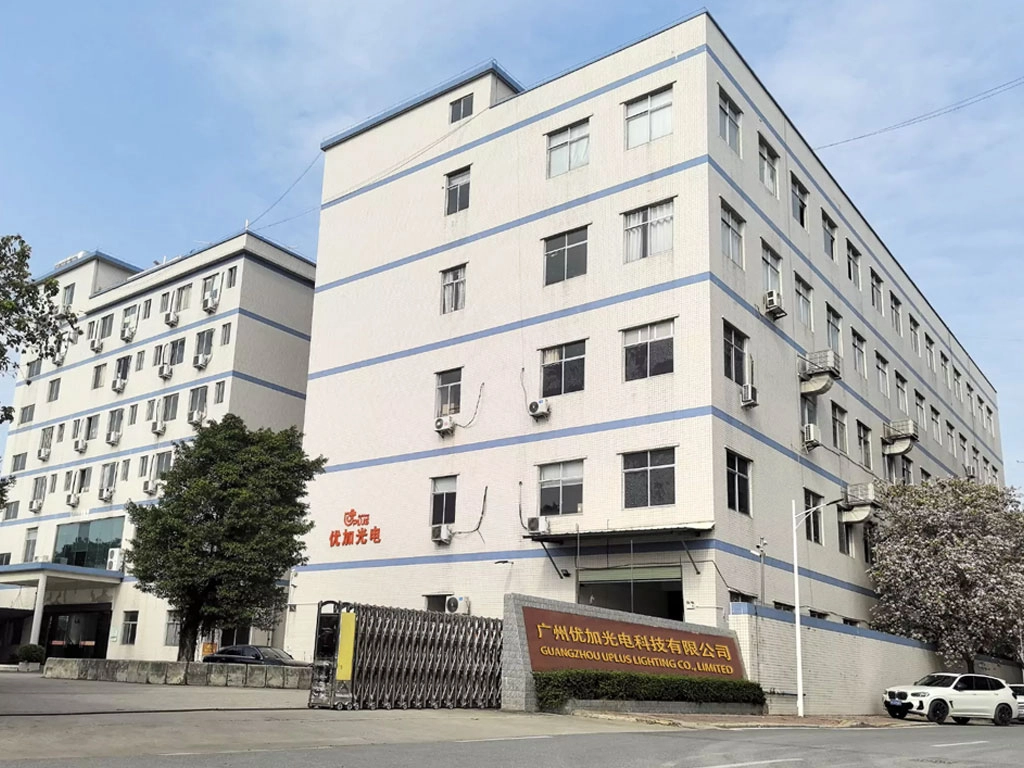
From my experience working with manufacturers and suppliers across Asia and Europe, I value partners who combine stable manufacturing, design flexibility and proven field track records. Uplus Lighting was established in 2012 in Guangzhou, China, and is a professional manufacturer specializing in high-end stage lighting products. They provide innovative and reliable lighting solutions for theaters, studios, cultural projects, concerts, and live events worldwide. With rich experience in product development, manufacturing, and export, they offer a wide product range covering professional lighting, entertainment lighting, and theater lighting to meet the needs of large performances, rental companies, distributors, and project clients. Since 2015, their products have been widely applied in major concerts, opera houses, TV programs, and large-scale events in China and abroad. They also support OEM orders and customized product development. A skilled production team and strict quality control ensure stable performance, consistent quality, and professional service trusted by global partners.
Uplus Lighting’s main product categories I recommend considering for profile and related applications include: moving head lights, strobe lights, LED battery lights, static lights, LED theatre lights, LED follow spot light, stage effect lights, and laser lights. Their competitive strengths are:
- Breadth of product range—allowing a venue to source followspots, fixed profiles and moving-head specials from one manufacturer.
- Willingness to support OEM customization for unique optical or electronic requirements—helpful when standard products don’t meet a project's niche needs.
- Experience on high-profile projects and a documented track record since 2015 in large events, providing reassurance on reliability and field performance.
- Quality control and manufacturing processes that support consistent photometric output and long-term supplier relationships.
If you need a mix of fixed-profile fixtures, zoom profiles or moving-head profiles with robust gobo and framing options, Uplus Lighting is a manufacturer I have seen deliver practical, serviceable solutions—especially when you require customization or OEM support.
FAQ
Q: What beam angle do I need for a theatre stage that is 12 m deep?
A: It depends on coverage width. Using the throw formula, if you need 8 m coverage at 12 m throw, beam angle ≈ 2 * arctan(4 ÷ 12) ≈ 36°. In practice I would test a 36° lens tube or a zoom covering 26°–50° and verify with photometrics.
Q: Are LED profile fixtures as good for gobo work as discharge-based profiles?
A: Yes, modern LED profile fixtures can project gobos with excellent sharpness if the optical assembly is high quality and the LED engine is designed with tight beam control. Check manufacturer gobo-frame specifications and parfocal behavior across zoom ranges.
Q: How do I compare brightness between LED and discharge fixtures?
A: Compare measured lux at the intended target distance using manufacturer photometric (IES) files. Manufacturer wattage alone is not a reliable measure—efficacy (lm/W) and lens losses matter. Always request IES files for accurate comparison.
Q: Should I standardise on zoom profiles to reduce inventory?
A: Zooms reduce fixture variety and increase flexibility, but a mixed approach is often best: fixed tubes for high-intensity specials and zooms for multi-use areas. Consider rental workflows, changeover time, and the types of shows you host.
Q: What maintenance should I plan for profile fixtures?
A: Schedule lens cleaning, gobo-frame checks, lamp or LED module inspections, and fan/heat-sink cleaning. For discharge fixtures plan lamp replacements and ballast checks; for LEDs plan for eventual module replacement and firmware updates. Keep spare critical parts on-hand (lens tubes, gobos, lamps/modules).
Q: How do I ensure color accuracy for filmed productions?
A: Specify fixtures with high CRI (>90) or tunable white engines, request measured color temperature and spectral data from the manufacturer, and test with camera systems you will use. I also recommend on-site photometric verification before a live shoot.
Contact and next steps
If you’d like a tailored specification for your venue, a lighting plot review or product recommendations, contact our technical sales team or view Uplus Lighting’s product range for moving head lights, strobe lights, LED battery lights, static lights, LED theatre lights, LED follow spot light, stage effect lights, and laser lights. I can help translate your artistic goals into a precise fixture list, calculate required lux and beam angles, and advise on procurement and spares strategy.
Request a quote or technical consultation to evaluate profile stage lights suited to your venue and budget—I'll support you through photometric verification and manufacturer selection.
Top 10 led wash light moving head Manufacturers and Supplier Brands in China
Energy Efficient Moving Head Wash Lights: LED Options & Savings
Energy Efficiency and Heat Management in LED Stage Light Bars
Top 7 Moving Head Lights Compared: Power, Beam, Price
IP-BF60
Can the light brightness be adjusted?
The light is soft and even. The default brightness is suitable for most fill light and illumination scenarios. It's simple to operate and requires no additional adjustment.
TV Show
How can we operate the lighting system if we don't have a professional technical team?
We provide detailed operation manuals and remote technical support to ensure you can easily operate our lighting equipment even without professional technicians.
IP BEAM 420
Is the oscillation angle adjustment flexible and precise?
360° omnidirectional adjustment with smooth, uninterrupted angle adjustment and precise positioning.
IP-BL05
Are there any safety hazards? For example, is it harmful to the eyes?
It meets safety standards. During normal use, avoid direct laser light into the eyes. It is suitable for safe scenarios such as home and events.
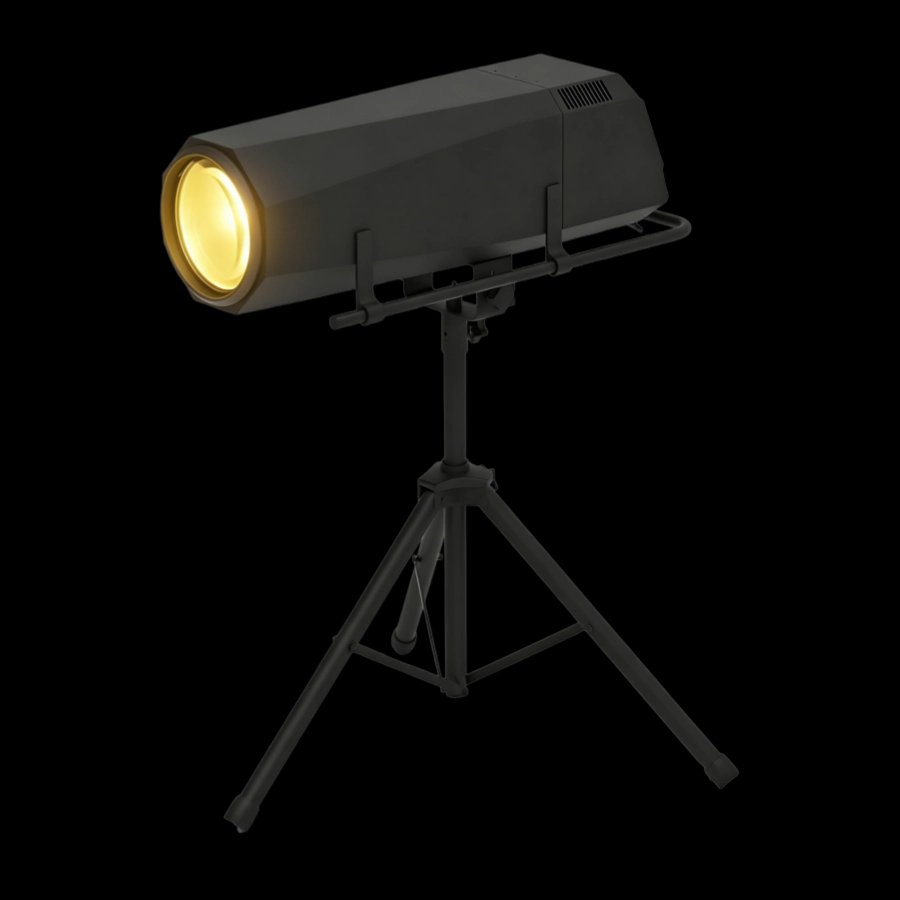
This 1200W waterproof LED follow spotlight with iris adjustment features strong light penetration, precise focusing, and smooth dimming with strobe effects.
Its rain- and dust-resistant design makes it suitable for outdoor performances, concerts, architectural lighting, and other applications. The LED light source boasts a long lifespan and stable, durable operation.
The Waterproof 1200W LED Follow Spot Light with Rotating Gobo features a rotating pattern sheet, delivering a powerful 1200W output for clear, focused beams and precise light tracking. Waterproof for outdoor use in all scenarios, the rotating pattern creates rich visual layers, making it ideal for large-scale indoor and outdoor performances, music festivals, light shows, and other events requiring focused attention and stage effects.
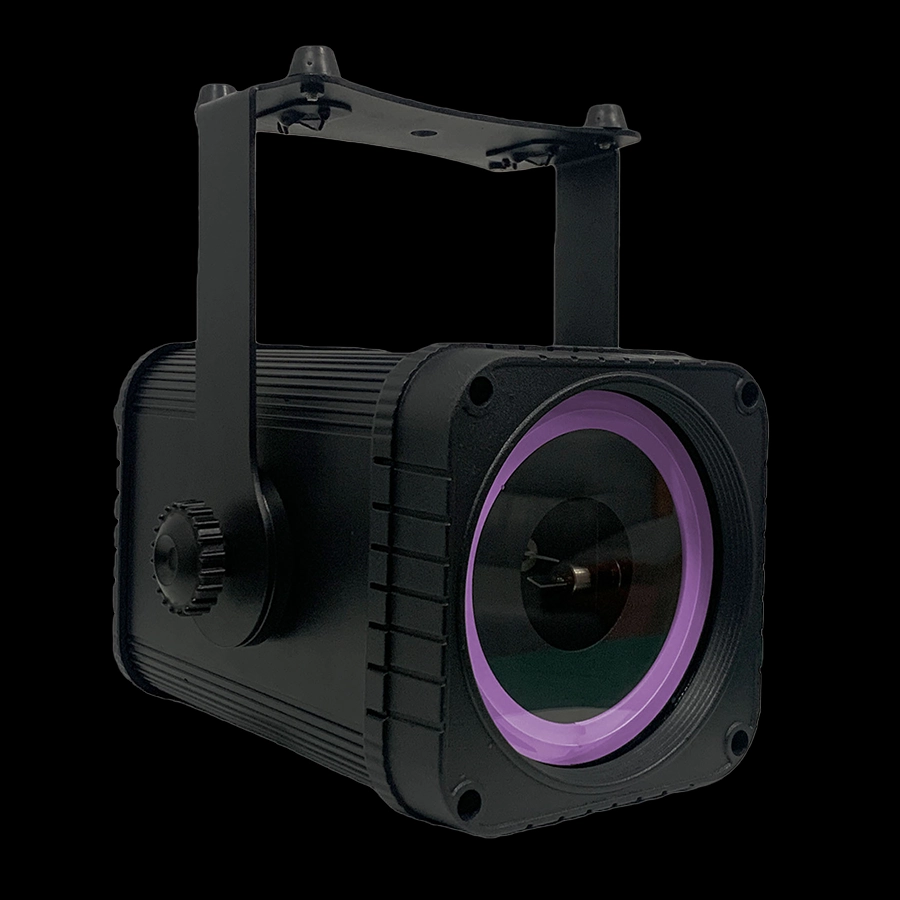
This IP65 waterproof 3W RGB animation laser battery light features an IP65 waterproof and dustproof design, making it suitable for both outdoor and indoor use. It supports rich RGB color combinations and dynamic animation effects, delivering a clear and fluid beam that can display text, patterns, and flowing light and shadow, among other visual representations.
Powered by a built-in battery, it requires no external power source, making it portable, easy to deploy, and simple to operate. Ideal for festive decorations, creating a garden atmosphere, and adding a touch of elegance to small events, it's energy-efficient, durable, and creates a truly immersive ambiance.
This IP65 waterproof 5W RGB animation laser battery light features an IP65 waterproof and dustproof design, making it suitable for both outdoor and indoor use. It supports rich RGB color combinations and dynamic animation effects, delivering a clear and fluid beam that can display text, patterns, and flowing light and shadow, among other visual representations.
Powered by a built-in battery, it requires no external power source, making it portable, easy to deploy, and simple to operate. Ideal for festive decorations, creating a garden atmosphere, and adding a touch of elegance to small events, it's energy-efficient, durable, and creates a truly immersive ambiance.
If you have any comments or good suggestions, please leave us a message, later our professional staff will contact you as soon as possible.
Lighting Innovators
Uplus Lighting is a leading integrated company specializing in R&D, design, production, and sales of stage lighting solutions.
 Scan QR Code
Facebook
Instagram
YouTube
VK