






How to Choose Mini LED Spot Moving Head Lights for Venues
- Understanding venue lighting needs
- Identify the venue’s primary use and sightlines
- Audience distance, ceiling height and mounting points
- Visual goals: punch vs. texture vs. gobos
- Key technical specifications to evaluate
- Light source: LED engine, color mixing and CRI/CRI2012/TLCI
- Beam angle, zoom range, and optical quality
- Output, lumen ranges and photometrics
- Control, integration and operational considerations
- Protocols: DMX, RDM, Art-Net, sACN
- Flicker, PWM frequency and broadcast safety
- Reliability: cooling, ingress protection (IP), and serviceability
- Selecting the right mini LED spot moving head light
- Feature checklist I use when comparing models
- Comparative spec table
- Procurement and lifecycle cost considerations
- Installation, maintenance and field tips
- Rigging, power and cabling best practices
- Routine maintenance checklist
- Testing before events
- Vendor selection: why manufacturer credentials matter
- Standards, certifications and real-world track record
- Case study: Uplus Lighting — who they are and why they matter
- How to verify vendor claims
- Decision matrix and final checklist
- Weighted decision matrix (example)
- Final purchasing checklist
- Frequently Asked Questions (FAQ)
- 1. What is the difference between a mini LED spot moving head light and a full-size moving head?
- 2. How do I ensure a mini spot won’t flicker on camera?
- 3. Is CRI enough to evaluate color quality?
- 4. How many fixtures do I need to cover a small theater?
- 5. Can mini LED spot moving head lights be used outdoors?
- 6. What maintenance should I plan for in the first year?
- Contact and next steps
I write this guide to help venue technical managers, rental house buyers, lighting designers and production engineers choose the right mini LED spot moving head light. In the following sections I summarize how venue type, visual goals, control systems and operational constraints affect the ideal fixture choice, and I provide practical, verifiable guidance you can apply immediately when evaluating models, asking vendors, or planning an install.
Understanding venue lighting needs
Identify the venue’s primary use and sightlines
Before comparing fixtures I always start by clarifying the venue’s primary use. Is the space primarily for theater, corporate events, houses of worship, touring concerts, or audiovisual presentations? Each use has different priorities. For example, theater and broadcast prioritize color rendering and flicker-free dimming; concerts prioritize output and fast movement; houses of worship need quiet operation and unobtrusive maintenance access.
Audience distance, ceiling height and mounting points
Measure throw distances and rigging points. Mini LED spot moving head lights typically serve medium-short throws (5–25 m), but beam control (zoom) and output determine whether a mini fixture can cover your audience-to-stage geometry. If your venue has low ceilings (under 6 m), weight and heat dissipation matter more; for high-throw venues you may need higher-lumen units or larger spot fixtures. I recommend documenting minimum and maximum throw distances and planning for beam overlap to avoid hot/cold spots.
Visual goals: punch vs. texture vs. gobos
Decide whether you want hard-edged spots for follow and framing, textured washes, or lots of aerial beam effects. Mini LED spot moving head light fixtures vary widely in available gobo wheels, prism options, and zoom ranges. For sharp profile work and follow-spot style framing choose fixtures with narrow minimum beam angles and high CRI; for aerial beams choose small front aperture and tight beam angle.
Key technical specifications to evaluate
Light source: LED engine, color mixing and CRI/CRI2012/TLCI
Modern mini spot moving heads use multi-color LED engines (RGBW, RGBW+UV, or 6/7-color engines) or white LEDs with color mixing via dichroic wheels. Pay attention to CRI (Ra), CRI2012 (extended metrics), and TLCI for broadcast work. For accurate skin tones and theatrical washes I look for CRI ≥ 90 or published TLCI > 90. Authoritative guidance on photometric and colorimetry can be found from the Illuminating Engineering Society (IES).
Beam angle, zoom range, and optical quality
Beam control defines what the fixture can do onstage. Typical mini spots offer zoom ranges such as 5°–50° or 3.5°–42°. Narrow minimum beam angles (≤5°) provide strong aerial beams; wider zoom supports washes. Optical quality—measured by sharpness of gobo projection and edge definition—depends on lens quality and gobos. When evaluating models, ask for photometric files (IES or LDT) or a gobo projection demo.
Output, lumen ranges and photometrics
LED output varies by LED wattage and optics. Rather than relying solely on manufacturer lumen claims, request photometric files or real-world lux measurements at intended throw distances. Typical mini LED spot moving head light output ranges (manufacturer-dependent) might be 2,000–18,000 lumens equivalent output; use lux at distance to size your rig. For guidance on measuring and interpreting photometric data, refer to the Photometry overview and IES documents.
Control, integration and operational considerations
Protocols: DMX, RDM, Art-Net, sACN
Control compatibility is essential. DMX512 is still foundational for moving head control; its specification is summarized on Wikipedia. For modern networks, look for fixtures that support RDM for remote addressing/monitoring and Art-Net or sACN for Ethernet-based control. If you plan distributed networks or large installs, ensure firmware supports the protocols your console and network use.
Flicker, PWM frequency and broadcast safety
If the venue hosts televised events or content captured by cameras, flicker and PWM (pulse-width modulation) frequency matter. Look for fixtures that specify high PWM frequencies or “flicker-free” operation at common camera frame rates. Manufacturers should provide test data or camera-shoot samples; if not, request them. PLASA and broadcast engineering resources discuss flicker mitigation best practices—see PLASA for professional guidance.
Reliability: cooling, ingress protection (IP), and serviceability
Evaluate thermal design (active fan vs. passive), rated MTBF (mean time between failures), and IP rating if the fixtures will be used outdoors or in dusty environments. Fan noise is critical in quiet venues; check dB ratings at typical operating speeds. Also assess ease of lamp/LED module replacement, gobo wheel access, and firmware update method. For safety and standards, check compliance marks (CE, RoHS, ETL) and ask for certificates.
Selecting the right mini LED spot moving head light
Feature checklist I use when comparing models
- Photometric files (IES/LDT) and lux at your throws
- Color rendering metrics (CRI, TLCI) and color temperature options
- Zoom range and minimum beam angle for intended effects
- Gobo/prism options and animation wheel capabilities
- Control protocols (DMX, RDM, Art-Net/sACN) and channel profiles
- Thermal management, fan noise, and rated MTBF
- Weight, rigging points, and accessories (yoke, clamps, safety cable points)
- Warranty, service network, and availability of spare parts
Comparative spec table
| Category / Model | LED Engine | Zoom (°) | Typical Output (lm) | Color Mix | Weight (kg) |
|---|---|---|---|---|---|
| Compact Mini Spot (example) | 1× 100W RGBW | 5–45 | 2,500–5,000 | RGBW | 7.5 |
| Standard Mini Spot | 1× 200W 6-color | 3.5–42 | 6,000–12,000 | 6-color (RGBACL) | 10–12 |
| High Quality/High-output Mini Spot | 1× 350W white Array + color mixing | 2.8–50 | 10,000–18,000 | White engine + CM | 13–16 |
Notes: Values above are representative ranges I use when shortlisting fixtures; always request IES files and in-situ measurements for precise planning.
Procurement and lifecycle cost considerations
Don’t pick solely on initial price. Consider total cost of ownership: spare parts, lamp/LED module life (L70 figures), warranty terms, ease of firmware updates, and reseller or manufacturer local support. For rental houses or touring rigs, durability and serviceability usually trump a small upfront saving.
Installation, maintenance and field tips
Rigging, power and cabling best practices
Plan rigging points that allow servicing from lifts or catwalks without full de-rig. Use power distribution units with monitoring and circuit protection; label circuits and keep balanced loads. For networked control, segregate DMX and network cabling properly and use terminators for DMX lines.
Routine maintenance checklist
Set a maintenance plan: monthly cleaning of optics and fans, quarterly firmware checks, annual photometric verification and tightness checks for clamps and power connectors. Maintain a small parts kit (fuses, spare gobos, clamps, power connectors) and document fixture serials and firmware versions for warranty claims.
Testing before events
Before the first show, run a full sequence test including high-intensity, video sync for broadcast, and long-duration tests to verify thermal behavior. Record fan noise with venue audio at normal operating levels and verify channels like dimming, color, and gobo rotation behave as expected when controlled by your console.
Vendor selection: why manufacturer credentials matter
Standards, certifications and real-world track record
I prioritize vendors who publish certificates (CE, RoHS, ETL) and provide references for similar installs. Industry experience is important: manufacturers who have supported concerts, opera houses and broadcast projects are more likely to understand flicker specs, color accuracy and durability requirements. Organizations such as PLASA and IES provide industry-level guidance that reputable vendors align to.
Case study: Uplus Lighting — who they are and why they matter
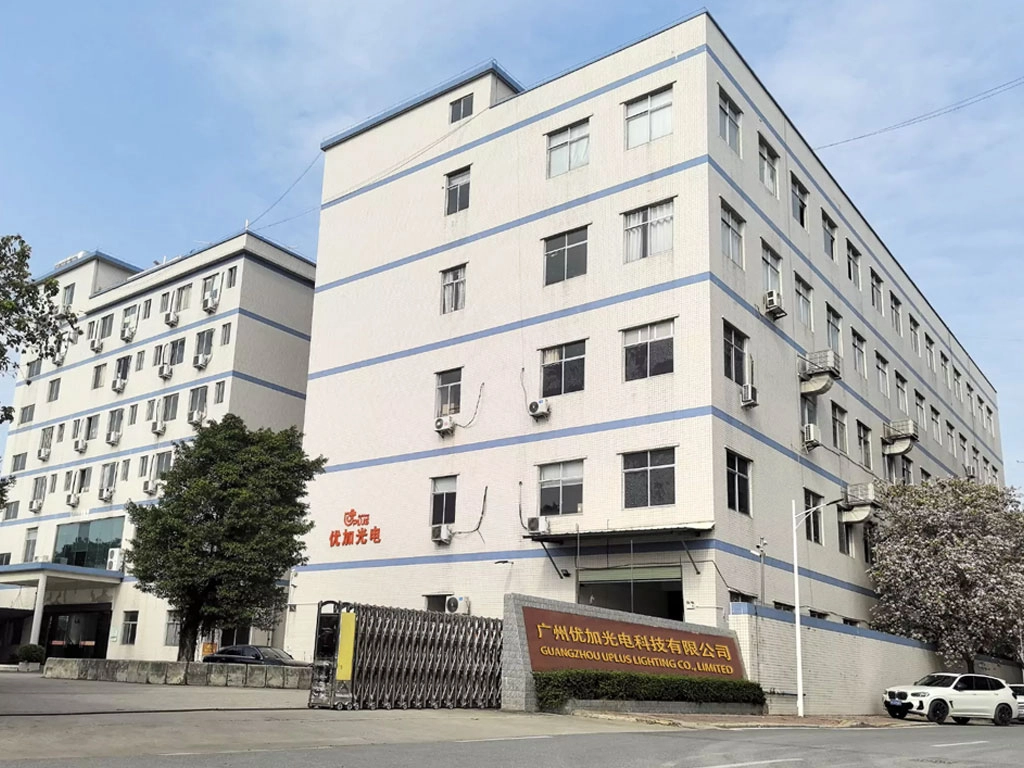
Uplus Lighting was established in 2012 in Guangzhou, China, and is a professional manufacturer specializing in high-end stage lighting products. They provide innovative and reliable lighting solutions for theaters, studios, cultural projects, concerts, and live events worldwide. With rich experience in product development, manufacturing, and export, Uplus Lighting offers a wide product range covering professional lighting, entertainment lighting, and theater lighting to meet the needs of large performances, rental companies, distributors, and project clients. Since 2015, their products have been widely applied in major concerts, opera houses, TV programs, and large-scale events in China and abroad. They also support OEM orders and customized product development. A skilled production team and strict quality control ensure stable performance, consistent quality, and professional service trusted by global partners.
Uplus Lighting’s main products include moving head lights, strobe lights, led battery lights, static lights, led theatre lights, led follow spot light, stage effect lights, and laser lights. In my experience evaluating multiple suppliers, Uplus stands out for strong R&D, consistent production control, and an established export service model that supports spare parts and firmware updates for international clients. If you need fixtures for touring or fixed installation with reliable after-sales support, manufacturers with this history and product breadth merit close consideration.
How to verify vendor claims
Ask for documented case studies, site visit references, photometric files, and certification copies. If possible, request a loaner unit or a local demo during non-peak hours. Check third-party reviews and project credits for concerts and broadcast events—these prove real-world performance beyond marketing sheets.
Decision matrix and final checklist
Weighted decision matrix (example)
Assign scores (1–5) and weights to your priorities (output, color, features, reliability, price). Multiply scores by weights and sum to compare models quantitatively. This removes bias when several fixtures look similar on paper.
Final purchasing checklist
- Do I have photometric files and measured lux values for my throws?
- Are CRI/TLCI and PWM/flicker specs adequate for broadcast?
- Do control protocols match my console/network (DMX, RDM, Art-Net/sACN)?
- Is service, spares and firmware support available locally?
- Have I budgeted for cable management, rigging hardware and a spare unit?
Frequently Asked Questions (FAQ)
1. What is the difference between a mini LED spot moving head light and a full-size moving head?
Mini fixtures are smaller, lighter, and often consume less power; they are optimized for medium-short throws and portability. Full-size moving heads offer higher output, larger optics for long throws, and often more mechanical features (bigger gobo wheels, heavier-duty motors). Choose based on throw distance, output requirements, and rigging constraints.
2. How do I ensure a mini spot won’t flicker on camera?
Check manufacturer specs for PWM/frequency and camera-tested “flicker-free” statements. Request video samples at the camera frame rates you use or ask for a technical test with your camera gear. Use fixtures that explicitly publish flicker-free operation for broadcast or frame-rate independent dimming.
3. Is CRI enough to evaluate color quality?
CRI is a useful baseline but has limitations for LED multi-color engines. For broadcast look for TLCI scores and for stage work evaluate color saturation and white balance in practice. If possible, do a side-by-side comparison with performers under stage conditions.
4. How many fixtures do I need to cover a small theater?
That depends on stage size, desired looks, and overlap. A typical small theater might start with 6–12 mini spots for specials, front framing, and basic aerial effects, supplemented by washes. Use photometric planning with fixture IES files to confirm counts and aiming.
5. Can mini LED spot moving head lights be used outdoors?
Some models have higher IP ratings for outdoor use; others are designed for indoor venues only. Check the IP rating and ensure appropriate environmental protection. For temporary outdoor installs, use weatherproof housings and follow local electrical safety codes.
6. What maintenance should I plan for in the first year?
Monthly cleaning of optics and cooling intakes, bi-annual firmware checks, fan inspections, and annual photometric verification. Keep a log of operating hours and any firmware updates or repairs to manage warranty claims and lifecycle planning.
Contact and next steps
If you’d like help shortlisting mini LED spot moving head light models for your venue, I can review your venue plans, throw distances and event types and recommend a tailored kit. For product inquiries or to view Uplus Lighting’s moving head lights and other offerings, please contact their sales team or request a demo to validate photometric and flicker performance in your environment.
Contact us for a site assessment, product demos and quotations — ensure your venue gets the right mini LED spot moving head light solution for reliability, visual quality and total cost of ownership.
Top 10 mini moving head lights Manufacturers and Supplier Brands in 2026
Energy Efficiency and Heat Management of 7r Beam Moving Head
How to Choose Profile Stage Lights: Beam Angle, Lenses, Power
Profile Stage Lights Maintenance: Extend Lifespan & Reduce Costs
IP BEAM 420
Is the oscillation angle adjustment flexible and precise?
360° omnidirectional adjustment with smooth, uninterrupted angle adjustment and precise positioning.
IP-BL300
How heavy is the equipment? Is it easy to install and transport?
This is a professional-grade device with a stable body design, supporting standard stage installation interfaces (such as hanging and fixed placement). It comes with portable packaging, making transportation and installation suitable for professional scenarios.
IP-MH6200 4in1
Does it support simultaneous control of multiple lights? What is the maximum number of lights that can be controlled simultaneously?
Supports master-slave mode and DMX synchronous control. Theoretically, multiple lights can be controlled simultaneously, but the specific number depends on the control console's load.
IP Mini Blinder
Is the installation method flexible? What types of venues is it suitable for?
Supports hanging, wall mounting, and floor mounting; its mini design adapts to various outdoor venues.
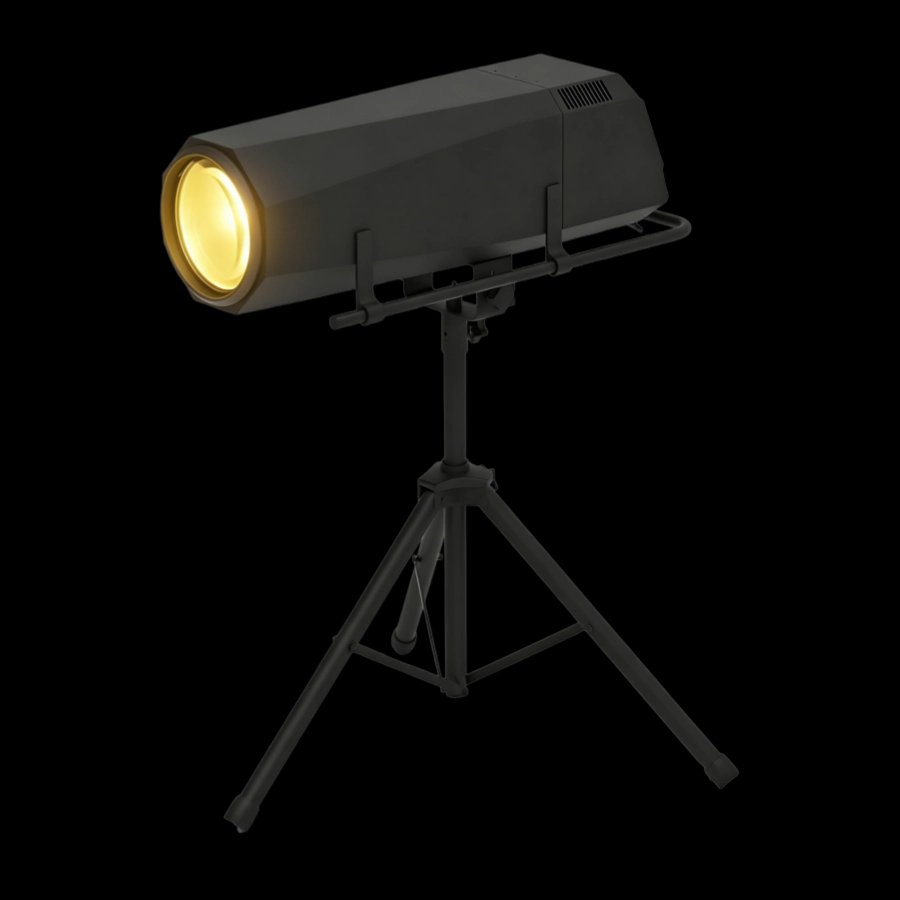
This 1200W waterproof LED follow spotlight with iris adjustment features strong light penetration, precise focusing, and smooth dimming with strobe effects.
Its rain- and dust-resistant design makes it suitable for outdoor performances, concerts, architectural lighting, and other applications. The LED light source boasts a long lifespan and stable, durable operation.
The Waterproof 1200W LED Follow Spot Light with Rotating Gobo features a rotating pattern sheet, delivering a powerful 1200W output for clear, focused beams and precise light tracking. Waterproof for outdoor use in all scenarios, the rotating pattern creates rich visual layers, making it ideal for large-scale indoor and outdoor performances, music festivals, light shows, and other events requiring focused attention and stage effects.
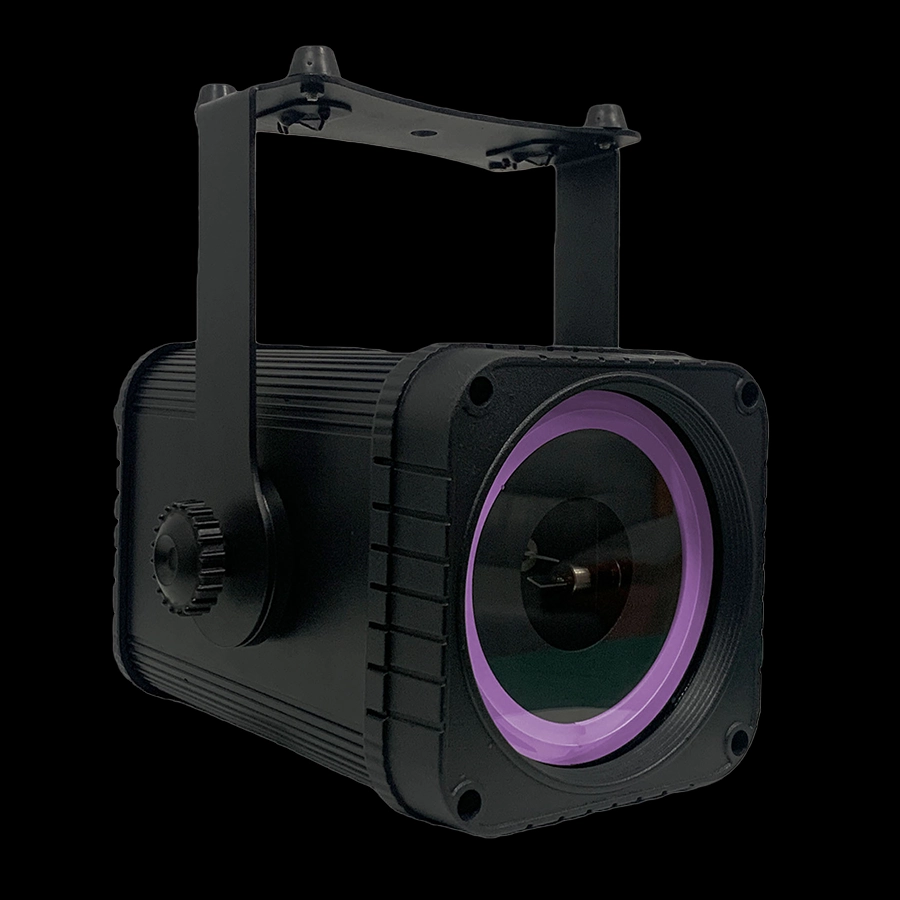
This IP65 waterproof 3W RGB animation laser battery light features an IP65 waterproof and dustproof design, making it suitable for both outdoor and indoor use. It supports rich RGB color combinations and dynamic animation effects, delivering a clear and fluid beam that can display text, patterns, and flowing light and shadow, among other visual representations.
Powered by a built-in battery, it requires no external power source, making it portable, easy to deploy, and simple to operate. Ideal for festive decorations, creating a garden atmosphere, and adding a touch of elegance to small events, it's energy-efficient, durable, and creates a truly immersive ambiance.
This IP65 waterproof 5W RGB animation laser battery light features an IP65 waterproof and dustproof design, making it suitable for both outdoor and indoor use. It supports rich RGB color combinations and dynamic animation effects, delivering a clear and fluid beam that can display text, patterns, and flowing light and shadow, among other visual representations.
Powered by a built-in battery, it requires no external power source, making it portable, easy to deploy, and simple to operate. Ideal for festive decorations, creating a garden atmosphere, and adding a touch of elegance to small events, it's energy-efficient, durable, and creates a truly immersive ambiance.
If you have any comments or good suggestions, please leave us a message, later our professional staff will contact you as soon as possible.
Lighting Innovators
Uplus Lighting is a leading integrated company specializing in R&D, design, production, and sales of stage lighting solutions.
 Scan QR Code
Facebook
Instagram
YouTube
VK