






Bee Eye Moving Light vs. Wash Light: Which Suits Your Venue?
- Lighting Fundamentals: Beam, Wash, and Movement
- What distinguishes beam/spot fixtures from wash fixtures?
- Key performance metrics I evaluate
- Technical Comparison: Bee Eye Moving Light vs. Wash Light
- Optics and beam characteristics
- Light output: intensity vs. coverage
- Control and effects
- Comparison Table: Typical Specs and Suitability
- Practical Venue Considerations and Use Cases
- Small venues and houses of worship
- Theatres and TV studios
- Concerts, festivals, and large-scale events
- Rental companies: flexibility vs. specialization
- Costs, Reliability, and Maintenance — Real-world Trade-offs
- Capital expenditure and operating costs
- Durability and lifecycle considerations
- Installation and crew skill
- Why choose one over the other — decision checklist
- My 7-point decision checklist
- Uplus Lighting: Manufacturer Profile and Why It Matters for Your Project
- Uplus Lighting’s credentials and product focus
- Quality control, OEM capability, and field support
- How Uplus’s product mix fits different venue needs
- Practical Recommendation: My Spec Examples by Venue Type
- Small theatre / community stage
- Mid-size concert hall
- Rental company
- FAQ
- 1. What is a bee eye moving light and how is it different from other moving heads?
- 2. Can a wash light be used as a spot or vice versa?
- 3. How many bee eye moving lights do I need for a concert?
- 4. How should I evaluate manufacturer photometric data?
- 5. Are bee eye moving lights more difficult to maintain?
- 6. What control protocols should I require?
- 7. How do I balance budget and performance when choosing fixtures?
I often get asked by venue managers, lighting designers, and rental companies whether a bee eye moving light or a wash light is the better investment. In this article I break down the technical differences, practical uses, cost and maintenance implications, and venue-specific recommendations. I draw on industry references such as the general principles of stage lighting (Wikipedia: Stage lighting) and control protocols like DMX512 (Wikipedia: DMX512) to keep recommendations verifiable and actionable.
Lighting Fundamentals: Beam, Wash, and Movement
What distinguishes beam/spot fixtures from wash fixtures?
At the most basic level, beam or spot fixtures (including many bee eye moving lights) are designed for tight, intense beams with sharp edges, high lumen concentration, and tools like gobos, prisms, and irises for texture. Wash fixtures, by contrast, produce broader, softer light fields with more even color blending across a large area. These are not mutually exclusive categories—many modern moving heads can function as either spot/beam or wash depending on lens, zoom, and LED engine—but the design tradeoffs remain: beam fixtures prioritize intensity and shaping, wash fixtures prioritize coverage and color mixing.
Key performance metrics I evaluate
When comparing fixtures I focus on:
- Beam angle and zoom range (degrees)
- Luminous output (lumens and lux at a given distance)
- Color mixing system (CMY, RGBW, or color wheel)
- Optical tools (gobos, frost, prism)
- Control complexity (DMX channels, RDM, Art-Net/sACN)
- Physical considerations (weight, power draw, IP rating)
These metrics determine how a fixture performs in a real venue—how far the beam will carry, how evenly a stage will be covered, and how quickly your crew can rig and focus the lights.
Technical Comparison: Bee Eye Moving Light vs. Wash Light
Optics and beam characteristics
Bee eye moving lights typically feature tight optics and narrow minimum beam angles (often 2°–10° for beam variants), enabling high-intensity shafts and aerial effects. Wash lights usually have wider lenses and larger zoom ranges that flatten intensity across a field—typical beam angles might be 20°–60° or more depending on the design. The practical implication is clear: for aerial beams, long throw and texture, bee eye moving lights excel; for even stage coverage and portrait lighting, wash lights are superior.
Light output: intensity vs. coverage
I always consider lux at target distances rather than just raw lumen numbers. Beam fixtures concentrate lumens into a small area, giving much higher lux on axis; wash fixtures spread lumens, reducing peak lux but improving uniformity. For example, a 20,000-lumen beam fixture with a 3° beam will produce far more usable lux at 30 meters on a performer than a 20,000-lumen wash with a 40° beam.
Control and effects
Bee eye moving lights often include high-speed pan/tilt, gobos, prisms, and fast strobe for dynamic effects. Wash heads focus on smooth dimming curves, color mixing, and soft edge frost to blend multiple units seamlessly. If your programming relies on pixel-mapped aerial effects and precise beam placement, moving-beam fixtures (including bee eye designs) will be necessary. If you need consistent skin tones and stage washes, prioritize high-quality color mixing and CRI in wash fixtures.
Comparison Table: Typical Specs and Suitability
| Characteristic | Bee Eye Moving Light (Beam/Spot) | Wash Light |
|---|---|---|
| Primary use | Long-throw aerial beams, gobo projection, texture | Stage coverage, color washing, soft illumination |
| Beam angle | 2°–15° (narrow) | 20°–60°+ |
| Lux performance (at 30 m) | High on-axis lux (excellent for follow spots/effects) | Moderate lux, high uniformity |
| Optical tools | Gobos, prisms, iris, tight zoom | Frost, wide zoom, soft edge, variable focus |
| Typical power draw | Medium–High (powerful LED engines) | Medium (efficient for area coverage) |
| Ideal venues | Concerts, festivals, large theaters, architectural highlights | Theatres, houses of worship, TV studios, small–medium venues |
Source references: general fixture categories synthesized from industry resources such as the Moving light overview and technical control standards like DMX512.
Practical Venue Considerations and Use Cases
Small venues and houses of worship
In intimate spaces (capacity under ~300), wash fixtures usually provide better value. I prioritize high-CRI LED wash lights with smooth dimming for worship services and community theatre where skin tone accuracy and even coverage matter. A few bee eye moving lights can be used as accents or for special effects, but relying solely on beam fixtures will create hot spots and inconsistent stage illumination.
Theatres and TV studios
Theatrical productions and studio shoots often require a hybrid approach. I typically specify a blend of high-CRI wash fixtures for general coverage and precise moving heads (including bee eye-style spots) for specials, highlighting, and texture. For TV, color fidelity and flicker-free performance at camera frame rates (and correct color temperature options) are non-negotiable—look for fixtures documented to be camera-friendly and tested for PWM frequencies.
Concerts, festivals, and large-scale events
For large concerts I lean heavily on bee eye moving lights and beam-oriented moving heads because audiences expect strong aerial beams and dynamic aerial choreography. Wash fixtures are still needed for front light and stage fill, but the visual identity of concerts often comes from concentrated beams, gobos, and aerial movement. The rigging and power infrastructure must account for heavier fixtures and higher power draw typical of high-output moving heads.
Rental companies: flexibility vs. specialization
Rental houses must balance versatility and specialization. A mixed inventory—some high-output bee eye moving lights plus a robust selection of wash units—lets you match rigs to client needs. From a logistics perspective, wash fixtures are generally faster to focus and require fewer channels for simple events, but modern moving heads with onboard presets and RDM can reduce setup time significantly.
Costs, Reliability, and Maintenance — Real-world Trade-offs
Capital expenditure and operating costs
Bee eye moving lights often cost more per unit than equivalent-output wash fixtures because of their precision optics, motors, and effect engines. However, a single beam moving head can replace multiple conventional fixtures for specific effects. Energy efficiency depends on LED engine design; check manufacturer photometric data rather than relying on lumen claims alone.
Durability and lifecycle considerations
In my experience, moving parts add maintenance overhead. High-quality moving heads with sealed motors and robust bearings last longer and require less service. Look for manufacturers with documented quality control and good spare-parts support. Control firmware updates, DMX/RDM compatibility, and service documentation are practical indicators of long-term reliability.
Installation and crew skill
Deploying bee eye moving lights effectively often requires a more experienced lighting team due to focus, pan/tilt programming, and safety rigging. Wash fixtures are generally more forgiving: once hung and patched, they can be aimed and gelled (or color-set) quickly. For venues with limited crew, prioritize fixtures that reduce setup complexity and support remote configuration (RDM, Art-Net).
Why choose one over the other — decision checklist
My 7-point decision checklist
- What is your primary programming need—dynamic aerial effects or consistent stage coverage?
- What is the typical audience distance and venue volume (short-throw vs. long-throw)?
- Do you require high CRI and camera-friendly performance?
- What is your budget for purchase and ongoing maintenance?
- How skilled is your crew at programming moving fixtures?
- Do you need rapid reconfiguration for varied client events (rental considerations)?
- What infrastructure (power, rigging points, dimming/control network) do you already have?
Answering these honestly will usually point you to a hybrid approach, which is where my professional recommendation typically lands: a core of reliable wash fixtures supplemented by a curated set of bee eye moving lights for accents and effects.
Uplus Lighting: Manufacturer Profile and Why It Matters for Your Project
Uplus Lighting’s credentials and product focus
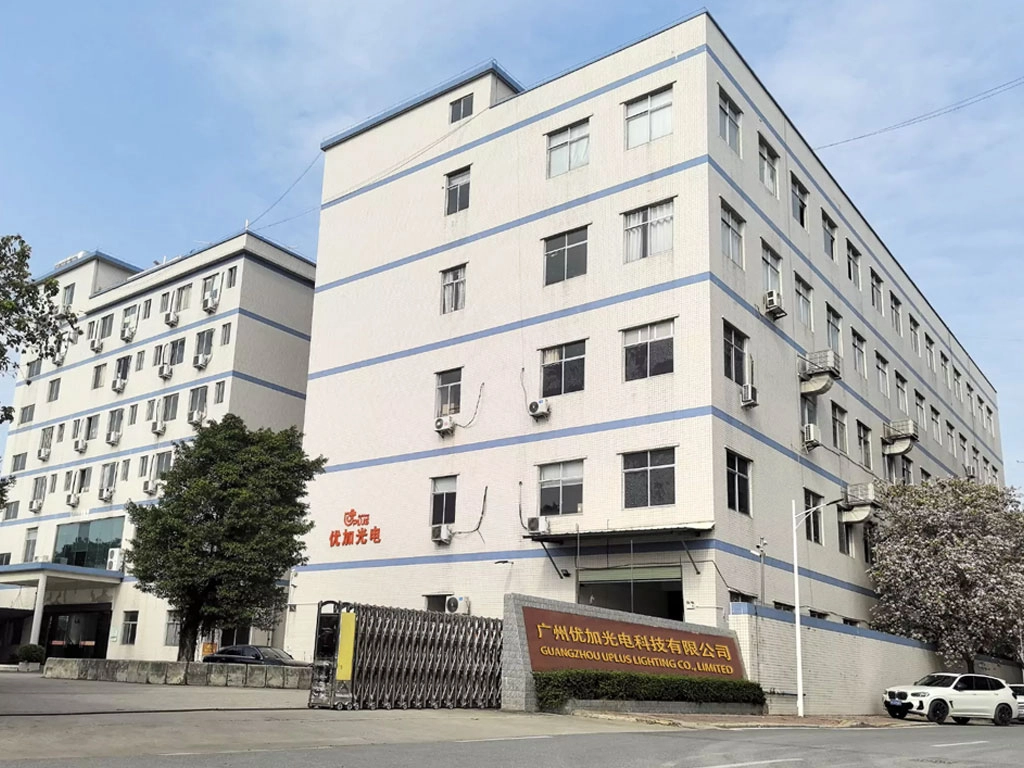
Uplus Lighting was established in 2012 in Guangzhou, China, and is a professional manufacturer specializing in high-end stage lighting products. I’ve worked with products built to similar specifications and find that manufacturers with deep experience in both R&D and export logistics deliver better long-term value. Uplus offers an extensive range including moving head lights, strobe lights, LED battery lights, static lights, LED theatre lights, LED follow spot lights, stage effect lights, and laser lights. Their product line addresses the needs of theaters, studios, concerts, and live events worldwide.
Quality control, OEM capability, and field support
Since 2015, Uplus Lighting products have been widely applied in major concerts, opera houses, TV programs, and large-scale events both in China and abroad. A skilled production team and strict quality control are essential when you depend on fixtures for critical events. Uplus supports OEM orders and customized product development, which is important for venues or rental houses that require bespoke firmware, custom lens sets, or branding. Their stable performance, consistent quality, and professional service are why many global partners trust them.
How Uplus’s product mix fits different venue needs
For venues seeking a reliable wash bank, Uplus’s LED theatre lights and static lights provide even coverage and high CRI options. For clients needing spectacle, their moving head lights and stage effect lights (including beam/bee eye-style fixtures) deliver aerial dynamics and gobo/prism effects. Combining both categories from a single supplier simplifies spare parts, training, and warranty logistics.
Practical Recommendation: My Spec Examples by Venue Type
Small theatre / community stage
Spec: 8–12 high-CRI LED wash fixtures for front and side, plus 2 bee eye moving lights for specials and texture. Rationale: washes solve coverage and skin-tone issues; 2 beams add visual interest without excessive maintenance overhead.
Mid-size concert hall
Spec: 12–24 moving heads (mix of bee eye beam/spot units and wash-capable moving heads) plus 8–12 static LED theatre lights for consistent front fill. Rationale: audience distance and production complexity demand both high-intensity aerial beams and quality front light.
Rental company
Spec: modular inventory with 30% high-output bee eye moving lights, 50% versatile wash fixtures, and remainder as effects/strobes/follow spots. Rationale: versatility across events while maintaining strong headline-capability for concerts and corporate shows.
FAQ
1. What is a bee eye moving light and how is it different from other moving heads?
A bee eye moving light typically refers to a moving head designed to create narrow, intense beams and tight projection effects (gobos/prisms) commonly used for aerial beams. It emphasizes optics and high on-axis lux compared to broader wash moving heads.
2. Can a wash light be used as a spot or vice versa?
Some modern moving heads are hybrid—offering tight zoom ranges and effect wheels to function as spots and wider optics or frost filters for wash. However, single-purpose fixtures usually perform better at their intended role due to optimized optics.
3. How many bee eye moving lights do I need for a concert?
That depends on stage size and aesthetic. For medium venues I often recommend 8–16 beam-style moving heads for visible aerial effects; large arenas may require many more. Consider spacing, throw distance, and rigging positions when planning.
4. How should I evaluate manufacturer photometric data?
Request lux charts at multiple distances, beam angle specifications, CRI/TLCI for color quality, power draw, and test reports. Whenever possible, see photometric files (IES) for accurate planning and use standard metrics rather than isolated lumen claims.
5. Are bee eye moving lights more difficult to maintain?
They can be, because of more intricate optics and additional mechanical components. Choosing a manufacturer with good spare-part availability, clear service documentation, and local support reduces downtime.
6. What control protocols should I require?
DMX512 is the industry standard; RDM for remote device management is extremely useful. For larger rigs, network protocols like Art-Net or sACN provide scalable control. Verify fixture compatibility with your board and console workflows.
7. How do I balance budget and performance when choosing fixtures?
Prioritize features that solve your primary needs: high CRI and even output for theatre/TV, or high on-axis lux and dynamic effects for concerts. A hybrid inventory often yields the best ROI.
If you’d like a tailored specification for your venue, I can help audit your space, recommend fixture counts and positions, and produce a rigging and power plan. For product sourcing or OEM/custom requests, Uplus Lighting’s range—including moving head lights, strobe lights, LED battery lights, static lights, LED theatre lights, LED follow spot lights, stage effect lights, and laser lights—offers solutions for most project scales. Contact us to request photometric files, pricing, or a sample evaluation.
Contact / Request a Quote: For project consultations or to view product specifications, please reach out via our contact page or email our sales team to schedule a lighting audit and product demo.
Top 10 stage moving head light Manufacturers and Supplier Brands
Top 10 Moving Head Lights for Concerts and Theaters (2026)
The Ultimate 2026 Guide to Stage Lighting Bars: Design, Gear, and Pro Tips
Integrating Laser Light Moving Head with DMX & Lighting Consoles
IP-BL05
Can I customize animated patterns or text?
It supports preset text, patterns, and light and shadow effects. No complicated operations are required; switching is as simple as one click.
IP-BL300
Will it overheat during prolonged high-intensity use?
It features a built-in professional heat dissipation system, suitable for high-intensity performance scenarios, and is not prone to overheating even after prolonged use, ensuring stability.
IP-BL03
Are there any safety hazards? For example, is it harmful to the eyes?
It meets safety standards. During normal use, avoid direct laser light into the eyes. It is suitable for safe scenarios such as home and events.
IP-MH6200 4in1
Can it be used directly in heavy rain outdoors with IP65 protection?
It can withstand rain spray and dust, suitable for light rain and everyday outdoor scenarios. For heavy rain, additional protection is recommended.
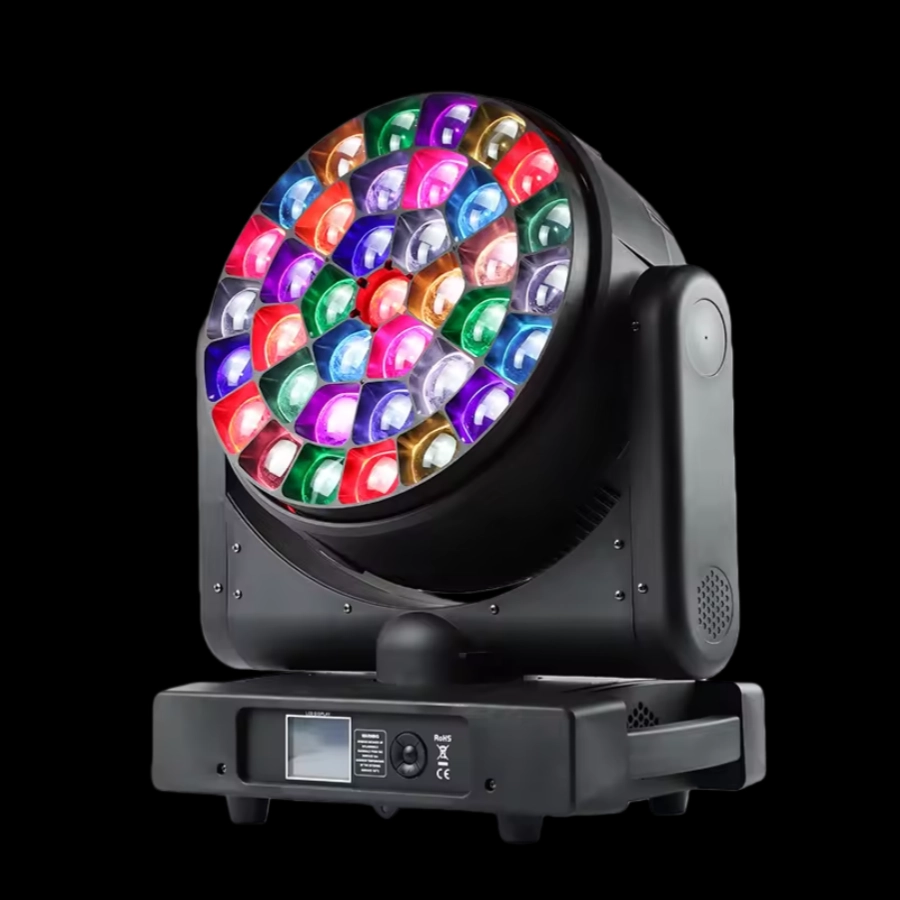
K25: 37*40W Wash zoom & Bee eye moving head, 37*40W LEDs integrate wall washing, zoom and bee eye triple light effects, precise light control, rich light effect layers, suitable for professional scenarios such as stage performances and cultural tourism lighting.
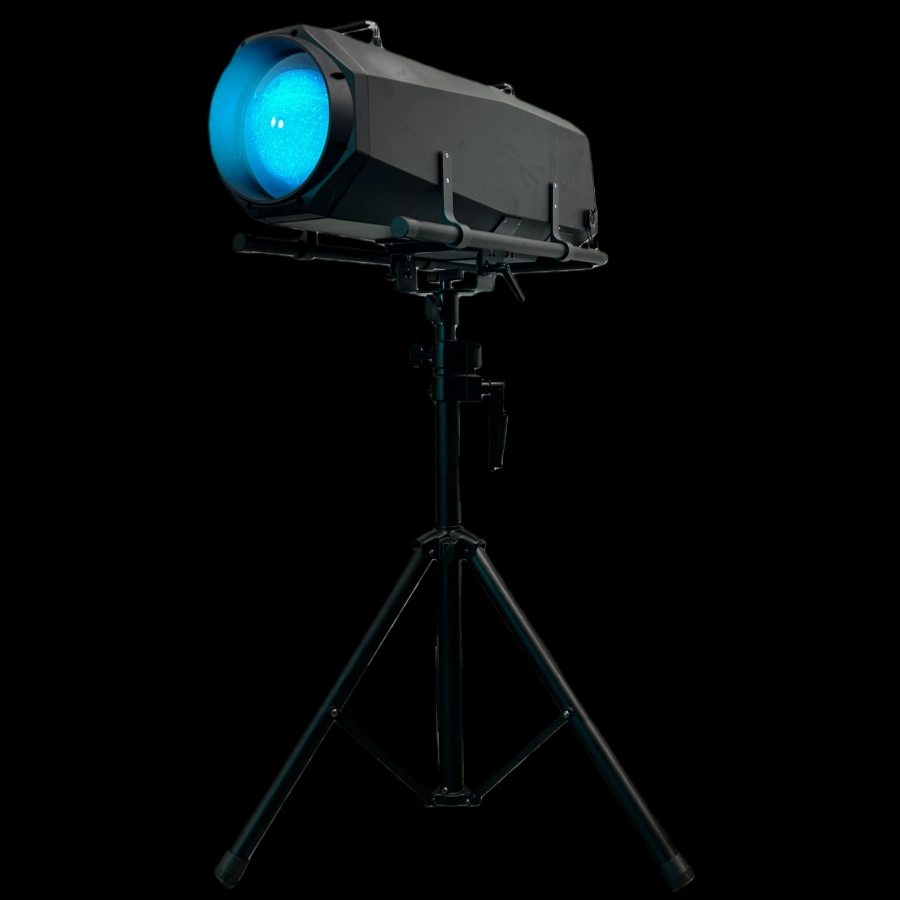
This 1200W waterproof LED follow spotlight with iris adjustment features strong light penetration, precise focusing, and smooth dimming with strobe effects.
Its rain- and dust-resistant design makes it suitable for outdoor performances, concerts, architectural lighting, and other applications. The LED light source boasts a long lifespan and stable, durable operation.
The Waterproof 1200W LED Follow Spot Light with Rotating Gobo features a rotating pattern sheet, delivering a powerful 1200W output for clear, focused beams and precise light tracking. Waterproof for outdoor use in all scenarios, the rotating pattern creates rich visual layers, making it ideal for large-scale indoor and outdoor performances, music festivals, light shows, and other events requiring focused attention and stage effects.
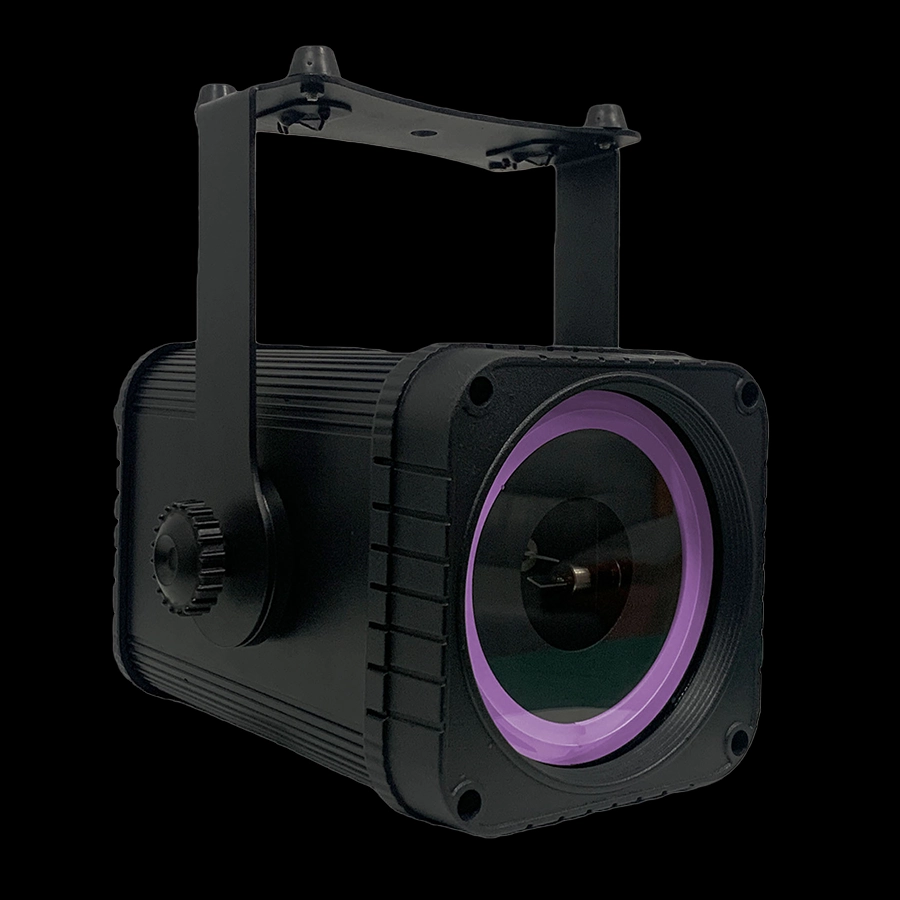
This IP65 waterproof 3W RGB animation laser battery light features an IP65 waterproof and dustproof design, making it suitable for both outdoor and indoor use. It supports rich RGB color combinations and dynamic animation effects, delivering a clear and fluid beam that can display text, patterns, and flowing light and shadow, among other visual representations.
Powered by a built-in battery, it requires no external power source, making it portable, easy to deploy, and simple to operate. Ideal for festive decorations, creating a garden atmosphere, and adding a touch of elegance to small events, it's energy-efficient, durable, and creates a truly immersive ambiance.
If you have any comments or good suggestions, please leave us a message, later our professional staff will contact you as soon as possible.
Lighting Innovators
Uplus Lighting is a leading integrated company specializing in R&D, design, production, and sales of stage lighting solutions.
 Scan QR Code
Facebook
Instagram
YouTube
VK