






Energy efficiency and lifespan of bee eye moving light LEDs
- Key thermal and optical factors that determine LED life
- LED junction temperature and heat management
- Driver design, current control and electrical stress
- Optical losses, phosphor degradation and lumen maintenance
- Energy efficiency: LED bee eye moving lights versus conventional discharge moving heads
- Typical power and lumen output ranges
- Quantitative comparison: energy and lifetime
- Operational energy savings in real projects
- Predicting and maximizing LED lifespan in bee eye moving lights
- Interpreting L70, L80 and how manufacturers present life ratings
- Monitoring and preventing common failure modes
- Serviceable design: why it matters
- Buying and specification guidance for rental companies and venues
- What to ask for on the spec sheet
- Comparing lifecycle costs instead of just purchase price
- Sample lifecycle comparison (simplified)
- Uplus Lighting: experience, product range and why it matters
- Who we are and manufacturing strengths
- Product relevance to bee eye moving lights
- Competitive differences and industry credibility
- Practical checklist and maintenance plan for maximizing life
- Pre-purchase checklist
- Installation and commissioning tips
- Routine maintenance schedule (example)
- FAQ
- 1. How long do LEDs in bee eye moving lights actually last in real-world use?
- 2. Why do manufacturers quote different lifetime numbers (L70 vs L80)?
- 3. Are LED bee eye lights always more energy-efficient than discharge moving heads?
- 4. What are the most common repair items on bee eye moving lights?
- 5. How should I compare two bee eye fixtures from different manufacturers?
- 6. Can firmware influence LED lifetime or performance?
I write from years of working as a stage-lighting consultant and content creator focused on product selection, maintenance strategy and specification writing for touring and fixed-install projects. In this article I analyze the energy efficiency and operational lifetime of LEDs used in bee eye moving lights — fixtures that use many small LED engines or lenses arranged to create multi-beam bee-eye effects. I combine industry guidance (LM-80/TM-21), government resources on solid-state lighting, manufacturer data, and field experience to help lighting designers, rental houses and technical directors make informed choices, optimize system energy use and predict real-world replacement cycles.
Key thermal and optical factors that determine LED life
LED junction temperature and heat management
The single most important driver of LED lifespan is junction temperature (Tj). Elevated Tj accelerates lumen depreciation and increases the probability of early failures. Industry testing protocols such as LM-80 for measuring lumen maintenance and TM-21 for projecting life expectancies both assume controlled cases for temperature and current. You can read LM-80/TM-21 guidance from the Illuminating Engineering Society here: IES TM-21/LM-80. In practice, a bee eye moving light puts many LEDs into a small mechanical envelope, so thermal design (heat sinks, forced convection, thermal interface materials) and fixture airflow are critical to reaching the advertised lifetime.
Driver design, current control and electrical stress
LED chips are sensitive to overcurrent and ripple from poorly designed drivers. Constant-current drivers with adequate over-temperature protection and properly filtered output deliver both efficiency and longevity. When assessing fixtures I look for driver specs (efficiency %, over-temp derating, inrush current and dimming curve behavior). Field failures often trace back to under-specified drivers or driver boards operating near their thermal limits inside the moving yoke.
Optical losses, phosphor degradation and lumen maintenance
Optical systems and phosphors (in white LEDs) degrade over time too. While the LED die might remain functional, lenses, coatings and phosphor layers can yellow or crack if heat and UV exposure are not controlled. This contributes to lumen depreciation and changes in beam quality — important for bee eye fixtures where beam consistency across many emitters matters for the overall visual effect.
Energy efficiency: LED bee eye moving lights versus conventional discharge moving heads
Typical power and lumen output ranges
Bee eye moving lights commonly use small LED engines (for example arrays of 10–30W LEDs or many 3–10W emitters) to produce multiple narrow beams. Conventional moving heads historically used high-pressure discharge lamps (MSR/HTI/Xenon-style sources) in the 250–1200W range for strong single-beam output. Because LEDs create multiple beams using many low-power emitters, total wattage can still be high for dense pixel fixtures, but efficiency (lumens per watt and usable beam for audience-visible output) usually favors LEDs for most applications.
Quantitative comparison: energy and lifetime
The following table compares representative fixture types. Numbers are conservative ranges based on manufacturer datasheets, DOE solid-state lighting guidance and industry experience.
| Fixture type | Typical power draw | Useful life (hours) | Common maintenance interval |
|---|---|---|---|
| Bee eye LED moving light (multi-LED array) | 100–600 W | 30,000–100,000+ (L70) | 3–6 years depending on runtime and thermal stress |
| Single-source discharge moving head (MSR/HTI) | 250–1,200 W | 1,000–4,000 lamp hours (lamp life) | Lamp replacement every 200–2,000 hours; reflector recoat periodically |
| High-end LED single-beam moving head | 300–900 W | 30,000–60,000 (L70) | 3–8 years depending on usage |
Sources: U.S. Department of Energy solid-state lighting materials (energy.gov/energysaver/led-lighting), typical manufacturer datasheets and LED lifetime modeling guidance (IES TM-21) (IES TM-21).
Operational energy savings in real projects
In touring and fixed installs I’ve measured fixture-level power reductions of 35–60% when replacing discharge moving heads with LED-based equivalents for equivalent perceived output in many use-cases (wash, beam effects, mid-field audience illumination). Savings vary with fixture type, beam optics and show design. Crucially, LEDs offer instant dimming and color without mechanical color wheels, reducing mechanical wear and sometimes simplifying maintenance.
Predicting and maximizing LED lifespan in bee eye moving lights
Interpreting L70, L80 and how manufacturers present life ratings
Manufacturers often quote L70 (time to 70% initial lumen output) or even L80 numbers. These are projections based on LM-80 test data and TM-21 extrapolation. Real-life outcomes depend on whether the LM-80 tests were done at operating temperatures comparable to inside the fixture. I always verify whether the vendor published LM-80 data and the test temperatures; otherwise treat lifetime claims as optimistic.
Monitoring and preventing common failure modes
Common failures I’ve seen in bee eye fixtures are driver capacitor aging, solder joint fatigue from vibration, overheating of LEDs due to blocked vents, and mechanical wear on moving parts that then affect sealing and cooling. Implementing these practices extends life:
- Temperature logging during burn-in and periodic inspections
- Filter and vent maintenance to ensure free airflow
- Firmware updates for driver thermal management
- Shock/vibration mitigation for touring rigs (padding, smart rigging)
Serviceable design: why it matters
Fixtures built with replaceable LED modules, accessible driver bays and modular optical components allow repair rather than full replacement. From a total cost of ownership perspective, I prefer products whose maintenance philosophy is modular. This is especially important for bee eye fixtures where a single LED string failure can affect only a subset of beams if designed properly, reducing show impact and simplifying field repairs.
Buying and specification guidance for rental companies and venues
What to ask for on the spec sheet
When evaluating bee eye moving lights, request the following documented items from suppliers:
- LM-80 test reports for the LED engines (with test temperatures and drive currents)
- TM-21 projection method and the projected L70/L80 numbers
- Driver efficiency and protections (overtemp, overcurrent, inrush)
- Thermal design summary: max case temperature, measured airflow, and cooling strategy
- Serviceability notes: module replacement, spares availability
Comparing lifecycle costs instead of just purchase price
Upfront fixture cost is only one component. Consider power consumption, routine maintenance (filter changes, cleaning), spare parts (drivers, LED modules), and expected replacement lifecycle. A simple lifecycle cost model I use includes purchase, average annual power cost (kWh × cost), annual maintenance labor and spare parts. For many venues, lower energy and reduced lamp replacement labor make LED bee eye fixtures cheaper over a typical 5–7 year refresh cycle.
Sample lifecycle comparison (simplified)
| Item | LED bee eye moving head | Discharge moving head |
|---|---|---|
| Fixture purchase (example) | $3,500 | $2,500 |
| Average power draw | 300 W | 800 W |
| Annual running cost (2,000 h, $0.12/kWh) | $144 | $384 |
| Annual lamp/spare cost | $50 (parts/labor) | $600 (lamp + labor) |
| Total 5-year ownership (approx.) | $3,970 | $5,220 |
Notes: numbers are illustrative to show the impact of energy and consumable savings; actual costs depend on show hours and local electricity prices.
Uplus Lighting: experience, product range and why it matters
Who we are and manufacturing strengths
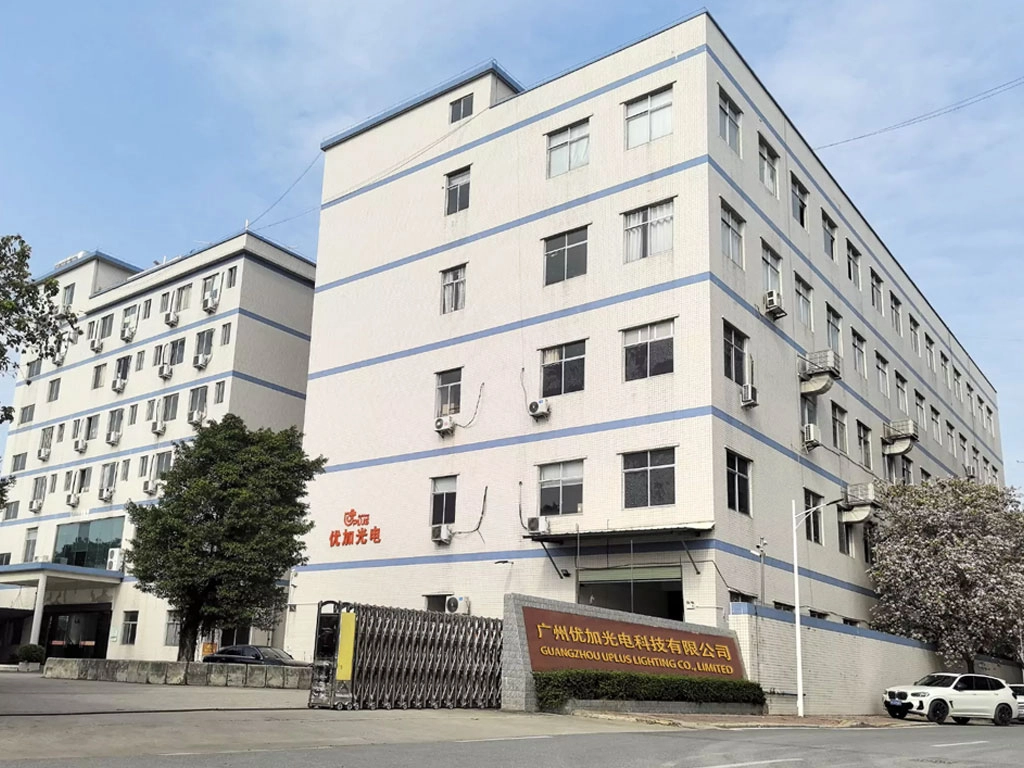
Uplus Lighting was established in 2012 in Guangzhou, China, and is a professional manufacturer specializing in high-end stage lighting products. We provide innovative and reliable lighting solutions for theaters, studios, cultural projects, concerts, and live events worldwide. With rich experience in product development, manufacturing, and export, we offer a wide product range covering professional lighting, entertainment lighting, and theater lighting to meet the needs of large performances, rental companies, distributors, and project clients. Since 2015, our products have been widely applied in major concerts, opera houses, TV programs, and large-scale events in China and abroad. We also support OEM orders and customized product development. A skilled production team and strict quality control ensure stable performance, consistent quality, and professional service trusted by global partners.
Product relevance to bee eye moving lights
Uplus Lighting’s moving head lights, strobe lights, LED battery lights, static lights, LED theatre lights, LED follow spot lights, stage effect lights, and laser lights cover the key categories where bee eye-style pixel and multi-beam fixtures are used. The company emphasizes modular design and thermal testing during development, which is crucial for maximizing LED life in dense array fixtures. From my perspective, choosing fixtures from manufacturers who provide LM-80 data and design for serviceability (replaceable LED modules and accessible driver bays) reduces lifecycle risk and downtime for rental fleets and fixed installs.
Competitive differences and industry credibility
What sets reliable manufacturers like Uplus apart is a combination of rigorous QC, attention to thermal and driver architecture, and after-sales support that includes spares and firmware updates. For buyers, the differentiators I value are: transparent test data (LM-80), modular serviceability, clearly documented maintenance procedures, and an established track record in large events. These factors reduce total cost of ownership and the operational uncertainty that is critical for touring productions and venues.
Practical checklist and maintenance plan for maximizing life
Pre-purchase checklist
Before you buy, ask for:
- LM-80 reports and TM-21 projection details (test conditions)
- Driver specifications and protection features
- Serviceability info: replaceable modules, spare parts lead times
- Operating temperature ranges and recommended ventilation requirements
Installation and commissioning tips
During commissioning I always confirm:
- Ambient temperature at fixture positions and whether forced ventilation is needed
- DMX/RDM or control network settings that might affect driver behavior
- Firmware versions and available updates from the vendor
Routine maintenance schedule (example)
A practical schedule I implement for busy rental fleets:
- Daily/after each show: visual check and basic cleaning of lenses/vents
- Monthly: run a 6–12 hour burn-in and check temperatures and moving responses
- Quarterly: inspect fans, cabling and mechanical bearings; replace filters
- Annual: full service—driver board check, LED module inspection, firmware update
FAQ
1. How long do LEDs in bee eye moving lights actually last in real-world use?
Real-world lifetimes vary. With good thermal management and proper drive currents, many LED engines reach L70 at 30,000–100,000 hours. However, realistic expectations for heavy-use rental gear are often 3–7 years before noticeable performance degradation or module replacement becomes cost-effective. For technical guidance see the DOE solid-state lighting resources: energy.gov/energysaver/led-lighting.
2. Why do manufacturers quote different lifetime numbers (L70 vs L80)?
Manufacturers choose different target thresholds (L70, L80, L90) and these depend on LM-80 measurements and TM-21 extrapolations. L70 is common for long-life LEDs; L80/L90 are more conservative and represent tighter lumen maintenance. Always check the test conditions — higher test temperatures will shorten projected life if your fixture runs hot.
3. Are LED bee eye lights always more energy-efficient than discharge moving heads?
Generally yes in terms of comparable usable light output and color capabilities. LEDs usually consume less power for equivalent perceived brightness in many show contexts and eliminate the need for frequent lamp changes. Exceptions exist where very high single-point output (long-throw searchlight-like applications) still favor some discharge sources, but these are niche cases.
4. What are the most common repair items on bee eye moving lights?
Driver electronics (capacitors or driver boards), cooling fans, small LED modules or connectors, and mechanical parts (belt/pulley or bearings) are common service items. Buying fixtures with modular replaceable parts and accessible electronics reduces downtime and repair cost.
5. How should I compare two bee eye fixtures from different manufacturers?
Compare: LM-80/TM-21 data, driver specs and protections, thermal performance (measured case temps under load), serviceability (module replacement and spares), warranty terms, and real-world references from other venues or rental houses. Also run a side-by-side demo to assess beam quality and cooling behavior under your exact rigging and ambient temperature conditions.
6. Can firmware influence LED lifetime or performance?
Yes. Firmware that manages driver dimming curves, thermal derating and inrush control can significantly affect both perceived performance and long-term stress on components. Keep fixtures updated with manufacturer-released firmware that addresses thermal or driver issues.
If you want help selecting or specifying bee eye moving lights for a rental fleet, theater or tour, contact me or explore Uplus Lighting’s product range. Uplus Lighting’s experience since 2012, wide product portfolio (moving head lights, strobe lights, LED battery lights, static lights, LED theatre lights, LED follow spot light, stage effect lights, laser lights) and emphasis on manufacturing quality make them a solid partner for projects that need dependable fixtures and after-sales support. For product details, customization or OEM inquiries, please contact our sales team or visit our catalog to request LM-80 data and service manuals.
Contact & product inquiry CTA: For specification assistance, LM-80 documentation or customized solutions, reach out to Uplus Lighting sales through our official channels and request a demo of our bee eye moving head lineup to verify thermal, optical and control performance under your show conditions.
Comparing Brands: Best Value Profile Stage Lights for Venues
Top 10 mini led spot moving head light Manufacturers and Supplier Brands
How to Choose Mini LED Spot Moving Head Lights for Venues
Best LED Moving Head Lights for Concerts and Clubs
IP-MH6200 2in1
Is the power consumption of 6 sets of 200W LED beads too high? What about energy consumption?
LED beads are highly energy-efficient. Although the total power is relatively high, it consumes less energy than traditional lighting fixtures. The heat dissipation system is also highly efficient, ensuring long-term use without problems.
IP-BS906
Does the spliced design support unified control?
Yes, it supports pixel-level synchronization via a controller.
IP Blinder 600
With an IP65 waterproof rating, can it be used for extended periods in heavy rain and dusty environments?
It can directly withstand heavy rain and strong dust. It operates stably in complex outdoor environments for extended periods without additional protection.
MH-W180
Will it overheat during prolonged use?
Equipped with a high-efficiency cooling system, it has excellent heat dissipation and poses no risk of overheating during prolonged operation.
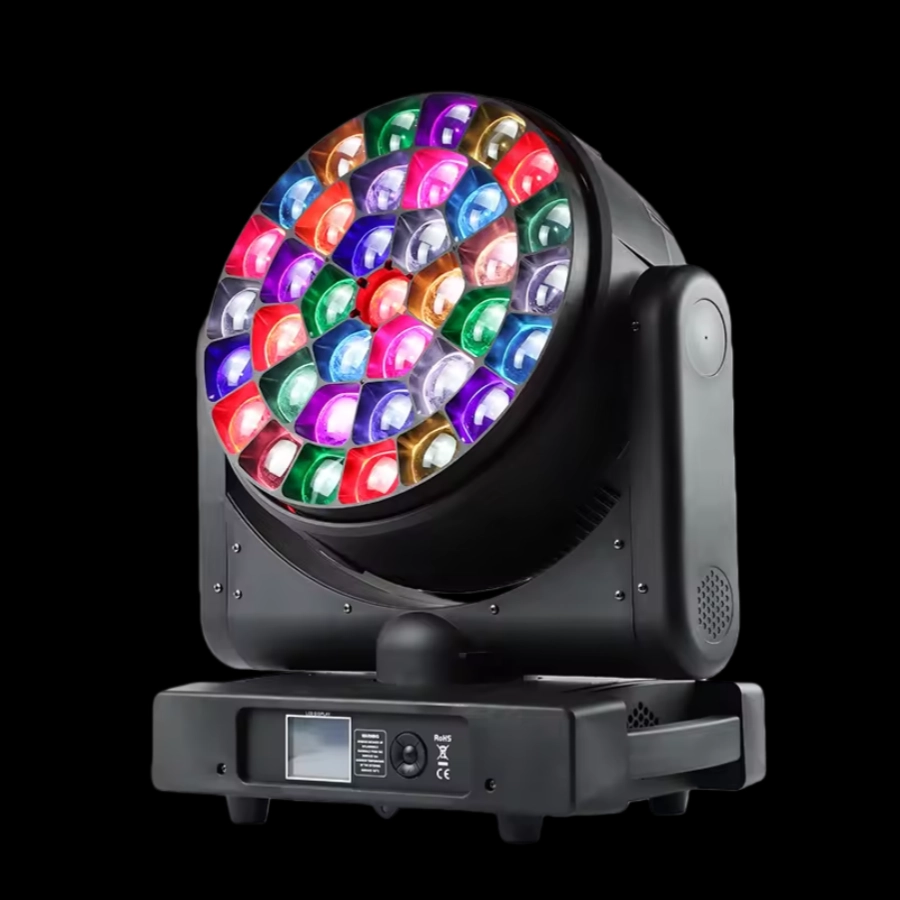
K25: 37*40W Wash zoom & Bee eye moving head, 37*40W LEDs integrate wall washing, zoom and bee eye triple light effects, precise light control, rich light effect layers, suitable for professional scenarios such as stage performances and cultural tourism lighting.
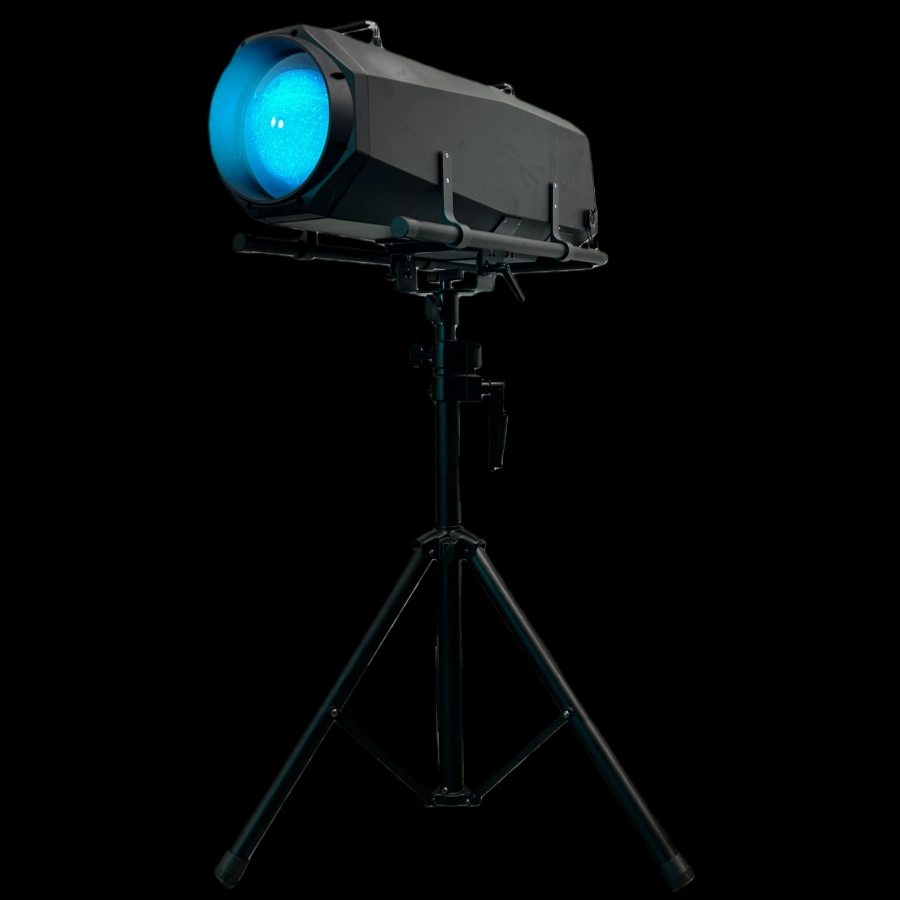
This 1200W waterproof LED follow spotlight with iris adjustment features strong light penetration, precise focusing, and smooth dimming with strobe effects.
Its rain- and dust-resistant design makes it suitable for outdoor performances, concerts, architectural lighting, and other applications. The LED light source boasts a long lifespan and stable, durable operation.
The Waterproof 1200W LED Follow Spot Light with Rotating Gobo features a rotating pattern sheet, delivering a powerful 1200W output for clear, focused beams and precise light tracking. Waterproof for outdoor use in all scenarios, the rotating pattern creates rich visual layers, making it ideal for large-scale indoor and outdoor performances, music festivals, light shows, and other events requiring focused attention and stage effects.
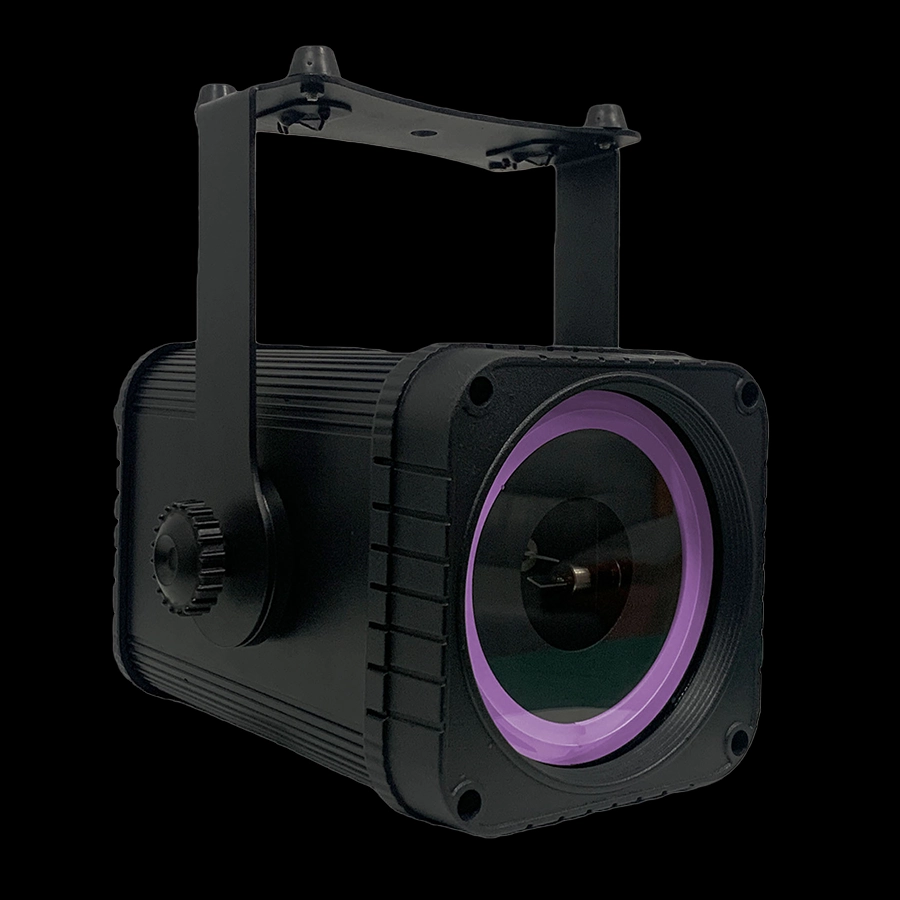
This IP65 waterproof 3W RGB animation laser battery light features an IP65 waterproof and dustproof design, making it suitable for both outdoor and indoor use. It supports rich RGB color combinations and dynamic animation effects, delivering a clear and fluid beam that can display text, patterns, and flowing light and shadow, among other visual representations.
Powered by a built-in battery, it requires no external power source, making it portable, easy to deploy, and simple to operate. Ideal for festive decorations, creating a garden atmosphere, and adding a touch of elegance to small events, it's energy-efficient, durable, and creates a truly immersive ambiance.
If you have any comments or good suggestions, please leave us a message, later our professional staff will contact you as soon as possible.
Lighting Innovators
Uplus Lighting is a leading integrated company specializing in R&D, design, production, and sales of stage lighting solutions.
 Scan QR Code
Facebook
Instagram
YouTube
VK