






Profile Stage Lights Maintenance: Extend Lifespan & Reduce Costs
- Common Failure Modes and What They Tell You
- Optical Degradation: Dust, Coatings, and Image Softening
- Thermal Stress and Electronics Failure
- Lamp and LED Degradation: When to Replace and When to Retrofit
- Routine Maintenance Procedures I Use and Recommend
- Daily and Pre-Show Quick Checks
- Monthly Cleaning and Optical Maintenance
- Lamp/LED and Driver Service Schedule
- Preventive Strategies and Lifecycle Management
- Environmental Control: Heat, Dust and Smoke Management
- Record-Keeping, Tracking Hours, and Predictive Replacement
- When to Repair, Replace, or Retrofit
- Tools, Parts, & Cost-Benefit Comparison
- Essential Tools and Consumables I Keep On-Hand
- Maintenance vs Replacement: A Comparative Table
- Interpreting the Table — My Practical Take
- Uplus Lighting: Manufacturer Profile and Why It Matters
- Who Uplus Lighting Is and Where They Fit
- Product Range and Technical Strengths
- Why Manufacturer Support Improves Lifecycle Outcomes
- Implementation Checklist and Final Recommendations
- Quick Implementation Checklist
- Measuring Success
- Standards and Further Reading
- FAQ
- 1. How often should I replace lamps in profile stage lights?
- 2. Can I safely clean internal optics myself?
- 3. When is it worth retrofitting profile lights to LED?
- 4. What are the most common causes of sudden fixture failure?
- 5. How should I track fixture maintenance effectively?
- 6. Are replacement parts interchangeable between brands?
I work daily with theatrical rigs, touring packages, and installation projects, so I know how small maintenance choices compound into major savings or costly downtime. In this article I explain how to keep profile stage lights (ellipsoidal fixtures / profile spotlights) performing at their best: cleaning optics, preserving lamps and LEDs, managing thermal and mechanical stresses, and setting up realistic maintenance routines that extend lifespan while reducing overall cost of ownership. Where useful, I reference authoritative sources and standards to make my recommendations verifiable and practical.
Common Failure Modes and What They Tell You
Optical Degradation: Dust, Coatings, and Image Softening
One of the first signs I see on aging profile stage lights is loss of beam sharpness and contrast. Dust, fine stage smoke residue, and degraded coatings on lenses and gobos reduce output and image quality. Profile fixtures rely on precise lens spacing and clean optics to form crisp patterns; even a slight deposit on the plano-convex lenses or the internal shutter assembly will soften edges and reduce lumen delivery.
Quick checks I perform: inspect lens surfaces with a bright flashlight, check for fogging or haze on internal lenses (using the fixture's focus position), and verify gobo clarity. For definitions and optical principles behind ellipsoidal fixtures, see the ellipsoidal reflector spotlight reference on Wikipedia: https://en.wikipedia.org/wiki/Ellipsoidal_reflector_spotlight.
Thermal Stress and Electronics Failure
Thermal issues are the silent killers of profile stage lights. Heat accelerates solder joint fatigue, degrades capacitors, and shortens the life of plastic parts. I always ask: is the fixture properly ventilated? Are cooling fans functioning and free of lint? For LED-based profile fixtures, thermal management is even more critical—while LEDs have long lumen-maintenance lifetimes, their drivers and thermal path must be maintained to avoid premature failure.
Industry guidance on designing quality management systems that include product reliability can be found in ISO 9001 resources: https://www.iso.org/iso-9001-quality-management..
Lamp and LED Degradation: When to Replace and When to Retrofit
Traditional tungsten-halogen lamps used in many profile lights have finite life and gradual lumen depreciation. Halogen lamps are forgiving in optics but need regular replacement on frequently used fixtures. LEDs, conversely, offer dramatically longer service life (often tens of thousands of hours), but the fixture's electronics and thermal path determine real-world longevity. For lifetime comparisons of light sources, see LED lifetime notes at Wikipedia: https://en.wikipedia.org/wiki/Light-emitting_diode#Lifetime and halogen lamp characteristics: https://en.wikipedia.org/wiki/Halogen_lamp.
Routine Maintenance Procedures I Use and Recommend
Daily and Pre-Show Quick Checks
For venues and touring rigs I recommend a daily checklist that takes 2–5 minutes per fixture: visual inspection of lens and housing, quick lamp/LED status check, verification of fan noise/operation, and a DMX/controls patch test. I use a written or digital checklist to ensure consistency; it prevents the “we thought someone else checked it” problem.
Monthly Cleaning and Optical Maintenance
Every 30–90 days (depending on environment), perform detailed cleaning: remove external dust, carefully clean lenses with manufacturer-approved lens cleaner and lint-free wipes, inspect and clean gobos, and check shutter movement. Avoid using isopropyl alcohol on coated lenses unless the manufacturer confirms it safe—some coatings degrade with strong solvents. If you need manufacturer guidance, consult the fixture manual; if unavailable, contact the OEM technical support.
Lamp/LED and Driver Service Schedule
For tungsten-halogen fixtures, I typically budget for lamp replacement at 500–1,000 hours for high-use rental or touring gear and up to 2,000 hours for installation use, depending on the lamp type and operating conditions. For LED-based profile lights, plan for driver inspection or firmware updates annually and verify thermal pads and heat-sink mounting every 2–3 years. These schedules match industry expectations for high-reliability operation—LED lifetime references are discussed above.
Preventive Strategies and Lifecycle Management
Environmental Control: Heat, Dust and Smoke Management
Controlling the fixture's environment yields the biggest ROI. I take three practical steps: (1) improve venue ventilation to reduce ambient temperature and particulate concentration, (2) use optical filters or haze policies to minimize oily residue accumulation, and (3) apply dust filters at intake points where appropriate. For touring, I insist on sealed case transport and desiccant packs to avoid condensation and contamination.
Record-Keeping, Tracking Hours, and Predictive Replacement
I maintain a simple database (can be a spreadsheet or facility management software) that records fixture hours, lamp changes, repairs, and firmware versions. With accumulated hours you can forecast lamp replacement, pre-order spares, and plan downtime—saving rush shipping and emergency rental costs. Many rental companies have shown measurable reductions in unplanned maintenance by adopting hour-tracking and scheduled swaps.
When to Repair, Replace, or Retrofit
Decisions depend on total cost of ownership (TCO). Consider these rules of thumb I apply:
- If repair cost approaches 40–60% of a modern equivalent fixture, replace.
- If optical quality is compromised repeatedly by internal heat or mechanical wear, retrofit or upgrade to LED platforms to reduce labor and lamp costs.
- If the fixture still meets artistic requirements and repair is modest, repair and maintain with scheduled checks.
Tools, Parts, & Cost-Benefit Comparison
Essential Tools and Consumables I Keep On-Hand
My toolkit for profile maintenance includes: lint-free lens wipes, manufacturer-approved lens cleaner, small aperture vacuum and soft-bristle brush, a set of hex keys and screwdrivers sized to the fixtures, multimeter, spare lamps, and a basic thermal camera or IR thermometer for hotspot checks. For LED fixtures I add a driver tester and anti-static wrist strap.
Maintenance vs Replacement: A Comparative Table
Below is a practical comparison I use when advising clients. Numbers are indicative and derive from known lamp lifetimes and industry expectations; actual costs vary by brand, model, and usage pattern. Lamp/LED life references: LED lifetimes (tens of thousands of hours) and halogen lifetimes are discussed in general on Wikipedia: LED lifetime, halogen lamp. The cost categories are relative and intended for decision-making rather than precise accounting.
| Approach | Typical Maintenance Frequency | Expected Service Life (Fixture) | Operational Cost Factors | Best When... |
|---|---|---|---|---|
| Reactive Replacement | On failure | Varies (useful life unpredictable) | High emergency repair + rental costs | Low up-front budget; non-critical applications |
| Scheduled Maintenance (lamps + cleaning) | Monthly optical, lamp swap per hours | 5–15 years (with lamp/parts replacements) | Moderate: lamp replacements, labor | Rental houses, theaters with regular shows |
| Retrofit to LED / Upgrade Electronics | Annual driver check, thermal verification | 10–20 years (LEDs 25k–50k hrs) | Higher up-front, lower operating cost (energy + lamp labor) | High-use venues wanting lower TCO |
Interpreting the Table — My Practical Take
For high-use contexts (concert touring, weekly theater), scheduled maintenance or LED retrofits generally provide the best TCO. For low-use installations the capital cost of retrofits may not pay back quickly. Use fixture-hour tracking to make the decision based on your actual utilization rather than assumptions.
Uplus Lighting: Manufacturer Profile and Why It Matters
Who Uplus Lighting Is and Where They Fit
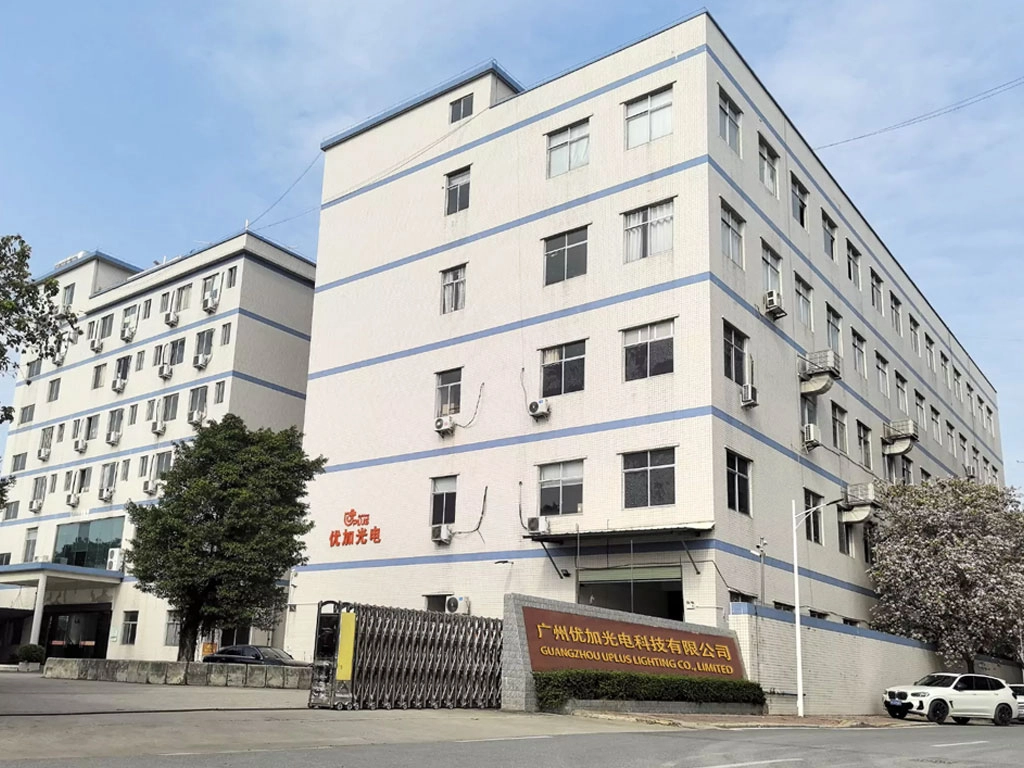
Uplus Lighting was established in 2012 in Guangzhou, China, and is a professional manufacturer specializing in high-end stage lighting products. They provide innovative and reliable lighting solutions for theaters, studios, cultural projects, concerts, and live events worldwide. With extensive experience in product development, manufacturing, and export, Uplus offers a wide product range covering professional lighting, entertainment lighting, and theater lighting to meet the needs of large performances, rental companies, distributors, and project clients.
Product Range and Technical Strengths
I have worked with many manufacturers and find Uplus’s portfolio strong in core product categories: moving head lights, strobe lights, led battery lights, static lights, led theatre lights, led follow spot light, stage effect lights, and laser lights. Since 2015, their fixtures have been applied in major concerts, opera houses, TV programs, and large-scale events domestically and internationally. They support OEM orders and customized development, which is important when a project requires integration-level adaptations.
Why Manufacturer Support Improves Lifecycle Outcomes
A skilled production team and strict quality control matter when you evaluate lifecycle costs. Uplus emphasizes stable performance, consistent quality, and professional service trusted by global partners — factors that simplify preventive maintenance and spare parts logistics. When an OEM provides clear maintenance guidance, replacement parts, and firmware support, your maintenance routine is easier, and downtime is reduced. Quality and process controls aligning with recognized standards (for example, design/manufacturing practices informed by ISO principles) reduce field variability and increase predictability in maintenance planning (ISO 9001).
Implementation Checklist and Final Recommendations
Quick Implementation Checklist
- Create a fixture inventory with hours, lamp types, and serial numbers.
- Adopt a daily pre-show checklist and monthly deep-cleaning schedule.
- Stock critical spares: lamps, fans, gobos, and a driver or PSU module if your fixtures allow modular swaps.
- Monitor thermal performance with an IR thermometer and log values to spot trends.
- Plan for an LED retrofit when fixture-hours and operational costs justify the capital investment.
Measuring Success
Track these KPIs to measure the impact of maintenance changes: unplanned downtime events, average lamp cost per production, mean time between failures (MTBF), and energy consumption per show. Over 6–12 months you should see fewer emergency fixes, improved beam quality, and lower cost per operating hour if maintenance is executed consistently.
Standards and Further Reading
For broader context on stage lighting practice and terminology, consult the stage lighting overview: https://en.wikipedia.org/wiki/Stage_lighting. For manufacturer and industry best practices, industry associations like the Professional Lighting and Sound Association (PLASA) publish useful materials: https://plasa.org.uk/.
FAQ
1. How often should I replace lamps in profile stage lights?
It depends on usage and lamp type. For tungsten-halogen lamps in heavy-use scenarios, budget for replacement between 500–1,000 hours; in lighter-use installations you may extend that up to ~2,000 hours depending on lamp specification and operating conditions. Always follow manufacturer guidance and track actual hours to plan replacements proactively (see halogen lamp lifetime: https://en.wikipedia.org/wiki/Halogen_lamp).
2. Can I safely clean internal optics myself?
Yes, with precautions. Use lint-free wipes and manufacturer-approved cleaners, work in a dust-free environment, and avoid touching coated surfaces with bare fingers. If the fixture requires disassembly beyond basic lens removal, consult the manual or a trained technician to avoid damage and warranty issues.
3. When is it worth retrofitting profile lights to LED?
Consider retrofit when your annual operating hours are high enough that lamp replacement, energy use, and labor exceed the capital cost of LED conversion within an acceptable payback period (often 2–5 years depending on local energy costs). Also retrofit when heat and maintenance demands of halogen gear impair reliability.
4. What are the most common causes of sudden fixture failure?
Common causes include failed cooling fans, power-supply/driver faults, and mechanical shock during transport. Environmental factors—high ambient temperature and dust—also accelerate failures. Regular pre-show checks catch many of these issues before they cause a show-stopping failure.
5. How should I track fixture maintenance effectively?
Create a simple log for each fixture recording hours, lamp changes, repairs, and firmware updates. Many venues use spreadsheets or facility management tools; rental companies often use asset-management software with hour meters integrated into rental workflows.
6. Are replacement parts interchangeable between brands?
Not always. Lamps of given specifications (wattage, base) are usually interchangeable, but electronics, connectors, and mechanical parts often vary. When possible, buy spares from the OEM (such as Uplus Lighting) or confirm cross-compatibility before relying on generic parts.
If you want tailored maintenance schedules, spare lists, or a cost analysis for your rig, contact me or reach out to Uplus Lighting for technical support and product options. Uplus can supply fixtures, OEM spares, and customization support to match your project needs.
Contact & Product Inquiry: For maintenance support, OEM parts, or to view Uplus Lighting’s product range (moving head lights, strobe lights, led battery lights, static lights, led theatre lights, led follow spot light, stage effect lights, laser lights), please contact Uplus Lighting. I can also provide consulting to set up preventive maintenance programs and ROI calculations for retrofits.
Energy Efficient Moving Beam LED Light Bars for Venues
Affordable Moving Head Lights Under $1000: Best Picks
Top 10 mini moving head lights Manufacturers and Supplier Brands in 2026
Top 7 Moving Head Lights Compared: Power, Beam, Price
IP-WASH1980
What is the lifespan of the LED chips? Is replacement and maintenance convenient?
The LED chips can last for tens of thousands of hours under normal use. The modular design makes replacement easy and requires no complicated operations.
Stage Performance
Do you provide equipment installation and commissioning services?
We provide complete design and product supply services, but do not include on-site installation and commissioning services. Our product design and control system are simple and easy to operate. Customers can install it themselves as needed, or we can provide remote technical support.
About Product Choice
How is the performance of this product?
Each of our stage lights undergoes rigorous testing to ensure superior performance, durability, and safety. From light testing to every component, every step is meticulously crafted to meet our stringent standards.
About Customized Services
Which product can be customized?
Our stage lights can be customized according to your needs, and we will try our best to meet your requirements.
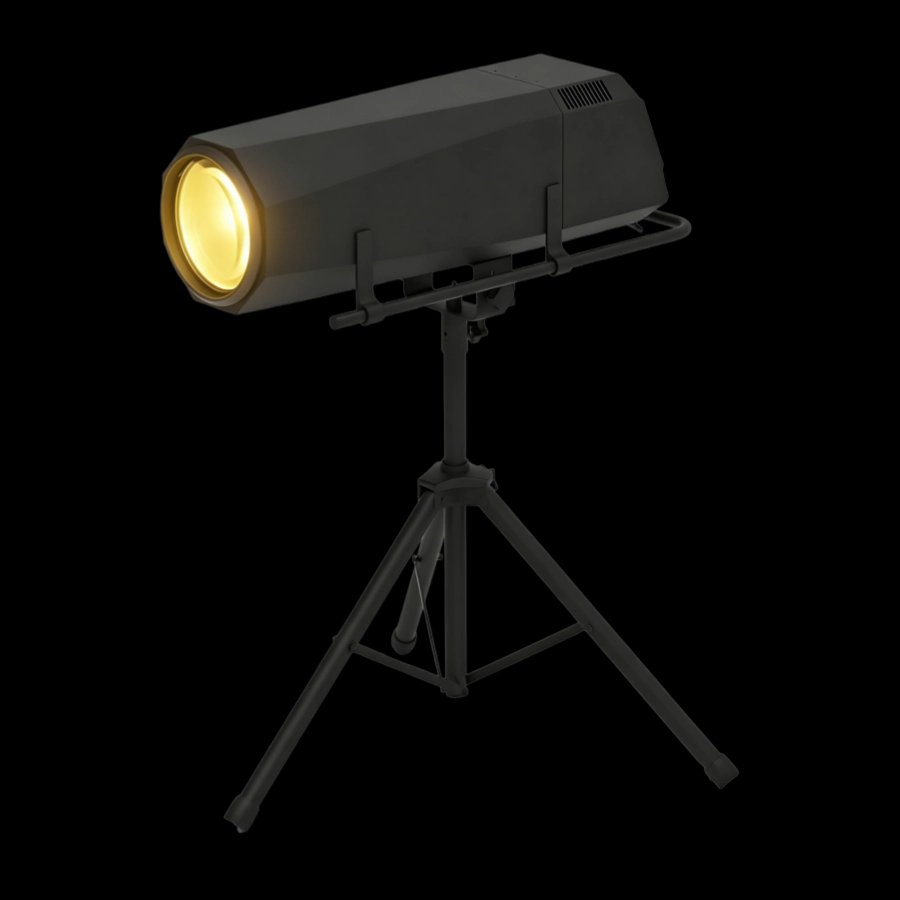
This 1200W waterproof LED follow spotlight with iris adjustment features strong light penetration, precise focusing, and smooth dimming with strobe effects.
Its rain- and dust-resistant design makes it suitable for outdoor performances, concerts, architectural lighting, and other applications. The LED light source boasts a long lifespan and stable, durable operation.
The Waterproof 1200W LED Follow Spot Light with Rotating Gobo features a rotating pattern sheet, delivering a powerful 1200W output for clear, focused beams and precise light tracking. Waterproof for outdoor use in all scenarios, the rotating pattern creates rich visual layers, making it ideal for large-scale indoor and outdoor performances, music festivals, light shows, and other events requiring focused attention and stage effects.
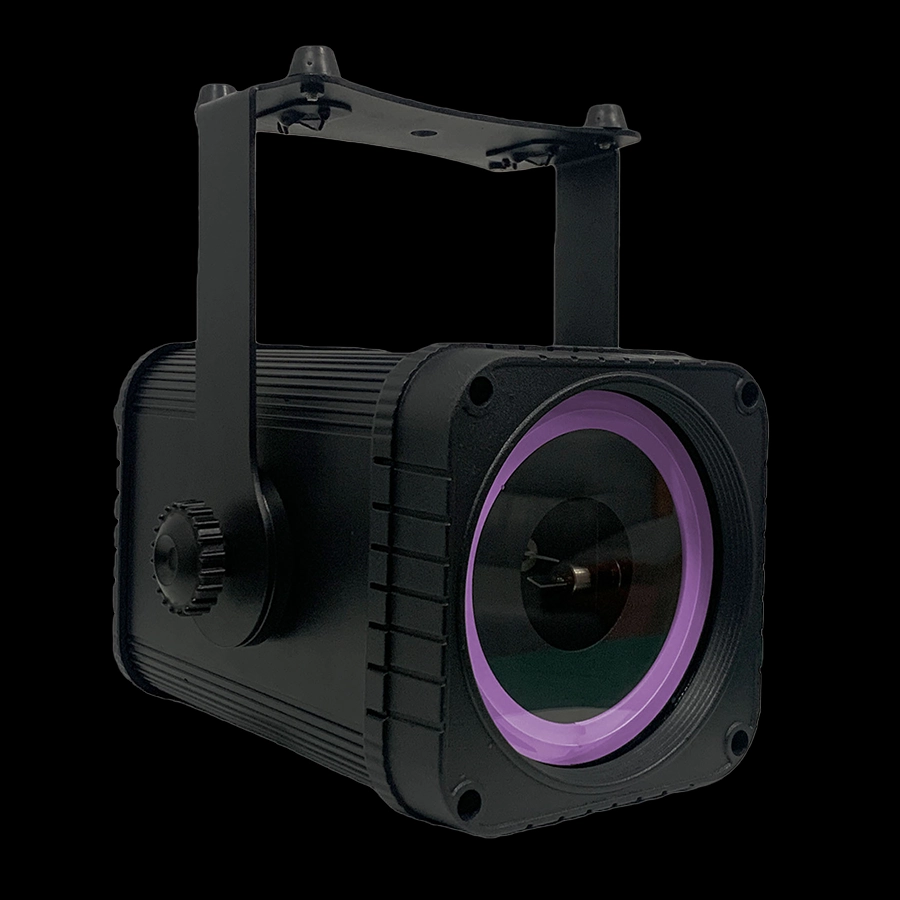
This IP65 waterproof 3W RGB animation laser battery light features an IP65 waterproof and dustproof design, making it suitable for both outdoor and indoor use. It supports rich RGB color combinations and dynamic animation effects, delivering a clear and fluid beam that can display text, patterns, and flowing light and shadow, among other visual representations.
Powered by a built-in battery, it requires no external power source, making it portable, easy to deploy, and simple to operate. Ideal for festive decorations, creating a garden atmosphere, and adding a touch of elegance to small events, it's energy-efficient, durable, and creates a truly immersive ambiance.
This IP65 waterproof 5W RGB animation laser battery light features an IP65 waterproof and dustproof design, making it suitable for both outdoor and indoor use. It supports rich RGB color combinations and dynamic animation effects, delivering a clear and fluid beam that can display text, patterns, and flowing light and shadow, among other visual representations.
Powered by a built-in battery, it requires no external power source, making it portable, easy to deploy, and simple to operate. Ideal for festive decorations, creating a garden atmosphere, and adding a touch of elegance to small events, it's energy-efficient, durable, and creates a truly immersive ambiance.
If you have any comments or good suggestions, please leave us a message, later our professional staff will contact you as soon as possible.
Lighting Innovators
Uplus Lighting is a leading integrated company specializing in R&D, design, production, and sales of stage lighting solutions.
 Scan QR Code
Facebook
Instagram
YouTube
VK